Francesca Villa turns treasured objects into bespoke jewelry
Francesca Villa turns keepsakes into jewels with biography, not just beauty, but each bespoke transformation asks for time, trust, and a tolerance for risk.

The appeal of a jewel with a past
Francesca Villa treats personalized jewelry as a form of preservation, not decoration. Her most compelling pieces begin with memorabilia, then evolve into heirlooms that carry memory in precious metal and stone. That is the real luxury here: not just ownership, but continuity, the feeling that a private story has been given permanent form.
Villa describes her work as jewelry that “treasures memory and narrative,” and that idea runs through the whole practice. A vintage cameo, a poker chip, or a painted crystal can become the starting point for something far more intimate than an engraved pendant or a birthstone ring. Instead of adding sentiment to an existing design, she builds the sentiment into the design itself.
How Francesca Villa turns objects into form
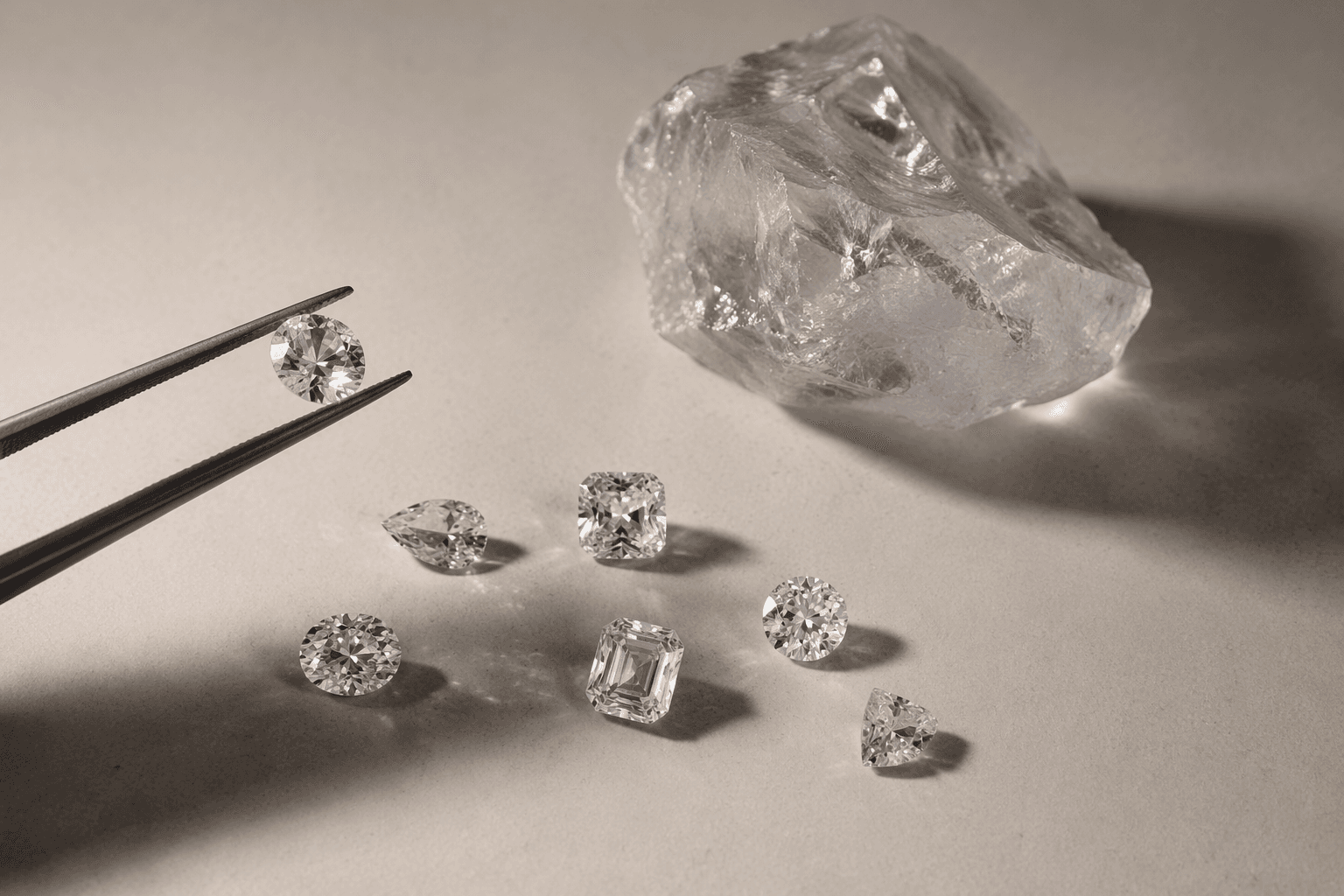
Villa’s inspirations are specific and deliberately tactile. Vintage cameos, hand-carved and painted crystal cabochons, lenticulars, and Victorian-era Essex Crystal all sit comfortably within her visual language. She also draws on flea-market finds, including vintage poker chips, Venetian glass beads, and antique toy soldiers, proof that her material imagination is as much about story as it is about sparkle.
The crucial move happens early. She begins with an intriguing object that has a story to tell, then translates that vision onto paper before the delicate creation process begins. In other words, the object is not merely mounted and sent out into the world unchanged. It is reinterpreted, with precious materials giving the found or inherited item a new setting, a new balance, and often a new scale.
That difference matters. A simple engraving marks a memory. Villa’s method makes the memory structural. The object is no longer an accessory to the jewel; it is the jewel’s emotional architecture.
Why bespoke jewelry feels more personal than trends
The current appetite for personalized jewelry often centers on initials, names, and birthstones, but memorabilia-based commissions go further. They ask for an object that already belongs to a life, a family, or a private mythology. That is why they feel more profound than a trend-driven gesture. A birthstone says something symbolic. A client’s own object says something lived.
Villa’s bespoke page makes that premise clear: she designs pieces that celebrate treasured memories and can work from a client’s own precious jewel or object, or even tell a story anew. That flexibility is what gives the work its emotional range. A commission can preserve a beloved item as it is, or it can transform that item into a wearable narrative with a fresh silhouette.
This is also why the category resonates so strongly now. A 2025 Tatler Asia profile framed Villa’s jewelry as sentimental and expressive, and that is exactly where the market has moved. Buyers want personalization that feels authored, not merely customized. They want a piece that can hold family history, a private joke, a collected object, or a reminder of a person who matters.
The craftsmanship, and the risk, behind the romance
The romance should not obscure the difficulty. WWD notes that Villa can work vintage poker chips, cameos, and Victorian-era Essex Crystal into precious jewelry, but the process is time-intensive and can be risky. That is the unglamorous truth of memorabilia-based commissions: not every object is easy to convert, and not every sentimental item is suited to daily wear.
The risk comes from the materials themselves and from the act of transformation. An object that looks perfect in its original form may need to be rethought entirely once it is asked to live inside a ring, brooch, or pendant. Fragility, proportion, and wearability all become part of the conversation. A commission can fail emotionally if the result is too literal, but it can also fail physically if the material cannot withstand the new setting.
That is why these projects demand real judgment. The best transformations preserve the soul of the object without forcing it into a design that ignores its limits. The most successful results feel inevitable, as if the object had always been waiting for this frame.
The background that makes the work believable
Villa’s authority comes from more than a clever idea. Her brand has been active since 2007, and her own bio says she has designed jewelry for some of the world’s most prestigious houses. She is also creative director of a renowned atelier that produces high jewelry for leading international brands, a role that suggests fluency not only in aesthetic language but in the precision and discipline high jewelry demands.
Her path into the field also explains the tenderness of the work. She studied literature at university, a detail that makes sense for a jeweler who thinks in narrative terms. Her passion was sparked by rummaging through her grandmother’s jewelry box as a child, and after 10 years designing for prominent brands she revived her fascination with objets trouvé in her eponymous collection.
There is family history here, too. Profiles identify Villa as the fifth generation of the Villa jewellers family, with a tradition that began with her great-great-grandfather. That lineage gives the work a deeper legitimacy: it is not only an individual designer’s vision, but a continuation of a multi-generational relationship with precious objects, craft, and value.
What to look for in a transformation commission
A memorabilia commission is worth pursuing when the object has both emotional force and enough material integrity to survive reworking. The strongest candidates usually share a few qualities:
- A clear personal or family story
- A form that can be translated into a wearable design
- A material that can tolerate setting, mounting, or recutting
- A memory strong enough to guide the final jewel, not just decorate it
The most important question is not whether an object is precious in the traditional sense. It is whether the piece carries enough meaning to justify the care, time, and risk required to transform it. When that answer is yes, the result can outlast trend entirely. It becomes something rarer than a bespoke jewel: a portable inheritance, made to be worn, remembered, and passed on.
This article was produced by Prism’s automated news system from verified source data, official records, and press releases, then run through automated quality and moderation checks before publishing. The system is built and supervised by the people who set the standards it runs under. Read our full AI policy.
Know something we missed? Have a correction or additional information?
Submit a Tip