Gen Z makes personalized engagement rings a lasting category
Gen Z is turning engagement rings into personal statements, with east-west settings, toi et moi styles, antique cuts, and colored stones replacing the default solitaire.

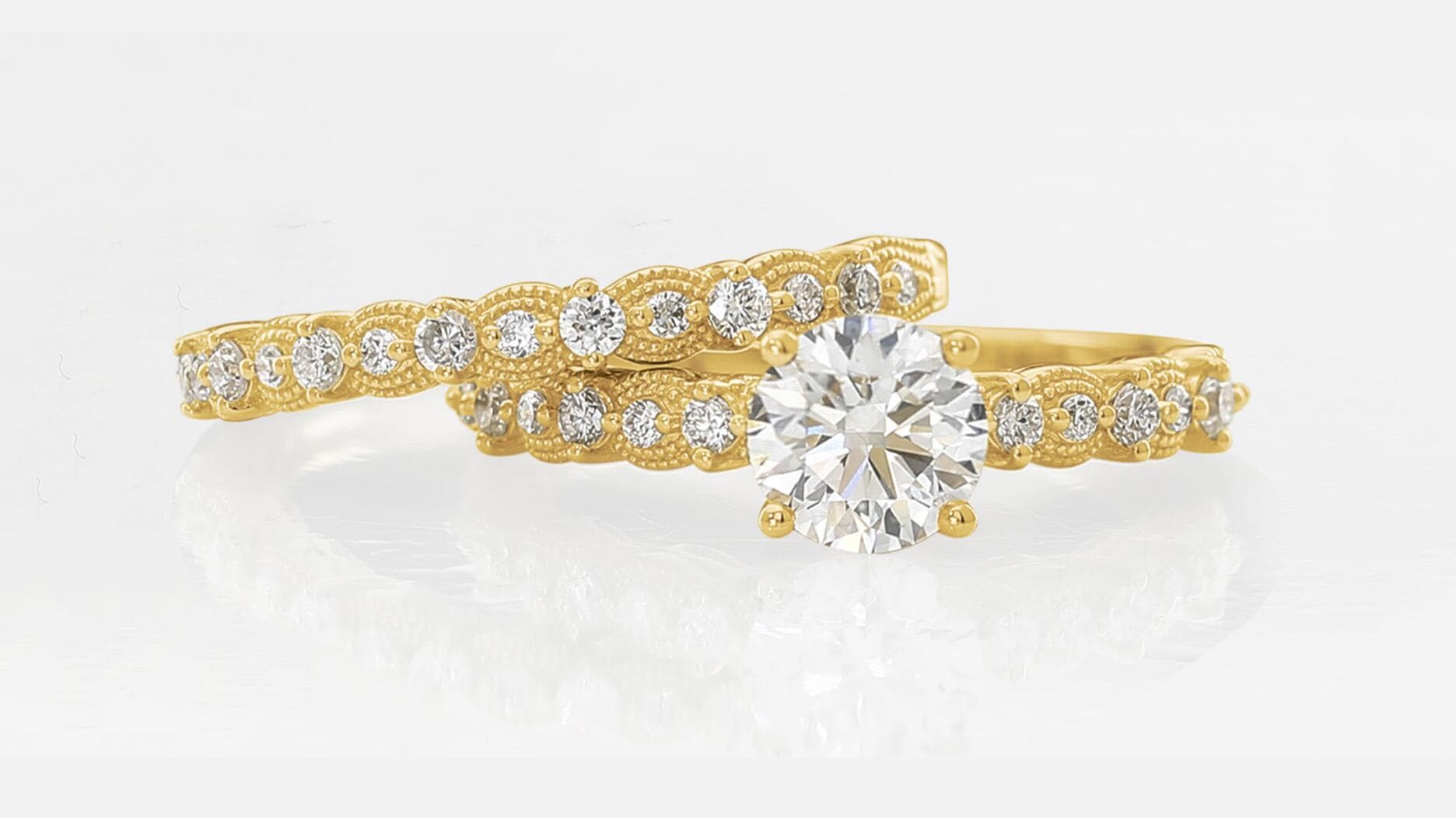
The engagement ring is no longer following a preset script. Younger couples are choosing stones, silhouettes, and settings that feel specific to them, and that shift is making personalized rings look less like a detour and more like the new center of the category. East-west settings, toi et moi rings, asymmetrical designs, chunky bands, antique cuts, and colored center stones are the details signaling commitment now.
Why the category is sticking
What makes this moment different is that it is not built on one novelty style that will fade when the next trend cycle arrives. The appeal is broader and more durable: these rings let buyers make the most traditional piece of wedding jewelry feel authored, not inherited. A recent trend report captured the mood with unusual clarity: “Couples are ditching one-size-fits-all rituals for cinematic and expressive revelry.”
That line explains why Gen Z is embracing alternative engagement and wedding rings with such confidence. The new ring is expected to carry a point of view. It should look chosen for a specific person, not pulled from a catalog of defaults. In that sense, the category is growing because it answers a deeper buyer desire for self-expression, mixed aesthetics, and a ring that tells a story before it ever flashes.
The new commitment signals
East-west settings and the appeal of a sideways silhouette
East-west settings have become one of the clearest markers of this shift. By turning the center stone horizontally, the ring changes the visual rhythm of the hand without relying on extra size or excessive ornament. The effect is modern and a little unexpected, which is exactly why it works for buyers who want their engagement ring to feel distinctive without losing polish.
That sideways orientation also gives familiar stones a new personality. A marquise, oval, or emerald-cut diamond reads differently when it stretches across the finger rather than up and down, and that altered line has become part of the appeal. It is a subtle move, but in a market that prizes individuality, subtlety can be the loudest signal of all.
Toi et moi and the language of two stones
Toi et moi rings remain one of the most recognizable expressions of personalized bridal style. The two-stone format naturally lends itself to symbolism, whether that means two people, two histories, or two aesthetic preferences living in the same ring. It is also visually flexible, which helps explain why it keeps returning.

What makes the style feel current now is its ability to be both romantic and irregular. Designers can play with proportion, pairing stones of different shapes, sizes, or colors so the ring never feels formulaic. For buyers who want the engagement ring to read like a private message rather than a standardized emblem, toi et moi offers a built-in narrative.
Asymmetry and chunky bands make the point
Asymmetrical designs and bold, chunky bands are pushing the category further away from the airy, delicate engagement ring of the past. These are rings with weight and presence. They announce themselves on the hand and give the stone or stones a more sculptural frame, which is part of their appeal to younger shoppers.
Chunky bands also help shift the emotional register of the ring. Instead of looking fragile or purely decorative, they feel anchored and intentional. That matters to buyers who want commitment jewelry to look substantial, not precious in the old-fashioned sense of the word.
Antique cuts and color are changing what looks special
The current appetite for antique cuts is one of the clearest signs that the diamond-first formula is being rewritten. Taylor Swift’s old mine-cut engagement ring, designed by Kindred Lubeck, helped push vintage and antique-cut diamonds back into the conversation, but the larger story is bigger than any single celebrity moment. Buyers are responding to stones that carry texture, history, and a softer, less standardized sparkle.
Colored center stones are part of the same move. Sapphires, in particular, give the engagement ring a different emotional temperature. They shift the center stone away from the idea that only a diamond can mark the occasion, and they make room for color as a serious bridal choice rather than an accent.
Together, antique cuts and colored stones reveal what is really changing. The old formula prized uniformity: one diamond, one shape, one expected look. The new formula prizes personality. A ring feels more meaningful when the cut, hue, and setting work together to suggest a life, not just a price point.
What buyers are really choosing
The most important thing to notice about this category is that the details are doing the storytelling. When shoppers choose an east-west setting, a toi et moi design, an asymmetrical layout, a chunky band, an antique cut, or a colored center stone, they are not just opting out of tradition. They are choosing a different vocabulary for commitment.
- East-west settings signal a modern silhouette and a willingness to reframe a familiar stone.
- Toi et moi rings suggest duality, partnership, and a ring with built-in symbolism.
- Asymmetry gives the piece a more individual, less templated feel.
- Chunky bands add weight, confidence, and a sense of permanence.
- Antique cuts bring in history and a less standardized kind of brilliance.
- Colored center stones, especially sapphires, move the ring beyond diamond-first convention.
That is why personalized engagement rings are no longer a fringe idea waiting for a passing trend cycle to catch up. They are becoming a lasting category because they answer the most persuasive wedding-jewelry question of the moment: how do you make something as old as marriage look unmistakably like you?
This article was produced by Prism’s automated news system from verified source data, official records, and press releases, then run through automated quality and moderation checks before publishing. The system is built and supervised by the people who set the standards it runs under. Read our full AI policy.
Did this article answer your question?