Hair jewelry turns personal keepsakes into Victorian goldwork
Victorian hairwork turned a lock of hair into goldwork, cameos, and mourning keepsakes, and its intimacy still shapes bespoke jewelry today.
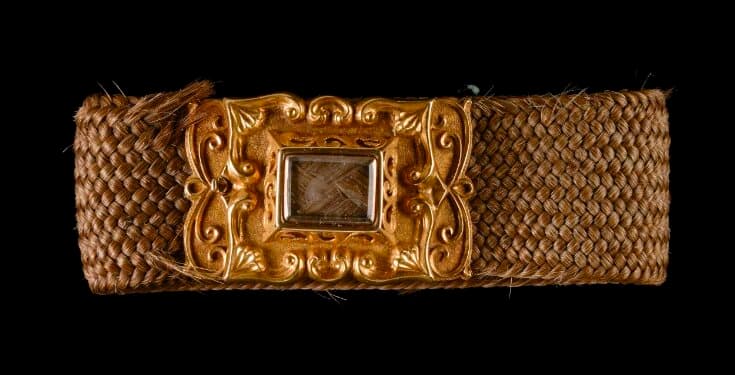
Hair jewelry made personalization literal long before engraving became the default. In a Victoria and Albert Museum bracelet from 1830 to 1850, plaited human hair is finished with a gold clasp set with a shell cameo, a combination that turns a private trace of one person into a polished object of dress. That is the lasting appeal of the form: the material itself came from someone specific, so the piece does not just symbolize memory, it contains it.
From lock of hair to crafted object
Hairwork predates the Victorian period, with museum and historical sources tracing it back to at least the 17th century, but it flourished in the 19th century as both a trade and a domestic practice. Victorians continued the custom in gifts of love and remembrance, and Queen Victoria herself wore and gave jewelry set with hair. After Prince Albert’s death in 1861, mourning dress and mourning jewelry became more visible in public life, which helped hairwork move from private keepsake to cultural staple.
The range was broader than many people realize. Hair was woven into bracelets, rings, necklaces, wreaths, framed memorials, and floral forms, and it was made both by professional hairworkers and by amateurs at home. Mark Campbell’s Self-Instructor and the Art of Hair Work, published in 1867, shows how established the practice had become. Hairwork was not a fringe curiosity. It was a teachable craft with manuals, methods, and a steady market.
Why the Victorian bracelet looks more like goldsmithing than mourning
The Victoria and Albert Museum bracelet is especially revealing because it treats hair as one element in a larger design language. Alongside the plaited human hair, the gold clasp is set with a shell cameo, and the surface includes decorative techniques such as graniti and cannetille. The result is not a lock preserved in metal, but a bracelet in which braid, goldwork, and carved imagery all do different emotional work.
That cameo matters, too. Shell cameos were especially popular in the early 1800s, and jewelry makers used conch shells from places as far away as Madagascar and Jamaica because they were easier to carve and cheaper than hardstone cameos. The supply chain behind a sentimental jewel was therefore global as well as intimate, linking a personal keepsake to trade, carving skill, and fashion taste. The object’s beauty comes from that tension: something deeply private rendered through materials that were highly legible to the eye.
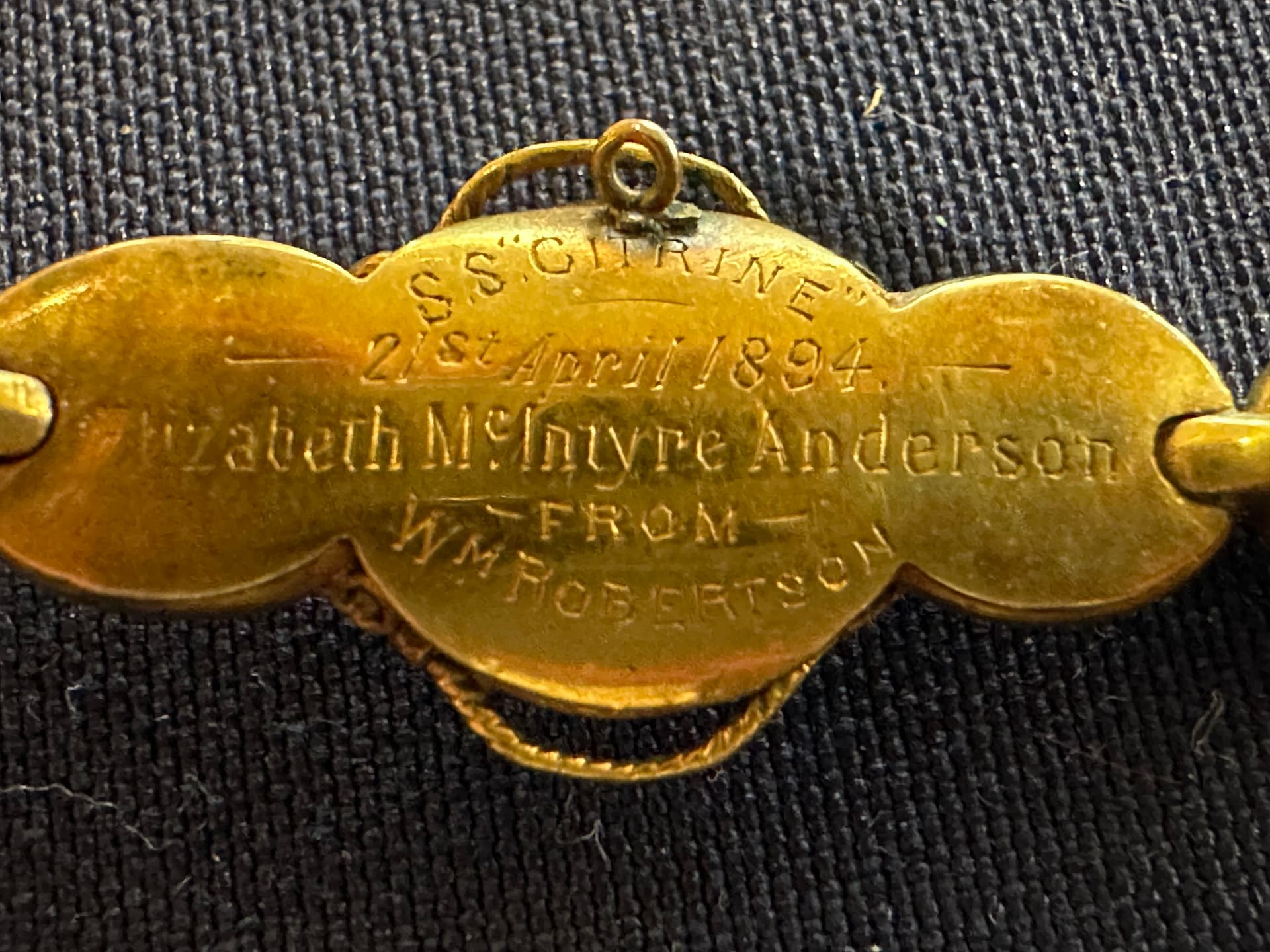
The same museum record system shows how specific these objects could be. One brooch is engraved with the dates of a 16-year-old who died in 1842, which makes the memorial unmistakably individual. Another example from the Royal Collection Trust records a gold and crystal heart-shaped locket sent to Queen Victoria in 1867 by Prince Albert’s nurse, containing his childhood hair. A separate memorial locket opens to reveal hair on one side and a photograph of Prince Albert on the other, a reminder that hair jewelry often worked alongside portraiture rather than in place of it.
Authenticity was part of the appeal
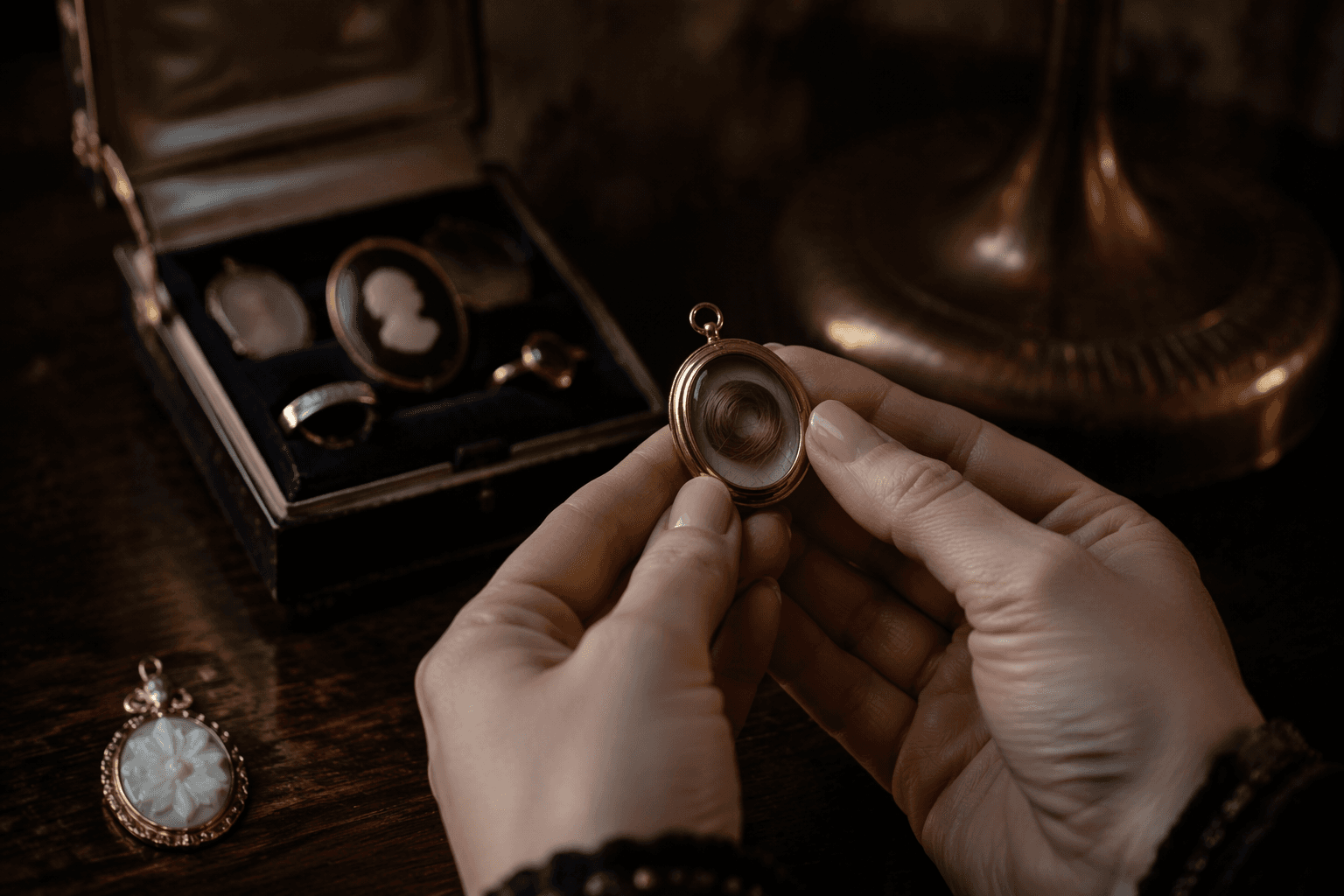
Victorian consumers did not buy hairwork on sentiment alone. The Victoria and Albert Museum notes that hair artists specialized in turning locks of hair into jewelry, and printed catalogues offered choices of designs along with guarantees that the correct hair had been used. That detail is telling: even in a medium built on trust, buyers wanted proof that the material had not been muddled or substituted. In other words, authenticity was already part of the luxury experience.
The scale of the trade makes that concern easier to understand. A Library of Congress blog reports that imported human hair into the United States was valued at $144,894 in 1876, roughly $4.5 million today. The same source says many women voluntarily participated in the hair trade, even though forced hair removal also existed. One estimate places England’s imports at about 50 tons of hair a year by the mid-1800s. Hairwork was therefore not just a domestic ritual of remembrance; it sat inside a real commercial system with labor, sourcing, and value attached to every strand.
What this means for personalized jewelry now
Modern personalized jewelry often leans on names, initials, or birthstones, but hair jewelry points to a more powerful idea: the most compelling keepsakes are the ones that preserve physical intimacy, not just visual identity. That is why memorial jewelry still resonates when it uses actual hair, why bespoke heirloom settings feel more meaningful when they protect a material trace, and why a piece can seem more precious when the design is built around the object’s origin rather than around an engraved label.
For a contemporary piece to carry that same force, the details matter. Look for clear material origin, thoughtful preservation, and a setting sturdy enough to survive repeated wear. A gold bezel, a locket, or a clasp with real structural weight does more than frame the keepsake; it turns memory into something that can be worn, handled, and passed down. Victorian hair jewelry understood that emotional truth first, and it remains the standard for personalized jewelry that wants to feel genuinely lived-in rather than merely customized.
This article was produced by Prism’s automated news system from verified source data, official records, and press releases, then run through automated quality and moderation checks before publishing. The system is built and supervised by the people who set the standards it runs under. Read our full AI policy.
Did this article answer your question?