How to Clean and Protect Engraved, Personalized Jewelry at Home
Wrong cleaning habits can permanently erase the lettering that makes a piece irreplaceable. Here's how to protect every engraved detail without losing them.
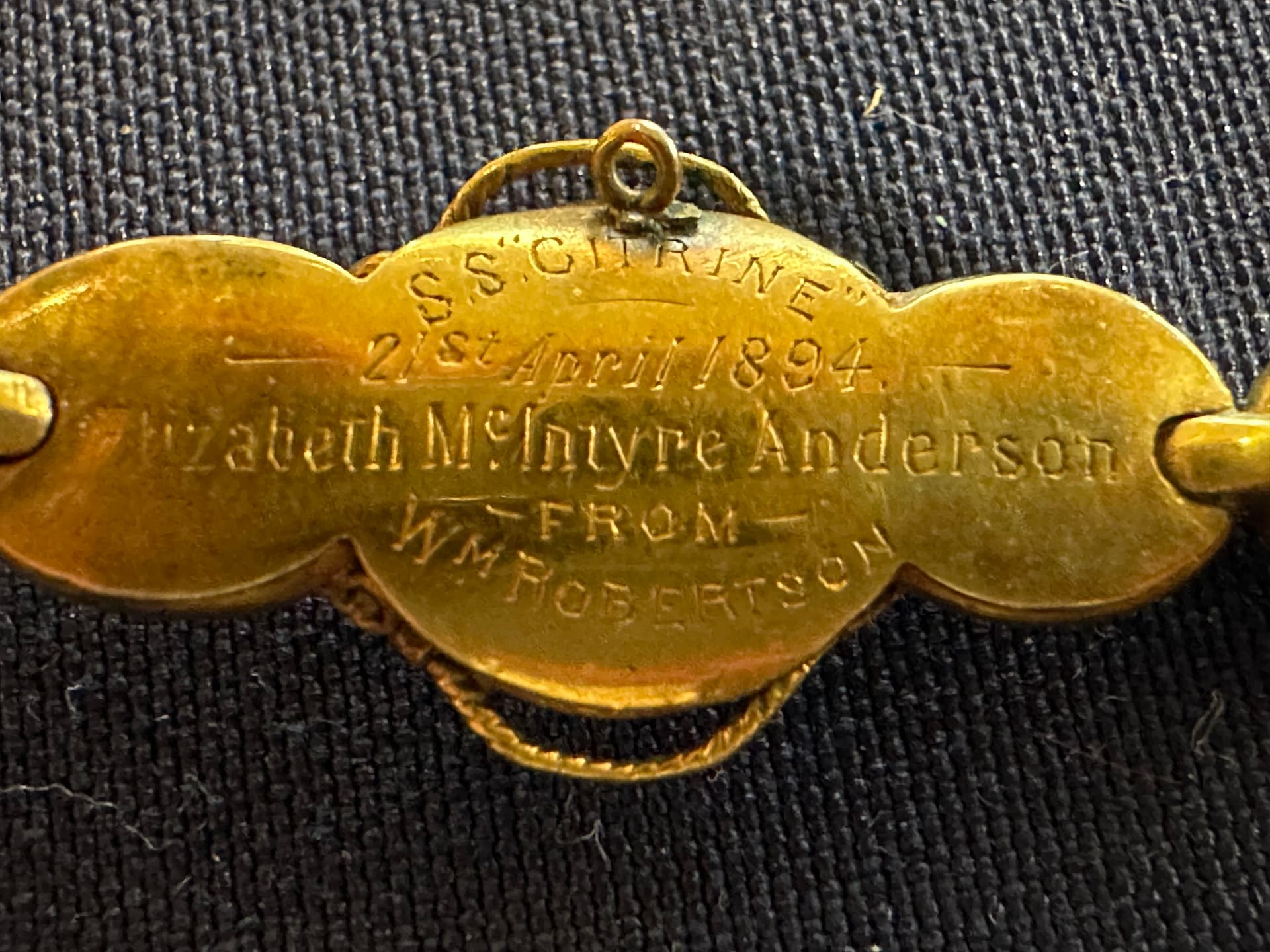
There is a particular kind of heartbreak reserved for discovering that an aggressive polish has blurred your grandmother's initials on a signet ring, or that a soak in the wrong solution has hazed the nacre on a pearl locket bearing your child's name. Engraved and personalized jewelry demands a slightly different level of care than a plain band, not because it is more fragile, but because the details that make it meaningful — the recessed lettering, the hand-cut flourishes, the inlaid surfaces — are the first casualties of careless cleaning.
The Core Method: Mild Soap and Warm Water
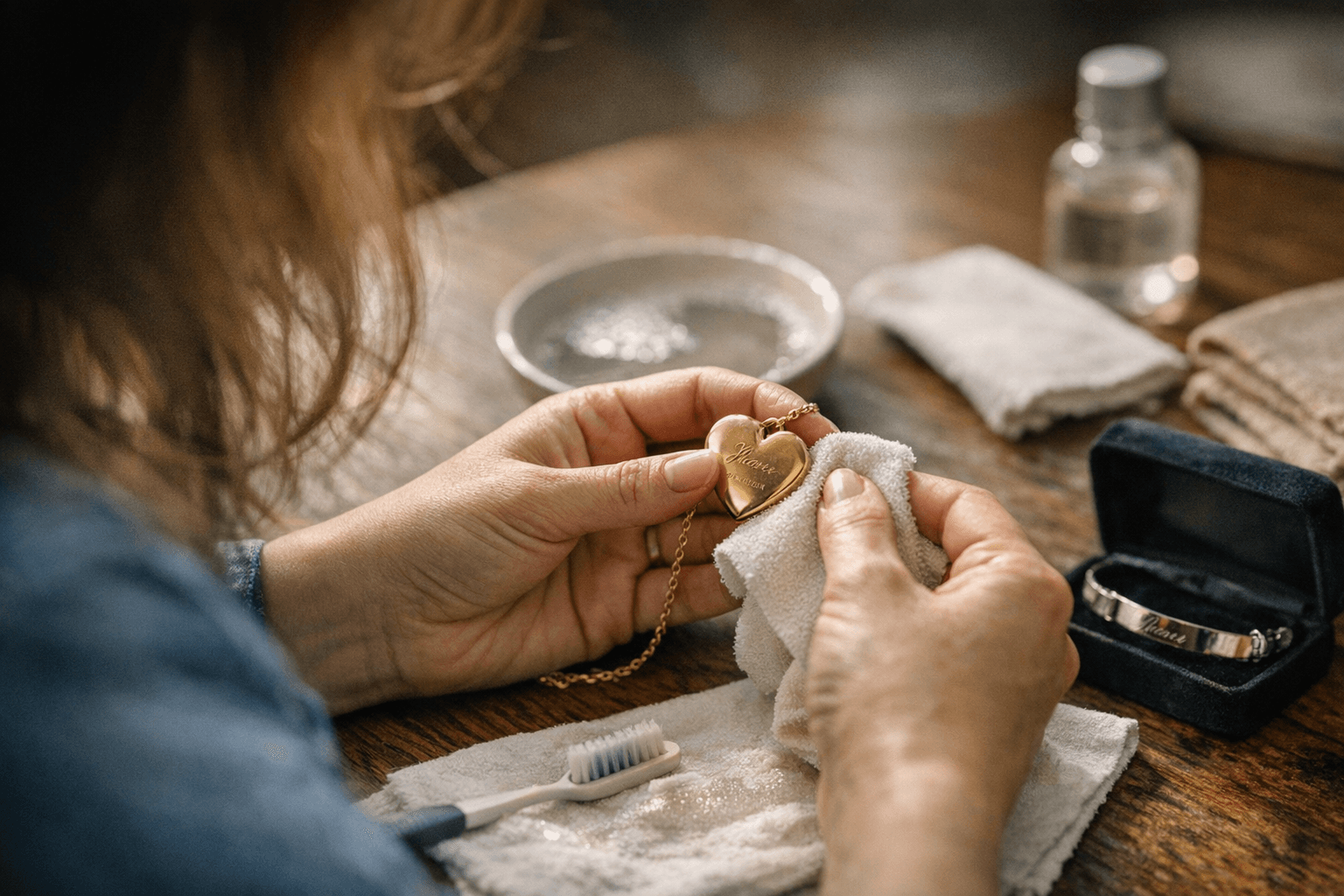
The Gemological Institute of America points to the same starting point for nearly every material: a few drops of mild dish soap dissolved in a bowl of warm (not hot) water. For most gold, platinum, and hard gemstone pieces, soaking for 10 to 15 minutes loosens the oils, skin residue, and everyday grime that accumulate fastest in exactly the places you most want clean: engraved recesses and prong settings. After soaking, use a soft-bristled toothbrush to work gently through the grooves. Rinse with lukewarm water and pat dry with a microfiber cloth. That sequence, done consistently every few weeks, prevents the kind of heavy buildup that tempts people into aggressive polishing.
For engraved pieces specifically, the brush step is not optional. Deposits of lotion, soap film, and oxidized metal settle into lettering and can make a crisp engraving look smudged or shallow. A soft brush, held at a low angle, clears those recesses without exerting the lateral pressure that can erode fine detail over time.
Gold: Solid Versus Plated
Solid gold, whether 14k or 18k, tolerates the soap-and-warm-water method well. What it cannot tolerate is ammonia, bleach, or chlorine, which attack the alloy metals in the mix and dull the surface. For engraved gold specifically, avoid polishing compounds applied directly over the lettering. Those compounds are mildly abrasive by design, and on a shallow engraving, repeated use slowly flattens the walls of the letters until the inscription reads as a shadow of its original depth.
Gold-plated jewelry, including vermeil and gold-filled pieces, requires an even lighter touch. Estate Diamond Jewelry notes that brushing plated surfaces can remove the gold layer entirely. A cotton swab or a soft, lint-free cloth is the right tool, used with minimal pressure. Never use polishing cloths designed for solid gold or silver on plated items: according to guidance from jewelry care specialists at Finematter, those cloths contain micro-abrasives and chemical agents that strip thin plating quickly.
Sterling Silver: Managing Tarnish Without Losing Detail
Silver tarnishes faster than gold because it reacts with sulfur compounds in the air and in skin products. For lightly tarnished engraved silver, the soap-and-warm-water method works well. For heavier tarnish, the aluminum foil and baking soda method is effective: line a bowl with aluminum foil (shiny side up), lay the piece on top, and pour hot water mixed with baking soda over it. The electrochemical reaction draws tarnish off the metal and onto the foil. Soak for two to five minutes, rinse, and dry thoroughly.
The important caveat for engraved silver is this: baking soda is mildly abrasive. Specialists at Blake Bros. note that polishing too often with baking soda paste can wear down details, especially on engraved pieces. Use the foil-and-water soak rather than scrubbing a paste directly into lettering. Finish with a microfiber cloth using light, buffing strokes rather than hard circular pressure.
Platinum: Low Maintenance, High Stakes
Platinum is the most durable of the common jewelry metals and develops a natural patina over time rather than tarnishing. Mild soap and warm water remain the safest cleaning method. The one rule that applies with extra force to engraved platinum: do not attempt to buff or polish engraved areas. Gentlebands, which specializes in engraved wedding bands, states plainly that polishing engraved areas can flatten the engraving. Platinum is worked at very high tolerances, and even shallow surface removal changes the way light catches the lettering.
Pearls: The Most Vulnerable Surface
Pearls are an organic material and the most unforgiving of all when it comes to cleaning mistakes. Never soak a pearl piece, never use an ultrasonic cleaner, and never expose pearls to ammonia, bleach, vinegar, or acetone. These agents attack nacre, the iridescent coating that gives a pearl its value, causing permanent pitting, chalkiness, and loss of luster.
When a deeper clean is needed, dampen a soft cloth with lukewarm water and add a drop of mild dish soap. Wipe each pearl individually, being careful not to soak the strand. If a personalized pearl piece, such as a monogrammed clasp or a locket on a knotted strand, has grime in the metal setting, use a barely damp soft brush only on the metal components, keeping moisture away from the pearls themselves. Lay the jewelry flat on a towel to dry completely before storing.
The Enemies of Engraved Jewelry
Certain substances deserve a firm prohibition across all materials:
- Chlorine: Found in swimming pools and many household cleaners. It degrades gold alloys, corrodes silver, and weakens prong settings.
- Ammonia: Effective on hard stones like diamonds but damaging to pearls, plated metals, and certain colored gemstones.
- Abrasive cloths: Rough fabrics, paper towels, and even some commercially sold polishing cloths will microscratch soft metals and, over time, flatten engraved surfaces.
- Ultrasonic cleaners: Generally safe for solid gold and diamonds but inadvisable for plated pieces, pearls, inlaid stones, and any piece with a shallow engraving where vibration can loosen settings.
Spot Cleaning and Everyday Maintenance
For pieces worn daily, a full soak every few weeks is more effective than nightly intervention. Between cleanings, a quick wipe with a dry microfiber cloth after each wear removes the skin oils and residue that cause buildup. This matters most for engraved surfaces, where even a thin film of oil darkens recessed letters and makes a piece look dull before its time.
For pieces with deep, filled engravings, where ink or enamel has been worked into the lettering for contrast, spot cleaning is the safest approach. Apply a mild soapy solution with a soft cloth or cotton swab to the surrounding metal only, avoiding saturating the fill material, which can loosen with prolonged moisture exposure.
Storage: The Step Most People Skip
Cleaning extends a piece's life, but storage determines how quickly it returns to needing cleaning. Oxygen is the primary driver of tarnish, which means the best storage limits air exposure. Anti-tarnish pouches or small airtight bags, one piece per bag to prevent scratching, slow oxidation significantly. A bathroom counter is among the worst storage locations: humidity from showers accelerates tarnish and, over time, can weaken the silk thread of pearl strands and soften adhesives in inlaid pieces.
When to See a Jeweler
Some problems are beyond the reach of a soft brush and mild soap. If an engraving has become genuinely shallow or difficult to read, a professional jeweler can re-engrave the piece. Avoid the temptation to attempt this at home: DIY re-etching risks distorting the original letterforms. If a plated engraved piece has worn through to the base metal, replating is a relatively affordable service that restores both the finish and, in pieces with oxidized engraving, the contrast that makes the lettering legible.
The most irreversible damage to personalized jewelry almost always comes from well-intentioned but overzealous cleaning. An aggressive polish that takes ten minutes can undo lettering that took a craftsperson an hour to cut. Gentle, consistent care, the right tools, and a clear understanding of which chemicals belong nowhere near your particular piece, is how an engraved ring, bracelet, or locket stays as legible decades from now as it was the day someone pressed it into your hand.
This article was produced by Prism’s automated news system from verified source data, official records, and press releases, then run through automated quality and moderation checks before publishing. The system is built and supervised by the people who set the standards it runs under. Read our full AI policy.
Did this article answer your question?