Illusion earrings offer layered style without extra piercings
Illusion earrings turn one piercing into a layered ear story, making stacked style feel easier, more personal, and far less committed.
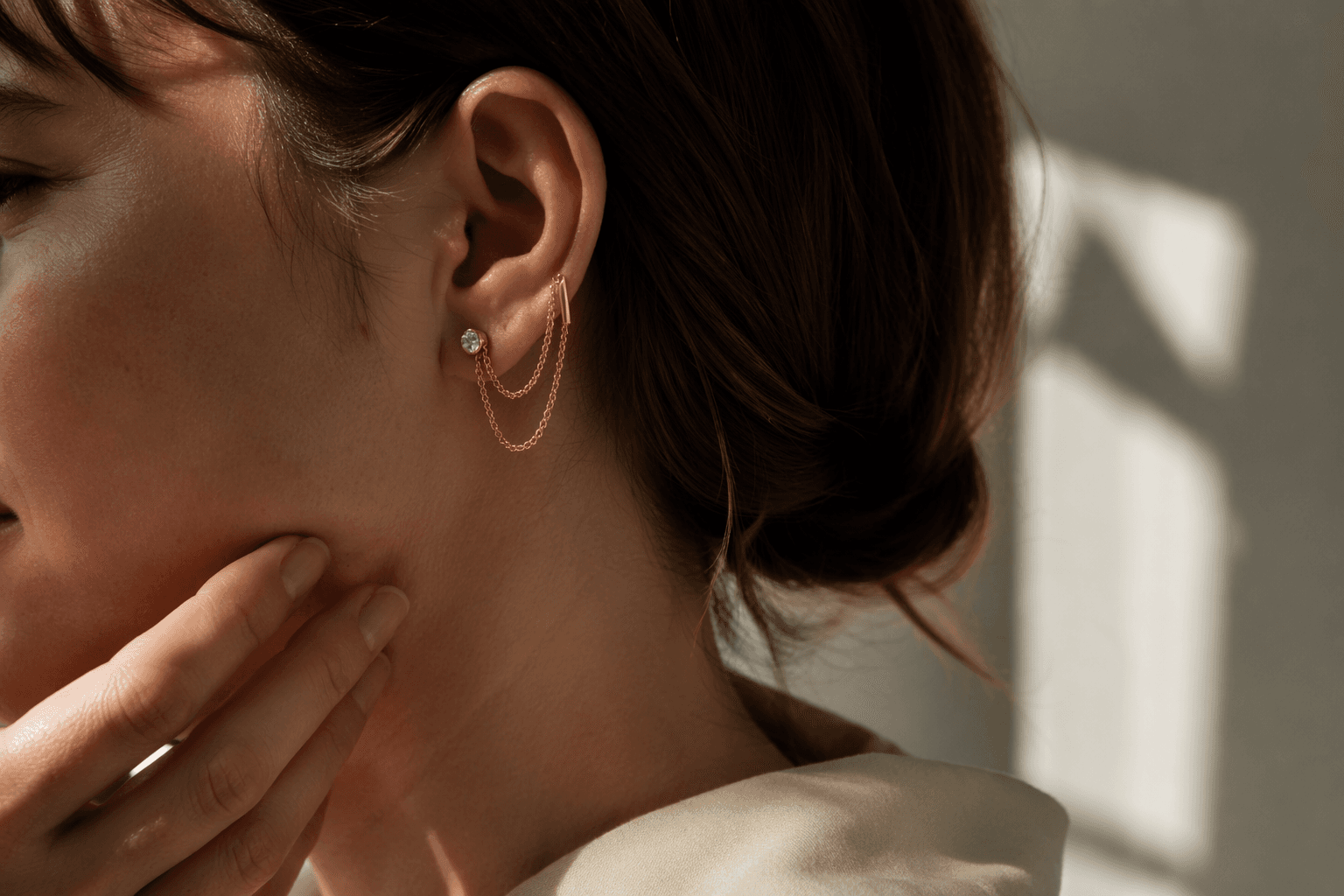
The smartest ear trend coming out of Las Vegas Jewelry Week is not louder, but trickier: illusion earrings create the look of a curated ear with one well-placed piece. JCK says they were one of the biggest earring stories on the show floors, and their appeal is simple: they speak to shoppers who stopped after a single piercing but still want that layered, collected effect.
Why the illusion earring works
The strength of the illusion earring is that it borrows the visual language of a fully styled ear without asking for extra piercings. That matters in a market that keeps rewarding jewelry with more than one function, more than one wear mode, and more than one styling story. A single earring can read like several, which gives the look its instant payoff: the ear looks considered, not crowded.
That flexibility also makes the trend feel commercially savvy. JCK has framed the category as a value-minded answer to the demand for customization, while still delivering a more editorial, layered silhouette. In practical terms, that means the appeal is not just aesthetic; it is also about access, because the customer gets a high-impact ear without a permanent commitment.
The ear is now the main styling canvas
National Jeweler has been making the same point from a broader fashion angle: the ear has become the place where the statement lives. Instead of oversized chandelier earrings, the heat is in huggies, studs, ear cuffs, and single earrings that look like multiple pieces. That shift explains why illusion earrings fit so naturally into the current conversation, because they extend the same idea one step further.
This is also why the category resonates across different levels of piercing commitment. Whether a wearer has several holes or none at all, the goal is the same: create dimension, asymmetry, and the sense that the ear was styled piece by piece. The look feels personalized because it can be made to appear spontaneous, even when every element is carefully engineered.
A trend with real precedent, not a passing gimmick
Illusion earrings are not arriving in a vacuum. JCK has already highlighted ear cuffs as a no-commitment style, and those remain a close cousin to the illusion earring because they change the ear without requiring a needle. The magazine has also described earring jackets as a long-running, versatile format that can move an ear look from day to night, which places illusion designs inside a broader cycle of modular ear styling.
Petite ear-climbing studs have played a similar role. JCK has previously pointed to these tiny climbers as a way to mimic a multi-piercing effect for people who never went beyond one hole. The important thing is that all of these styles solve the same problem from different angles: they add visual density without adding permanence.
Why price and materials matter here
Part of the reason the trend keeps expanding is that it can be expressed in more accessible materials. JCK has noted that sterling silver and vermeil can help widen the audience for layered-ear looks, and that is a meaningful detail in a category that could otherwise drift too far into fashion fantasy. When the structure does the work, the material does not always need to be precious to be effective.
That same accessibility shows up in price-point strategy. National Jeweler reported that the Stephanie Gottlieb x Studs collaboration used smaller-scale earrings to bring the price down while still creating a stacked-ear, or curated-earsape, look. That is a smart blueprint for this category: make the profile clever, keep the scale compact, and let the styling sell the piece.
The high-end version has already been tested
The appetite for curated-ear styling has been visible for years in more conceptual offerings. The Last Line’s 2021 “Year of Ear” subscription bundled 30 pieces, including pairs, singles, ear cuffs, hoops, huggies, drops, studs, and charms for hoops, for $20,975. That price tag made the point plainly: a fully styled ear can be sold as a collectible wardrobe rather than a single accessory.
Seen beside that precedent, illusion earrings feel less like a novelty and more like a distilled version of a bigger idea. They give shoppers the visual complexity of a larger ear edit, but in a format that is easier to wear, easier to buy, and easier to repeat. The category’s staying power comes from that balance between polish and practicality.
How to wear the look
The most successful illusion earrings do not try to mimic chaos. They create order inside the ear, with the eye moving from one detail to the next: a climber that traces the lobe, a stud that reads as two points of light, or a single earring that suggests a built-in stack. The effect is strongest when the shapes feel intentional and the proportions stay tight.
A few styling cues define the look:
- Choose one focal point per ear, then let the piece do the stacking for you.
- Mix finishes if you want the ear to feel more personal, especially with sterling silver and vermeil options.
- Use asymmetry deliberately, because the trend works best when the two ears do not feel identical.
- Treat small scale as a feature, not a compromise, since compact earrings are often what make the illusion convincing.
The bigger story is that illusion earrings meet the market exactly where it is now: hungry for personalization, open to modular styling, and increasingly drawn to jewelry that looks more edited than elaborate. In that sense, the trend is not just about faking a curated ear. It is about making the curated ear easier to live in.
This article was produced by Prism’s automated news system from verified source data, official records, and press releases, then run through automated quality and moderation checks before publishing. The system is built and supervised by the people who set the standards it runs under. Read our full AI policy.
Did this article answer your question?