JCK editors spotlight Khepri’s cartouche necklace among standout winners
Khepri’s cartouche necklace shows how a jewel can feel intimate before it is ever personalized. JCK’s editors use it to decode what makes a design feel like a story.
The power of a jewel that already knows its name
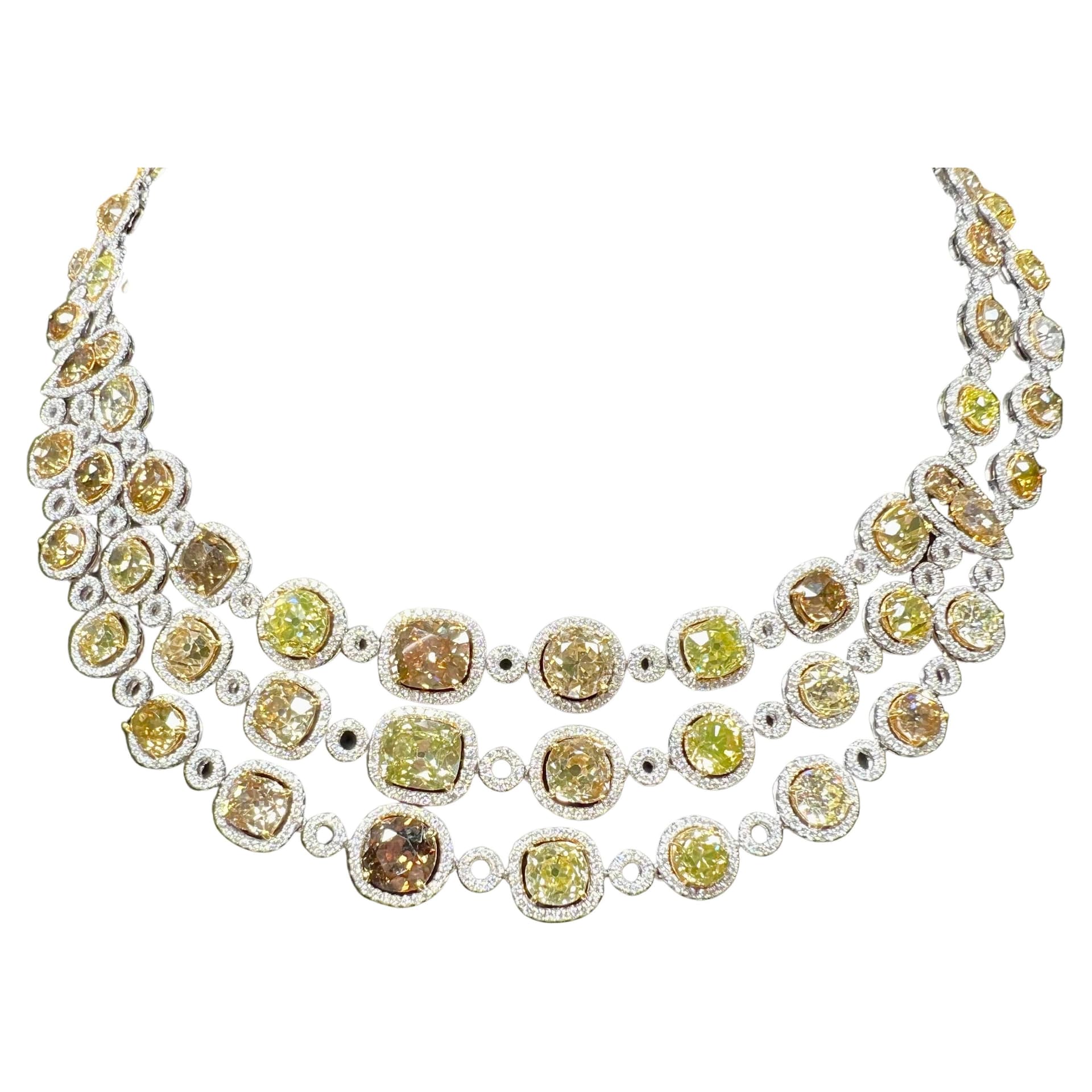
A cartouche has always carried the weight of identity, and that is exactly why Khepri Jewels’ cartouche charm fancy color diamond necklace reads as more than high jewelry. At $286,000, it is not simply a showpiece in JCK’s 2026 Colored Diamond Jewelry category; it is a polished lesson in how symbolism, silhouette, and material can make a jewel feel deeply personal before a hand ever touches a clasp.
That sense of intimacy is what gives JCK’s editors’ favorite-winner roundup its appeal. Instead of treating the 2026 Jewelers’ Choice Awards like a scorecard, the editors turn it into a miniature tour of design ideas worth borrowing, from a whimsical praying-mantis statement piece to Khepri’s more quietly resonant cartouche necklace. The result is not a ranking so much as a study in how jewelry earns emotional attention.
How JCK frames personal taste as the real prize
The awards themselves are built around the idea that taste should come from the trade and the wearers it serves. JCK says the main Jewelers’ Choice Awards are judged by retailers, while additional Editors’ Choice and Influencers’ Choice distinctions are selected by JCK editors and jewelry influencers. The 2026 winners were announced on May 4, and the editors’ standout roundup followed on May 8, giving the winning designs a second life as style references rather than just competition results.
That structure matters because it shifts the conversation away from abstract prestige and toward wearability, personality, and story. The 2026 voting guide said readers could vote by February 8, and JCK notes that the entry period for the next year’s awards opens after Labor Day. In other words, the program moves on a calendar that keeps both the trade and the audience engaged, with enough distance between nomination, voting, and editorial interpretation for the best pieces to reveal what they really are: objects with point of view.
Why Khepri’s cartouche feels so personal
Khepri Jewels is the work of founder and designer Reema Chopra, a New York-based, GIA-trained designer whose brand launched in 2023 and is shaped by themes of transformation, renewal, and ancient Egyptian symbolism. That background is not decorative trivia; it explains why the cartouche necklace feels emotionally legible. Khepri says the cartouche was once reserved for Egyptian royalty and worn as a talisman of strength and protection, then reimagines it as a modern heirloom.
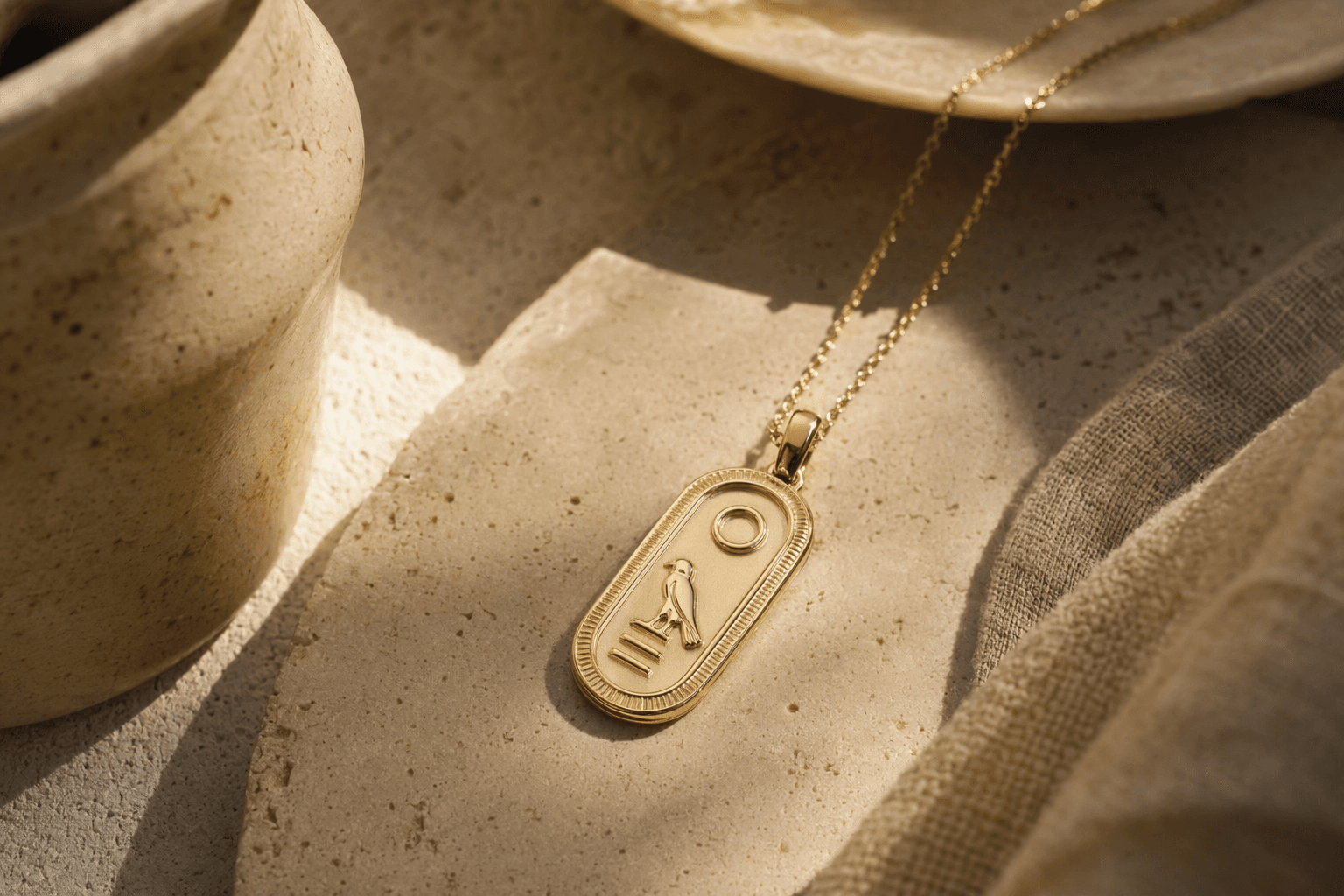
That is the key to its appeal. The motif already carries meaning, so the jewelry does not need to shout to feel special. A cartouche gives a necklace a built-in frame for identity, which is why it resonates so strongly with readers drawn to name jewelry, monogram pieces, and gifts that feel chosen rather than generic.
The use of fancy color diamonds pushes the idea further. Colored stones bring their own narrative layer, whether they read as luminous warmth, contrast, or a deliberate break from traditional white-diamond formality. In a category like colored diamond jewelry, the cartouche’s ancient reference keeps the piece from feeling merely extravagant; it feels authored.
What to borrow if you want a piece to feel like yours
The smartest customization ideas in high jewelry often start with structure, not surface decoration. Khepri’s cartouche suggests several directions that make a jewel feel personal without reducing it to a literal nameplate.
- Use a framed silhouette. A cartouche shape creates a natural boundary for a name, initial, symbol, or tiny engraved message, which gives the jewel a sense of containment and intention.
- Choose a motif with inherited meaning. The cartouche already signals strength and protection, so a custom version can carry the same emotional vocabulary, even if the final engraving is minimal.
- Let the stone choice do some of the storytelling. Fancy color diamonds suggest warmth, rarity, and specificity, especially when the color relationship is as considered as the setting itself.
- Build a collection around one idea. Khepri’s cartouche line is not a one-off gesture. It includes a Nine Yellow Diamond Pear Drop Necklace priced at $42,400 and an Eleven Pear Drop Necklace priced at $36,000, which shows how the same motif can move across price points and proportions without losing its identity.
That range is especially instructive. The award-winning necklace sits at the high end, but the broader collection proves the cartouche language can be scaled into pieces that are still collectable and still emotionally precise. For a buyer, that means the design logic is sturdy enough to support everything from a statement gift to a more accessible daily jewel.
Why the editors’ picks matter beyond the trophy
JCK’s editors, including Victoria Gomelsky, Natalie Chomet, Karen Dybis, Melissa Rose Bernardo, and Amy Elliott, use their favorite winners to show how jewelry can surprise without becoming costume. The praying-mantis statement piece brings whimsy and sculpture into the conversation; Khepri’s cartouche brings heritage, symbolism, and quiet authority. Together they suggest that the most memorable personalized jewelry does not rely on novelty alone.
What these winners share is a willingness to look specific. One leans into an insect’s angular drama, another into an ancient shape tied to protection and status, and both feel unmistakably designed rather than merely embellished. That distinction is what collectors notice first and what gift givers remember later.
Khepri’s cartouche necklace is persuasive because it understands that personalization is not only about adding a name. It is about building a piece that already feels inhabited by meaning, so the wearer steps into a story that the design has been telling all along.
Know something we missed? Have a correction or additional information?
Submit a Tip

