LINK Necklaces grows with modular jewelry you can update over time
LINK’s modular necklaces turn one base piece into many looks, while a revenue jump and old royal precedents show why updateable jewelry is catching on.
LINK Necklaces is built around a simple but timely idea: one necklace should not be frozen in a single moment. A chain can start with a pendant for the morning, pick up a different charm for dinner, and change again when the rest of the wardrobe does. That flexibility is exactly what makes the brand feel more relevant than static heirloom jewelry right now, especially as LINK says its revenue rose from $750,000 in 2024 to $1.7 million in 2025.
A necklace that changes with the wearer
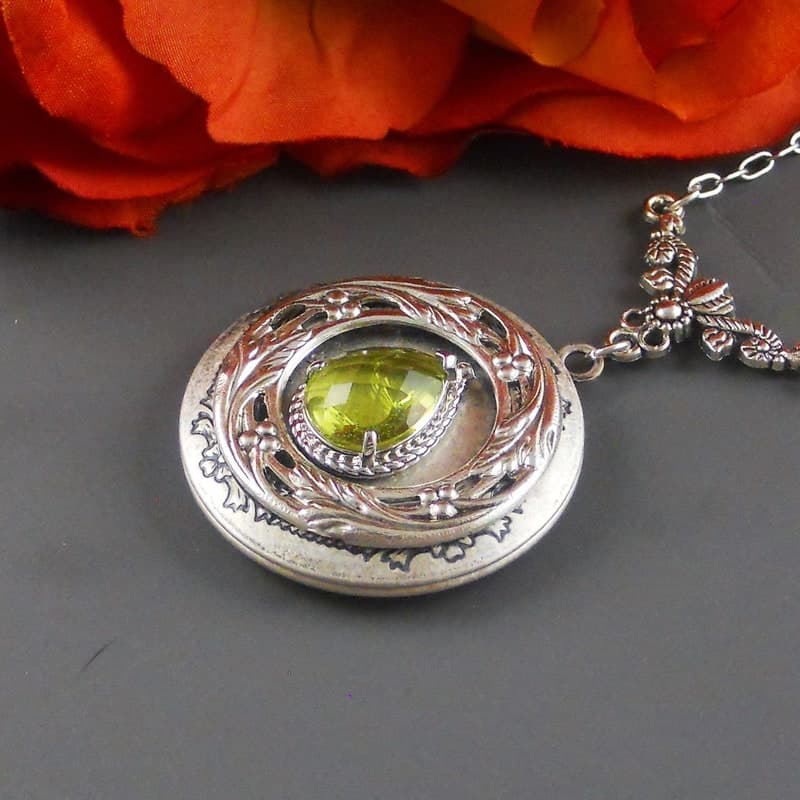
The appeal of LINK’s system is not just personalization in the abstract. It is the ability to build a piece that responds to mood, outfit, and milestone without starting over each time. LINK says shoppers can design their own link necklaces with interchangeable chains and pendants, and its model also reaches into bracelets and hoop components, which makes the platform feel less like a single product line and more like a modular jewelry wardrobe.
That matters because modern shoppers increasingly want jewelry that can evolve. A chain with one meaningful charm can read minimal at the office, then become more expressive at night by adding a second pendant or changing the clasp detail. In practical terms, a single base necklace can move from a solo statement to a layered look, or from polished to playful, simply by swapping components rather than buying a new finished piece.
Why personalization is winning now
The broader market helps explain why this kind of jewelry has momentum. Grand View Research estimates the global jewelry market at $381.5 billion in 2025, with the U.S. jewelry market at $78.4 billion and the global luxury jewelry market at $54.21 billion. That is a vast market for a brand to enter, but it also shows how much room there is for products that feel less generic and more personal.
The personalization story is even clearer in adjacent categories. A Business Wire and ResearchAndMarkets report says the U.S. personalized gifting market was valued at $9.69 billion in 2024 and is projected to reach $14.56 billion by 2030. Statista also says North America is seeing a surge in demand for personalized, handcrafted pieces. Taken together, those numbers suggest that shoppers are not just buying jewelry for beauty alone; they are buying pieces that can carry initials, dates, symbols, and private meaning while still feeling contemporary.
The old royal logic behind the new modular look
LINK’s model may feel modern, but the underlying idea has deep roots. The British Academy of Jewellery traces transformable jewelry back more than three centuries to French court parures, modular sets that could include necklaces, bracelets, earrings, brooches, and tiaras, with individual elements added or removed. In other words, the concept of jewelry that can be rebuilt around the body is not a new invention at all.
That history runs through the courts of Versailles and into the collecting imagination around Napoleon and Empress Joséphine, where jewelry served more than decorative purposes. The Metropolitan Museum of Art notes that court jewelry reinforced hierarchy and royal power, and its exhibition materials frame jewelry as something that transforms, extends, and amplifies the body. Later, 20th-century high jewelry houses such as Chaumet, Cartier, and Van Cleef & Arpels developed transformable jewelry further, proving that modularity has long been part of serious jewelry design, not just a trend for fashion accessories.
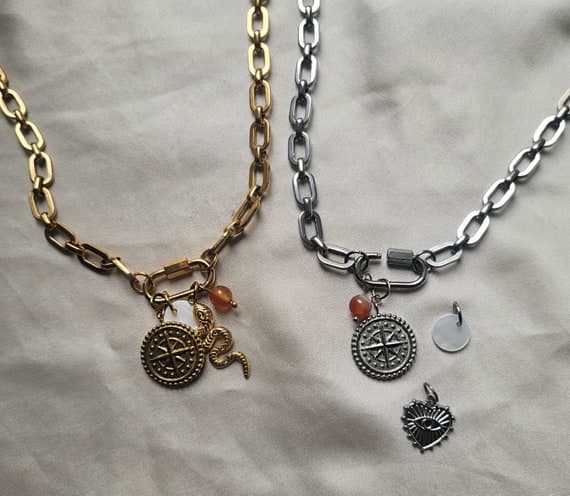
For today’s shopper, that lineage gives updateable jewelry a strong argument. It links the desire for versatility to a centuries-old tradition of adapting ornament to occasion, dress, and identity. The difference is that the new version is meant for everyday wear, not just ceremony.
How LINK’s modular system works in practice
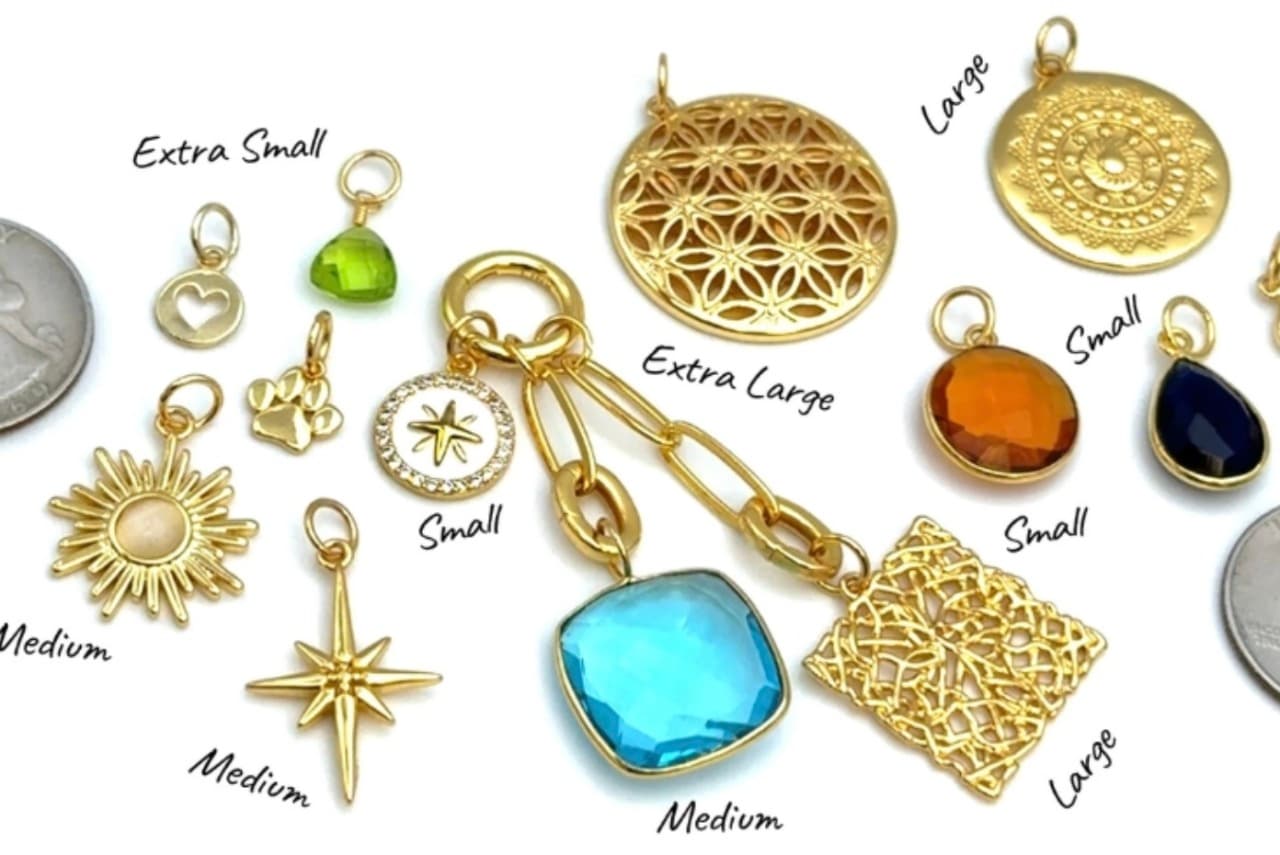
LINK’s own framing is refreshingly direct: start with a chain, then add meaningful charms. The brand says it offers 140-plus pendant styles in stock, which matters because breadth is what makes customization feel real rather than token. A small pendant selection can leave a modular system feeling limited, but a catalog that large gives the wearer room to build around a birthstone, a letter, a symbolic shape, or a mood-driven mix of finishes and silhouettes.
The interchangeable hardware is just as important as the pendants themselves. LINK offers pendant extender sets, toggle clasps, paperclip pendant extenders, and infinity clasps, details that let the necklace lengthen, shift, or change its visual rhythm. A paperclip extender can create a looser, more modern drop. A toggle clasp can become part of the design rather than merely a closure. An infinity clasp can keep the look clean and continuous. Those are small parts, but in modular jewelry, the connectors are what make the system feel intentional.

- A single pendant on a short chain for a crisp, everyday profile.
- A longer extender plus layered charms for a more dressed-up neckline.
- A toggle clasp used as a focal point when the wearer wants the hardware to show.
- A bracelet or hoop component carrying the same motif for a coordinated set without matching everything exactly.
That kind of construction opens up multiple looks from one purchase:
What this says about value
The strongest case for modular jewelry is not novelty. It is longevity through use. A fixed necklace can be beautiful, but a necklace that can be rebuilt around changing wardrobes and milestones has a better chance of staying in rotation. That makes LINK’s approach feel especially tuned to the way many shoppers actually buy now: one good base piece, then small additions over time.
In that sense, LINK sits at the intersection of affordable luxury, personalization, and a very old jewelry idea made newly practical. The brand’s growth, its broad catalog of interchangeable parts, and the long history of transformable jewelry all point to the same conclusion: the most desirable necklace may be the one that refuses to stay finished.
This article was produced by Prism’s automated news system from verified source data, official records, and press releases, then run through automated quality and moderation checks before publishing. The system is built and supervised by the people who set the standards it runs under. Read our full AI policy.
Did this article answer your question?