Mejuri grows into omnichannel brand centered on self-purchase jewelry
Mejuri turned self-purchase into a jewelry category, then used stores, services, and traceable materials to make everyday luxury feel personal.
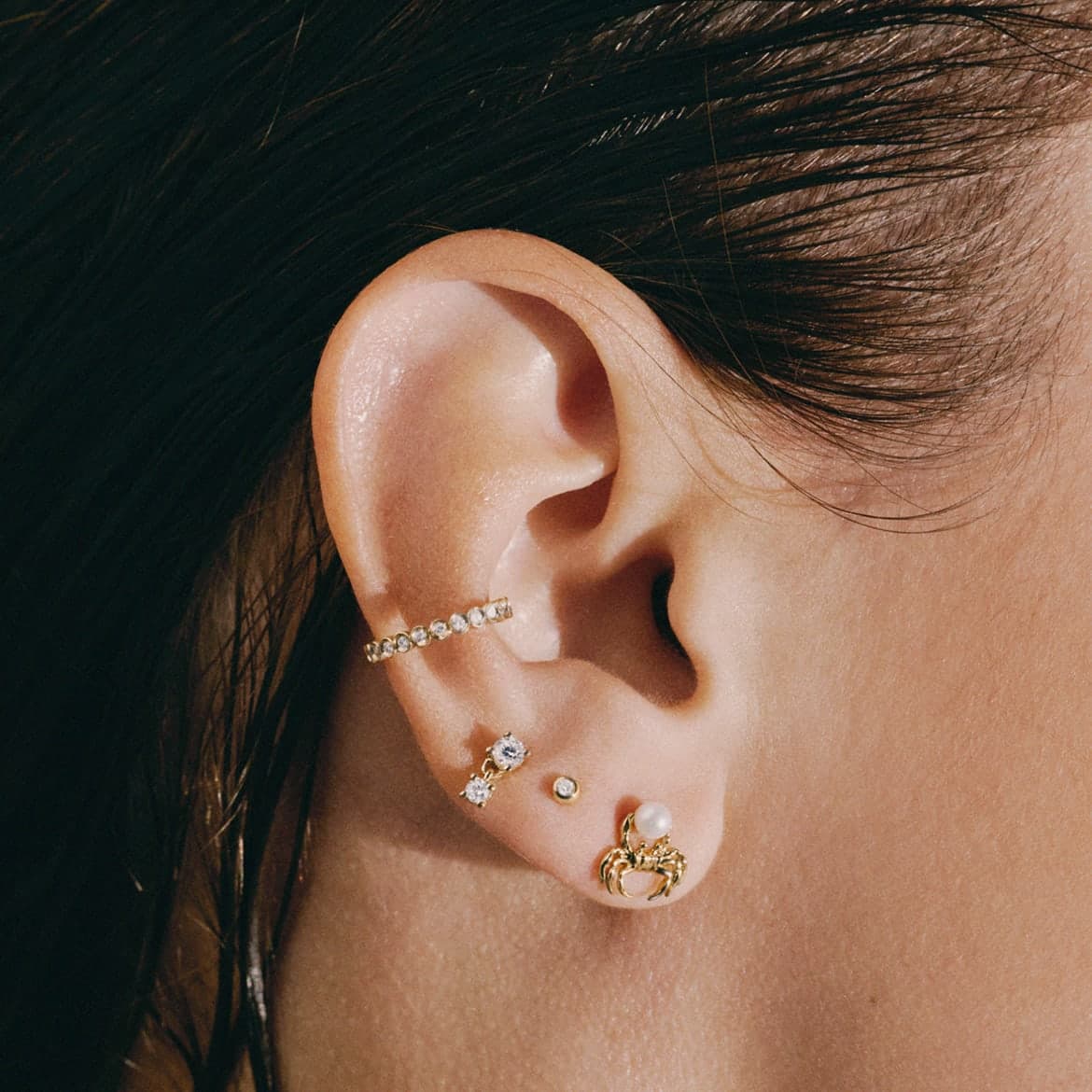
Mejuri helped turn fine jewelry into a purchase made for the mirror, not the gift box. Founded in January 2015 by third-generation jeweler Noura Sakkijha and her husband, Majed Masad, who is now the company’s COO, the brand built its identity around a reversal that still feels sharp in a category long shaped by gifting. More than half of Mejuri purchases are still made for the wearer themselves, and its mission statement says it plainly: “fine jewelry for every day, for our damn selves.”
Self-purchase changed the brief
That idea has always been more than a slogan. Mejuri describes itself as an online jewelry shop focused on handcrafted, everyday fine jewelry, which tells you exactly where the emphasis sits: not on ceremonial extravagance, but on pieces that can be worn into the week, not just saved for it. In practice, that means the brand’s promise is less about occasion and more about repetition, the quiet luxury of a ring that becomes part of a hand, or hoops that stay on through school runs, meetings, and dinner.
The larger shift matters because self-purchase changes how jewelry is marketed, priced, and styled. When a customer buys for herself, the emotional pitch is not permission from someone else, but recognition of one’s own milestones, taste, and routine. Mejuri built on that logic early, and the persistence of self-directed buying shows that the category has room for jewelry that feels chosen rather than bestowed.
Stores turned a digital brand into a tactile one
Mejuri’s move into physical retail is what made that self-purchase story durable. By 2025, the company said it had 61 stores globally and more than three million customers, a scale that puts it far beyond the narrow logic of a pure direct-to-consumer startup. Its footprint now stretches across North America, the United Kingdom, Australia, and Germany, a geography that matters because fine jewelry is still a product many people want to see under real light before they commit.
The retail strategy had already been widening by late 2023, when Mejuri said it planned to open about 20 more stores in 2024 and aimed to reach 50 brick-and-mortar locations by the end of that year. Retail coverage at the time counted 29 stores, including five that had opened that year, with additional locations slated for San Francisco, Los Angeles, Nashville, Miami, and London. The trajectory tells you what the brand understood early: jewelry may be discovered online, but trust is often sealed in person.
That is where the in-store details matter. Mejuri’s stores include Piercing Studios at select locations, along with complimentary jewelry cleaning, services that reinforce the notion that these are pieces meant to live on the body. A piercing appointment or a cleaning cloth at the counter sounds small, but in jewelry, service is part of the sale. It signals maintenance, fit, and relationship, not just checkout.

Materials now carry the same message as the marketing
Mejuri’s self-purchase positioning would be hollow if the materials did not support it. In 2024, the brand launched Salmon Gold, a collection made from regenerated gold, and said it aimed to become 100% traceable by 2030. That traceability goal gives the collection its real weight: a jewelry buyer who is choosing for herself increasingly wants the story of the metal as much as the shine of the finish.
The company’s materials page says its 14k collection is made with 90% recycled gold and 10% newly mined gold. That blend is revealing. Fourteen-karat gold is a practical choice for everyday wear because it balances richness with durability, and Mejuri’s recycled-to-new ratio frames sustainability as an engineering problem as much as an ethical one. The message is not that luxury has to look austere; it is that a well-made piece can feel personal while still acknowledging where its metal came from.
For personalized jewelry brands, this is the crucial lesson. Customization cannot be treated as decoration on top of a weak product. If the buyer is being asked to make the piece her own, the brand has to give her something sturdy enough to become part of her life, whether that means traceable gold, a thoughtful finish, or a store experience that makes sizing, piercing, and cleaning feel effortless.
What personalized jewelry brands should learn from Mejuri
Mejuri’s rise suggests that personalization works best when it begins with identity and ends with service. The brand did not win by chasing novelty; it won by making everyday wear feel like a statement of self-possession, then backing that feeling with stores, cleaning, piercing, and a growing retail network that now spans four regions. For personalized jewelry, the next step is to make pieces even more self-expressive through details that feel intentional, not ornamental.
That is where customization has room to matter most. Initials, engravings, birthstones, chain lengths, stacking combinations, and piercing-based styling all become more compelling when they are framed as part of a personal uniform rather than a one-off gift. Mejuri’s example shows that the modern jewelry buyer is not waiting to be gifted into the category. She is already there, selecting, stacking, cleaning, piercing, and returning for the next piece that feels like it belongs to her life.
This article was produced by Prism’s automated news system from verified source data, official records, and press releases, then run through automated quality and moderation checks before publishing. The system is built and supervised by the people who set the standards it runs under. Read our full AI policy.
Did this article answer your question?