Pandora Charms See U.S. Demand Slowdown Amid Luxury Market Pressures
Pandora's silver charm sales decelerated across North America in early 2026, with U.S. consumers in New York and Los Angeles visiting stores less as rising rates redirected spending.
American consumers chose experiences over accessories in early 2026, and Pandora felt the difference. The Danish jeweler's customizable silver beads, the cornerstone of its affordable-personalization model, saw U.S. demand slow noticeably by March, with same-store sales in North America decelerating and repeat charm purchases declining as household budgets tightened.
The pull-back was pronounced in New York and Los Angeles, two cities that had long been reliable strongholds for the brand. Consumers in both markets visited jewelry stores less frequently, a behavioral pattern driven by higher interest rates and economic uncertainty that redirected discretionary spending toward concerts, restaurants, and travel rather than accessories.
Higher silver prices added a structural layer to the demand-side pressure. Since Pandora charms are constructed as customizable silver beads, rising commodity costs created input-cost headwinds that compounded the consumer caution already visible in traffic and sales data. North America accounts for over 25% of Pandora's total revenue, making the regional slowdown a material concern for the company's overall performance.
What makes this more than a single-brand story is the role charms play in the mid-market jewelry ecosystem. Pandora's model runs on repeat purchase behavior: customers buy a bracelet, then return for individual beads marking milestones, hobbies, and personal moments. That cadence sustains not just Pandora's own revenue but the order books of the retailers and suppliers who depend on the same cycle. When that cycle slows, the effects travel downstream across the category.
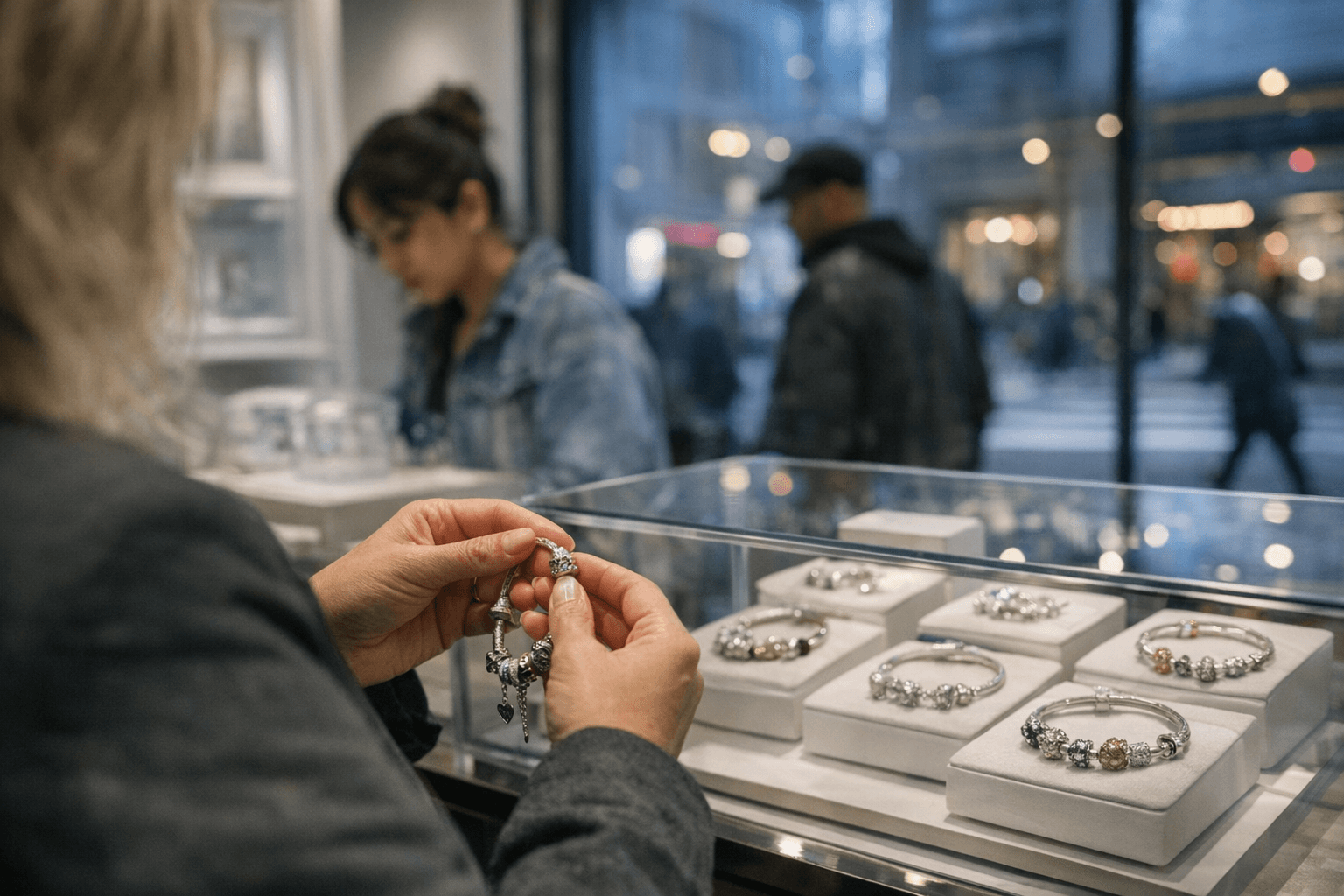
Pandora moved on multiple fronts to address the softness. The company advanced digital ecosystem improvements and introduced augmented-reality bracelet-building tools, allowing shoppers to visualize and customize charm combinations before committing to a purchase. It also adjusted its product line with Gen Z consumers as the explicit target, a deliberate pivot toward the demographic most likely to sustain the brand's personalization franchise over the coming decade.
For analysts tracking the mid-market jewelry segment, the charm slowdown carries significance beyond Pandora's quarterly figures. Charms have functioned as a working indicator for affordable-luxury health in the United States; when repeat purchases in this category decelerate, it tends to mirror broader softness across the segment. Whether Pandora's AR tools and Gen Z product strategy are enough to restore momentum will become clearer in the company's next North American same-store sales update.
This article was produced by Prism’s automated news system from verified source data, official records, and press releases, then run through automated quality and moderation checks before publishing. The system is built and supervised by the people who set the standards it runs under. Read our full AI policy.
Did this article answer your question?