Personalized bridal bands win with secret details and evolving collections
Wedding bands are becoming private storytelling objects, with hidden inscriptions, fingerprint engravings, and evolving stacks that carry each milestone forward.
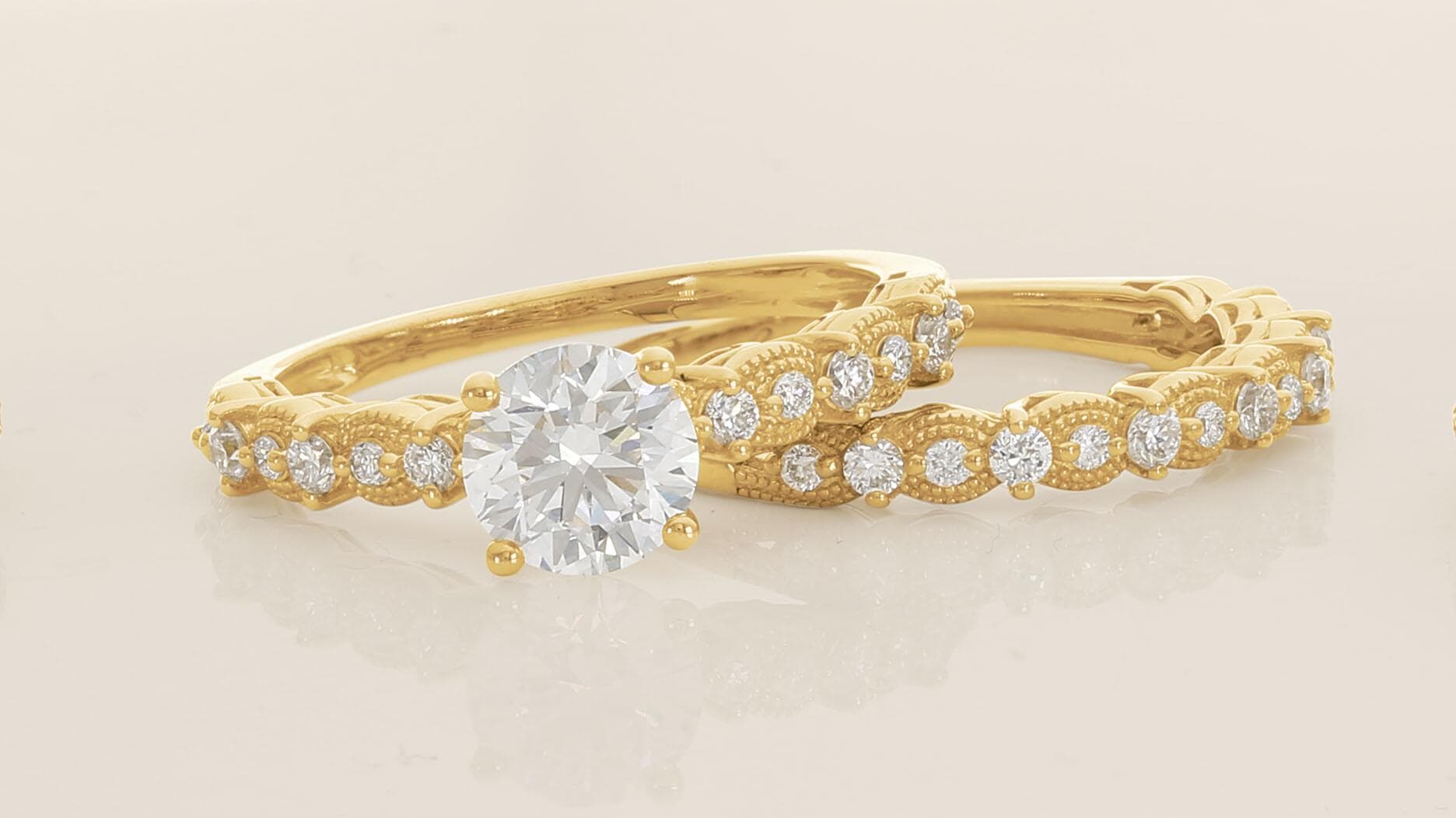
The new bridal band is less a symbol of one ceremony than a private archive. Couples are asking for secret inscriptions, hidden stones, fingerprint engravings, celestial motifs, and handcrafted textures that sit close to the skin and mean more the longer they are worn. The appeal is emotional as much as visual: a ring can now hold a memory no one else can see, while still looking polished enough for a lifetime on the hand.
The intimate details changing bridal jewelry
Lenore Fedow at National Jeweler captures the shift clearly: brides want wedding bands that feel deeply personal, down to the smallest design choice. A hidden gemstone tucked inside the shank, a line of engraving visible only when the ring is removed, or a fingerprint pattern pressed into metal turns the band into something private rather than merely decorative. Even celestial symbols and textured handmade finishes are doing the work of storytelling, giving the ring a sense of authorship that mass-produced bridal jewelry often lacks.
That intimacy matters because the wedding band is no longer being treated as the end of the story. National Jeweler says many brides now think of wedding jewelry as a living collection, adding anniversary bands and milestone pieces over time. In practice, that means the first ring is often only the opening chapter, with later additions marking births, anniversaries, or vows renewed years after the wedding day.
Personalization has become the bridal default
The broader wedding culture is moving in the same direction. Pinterest’s 2026 Wedding Trend Report describes couples rewriting traditions so celebrations feel unmistakably personal, and that instinct is showing up in jewelry with unusual clarity. What once read as customization for the ultra-attentive buyer is becoming the expectation, especially for rings that are meant to be worn every day and absorbed into the rhythm of daily life.
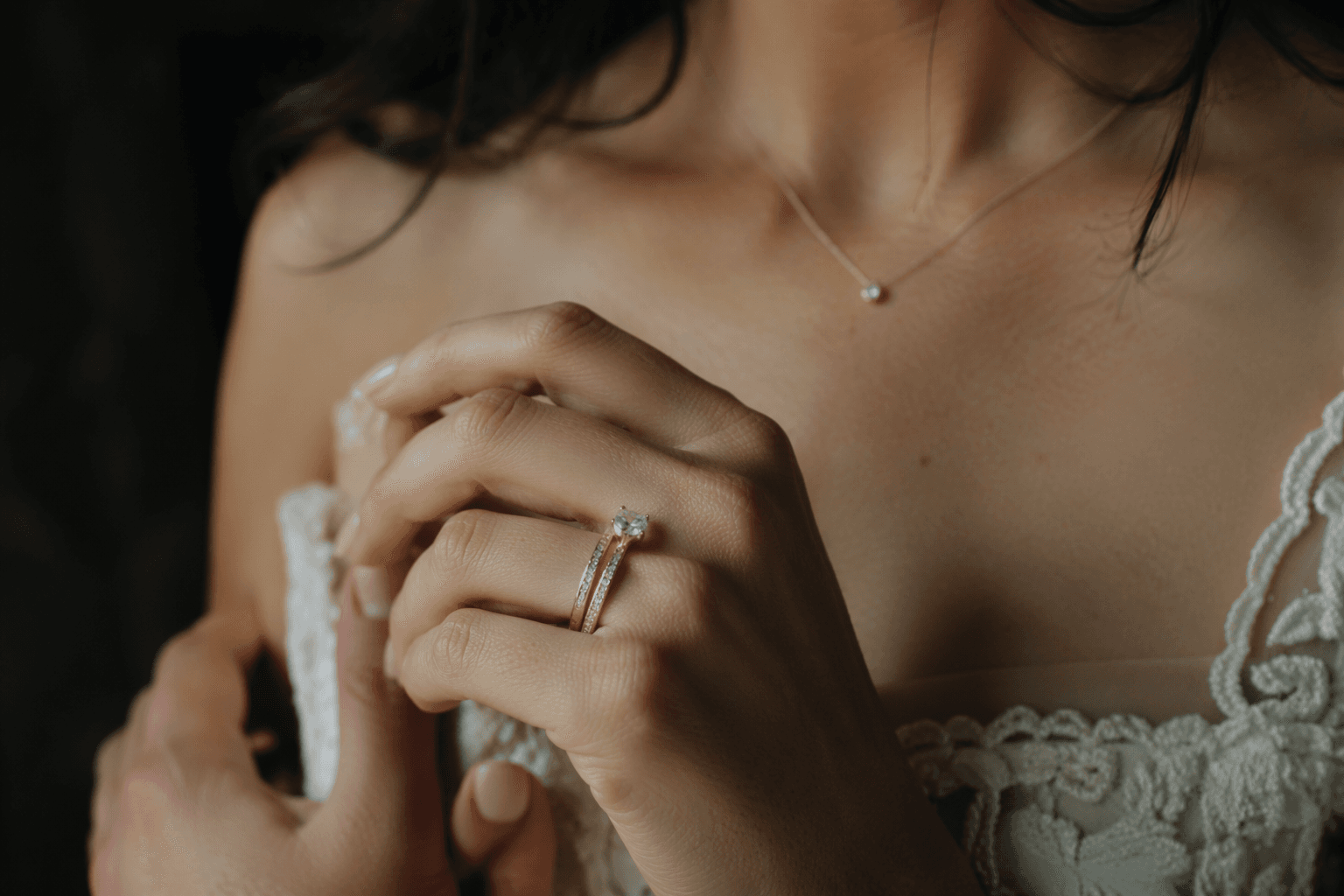
JCK’s June coverage shows how far that language has expanded. Personalization is now expressed through east-west settings, toi et moi designs, asymmetry, chunky bands, vintage and antique-cut diamonds, and colored center stones such as sapphires. Those choices are not just stylistic flourishes. They change the silhouette of the ring itself, making the piece feel less standardized and more like an object designed around the wearer’s hand, taste, and story.
Michelle Graff’s JCK coverage also notes that this year’s conversations are shaped as much by market realities as by design innovation. That is an important clue: personalization is not only an aesthetic mood, it is a commercial answer to shoppers who want distinction without abandoning the emotional logic of bridal jewelry.
Why brands are building collections around individuality
De Beers Group has clearly read the room. On April 9, 2026, the company launched Desert Diamonds Bridal, framing it around warmer, nature-made hues and personal expression. The timing and language matter because the campaign pushes beyond the classic white-diamond bridal script and toward a more expressive palette that still sits within a recognizable luxury framework.
De Beers later extended the idea with Desert Diamonds Icons, bringing individuality to classic categories including the eternity band. The company says four iconic jewelry design classics together account for 70% of diamond jewelry acquisitions, which explains why the strategy is so pointed. Instead of chasing novelty at the margins, De Beers is trying to reframe the most familiar bridal forms with a looser, more personal visual code. That is a telling bet: the market’s biggest categories are being asked to carry more self-expression than ever before.
The rise of the ring as a living collection
Foundrae’s commitment-jewelry collection reflects the same shift from single purchase to ongoing narrative. Its lineup includes engagement rings, wedding bands, anniversary bands, commitment medallions, and vow-renewal gifts, a structure that treats commitment as a sequence rather than a single event. That approach fits modern bridal buying especially well, because it gives couples a way to build meaning gradually instead of trying to encode every sentiment into one ring.
The Knot has long noted that stacked wedding rings remain a popular way to customize and layer bands over time. Stacking allows a bride to start with a pared-back wedding band, then add texture, color, or diamond weight as life changes. It also keeps the original ring in play, which is why so many couples now think in terms of a band that can be revised, not replaced.
What to look for when a ring is supposed to tell a story
Personalization works best when the details are deliberate, not decorative noise. The strongest bands tend to use one or two meaningful elements well, whether that is a hidden inscription, a fingerprint engraving, or a concealed stone set where only the wearer can find it. Handmade finishes can add warmth and tactility, while east-west settings, toi et moi pairings, and antique-cut stones create a more distinctive profile without sacrificing wearability.
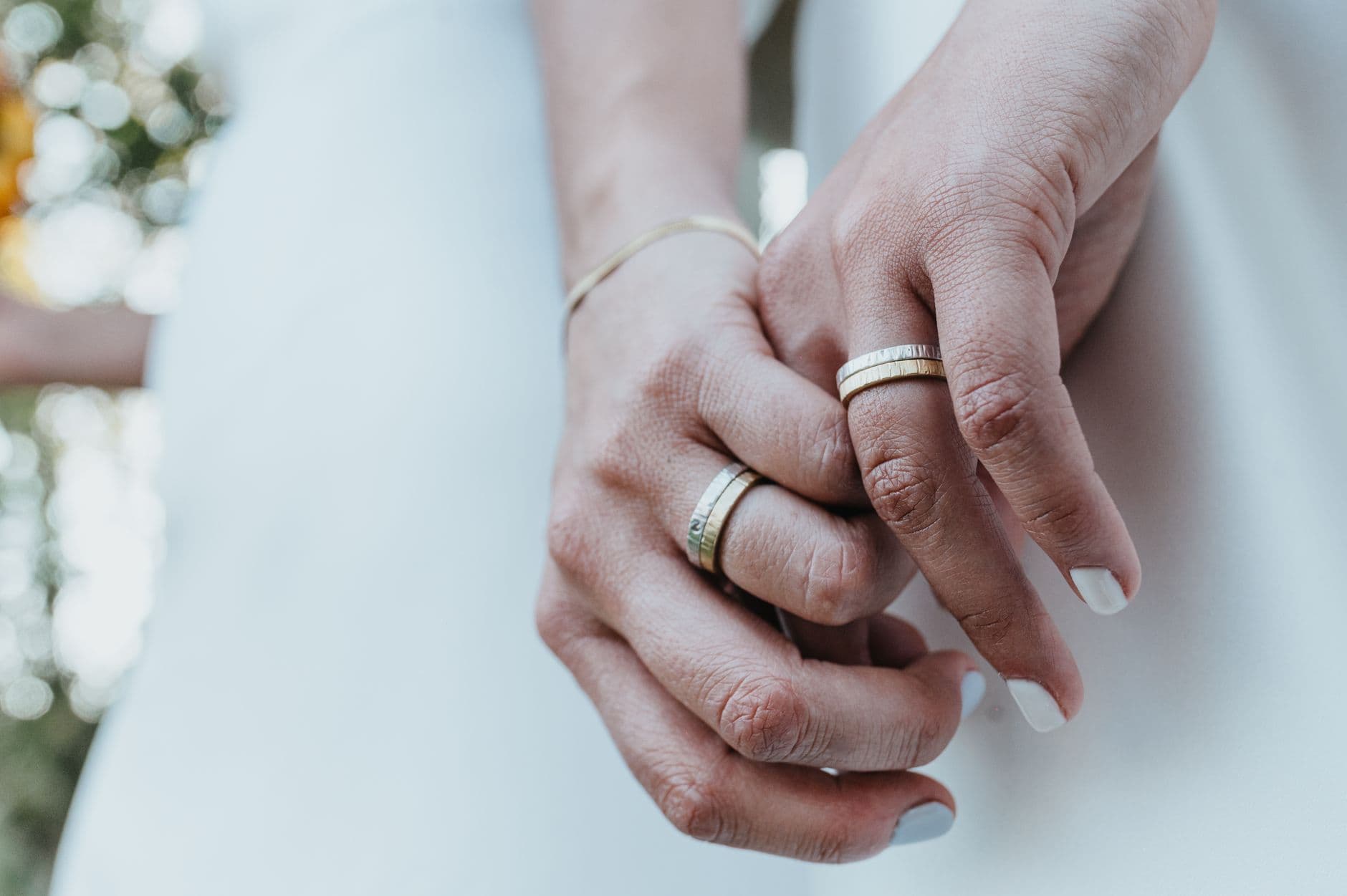
A good customized bridal band should still feel balanced on the hand. Chunky bands and asymmetrical designs can look striking, but the real test is comfort over years of wear, not a single fitting. The same is true of colored center stones and mixed-metal stacks: they should feel intentional, because the best personalization reads as personal history, not trend-chasing.
Why engraving still matters
Engraving may be one of the oldest tricks in bridal jewelry, but it has never stopped feeling intimate. The Knot has described ring engraving as a way to add “secret meaning” known only to the couple, and that idea feels newly central in a market built on visibility. In a world of highly shareable weddings, the most meaningful detail may be the one that stays hidden under the palm.
That is the real change underway: bridal jewelry is moving away from the generic and toward the confessional. Whether the detail is a sapphire tucked inside the shank, a fingerprint traced into gold, or a stack that grows over years, the ring is becoming a record of a relationship in motion.
This article was produced by Prism’s automated news system from verified source data, official records, and press releases, then run through automated quality and moderation checks before publishing. The system is built and supervised by the people who set the standards it runs under. Read our full AI policy.
Know something we missed? Have a correction or additional information?
Submit a Tip