Personalized engagement rings gain ground as shoppers customize every detail
The biggest shift in ring shopping is control: couples are choosing stones, settings, and metal with far more intention, and the best sites make that easy.

The new engagement-ring brief is control, not compromise
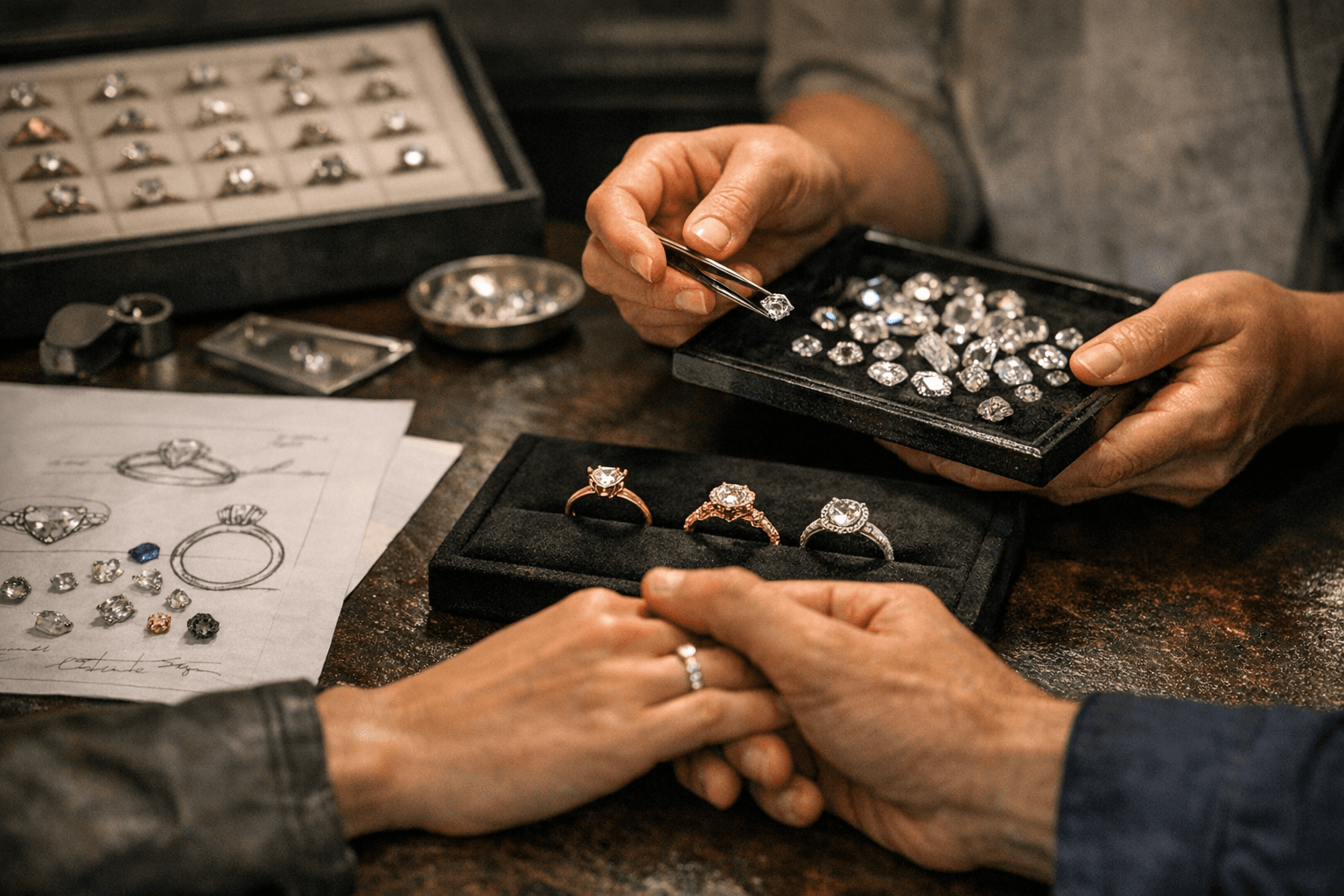
The signal is hard to miss: shoppers want engagement rings that feel personal from the first click. Online retailers are responding with tools that let buyers choose the setting, stone silhouette, diamond parameters, ring size, metal type, and even ready-to-ship options, so the finished piece can feel custom without drifting into full bespoke pricing.
That shift matches how proposals are actually planned now. The Knot’s 2024 Jewelry and Engagement Study found that 57% of couples discussed engagement more than a year before the proposal, and 83% of proposers prepared in advance. In other words, the ring is less of a last-minute surprise than a collaborative design project, and that has changed what matters most when shopping online.
What shoppers are really using on customization sites
The best online engagement-ring experiences are not about endless options for their own sake. They are about narrowing choices cleanly: a round, oval, emerald, or cushion stone; a platinum or yellow-gold setting; a narrow pavé band or a plain solitaire; a natural or lab-grown center stone; a made-to-order timeline or a ready-to-ship delivery window.
That is where the strongest retailers separate themselves. Blue Nile, for example, was founded in 1999 as the original online jeweler, and its appeal has always been scale paired with convenience. Forbes Vetted named it the best overall place to buy engagement rings online in January 2026, pointing to thousands of pre-made and customizable options, overnight shipping, 30-day returns, a lifetime warranty, price-match guarantees, and virtual advisors that help translate taste into a finished ring.
The practical checklist that matters most
Before falling for a photo, shoppers should look at the details that control both price and satisfaction:
- Setting flexibility, especially whether the site lets you move from solitaire to halo, pavé, bezel, or three-stone designs without starting over
- Stone filters, including shape, carat range, cut, color, clarity, and natural versus lab-grown
- Metal options, such as platinum, 18k yellow gold, white gold, or rose gold
- Visualization tools, which help show proportion, band width, and how the center stone reads on the hand
- Turnaround times, especially for made-to-order pieces versus ready-to-ship inventory
- Resizing policies, because a ring that cannot be adjusted easily can become a problem after the proposal
- Warranty and service terms, since a true custom-feel purchase should still come with long-term support
Those are the levers that make a ring feel made for one person instead of pulled from a catalog. The strongest platforms reduce the anxiety of online shopping by showing exactly how the final piece will wear, fit, and arrive.
Why lab-grown stones changed the market math
Lab-grown diamonds are no longer a side note in engagement-ring shopping. JCK reported in February 2026 that lab-grown center stones accounted for 61% of engagement-ring purchases, a 239% increase since 2020. That helps explain why retailers now put natural and lab-grown filters front and center instead of burying them deep in the product page.
The rise of lab-grown stones also pushed personalization into the mainstream. When buyers can choose a larger center stone at a lower price point, they often redirect budget into setting detail, a more substantial band, or a higher-grade metal finish. The result is not simply a cheaper ring. It is a ring where more of the spend goes toward visible design choices.
Provenance still matters, especially for natural diamonds
The lab-grown surge has not made provenance irrelevant. It has made it more visible. De Beers leaned into that tension on June 6, 2025 at JCK Las Vegas, unveiling Ombré Desert Diamonds and ORIGIN, its branded polished-diamond program. De Beers says ORIGIN uses the Tracr blockchain platform to provide provenance information, a direct response to shoppers who want a clearer story behind a natural stone.
That matters because sustainability claims in jewelry can blur quickly if they are not tied to real practices. Brilliant Earth, founded in 2005, built its identity around sustainability and ethical sourcing, which puts it in a different lane from Blue Nile’s volume and convenience play. James Allen, founded in 2006, helped normalize online diamond buying at a time when many shoppers still wanted a jeweler behind a counter. Together, those brands show how the market now splits between scale, sourcing, and service.
Natural versus lab-grown is now a style choice too
For many buyers, the decision is no longer just about budget. It is about values, traceability, and the kind of story they want the ring to carry. A natural diamond may appeal to shoppers who care about geology, rarity, and documented origin. A lab-grown stone may appeal to those who want a larger look, a lower price, and a cleaner sustainability narrative, though those claims should still be examined carefully rather than accepted at face value.
That is why the strongest guides do not push one category as universally better. They help shoppers compare what each material actually delivers in size, price, provenance, and visual effect. In a market where customization is now expected, the stone itself is only one part of the design brief.
What the numbers say about how people buy now
The Knot’s broader 2026 readout drew on nearly 17,000 U.S. couples who married in 2024, underscoring just how deeply proposal planning and ring buying have become part of the modern wedding economy. The same data set shows that the average engagement-ring cost was $5,200 in 2024, down from $6,000 in 2021, while average carat weight rose to 1.7 carats from 1.5 carats over the same period.
That combination is telling. Buyers are spending a little less on average, but they are getting more stone for the money, which suggests that value has shifted from sheer budget to perceived size, design flexibility, and ease of online customization. The average shopper is not looking for a trophy object. They are looking for a ring that feels considered, visually substantial, and easy to make their own.
How to shop for a ring that feels custom without going bespoke
The best online engagement-ring shopping experience starts with a clear budget and ends with a ring that looks deliberate. Blue Nile stands out for breadth and service, while Brilliant Earth carries more weight for shoppers prioritizing sustainability language and sourcing mission. James Allen remains part of the conversation because it helped set the template for online diamond selection, and WWD’s shopping guide reflects the broader field by highlighting retailers that combine trending styles with fast delivery.
The smartest approach is to use the site’s tools the way a jeweler would: choose the stone shape first, then the setting, then the metal, then the delivery timeline. If the retailer also offers resizing, strong return terms, and transparency around natural versus lab-grown stones, the ring can feel personal without the cost and delay of full custom work. That is the real story behind the customization boom: shoppers are no longer asking whether they can personalize an engagement ring, but how much control they should insist on before they click buy.
This article was produced by Prism’s automated news system from verified source data, official records, and press releases, then run through automated quality and moderation checks before publishing. The system is built and supervised by the people who set the standards it runs under. Read our full AI policy.
Did this article answer your question?