Personalized Jewelry Buying and Care Guide: What You Need to Know
Personalized jewelry transforms metal and stone into memory — here's how to choose, commission, and care for pieces that carry meaning beyond their materials.
There is a particular weight to a piece of jewelry that carries your name, your child's birthstone, or a date that changed everything. It sits differently on the wrist. It catches the eye differently in a mirror. Personalized jewelry occupies a category all its own in the fine jewelry world, one where the value of a piece cannot be calculated simply by the carat weight of a stone or the spot price of gold. Understanding how to navigate this category — what to look for, what questions to ask, and how to protect your investment — makes the difference between a piece that becomes an heirloom and one that disappoints within a season.
Why personalization changes everything
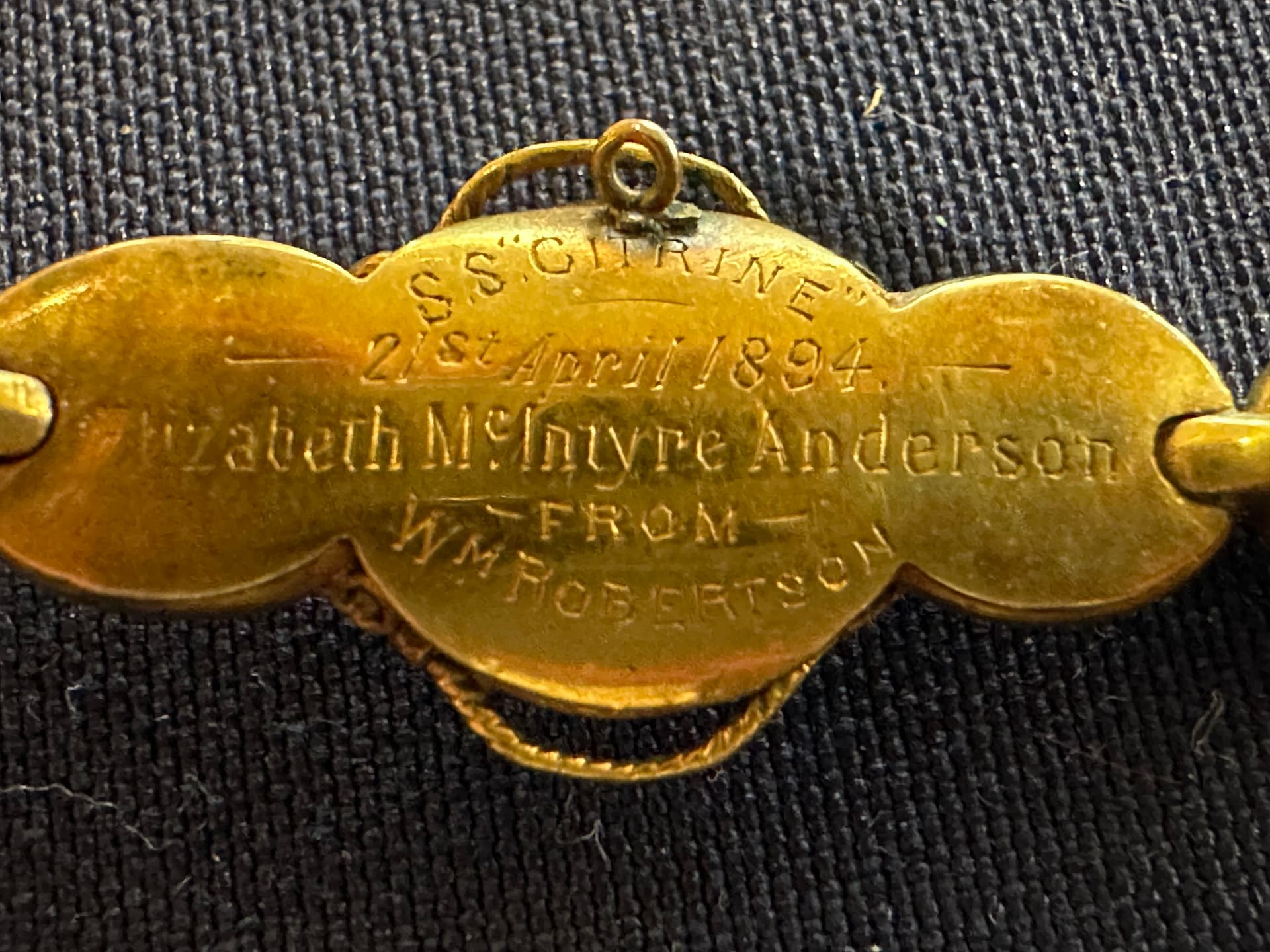
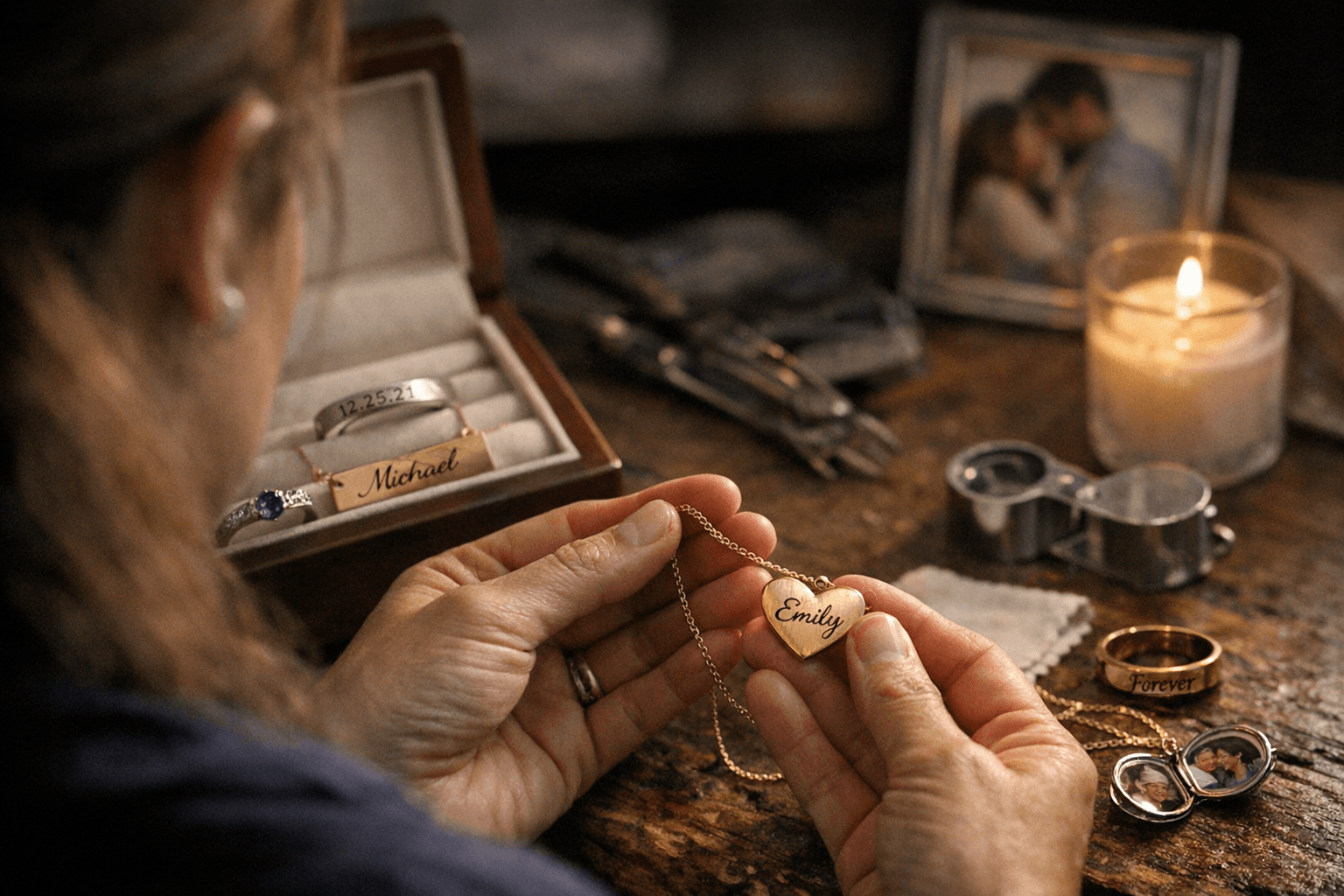
The jewelry industry has long understood that emotional resonance drives purchases in ways that pure aesthetics cannot. A solitaire diamond ring is beautiful; a ring engraved with the coordinates of where you met someone is irreplaceable. This is the fundamental proposition of personalized jewelry: it transforms a purchase into a memory made tangible. The result is a category that encompasses everything from monogrammed gold signet rings to custom-cut gemstones set to a client's exact specification, from laser-engraved name necklaces to bespoke pieces designed collaboratively with an artisan over months.
That emotional dimension also changes how you should approach the buying process. Because the piece is tied to a specific meaning, the details of its construction matter more, not less. A name plate necklace in gold vermeil will not carry the same longevity as one in solid 14-karat gold, and when the piece in question commemorates a birth, a marriage, or a loss, that longevity matters enormously.
Understanding your materials
Before commissioning or purchasing any personalized piece, you need to understand the material hierarchy in fine jewelry. Solid gold, whether 10-karat, 14-karat, or 18-karat, is the benchmark for durability in personalized work. The karat designation tells you the ratio of pure gold to alloy metals: 18-karat gold is 75 percent pure gold, making it richer in color but slightly softer; 14-karat gold, at 58.3 percent purity, offers an excellent balance of durability and warmth, which is why it remains the most popular choice for everyday personalized pieces in the American market. Ten-karat gold is the most durable and the most affordable, though its lower gold content gives it a slightly paler tone.
Gold vermeil, gold-filled, and gold-plated are not interchangeable with solid gold, despite their similar appearances. Gold vermeil is sterling silver coated with at least 2.5 microns of gold; it will wear through over time, particularly on high-contact areas like the inside of a ring band or the back of a pendant. Gold-plated pieces have an even thinner coating and are best understood as fashion jewelry, not fine jewelry. If a personalized piece is meant to last decades, solid gold or sterling silver are the only appropriate choices.
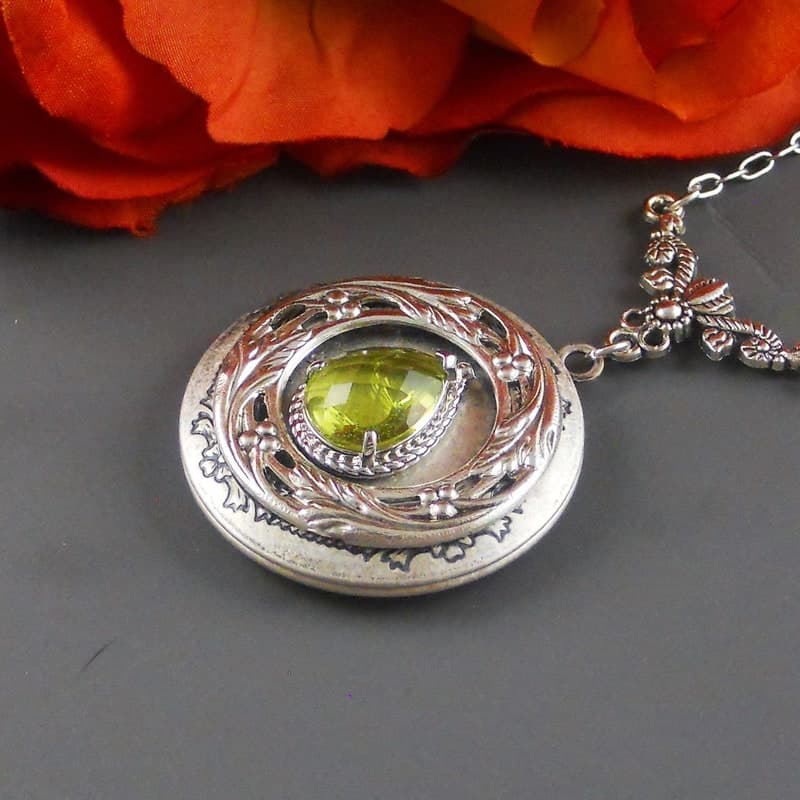
For personalized pieces set with stones, the birthstone tradition offers a rich vocabulary of options: January's garnet, June's pearl, September's sapphire. When selecting stones for a personalized piece, hardness matters as much as beauty. On the Mohs scale, sapphires and rubies register at 9, making them excellent choices for rings and bracelets that take daily wear. Pearls, at 2.5 to 4.5, require far more care and are better suited to occasional-wear pieces like pendants and earrings.
Setting styles and their significance
The setting you choose for a personalized piece is not merely an aesthetic decision; it is a structural one. A bezel setting, in which a rim of metal encircles the stone completely, offers maximum protection and a sleek, modern profile. It is the superior choice for stones in personalized rings or bracelets, particularly if the wearer has an active lifestyle. A prong setting, which elevates the stone above the band and holds it with metal claws, allows maximum light to enter the stone and creates brilliant sparkle, but it catches on fabrics and requires periodic inspection to ensure prongs have not bent or loosened.
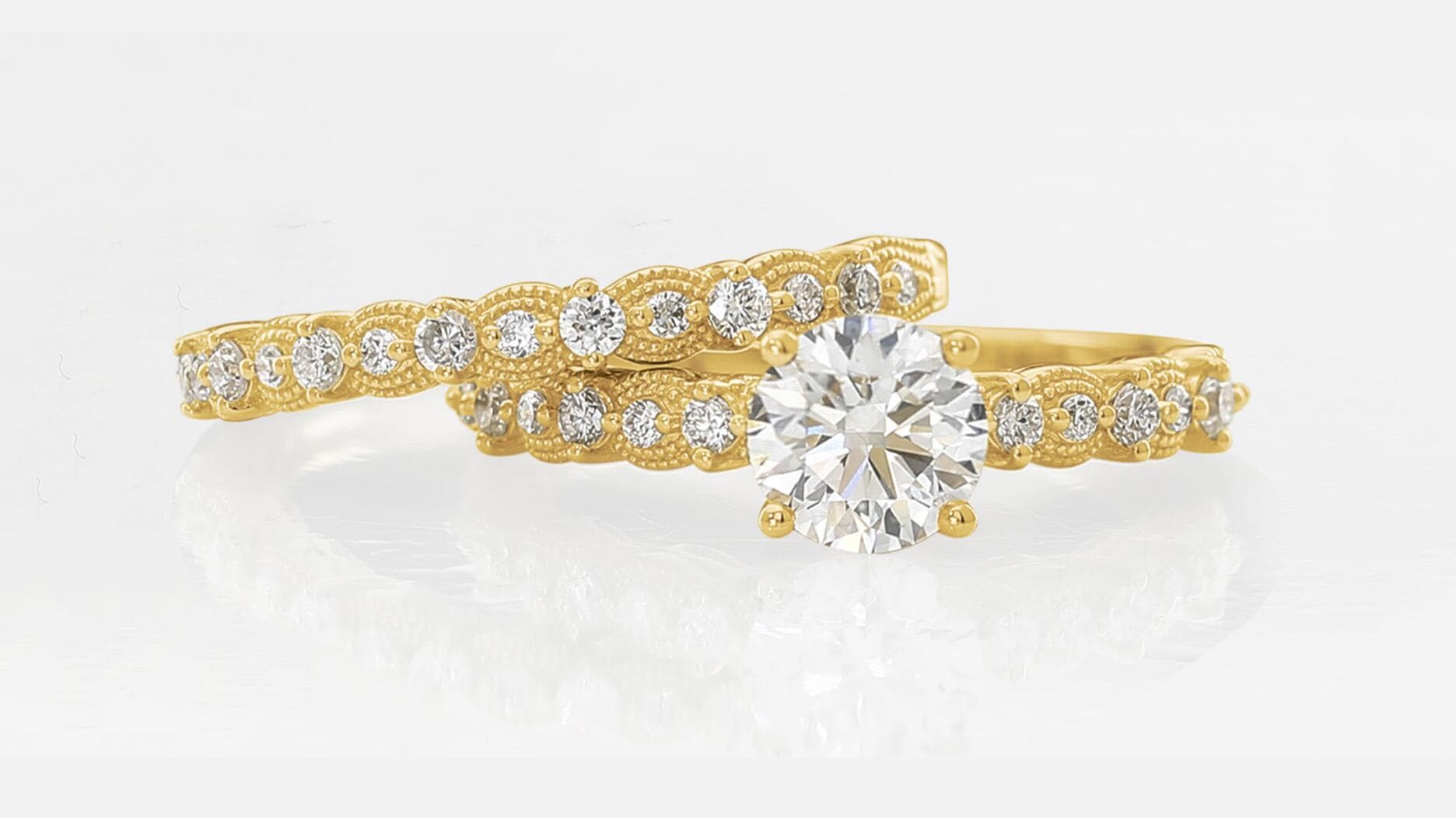
Pavé settings, in which small accent stones are set closely together across a surface, add considerable visual impact to personalized pieces like initial pendants or name rings, but they demand more maintenance. The small prongs holding each stone are vulnerable to knocks, and a piece that loses even one pavé diamond reads as damaged rather than worn. For personalized pieces you intend to wear daily, simpler settings are almost always the more practical choice.
The commissioning process
Commissioning a bespoke personalized piece is a sequential process, and understanding each stage protects you from misunderstandings and costly revisions.
1. Define the brief precisely. Bring reference images, specify the metal, and articulate the meaning behind the piece. A skilled jeweler uses this information to guide material and design decisions.
2. Request a written quote that itemizes materials, labor, and any stone costs separately. This transparency allows you to understand what you are paying for and to make informed substitutions if needed.
3. Review a CAD rendering or hand sketch before any metal is cast or stones are set. Digital design tools allow modern jewelers to produce photorealistic renderings that give you an accurate preview of the finished piece.
4. Confirm the timeline. Personalized fine jewelry typically requires four to eight weeks for custom work; rush fees are standard in the industry and can add 20 to 30 percent to the total cost.
5. Inspect the finished piece in person before final payment if at all possible. Check that engravings are crisp, stones are secure, and the finish matches what was specified.
Caring for personalized jewelry
The care requirements for a personalized piece depend entirely on its materials, but several principles apply universally.
- Remove personalized jewelry before swimming, bathing, or exercising. Chlorine is particularly damaging to gold alloys and can cause structural weakening over time; sweat accelerates tarnish on silver.
- Store pieces individually in soft pouches or lined compartments to prevent scratching. Chains should be laid flat or hung to prevent tangling, which can stress delicate links.
- Clean gold pieces at home with a solution of warm water and a few drops of mild dish soap, using a soft-bristled brush to reach engraved areas where oils and debris collect. Rinse thoroughly and pat dry with a lint-free cloth.
- Sterling silver requires more attentive care. Anti-tarnish strips stored alongside silver pieces slow oxidation significantly. For pieces with dark patina in engraved areas, clean carefully to preserve the intentional contrast that makes lettering legible.
- Personalized pieces with enamel detailing should never be subjected to ultrasonic cleaning, which can crack or lift the enamel. The same caution applies to pearls and any organic gemstone materials.
- Have fine personalized pieces professionally inspected once a year. A jeweler can retighten prongs, re-polish surfaces, and catch any structural issues before they become failures.
What makes a personalized piece worth the investment
The question worth asking before any significant purchase is not "Is this beautiful?" but "Will this last, and will it still mean something in twenty years?" For personalized jewelry, the answer depends on three intersecting factors: the quality of the materials, the skill of the maker, and the clarity of the intention behind the piece. A well-made personalized piece in solid gold or sterling silver, properly cared for, does not depreciate the way fashion jewelry does. It accumulates meaning. The engraving that marks a birth year becomes a relic. The initial pendant given at a graduation becomes a piece passed through a family.
The market for personalized jewelry has expanded considerably in recent years, with accessible price points at every level, from sterling silver name necklaces available for under one hundred dollars to fully bespoke commissions running into the thousands. The range is wide enough that there is no longer any reason to compromise on quality for the sake of budget. What matters is knowing where to spend and where to save, understanding that the metal is almost always the right place to invest, and that the meaning you build into a piece is the one element no price tag can capture.
This article was produced by Prism’s automated news system from verified source data, official records, and press releases, then run through automated quality and moderation checks before publishing. The system is built and supervised by the people who set the standards it runs under. Read our full AI policy.
Did this article answer your question?