Personalized Jewelry Meets Modern Technology in Today's Accessory Market
Ancient craft meets algorithmic precision as wearable technology reshapes what personalized jewelry can mean, and who gets to define it.
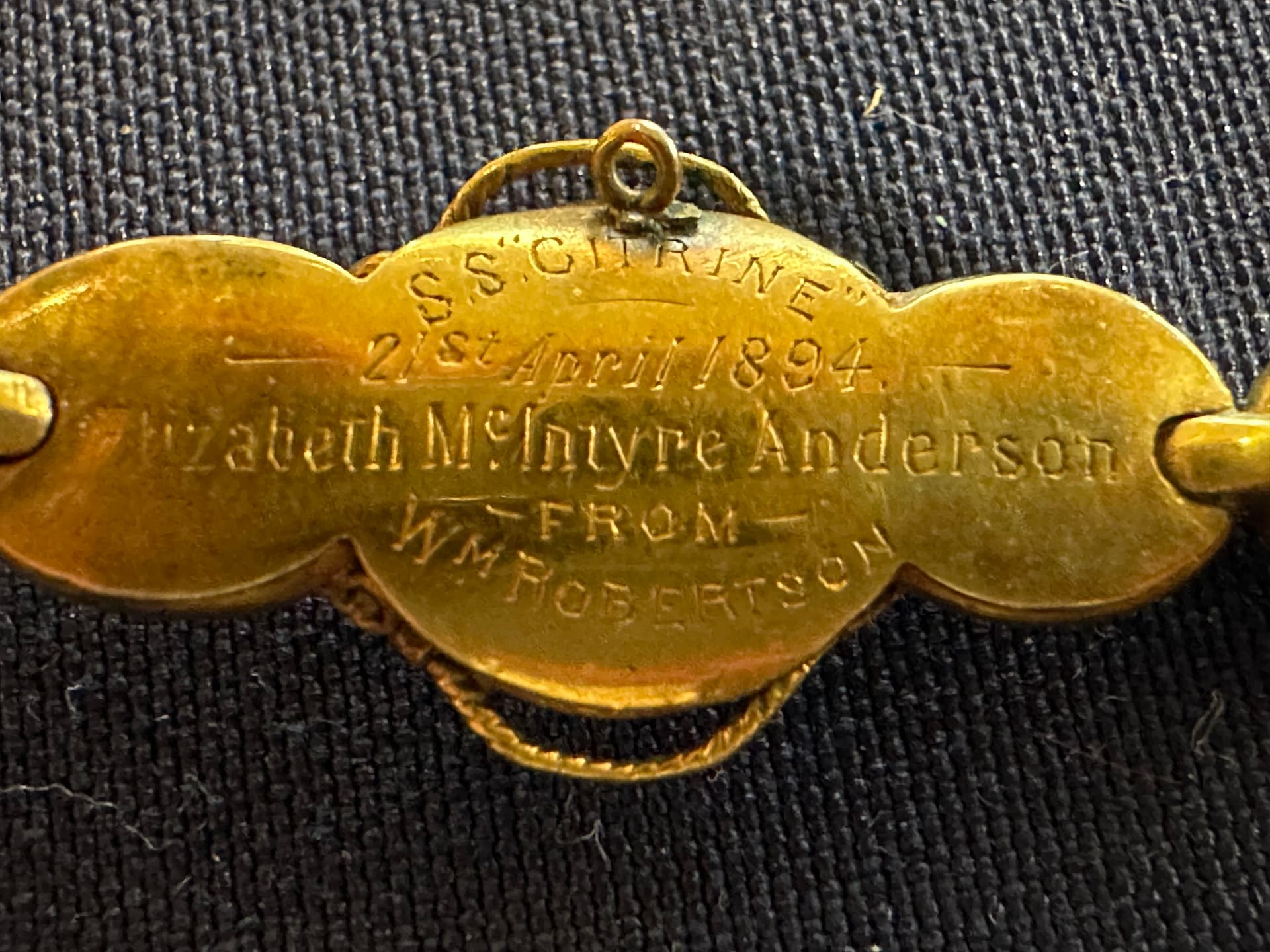
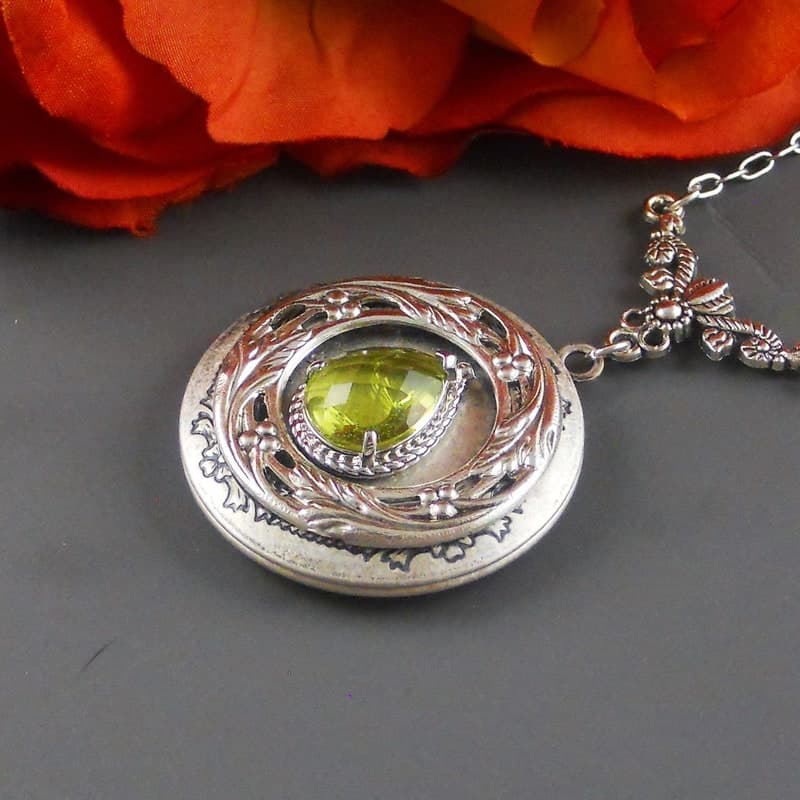
There is a particular intimacy to personalized jewelry that no other category of fine accessories can replicate. A signet ring engraved with a family crest, a locket fitted with a portrait miniature, a bracelet stamped with a child's birth date: these are objects that carry biography. The question facing the jewelry world today is whether emerging technology enhances that intimacy or quietly erodes it in the name of innovation.
That tension sits at the heart of a broader conversation about smart and personalized wearables, one that extends well beyond the jeweler's bench. The research and technology press has spent considerable energy debating whether more powerful processing hardware alone can make AI-integrated accessories genuinely meaningful to the people wearing them. The answer, increasingly, appears to be no.
When Silicon Meets Sentiment
Qualcomm's announcement of the Snapdragon Wear Elite chip was positioned as a significant step forward for AI-enabled wearables, promising the kind of computational power that could theoretically allow an accessory to understand context, respond to voice, and anticipate a wearer's needs in real time. It is an impressive engineering achievement on paper. But the technology press has been quick to place it in a more cautionary context. A Gizmodo analysis published in early March 2026 drew a direct line between Qualcomm's announcement and the earlier, highly publicized collapse of Humane's AI Pin, the wearable device that arrived with considerable fanfare and departed with a swift critical verdict.
The Humane AI Pin was supposed to represent a new paradigm: a screen-free, voice-operated device worn on clothing that could serve as a personal AI assistant without the psychological gravity well of a smartphone. Its failure was not primarily a failure of processing power. It was a failure of usability and social coherence. People did not know how to interact with it in public. The device did not fit comfortably into the rituals and contexts of daily life. It asked wearers to change their behavior for the technology, rather than the technology adapting to them.
The Gizmodo analysis posed the essential question with admirable directness: does more powerful silicon solve the usability and social aspects of AI wearables? The evidence from Humane's arc suggests it does not.
What Personalization Actually Requires
This is instructive for the fine jewelry world, where personalization has always been understood as something far more nuanced than customization. Engraving a name on a pendant is customization. Designing a piece around the specific story of a relationship, a place, a loss, or a beginning: that is personalization in the fullest sense, and it requires a different kind of intelligence, the human kind.
The most sophisticated jewelry ateliers have long understood that their clients are not simply purchasing a physical object. They are commissioning a translation: taking something ineffable about their inner life and finding it made permanent in gold, platinum, or stone. A skilled jeweler working on a bespoke commission will ask questions that a chip cannot yet formulate: What does this piece need to say in thirty years? Who will inherit it? What is the weight it needs to carry?
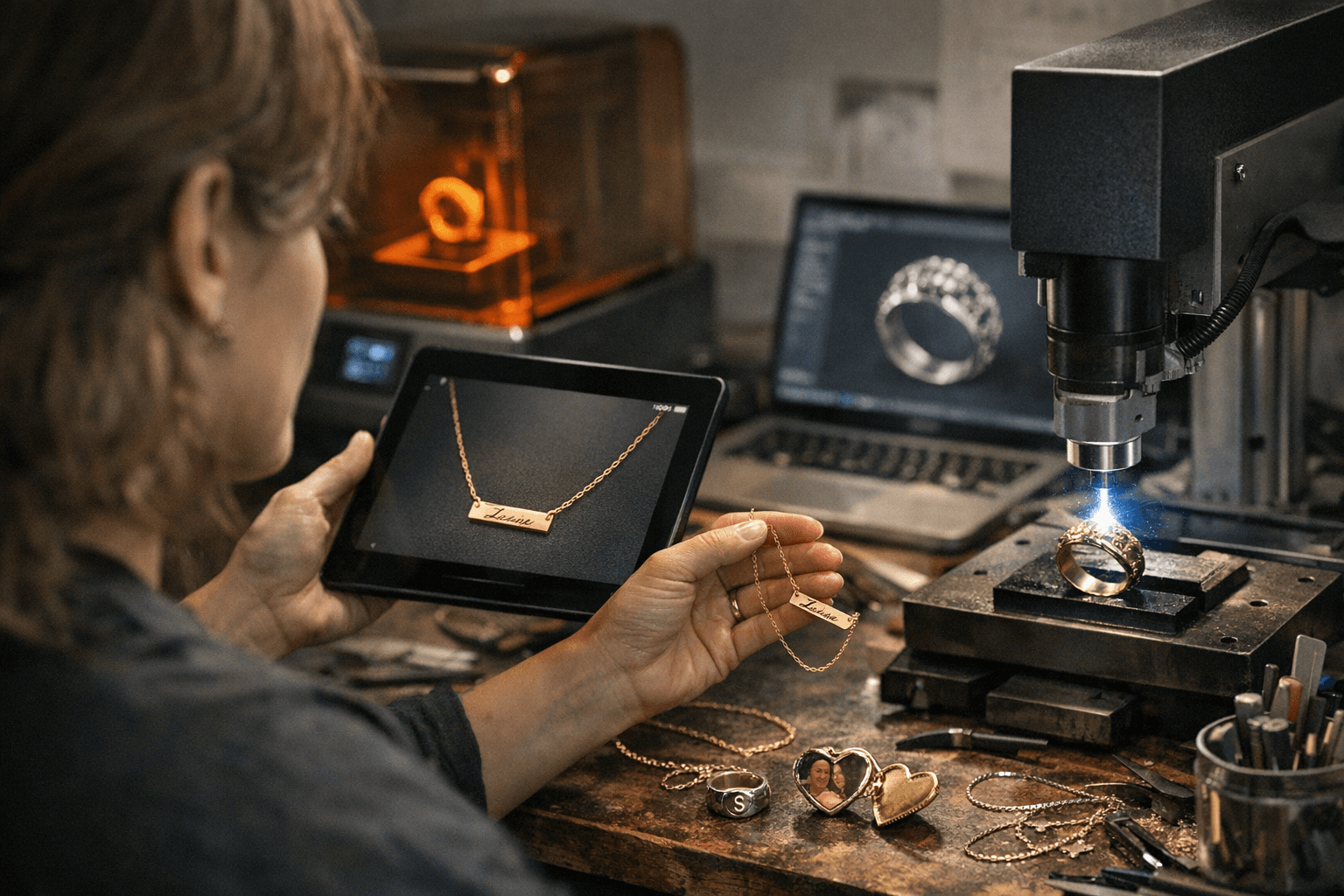
Technology can serve this process remarkably well when it stays in its lane. Computer-aided design software allows clients to see a three-dimensional rendering of a piece before a single gram of metal is poured. Laser engraving achieves a precision and consistency that hand tools cannot always match, particularly on curved surfaces or very small scales. Stone-sourcing databases now connect buyers to provenance records and gemological certificates in ways that were logistically impossible a decade ago.
The Wearable Technology Parallel
But the Qualcomm and Humane story offers a useful warning for any corner of the accessories market that conflates technological capability with meaningful experience. Wearable technology companies have repeatedly made the mistake of leading with specifications: processing speed, battery life, sensor arrays. They have consistently underestimated the degree to which an object worn on the body is subject to entirely different standards of judgment than a device carried in a pocket.
Jewelry has always understood this. A ring is not evaluated primarily on its functional merits. It is evaluated on how it feels against the skin, how it catches light in a particular room, whether it communicates the right things to the right people in the right moments. These are not problems that more powerful silicon solves. They are problems that require craft knowledge, cultural literacy, and genuine attentiveness to the individual wearing the piece.
The AI wearables industry is learning, slowly and somewhat painfully, what jewelers have known for centuries: that the objects we choose to put on our bodies are among the most personally and socially charged decisions we make. Getting that wrong is not a software bug. It is a fundamental misreading of what the object is for.
Where Technology Genuinely Adds Value
None of this is an argument against technology in personalized jewelry. The tools available to contemporary jewelers and their clients are genuinely extraordinary. Custom pieces that once required months of correspondence and multiple rounds of physical sampling can now be visualized, adjusted, and approved in a single digital session. Customers in cities far from major jewelry centers can access bespoke design services through platforms that combine skilled human designers with robust digital tools.
The distinction worth preserving is between technology that serves the maker and the wearer, and technology that positions itself as the primary experience. A Snapdragon chip embedded in a bracelet that monitors your biometrics is a different proposition from laser-cut personalization on a gold cuff. One is a device that happens to be worn. The other is jewelry that happens to use advanced manufacturing. The difference matters enormously to the person wearing it, even if the specifications sheet does not reflect it.
The Craft Standard Holds
What the personalized jewelry market has going for it, in this particular technological moment, is the resilience of its core value proposition. People want pieces that mean something. They want objects that hold memory, mark milestones, and carry the names and faces and coordinates of the people and places that have shaped them. No amount of AI processing power has yet improved on a well-set diamond, a cleanly engraved line, or the precise weight of a ring sized to a specific finger.
The lesson from Humane's AI Pin is not that technology cannot enhance accessories. It is that technology cannot substitute for the relational intelligence that makes an accessory worth wearing in the first place. The jewelry world would do well to adopt that lesson enthusiastically, and to let it guide every decision about where algorithmic tools end and human craft must begin.
This article was produced by Prism’s automated news system from verified source data, official records, and press releases, then run through automated quality and moderation checks before publishing. The system is built and supervised by the people who set the standards it runs under. Read our full AI policy.
Did this article answer your question?