Personalized Nameplates, Beaded Strands Lead Spring 2026 Jewelry Trends
Beaded strands and layered nameplates are leading spring 2026's most compelling jewelry moment, where personality has become the point.
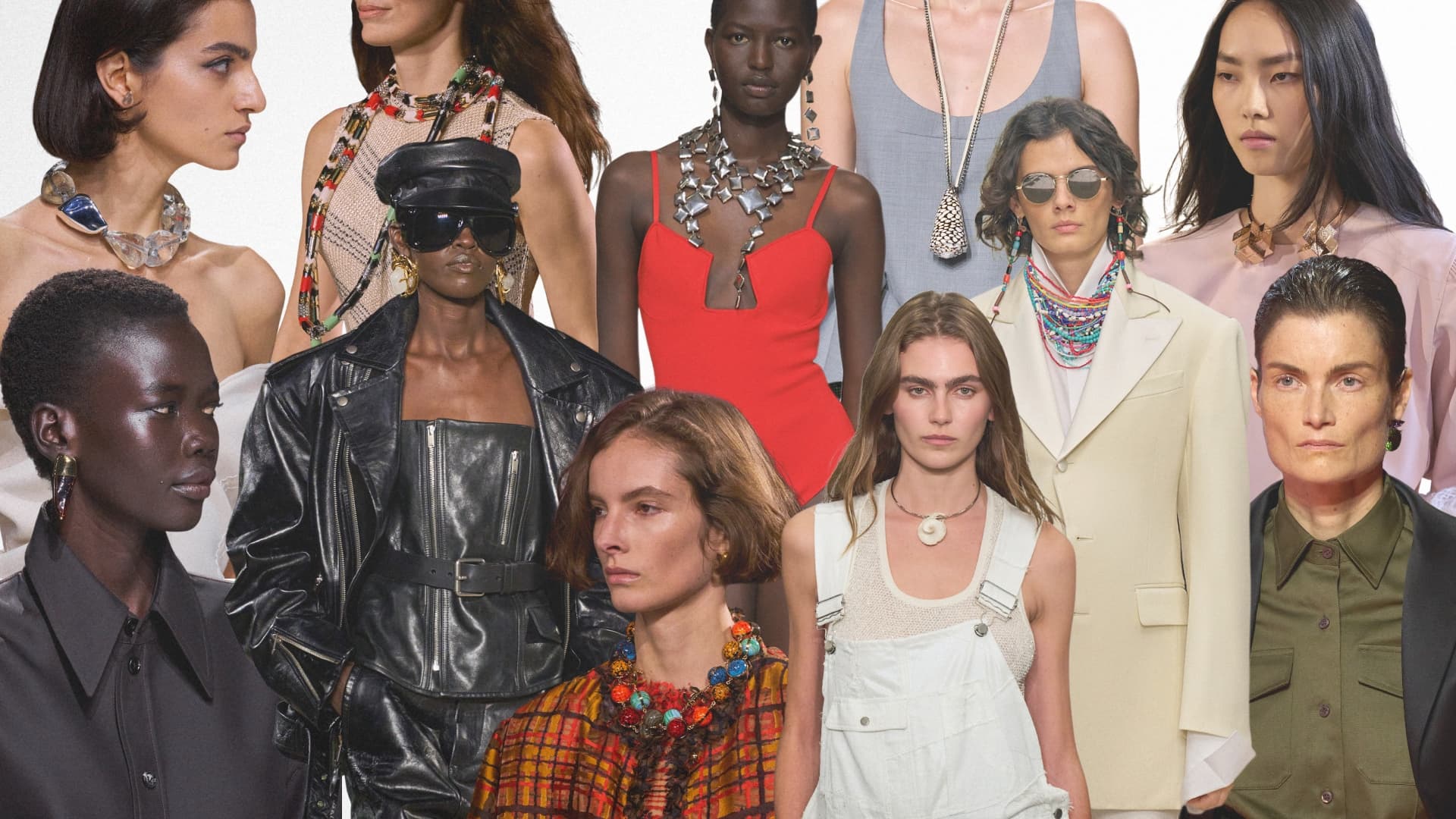
After sixty-plus hours spent studying spring runways and the commercial collections that follow in their wake, one conviction keeps surfacing: the most resonant jewelry trend of spring 2026 is not a silhouette or a stone cut. It is an intent. The pieces generating the most sustained attention this season are the ones that announce something specific about the person wearing them, not merely the label producing them.
Marie Claire's spring 2026 trend guide, published March 19, captures this shift with precision, identifying seven distinct trends drawn from runway presentations and commercial product rollouts. What unites them is less a shared aesthetic than a shared motivation: individuality rendered in metal, bead, and stone.
The Return of the Nameplate, Reimagined
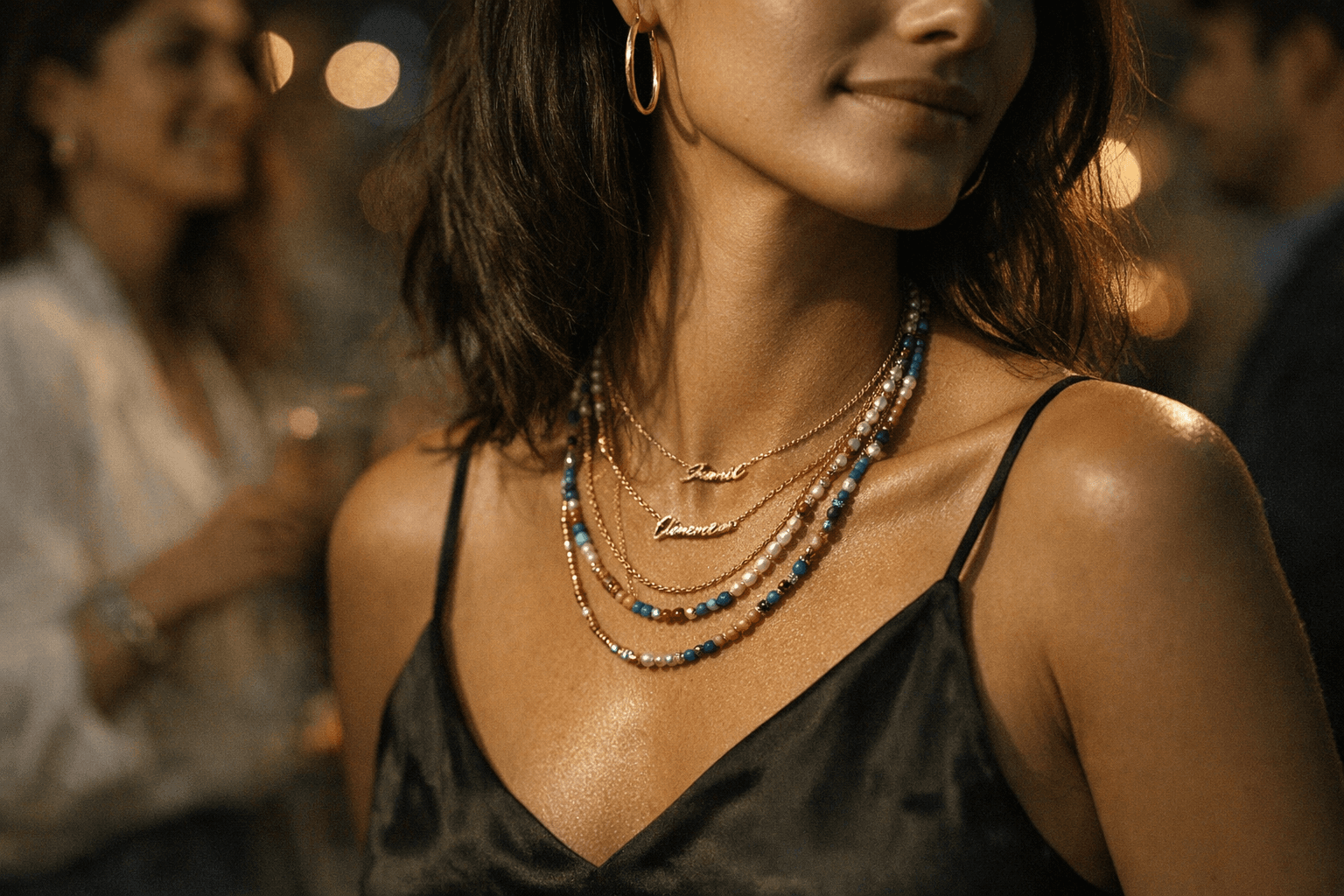
The nameplate necklace has traveled a long cultural road since the acrylic-and-gold iterations that defined earlier decades of personalized jewelry. What spring 2026 brings is a more considered version: layered, initial-forward, and treated not as novelty but as a foundational styling element. The shift in treatment matters. When a nameplate or initial pendant is layered with a fine chain, a delicate charm, or a strand of graduated beads, it stops reading as a personalization gimmick and starts reading as considered composition.
Layering is the operative word here. The strongest iterations of this trend pair a script-letter nameplate at mid-chest with a shorter initial pendant and a longer strand that pulls the eye downward, creating visual architecture rather than mere decoration. The craftsmanship question worth asking in this category: Is the lettering hand-finished or machine-stamped? Hand-engraved script catches light differently at every angle; machine-stamped work tends toward flat uniformity. For a piece meant to carry personal meaning, that distinction is worth the investment conversation.
Beaded and Strand Work, Elevated
Perhaps the most surprising ascent of the season belongs to beaded jewelry. For years, the bead occupied a specific cultural register: summer market, artisan fair, casual accessory. Spring 2026's runways have moved it decisively upmarket. The key to this elevation lies in materiality. Strands composed of semi-precious stones, natural pearls, or high-grade resin carry an entirely different visual weight than their mass-market counterparts, and the better designers are treating strand construction with the same structural rigor applied to fine chain work.
The styling implications are significant. A single well-executed beaded strand, worn against a bare neckline or layered over a silk shirt, functions more like a sculptural element than an accessory. The trend lends itself naturally to personalization: birthstone beads worked into a strand, or alternating metal beads with natural stones in a color story tied to the wearer's palette. What Marie Claire's guide underscores is that these pieces are being drawn from spring runway context, not simply from the craft-market tradition, which signals that the elevated bead is being taken seriously by the design community.
Personality as the Organizing Principle
What makes this particular trend moment worth examining carefully is the editorial framing that Marie Claire applies to it. The guide doesn't organize spring 2026's seven trends around aesthetic categories, the way a runway report might cluster looks by silhouette or color. Instead, the organizing principle is personality signaling: jewelry that communicates something about its wearer's inner world rather than simply their taste level.
This framing has practical consequences for how to approach shopping in the category. The question shifts from "Is this piece beautiful?" to "Is this piece specific?" A bezel-set initial ring in recycled gold that references a place or a person carries more narrative weight than a generically elegant band at twice the price. A beaded strand incorporating stones tied to a particular memory or relationship resists the disposability of trend-driven purchasing. The pieces that last in a collection are the ones with answers to "Why this, for me, now?"
What the Runway-to-Market Pipeline Reveals
The fact that Marie Claire's guide draws from both spring runways and commercial product rollouts is itself instructive. Runway personalization, when it filters into commercial collections, typically loses specificity in the translation: what starts as a bespoke one-of-a-kind nameplate piece becomes a standardized font option on a brand's website customization portal. The better commercial offerings this season are the ones that maintain some element of genuine craft in that transition, whether through hand-finishing, limited stone options selected by the designer rather than algorithmically generated, or setting choices that reflect a point of view.
The beaded strand, interestingly, translates better from runway to market than almost any other category because its component nature makes customization genuinely modular. A jeweler working with quality semi-precious stock can construct a strand to specification without compromising the integrity of the individual elements. That accessibility is part of why the trend has momentum beyond the runway: it is achievable at multiple price points without losing what makes it meaningful.
How to Wear It
The styling logic for spring 2026's dominant personalized trends follows a few consistent principles:
- Layer nameplates with chains of differing lengths and textures, mixing matte and polished finishes for depth
- Treat a beaded strand as the statement, not the supporting player: keep other accessories minimal when the strand is doing structural work
- Mix metals intentionally rather than by default; yellow gold nameplates against a white gold or silver chain creates contrast that reads as considered rather than careless
- Consider the neckline as the frame: high collars call for longer nameplate chains that clear the fabric; open necklines support shorter, more intimate placements
- For initial jewelry, the most sophisticated approach stacks two or three letters with personal significance rather than defaulting to a single monogram
The Longer View
Personalized jewelry has cycled in and out of fashion editorial for decades, but the spring 2026 iteration feels less like a trend revival than a recalibration of what fine jewelry is for. The seven trends Marie Claire identifies are diverse in form, but they cohere around the same underlying conviction: that a piece of jewelry should earn its place in a collection by meaning something, not simply by existing.
The beaded strand and the nameplate, two categories that once carried significant cultural baggage about who wore them and why, are now being approached with the seriousness that comes from understanding their potential. When the craftsmanship matches the intention, a strand of carefully selected semi-precious beads or a hand-finished nameplate in solid gold can hold as much meaning as any heirloom. That is the spring 2026 argument, and it is a persuasive one.
This article was produced by Prism’s automated news system from verified source data, official records, and press releases, then run through automated quality and moderation checks before publishing. The system is built and supervised by the people who set the standards it runs under. Read our full AI policy.
Did this article answer your question?