Personalized Styles, Bold Colors, and Birthstones Drive 2026 Jewelry Trends
Birthstones, bold color, and personal narrative are reshaping what jewelry buyers want in 2026, moving well past carat weight into meaning.
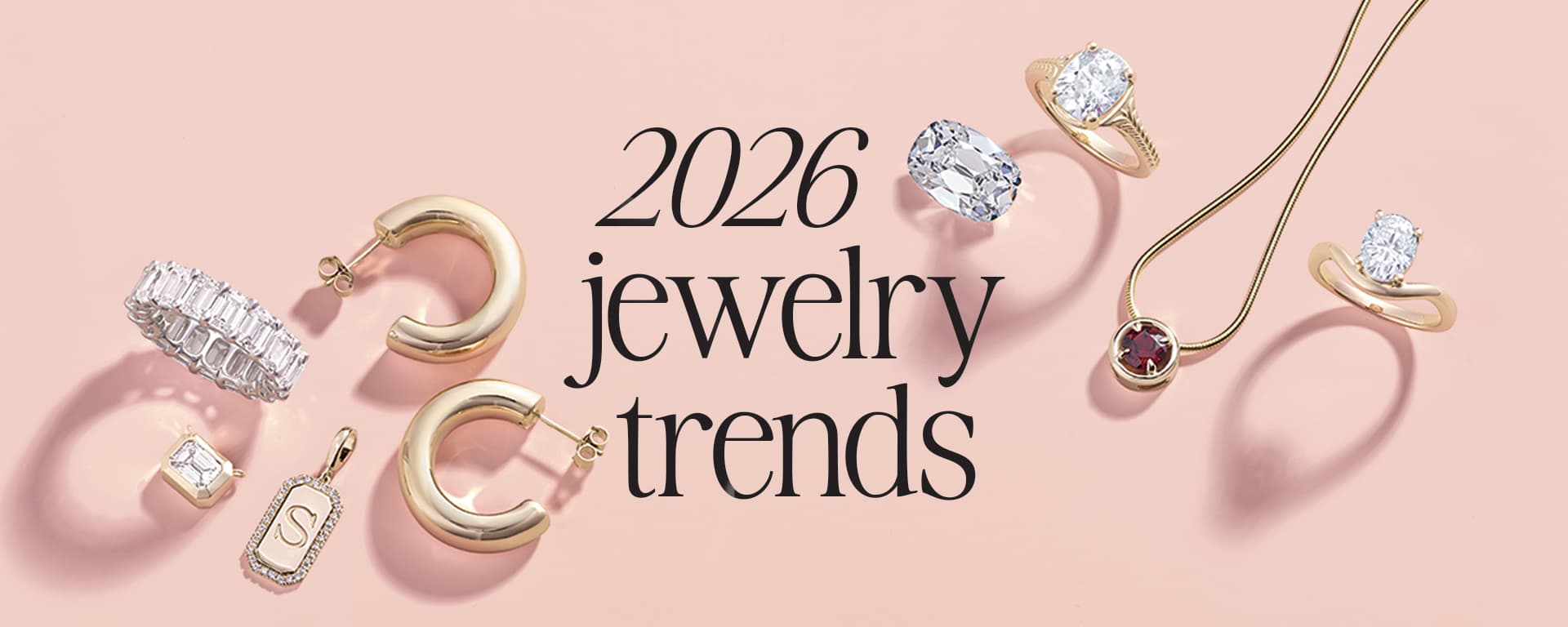
From statement styles to storied pieces, individuality and self-expression are the main motivators driving jewelry purchasing in 2026. The conversation in showrooms and design studios alike has shifted away from the traditional metrics of gemological prestige toward something more intimate: what a piece means to the person wearing it.
Two forces are defining this shift most clearly this year. The first is color, saturated, symbolically charged, and increasingly personal. The second is a deepened demand for personalization that goes far beyond an engraved initial or a birthdate stamped in gold. Together, they point toward a market where emotional resonance is the new luxury standard.
Color as the New Language of Meaning
Color has always mattered in fine jewelry, but in 2026 it carries a different weight. "Color continues to play a large role in jewelry design, not just for its visual appeal, but also for its symbolism," according to Rapaport's analysis of this year's dominant market trends. "Richly saturated gemstones, birthstones, and expressive color combinations allow customers to connect sentiment with style."
What this looks like in practice is a clientele reaching past the default of white diamonds toward rubies chosen for love, deep green tourmalines selected for their associations with strength, or sapphires worn as talismans of guidance. The selection process has become almost ritualistic. Consumers are increasingly drawn to stones with specific associations: protection, love, luck, guidance, or strength. A deep violet amethyst is no longer simply a February birthstone; it becomes a wearable declaration of intent.
Stuller, one of the industry's most significant suppliers of colored-gemstone jewelry, represents precisely the kind of assortment this moment demands: versatile, richly saturated designs that give retailers the breadth to serve buyers whose reasons for choosing a particular stone are as varied as the stones themselves.
The design vocabulary has expanded to match this appetite. Colorful engagement rings, long considered an eccentric departure from the solitaire tradition, are now a genuine category. Stacked gemstone bands, layered by color or meaning, allow wearers to build something cumulative and autobiographical on a single finger. "From colorful engagement rings to stacked gemstone bands, these designs offer a distinctive way to personalize people's stories."
This trend also mirrors broader cultural movements toward fluidity and self-expression. Jewelry is becoming less about the status quo and more about feeling, with customers responding to designs that allow them to interpret and style pieces in their own way. A charm bracelet hung with gold, diamond, and gem pendants, each chosen for a different person or moment, becomes a wearable archive.
Birthstones: From Sentimental Staple to Design Statement
Birthstones occupy a particular place within this color-driven moment. They have never disappeared from the market, but they are experiencing a reinvention. "Birthstones remain especially influential, offering a tangible way to represent loved ones or life chapters." What has changed is the context in which they appear.
A mother's ring with a child's stone set in a bezel of yellow gold is a different object than a modern birthstone stack: three slender bands, each holding a brilliant-cut stone in a minimal low-profile setting, layered on the index finger with no explanation needed. The stone does the communicating. This shift from sentimental keepsake to intentional design statement has elevated the birthstone category in ways that were not entirely predictable even a few years ago.
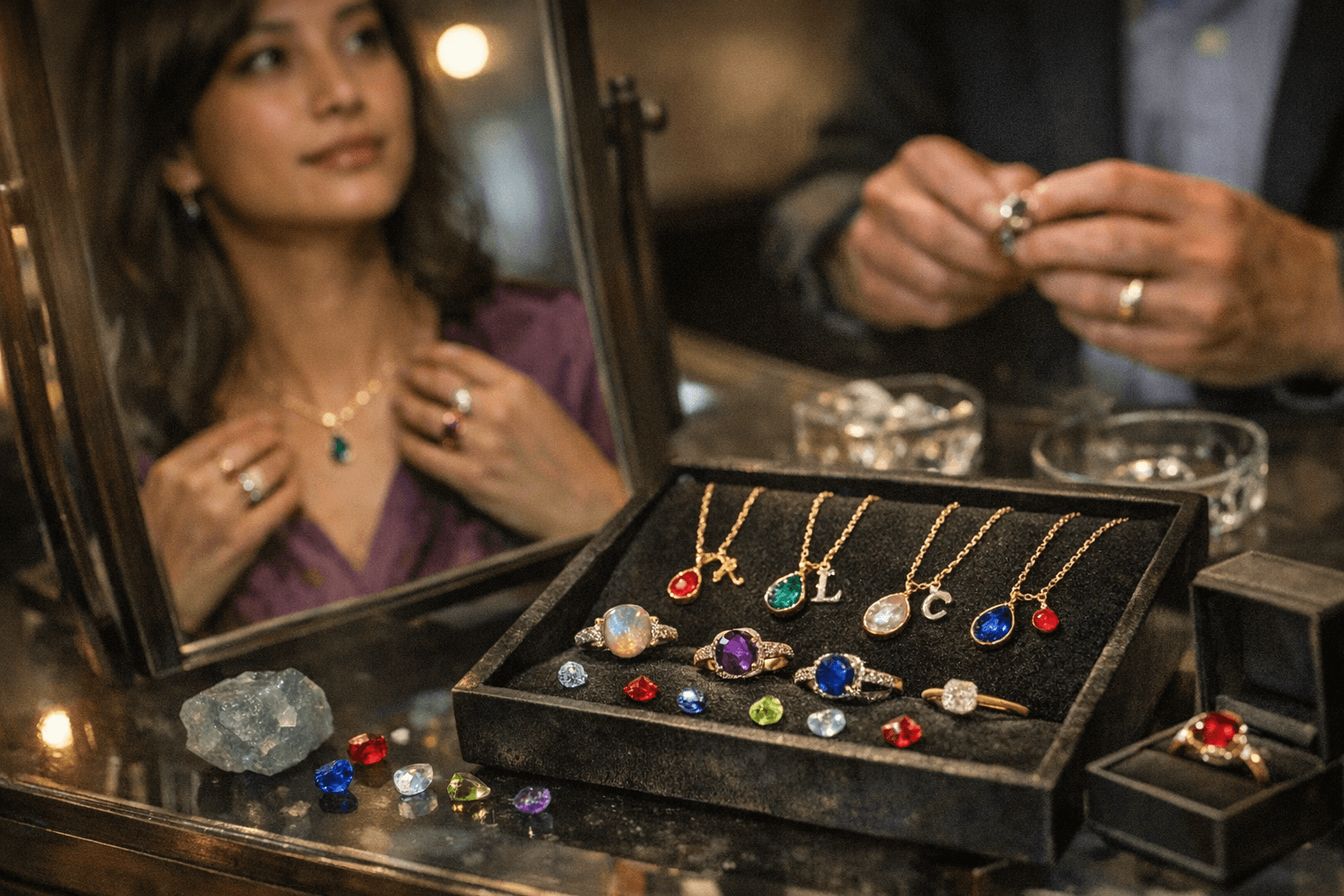
Beyond birth months, buyers are applying birthstone logic to other milestones: anniversary gems, stones tied to places of meaning, or colors chosen to represent qualities they want to carry with them. The twelve-stone tradition has become a framework, not a rule.
Personalization Beyond the Monogram
The third trend that has emerged as particularly powerful in 2026 is a more evolved form of personalization, one that demands more from both the jeweler and the customer. "Personalization remains one of the strongest drivers in jewelry purchasing, but what's changed is how consumers want to personalize. It's no longer about surface-level customization; it's about storytelling."
Surface-level customization, a name engraved on a locket, a date inscribed inside a band, remains meaningful. But the buyer of 2026 wants more than a name. They want the jeweler to understand that the three stones in their ring represent their grandmother's city, their mother's birthstone, and the month they met their partner. They want the setting, whether a cathedral prong or a flush bezel, to feel like a considered choice rather than a default. The craftsmanship is still essential, but it now serves a narrative purpose.
This puts a genuine burden of articulacy on the retail experience. The jeweler who can draw out that story and then translate it into a design recommendation is not simply selling; they are collaborating. The pieces that result from those conversations are the ones that stay in families.
What the Market Is Telling the Industry
The broader pattern across all five trends identified this year is consistent: "These 2026 jewelry trends point to consumers who are thoughtful, expressive and emotionally driven. Today's buyers want jewelry that feels intentional. They look for pieces that reflect identity, mark milestones, and stand the test of time."
For retailers and designers, the practical implication is a recalibration of the sales floor conversation. "Selling jewelry is not just about carat weight or metal quality. It's about listening, storytelling, and helping customers articulate what they want their jewelry to represent." A two-carat emerald-cut diamond and a one-carat sapphire flanked by rose-cut diamonds carry very different emotional propositions. Understanding which one belongs in which customer's life requires a different kind of expertise than knowing the 4Cs.
The case assortments that perform best this year will not be the ones with the highest average price points or the most technically impressive stones. They will be the ones curated with the understanding that every piece is a candidate for someone's most meaningful object. "The most successful assortments in your case this year will be the ones that balance beauty with meaning, designs that don't just follow trends, but reflect the lives of the people who wear them."
That is a high standard. It is also precisely the standard that fine jewelry has always, at its best, aspired to meet. The 2026 market is simply making it nonnegotiable.
This article was produced by Prism’s automated news system from verified source data, official records, and press releases, then run through automated quality and moderation checks before publishing. The system is built and supervised by the people who set the standards it runs under. Read our full AI policy.
Did this article answer your question?