Portrait miniatures, the earliest form of personalized jewelry
Portrait miniatures began in the 16th century as wearable likenesses, and their intimate logic still powers today’s photo lockets, fingerprint charms, and portrait pendants.
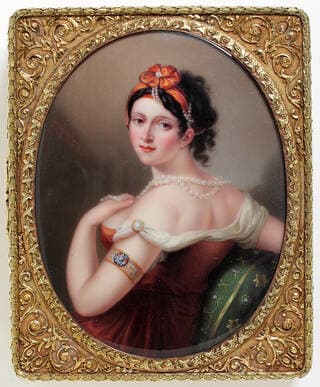
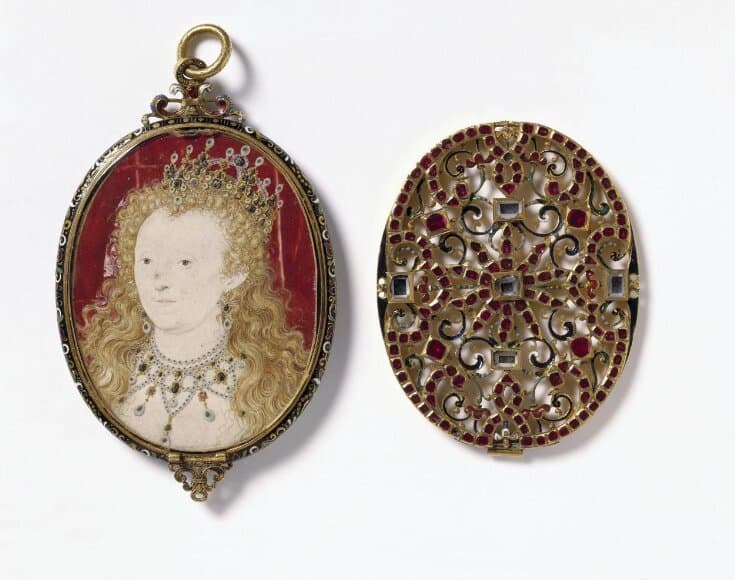
In 1857, the South Kensington Museum’s first portrait miniature acquisition was an image of Queen Elizabeth I by Nicholas Hilliard, housed in an enamelled gold locket with a jewelled cover. Portrait miniatures were likenesses made to travel close to the body, tucked into a locket, carried in a pocket, or shown only to a chosen few. That same tension between privacy and devotion is what makes modern personalized jewelry feel so immediate when a daughter’s name, a mother’s birthstone, or a beloved face lands in gold.
From court portrait to intimate keepsake
Portrait miniatures first appeared in the 16th century, usually painted in watercolour on vellum, and their small scale was part of the point. The Victoria and Albert Museum holds the United Kingdom’s finest collection, with 2,000 examples spanning the 16th to the 19th centuries. Outstanding examples by Hans Holbein, Nicholas Hilliard, and Samuel Cooper trace the medium from elite European court culture into more domestic uses of memory and affection.
The crucial distinction is that these were designed to be held and viewed closely. They were objects invested with political and personal significance, presented as tokens of loyalty, friendship, or love.
Why likeness, not just initials, changed the language of jewelry
Engraved initials identify; portrait miniatures embody. A face, painted small enough to fit into a jewel, carries a different charge from a monogram because it preserves expression, costume, and presence. The wearer controls access to the image, which turns the jewel into a private display rather than a public announcement.
That social privacy still explains the appeal of personalized jewelry now. Photo lockets and fingerprint charms work because they are intimate without being loud, and because they can hold a specific person rather than a generalized sentiment. The miniature’s design throughline is clear: the image is protected, portable, and revealed selectively.
The craft behind a wearable image
The materials matter as much as the likeness. Early miniatures were usually painted on vellum, and by 1720 ivory had replaced vellum as the most common support. Both surfaces demanded a painter who could control scale and detail with almost microscopic precision, because a portrait that size has to remain legible from a few inches away.
Protection was built into the object from the start. Miniatures were often housed in lockets or small boxes so they could be worn or carried safely, and later examples were customarily fitted with a shallow convex glass lens held by a burnished bezel or case edge. A bezel gives continuous protection around the image, while prongs would be an open, vulnerable choice for something so fragile.
The locket as both jewel and document
Most Elizabethan lockets were later broken up for their gold and stones, so the survival of that piece is exceptional.
A locket is not just a container for a picture; it is a piece of jewelry designed to guard an image that matters enough to keep close to the skin. In the Elizabethan example, the image of the queen and the jewel’s construction were inseparable.
A transatlantic tradition of memory
Portrait miniatures did not remain confined to British courts. The Starr Collection at the Nelson-Atkins Museum of Art spans 1500 to 1850. At the Metropolitan Museum of Art, American portrait miniatures extend the story into 18th- and 19th-century United States culture, where the format continued as a sentimental keepsake.
In Europe, miniatures could signal rank, allegiance, or courtly intimacy. In America, they became equally powerful as portable reminders of family, absence, and remembrance.
How the form keeps changing
Late 18th-century eye miniatures were a brief but fascinating fashion, and they pushed the idea of intimacy even further. By isolating a single eye, the miniature became more secretive, more coded, and more personal than a full face.
A custom portrait pendant works because it turns identity into design, while a fingerprint charm makes touch visible and permanent.
What to look for in a contemporary portrait jewel
A strong modern portrait piece borrows from the miniature’s best historical lessons. The likeness should be clear at a small scale, the composition should remain legible, and the setting should protect the image instead of overpowering it. A locket, bezel, or enclosed frame often suits the idea better than an exposed mount, because the object’s power comes from preservation as much as display.
This article was produced by Prism’s automated news system from verified source data, official records, and press releases, then run through automated quality and moderation checks before publishing. The system is built and supervised by the people who set the standards it runs under. Read our full AI policy.
Did this article answer your question?