Why Victorian hair jewelry made mourning deeply personal
Victorian hair jewelry made grief wearable, turning a lock of hair into a private memorial with the intimacy modern personalization still chases.
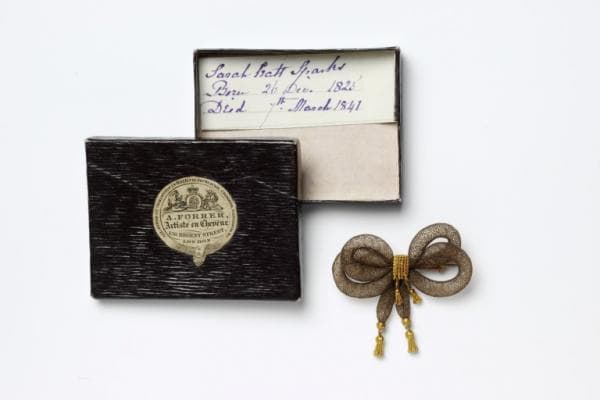
A strand of hair can do what an engraved date cannot: it preserves a physical trace. That is why Victorian mourning jewelry feels less like decoration than devotion, especially now, when so much personalized jewelry is built around the same impulse to make memory visible, wearable, and unmistakably yours. In Queen Victoria’s reign from 1837 to 1901, and especially after Prince Albert died in 1861, hairwork moved from private custom into the language of fashion.
Hair as remembrance, not ornament
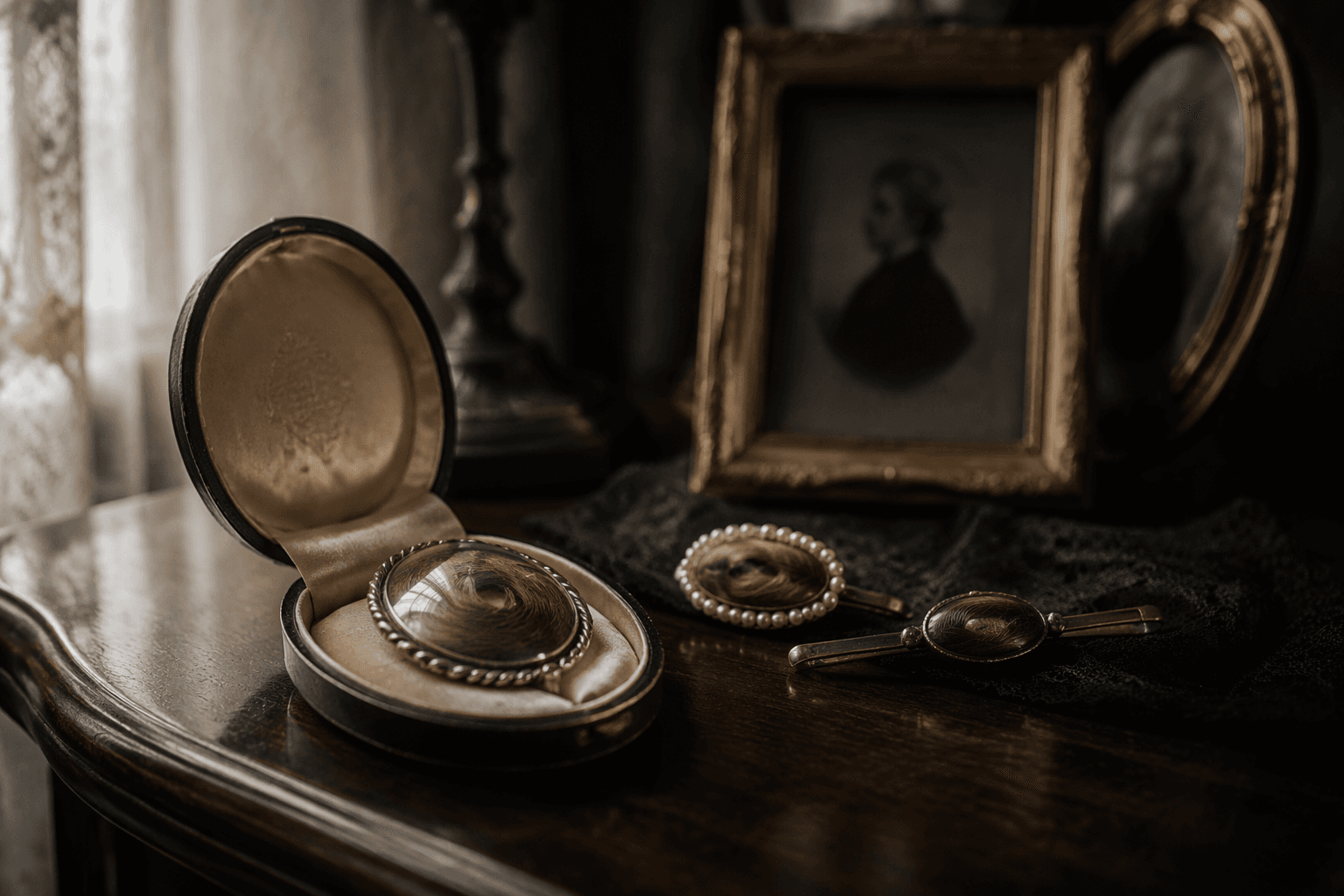
The Victoria and Albert Museum notes a simple but revealing fact: hair does not rot easily, and it can retain biological material, including a certain amount of DNA. In Victorian mourning jewelry, that durability turned hair into one of the most intimate materials a maker could use, because it carried the body’s presence rather than merely its likeness. Hair could be braided, woven, or knotted into lockets, rings, brooches, bracelets, and wreaths, giving grief a form that sat against the skin.
The craft behind the feeling
Hairwork was not improvised sentimentality. It required skill, patience, and a strong eye for pattern, because strands had to be arranged into stable compositions that could live inside or alongside metal settings. The result could be delicate and geometric or dense and sculptural, depending on whether the artist chose braiding, knotting, or finer weaving. That technical labor is part of why these pieces still read as art objects, not just keepsakes.
What makes them continue to resonate with buyers is the same quality that made them powerful in the 19th century: the material itself. An engraved monogram can stand in for a person, but a lock of hair contains the body’s texture, color, and weight. For anyone drawn to memorial jewelry today, that difference matters, because it explains why some pieces feel emotionally close while others simply feel personalized.
How Victoria turned private grief into public fashion
Victoria’s mourning after Prince Albert’s death in 1861 had an outsized cultural effect. In a 2016 National Geographic piece, Becky Little wrote that hair jewelry and hair wreaths were popular ways to remember loved ones during the Victorian era, and that popularity grew in a court climate shaped by the queen’s visible loss. Mourning jewelry became legible in public, even when the emotion behind it remained private.
That dual role made the category unusually modern. A woman could wear a ring or brooch containing hair in solemn remembrance, yet the object could also signal status, taste, and adherence to a shared code of bereavement. The jewelry was intimate first, but it was never hidden from view in the way a letter might be; it sat on the body and participated in social life.
Why the Brontë pieces still fascinate collectors
Few objects show the emotional precision of hair jewelry better than the pieces connected to Charlotte Brontë. A Smithsonian Magazine piece described a ring containing her hair, complete with an inscription and a small door that covered a plaited lock of hair. That hidden compartment transforms the ring from a simple memorial into something almost architectural, with concealment built into the design.
The Brontë Parsonage Museum also displays Charlotte Brontë’s hair bracelet, and the museum says the delicate piece contains hair from two people believed to be her sisters, Emily and Anne. The bracelet shows how mourning jewelry could broaden beyond one relationship and become a network of remembrance, binding sisters together in a single object. The museum’s interpretation also underlines a crucial truth about Victorian hair jewellery: it was fashionable and widely worn, not an eccentric outlier.
What to look for in antique mourning jewelry
If you are considering an antique piece, the details matter as much as the sentiment. Visible hairwork, secure closures, and legible inscriptions tell you a great deal about how the jewel was made and preserved. Signs of later repair or replacement are not automatically disqualifying, but they change the story the piece can tell.
A few practical points sharpen the eye:
- Look for braided, woven, or knotted hair that still reads as deliberate craft rather than loose residue.
- Check lockets, rings, brooches, and bracelets for intact hinges, clasps, or small doors, especially on pieces with hidden compartments.
- Read inscriptions closely, since they often identify the remembered person or sharpen the memorial purpose.
- Watch for moisture damage or abrasion, because hair and the surrounding mount can be vulnerable even when the piece looks sturdy at first glance.
Because hair carries such a strong personal charge, these objects deserve careful handling. Keep them away from moisture and direct light, and if a piece is damaged, professional conservation is the sensible route rather than improvised repair.
What modern buyers can learn from Victorian hairwork
Today’s personalized jewelry market often begins with an equally emotional trigger: a daughter’s name, a mother’s birthstone, a line of handwriting, a pair of initials on a charm. Victorian hair jewelry suggests that the most meaningful keepsakes are the ones that feel physically specific, not simply customized on the surface. A name is powerful, but a material trace can feel even more immediate.
That lesson also changes how unconventional materials are understood. Hairwork shows that a memorial piece does not need a gemstone to feel precious, and it does not need conventional sparkle to feel luxurious. Comfort can come from closeness, from symbolism, and from the quiet fact that the object contains something materially linked to the person remembered.
Victorian hair jewelry made mourning deeply personal because it turned memory into matter. That is still the standard by which the best memorial jewelry is judged: not by how loudly it declares sentiment, but by how completely it holds it.
This article was produced by Prism’s automated news system from verified source data, official records, and press releases, then run through automated quality and moderation checks before publishing. The system is built and supervised by the people who set the standards it runs under. Read our full AI policy.
Did this article answer your question?