Viviana Langhoff makes custom jewelry a revenue driver in Chicago
At Adornment + Theory, custom work is no longer a side offering. Viviana Langhoff has turned bespoke jewelry into the heart of a West Town retail model built for milestone buyers.
Custom jewelry is now the main event in West Town
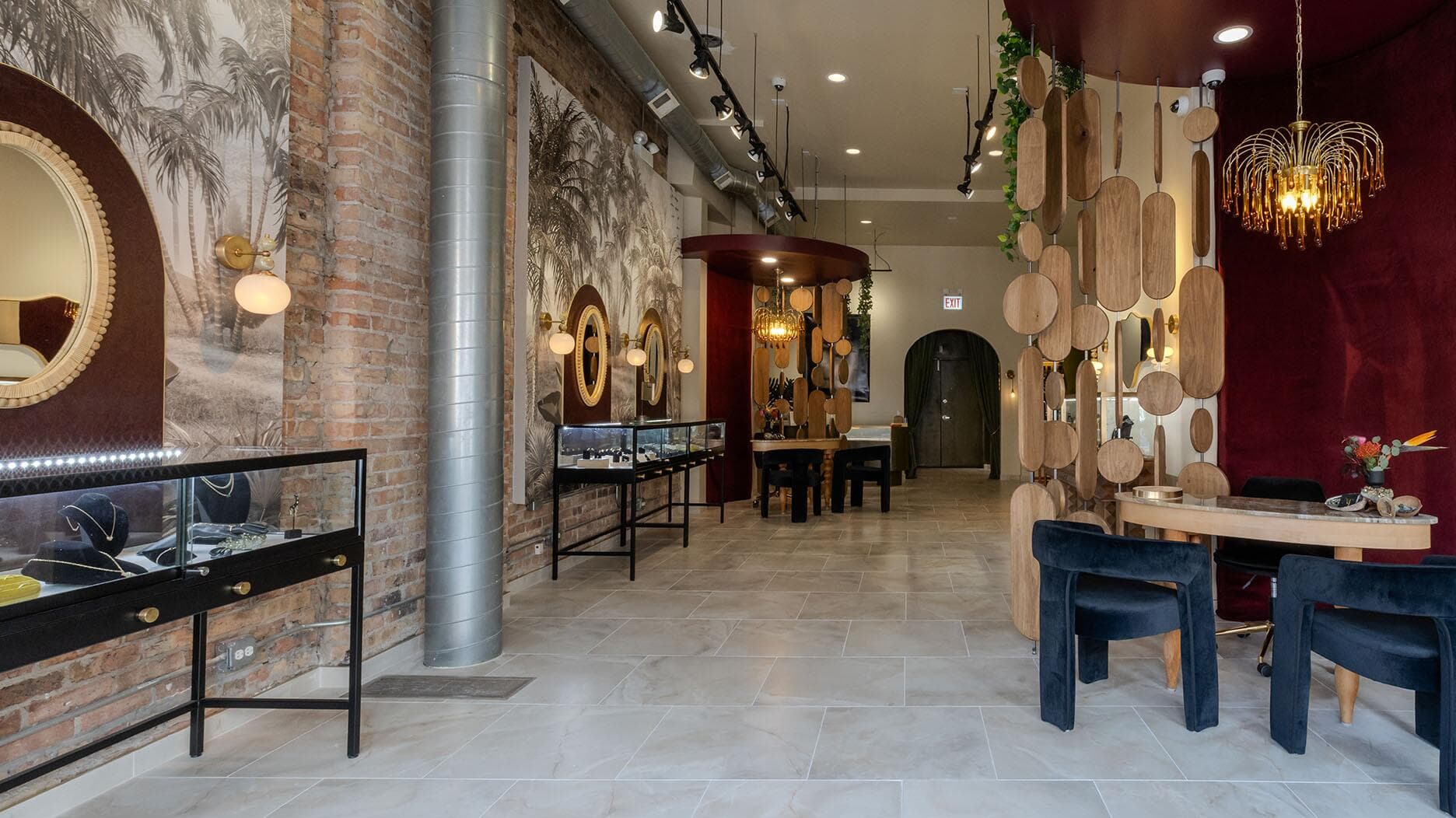
Viviana Langhoff has built Adornment + Theory around a simple retail truth: when jewelry feels personal, it feels easier to buy. Her 1,200-square-foot flagship at 1433 W. Chicago Ave. in West Town is arranged less like a conventional case-lined shop and more like a place designed for conversation, comfort, and decision-making. That matters because the store’s custom consultations are no longer an add-on service. They have become a major revenue driver.
The boutique specializes in unique wedding rings, custom engagement rings, and one-of-a-kind designer jewelry, which puts it squarely in the part of the market where the purchase is rarely impulsive. Buyers arrive with a proposal date, an anniversary, a family stone, or a name they want carried forward. Langhoff has made room for that emotional brief and turned it into a business model that rewards time spent talking through ideas, materials, and meaning.
Why the store feels less intimidating than a traditional jewelry counter
The physical space is part of the strategy. JCK described the flagship as a salon for people who appreciate design in all forms, and that phrasing gets to the heart of what makes the store different. The layout is home-like, with dedicated custom stations that invite shoppers to sit down, slow down, and think through a piece rather than rush past it under pressure from a sales case.
That atmosphere matters for bespoke jewelry because many customers are not just shopping for sparkle. They are shopping for a milestone, a memory, or a future heirloom. A room that feels calm and lived-in can make the custom process seem less technical and more accessible, especially for first-time buyers who may know they want something meaningful but not yet know how to describe it in gemological terms.
The custom process is the product
Langhoff’s brand says private custom sessions let clients take part in each step of the creative process. That is the key distinction between a made-to-order piece and a true bespoke experience. The customer is not only choosing a stone or a setting from a menu. The buyer is being folded into the design arc itself, from first sketch to final piece.
That workflow also broadens the kinds of projects the boutique can handle. The custom offering includes reconstructing heirloom jewelry and helping clients find a vintage engagement ring, both of which extend the life of materials already in circulation. For readers who care about provenance, that is more compelling than vague sustainability language. Reworking an existing stone, restoring a family piece, or sourcing vintage can reduce the need for newly mined material while preserving the emotional history that often gives jewelry its real value.
Ethics, provenance, and what the brand actually promises
Langhoff’s broader positioning leans into ethically sourced fine jewelry, but the strongest claims here are still the most practical ones: custom work, heirloom reconstruction, and vintage sourcing. Those are concrete practices, not buzzwords. They suggest a model that values material continuity and personal story over empty luxury language.
That distinction matters in a market crowded with greenwashed promises. “Ethically sourced” can mean many things unless a brand is specific about origin, traceability, or how stones and metals are acquired. Adornment + Theory’s most credible sustainability story is embedded in its service model. By offering to rebuild heirloom pieces and work with vintage engagement rings, the boutique gives buyers tangible ways to make a lower-waste choice without giving up beauty or significance.
Langhoff’s background gives the business its authority
Viviana Langhoff is presented by her brand as an award-winning fine jewelry designer and a nationally recognized industry leader, and she previously served as president of the Women’s Jewelry Association Chicago. That background matters because custom jewelry is built on trust. Buyers are handing over precious materials, sentiment, and a budget that may be tied to a wedding, an anniversary, or a family transition.
Her work is also rooted in heirloom and personal narrative, which helps explain why the store feels so centered on storytelling. A designer with that perspective is not only selling diamonds or settings. She is helping clients decide which details deserve to be remembered, and which materials can be remade into the next chapter of a family’s jewelry box.
What this says about the wider jewelry market
Adornment + Theory is part of a broader shift in retail: personalization is moving from specialty service to growth engine. Zales has introduced newer concept stores with consultation areas for custom design and a charm bar, a setup that National Jeweler said reflects customers who want jewelry experiences to feel hands-on, connected, and personal. That is a useful comparison because it shows the trend is not limited to independent jewelers with highly individualized brands.
Still, independents have an advantage. Langhoff’s store combines the intimacy of a neighborhood boutique with the practical tools of a custom studio. Instead of asking shoppers to imagine a luxury experience, it gives them one that feels like an appointment in a beautifully designed home. That makes the custom process easier to enter, especially for milestone buyers who want reassurance as much as beauty.
The retail lesson is clear. Custom jewelry is no longer a side service reserved for the highly committed. In Chicago, it is becoming the engine that brings people in, keeps them engaged, and turns a jewelry purchase into something they helped make from the start.
This article was produced by Prism’s automated news system from verified source data, official records, and press releases, then run through automated quality and moderation checks before publishing. The system is built and supervised by the people who set the standards it runs under. Read our full AI policy.
Did this article answer your question?