Why birthstone jewelry remains the ultimate personalized gift
Birthstone jewelry works best when it matches real life: choose by color, durability, and wearability, not just by month or meaning.
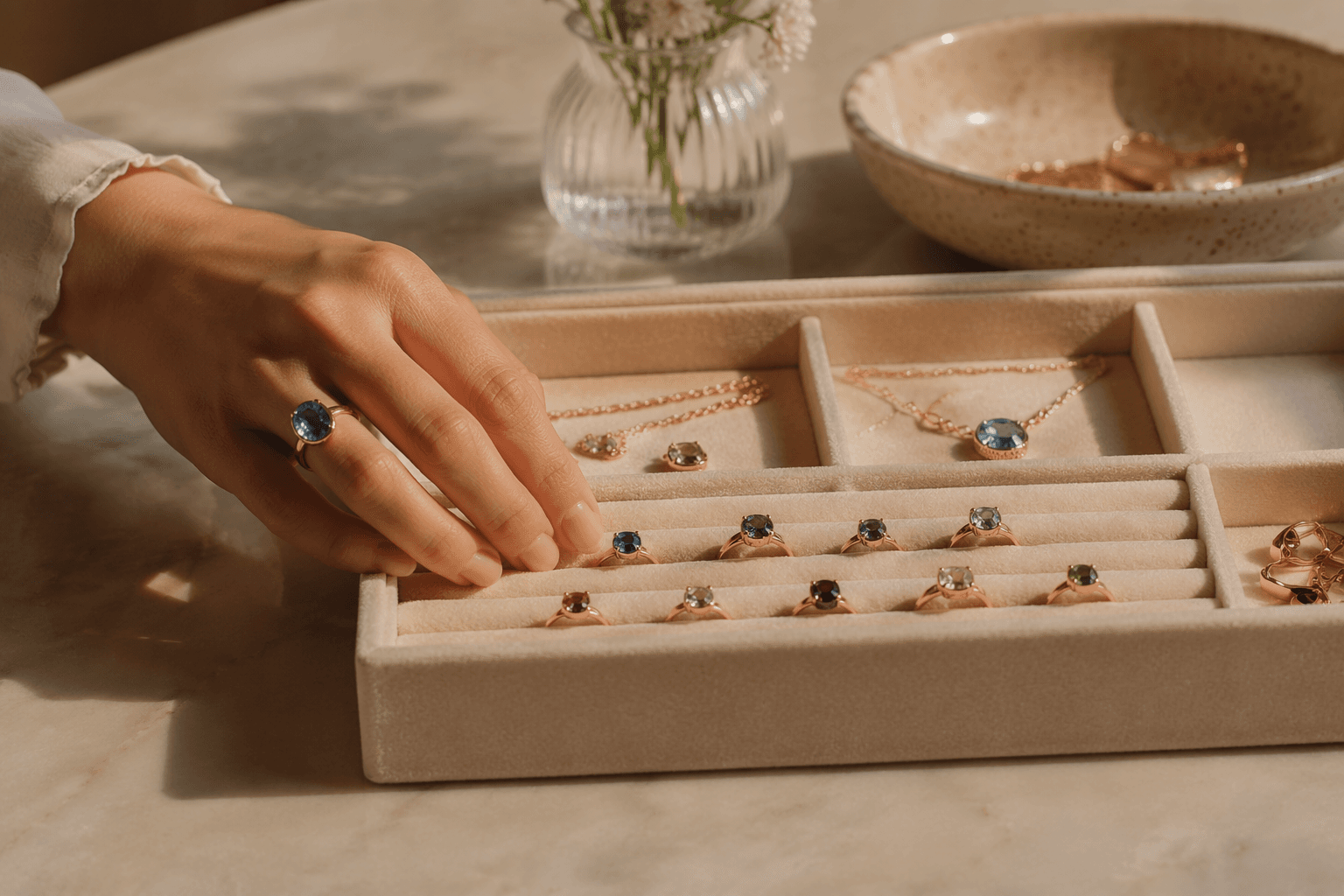
Pearl, alexandrite, and moonstone all count as June birthstones, and that range is what keeps the category useful. Birthstone jewelry turns a date into a gemstone choice that can be worn, styled, and actually lived in. A good birthstone piece has to suit a wardrobe, survive the way it will be worn, and still feel personal enough to mark a daughter, a mother, a partner, or a self-gift with real intention.
Why birthstone jewelry still feels personal
Birthstones are a popular, colorful introduction to gemstones and appeal to people around the world regardless of gender, age, nationality, or religion. Birthstone jewelry is one of the few personalized gifts that can be both intimate and universally legible.
The modern U.S. birthstone list was standardized in 1912 by the National Association of Jewelers, later Jewelers of America, then updated in 1952 and again in 2002. June, August, and December each have three official birthstones, giving shoppers room to choose by budget, color preference, or durability without leaving the birthstone theme behind.
The month matters, but the stone matters more
Those three June stones could not behave more differently in jewelry. Pearl has a soft, luminous surface that reads as quietly luxurious, while moonstone has a more ethereal glow. Alexandrite, by contrast, is a hard, resilient gemstone with a reputation that makes it especially compelling for daily wear.
August includes peridot, spinel, and sardonyx, while December offers tanzanite, turquoise, and zircon. That December trio is especially useful for style-driven gifting because the color story ranges from tanzanite’s blue to bluish purple, to turquoise’s blue-green intensity, to zircon’s brighter, rainbow-like variations.
Durability should lead the decision
The smartest way to buy birthstone jewelry is to treat durability as part of personalization. Durability depends on hardness, toughness, and stability, including how a stone handles wear, heat, light, chemicals, and humidity.
Pearl sits at 2.5 on the Mohs scale and is easily scratched or abraded, so it is best suited to pieces that will not take constant impact. Moonstone can scratch, chip, or cleave if struck against a hard surface, which makes it beautiful but less forgiving than tougher gems. Alexandrite, at 8.5 on the Mohs scale, has excellent toughness and no cleavage, which makes it a far stronger candidate for rings and bracelets that will see regular wear.
Sapphire and ruby are the workhorses of the gem world, both rated 9 on the Mohs scale and among the most durable gem families. If the gift is meant to be worn constantly, those stones offer the kind of practical resilience that turns a sentimental idea into an everyday piece. For softer stones, more protective settings and more occasional wear are the sensible answer.
How to match the stone to the way it will be worn
A birthstone ring worn every day asks for a different gemstone than a pendant reserved for dinner or formal events. Alexandrite, sapphire, and ruby handle that distinction with ease because they are built for endurance. Pearl and moonstone, while deeply appealing, make more sense in necklaces, drop earrings, or occasional rings that will be treated with more care.
The right choice is not only the right month, but the right placement, the right color intensity, and the right setting for the life the piece will lead. A vivid stone can anchor a stack. A paler stone can soften one. A harder gemstone can carry a prong setting more confidently, while a delicate stone often benefits from more protection.
A tradition with older roots and real authority
The biblical breastplate of Aaron in Exodus is a historical precursor to the tradition, even though the exact identities of the ancient stones remain uncertain.
The American Gem Society has a month-by-month chart and historical context, and Jewelers of America calls its list the original U.S. birthstone guide. GIA has also staged “GIA Celebrates Birthstones” at its museum in Kansas City, Kansas, United States, with more than 250 gems, minerals, and jewelry.
Why the category keeps growing
A 2024 market report valued the global personalized jewelry market at US$41.19 billion in 2023 and projected it to reach US$72.77 billion by 2030. Birthstone jewelry sits squarely inside that growth because it gives buyers a simple framework with wide stylistic latitude: one month, multiple stones, multiple price points, and multiple ways to wear the result.
This article was produced by Prism’s automated news system from verified source data, official records, and press releases, then run through automated quality and moderation checks before publishing. The system is built and supervised by the people who set the standards it runs under. Read our full AI policy.
Did this article answer your question?