Your Complete Guide to Choosing the Perfect Personalized Name Necklace
The difference between a name necklace that looks intentional and one that looks like a novelty gift often comes down to four decisions most shoppers make too quickly.
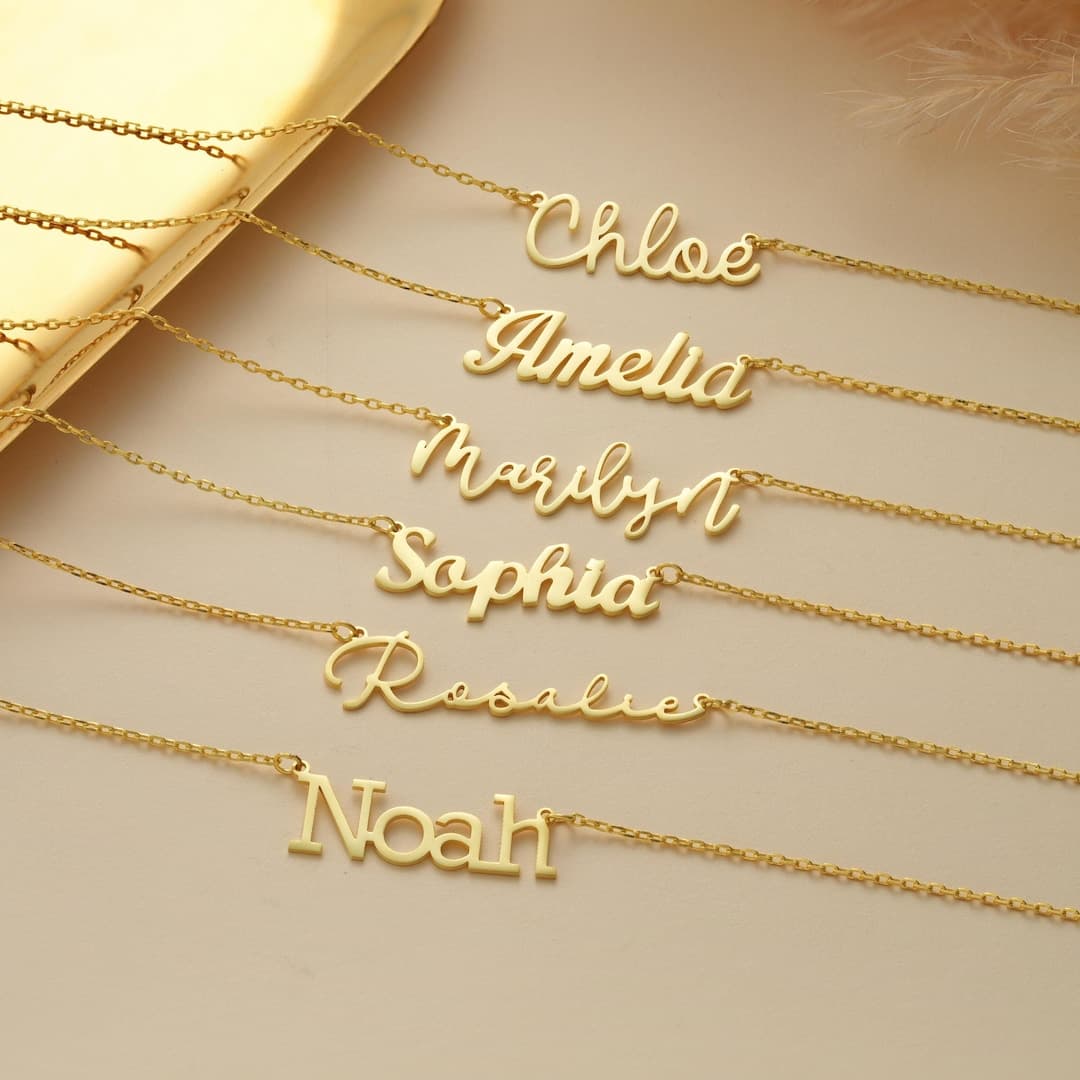
After combing through dozens of name necklaces across price points, testing chain weights, holding pendants under a loupe, and fielding the questions readers send in after a disappointing unboxing, the pattern is clear: most regrettable name necklace purchases come down to a handful of avoidable mistakes made at the moment of checkout. The good news is that every single one of them is preventable, provided you know what to look for before you click "confirm order."
The Metal Hierarchy: What You're Actually Buying
The single most consequential decision in any name necklace purchase is metal, and the options exist on a spectrum that's rarely explained with enough honesty.
At the top sits solid gold. At 14 karats or above, solid gold is chemically stable against skin, resists tarnish without maintenance, and will outlast almost anything else you own. It's the only choice with no asterisks. The price reflects that, but so does the longevity.
Gold vermeil sits one tier below and is frequently misunderstood. It is a layer of gold applied over a sterling silver base, which matters for two reasons: the silver substrate is hypoallergenic for most people (unlike brass-backed alternatives), and the gold layer, while thicker than standard plating, will eventually wear. A thinly plated vermeil piece will need replating over time, so ask about the gold layer thickness before purchasing. Unless specified otherwise, gold plated jewelry generally has lower quality gold and a thinner gold layer, making it worth scrutinizing a piece's quality carefully.
Gold-filled jewelry is made differently: gold filled jewelry is created by pressure or heat bonding a thin layer of gold over a base metal like brass, whereas gold vermeil is made by painting a layer of gold over a sterling silver base. The bonding method gives gold-filled pieces real durability advantages, but the brass core carries a risk worth knowing about: gold filled jewelry can turn your skin green, a result of chemical reactions between the materials in your gold filled jewelry, your skin, sweat, and any chemicals or products you're applying to your skin.
Sterling silver is the classic budget-accessible option, but tarnishing occurs when silver reacts with air, moisture, and some chemicals, and care and maintenance requires polishing to sustain its shine. For everyday wear, that's a real commitment.
Font: Where Cheap Necklaces Give Themselves Away
Nothing dates a name necklace faster or makes it look more like a boardwalk souvenir than the wrong font choice. The decision isn't purely aesthetic; it's structural.
Block-style fonts are the champions of legibility, with bold capital letters and robust, well-defined lines that shape each character, and their universal appeal makes them often recommended for those uncertain about which font to select for their name necklace. They read clearly from a distance and hold their detail as the pendant ages.
Script and cursive styles are more nuanced. The so-called "Carrie-style" font, made famous by a certain television series, works precisely because the text is cursive but the letters are spread out, making it more legible, with the first and last letters curved more than the others, adding a unique feminine touch. The problem arises when shoppers choose dense, tightly looped cursive scripts without previewing them first: at 8 to 12mm letter height, which is the standard range for name pendants, cramped letterforms blur together completely.
A bold script font looks larger than a minimalist block font, even at the same technical measurement, with standard name pendants around 8 to 12mm in letter height, while a statement look requires a larger design of more than 15mm. For longer names especially, requesting a digital proof or mock-up before production is non-negotiable. Many jewelers now offer this, and it exists precisely to prevent regret.
Chain Length and Proportion
A name pendant that sits in the wrong position on the body looks accidental rather than intentional. Chain length isn't just a comfort preference; it's a proportional decision that involves your neckline, frame, and how you intend to wear the piece.
A 14-inch choker necklace hugs your neck comfortably and is a must-wear for layering multiple necklaces, while a 16-inch chain sits around the collarbone. The collarbone is generally the most flattering placement for a name pendant because it's visible with almost every neckline without competing with the face.
Petite body types can go for 14 to 16 inches to highlight the neckline without overwhelming it, while for the average build, 16 to 18 inches naturally sits near the collarbone for a balanced, versatile look, and for taller necks or broader shoulders, 18 to 20 inches adds proportionality and looks visually balanced.
One practical note for necklines: a V-neck or open-collar shirt calls for a pendant that drops into that negative space rather than floating above it. A crewneck or turtleneck changes the calculus entirely, often making a longer chain or layered approach more legible.
Engraved vs. Cut-Out: A Construction Tradeoff
The two dominant construction methods for name pendants solve different problems and create different ones.
A cut-out name pendant means the letters themselves are formed from solid metal, cut directly from the base material. The visual impact is immediate and graphic. The tradeoff is fragility: thin letterforms in script-cut pendants are structurally vulnerable, and the open gaps between letters are prime candidates for snagging on fabric, catching in hair, and accumulating debris that's difficult to clean. Longer names in cut-out style also require a wider pendant, which can feel unwieldy on a delicate chain.
An engraved or plate-style pendant keeps the metal surface solid and intact, with the name inscribed or debossed into it. These wear more forgivingly, resist snagging, and hold detail over time. The visual effect is subtler and more refined. The right choice depends on your lifestyle: someone who wears their necklace through workouts, sleep, and daily contact would be better served by a plate-style design in solid gold or high-quality vermeil than by a lacy cut-out in plated brass.
The Clasp Problem Nobody Mentions
Clasp placement is the most overlooked variable in name necklace comfort, and it causes more irritation than most wearers realize. Here's something most sensitive-skin guides don't mention: the clasp is often the real culprit in neck reactions and discomfort. A lobster clasp that sits directly at the back of the neck rubs against the hairline with every movement. Better-constructed pieces position the clasp further down the chain or allow you to adjust its placement.
The style of the chain affects how much surface area contacts your skin, how much it moves, and how easily it can be cleaned, all of which influence how reactive it will be over time, with the simpler the chain style, the better for sensitive skin. A cable or box chain in an appropriate metal will outperform a decorative or heavily textured chain for everyday wear.
Metal Choice for Sensitive Skin
Most skin reactions to jewelry are due to metal allergies, and nickel and copper are frequently used as the base for costume jewelry or plated jewelry and are two of the most common metal allergens. This matters acutely for personalized pieces, which are made to be worn daily and held close to the skin.
Gold at a purity of 14 karat or more and platinum jewelry rarely cause allergic or other skin reactions. For those with documented metal sensitivities, a solid 14K gold or vermeil piece over sterling silver offers the most predictable outcome. Avoid any piece where the base metal isn't specified; vague labeling almost always means brass or nickel-containing alloys.
Before You Order: A Practical Checklist
The personalization process introduces a category of error that doesn't exist with standard jewelry: mistakes that become permanent the moment production begins. Most custom pieces cannot be returned or exchanged once made, which makes the following steps worth treating seriously.
- Spelling: Read the name backward, character by character. A reversed read bypasses the brain's autocorrect tendency and catches transpositions that a forward read misses.
- Special characters: Confirm whether the jeweler's system supports hyphens, accent marks, or apostrophes before ordering a name that requires them. Many platforms silently drop characters.
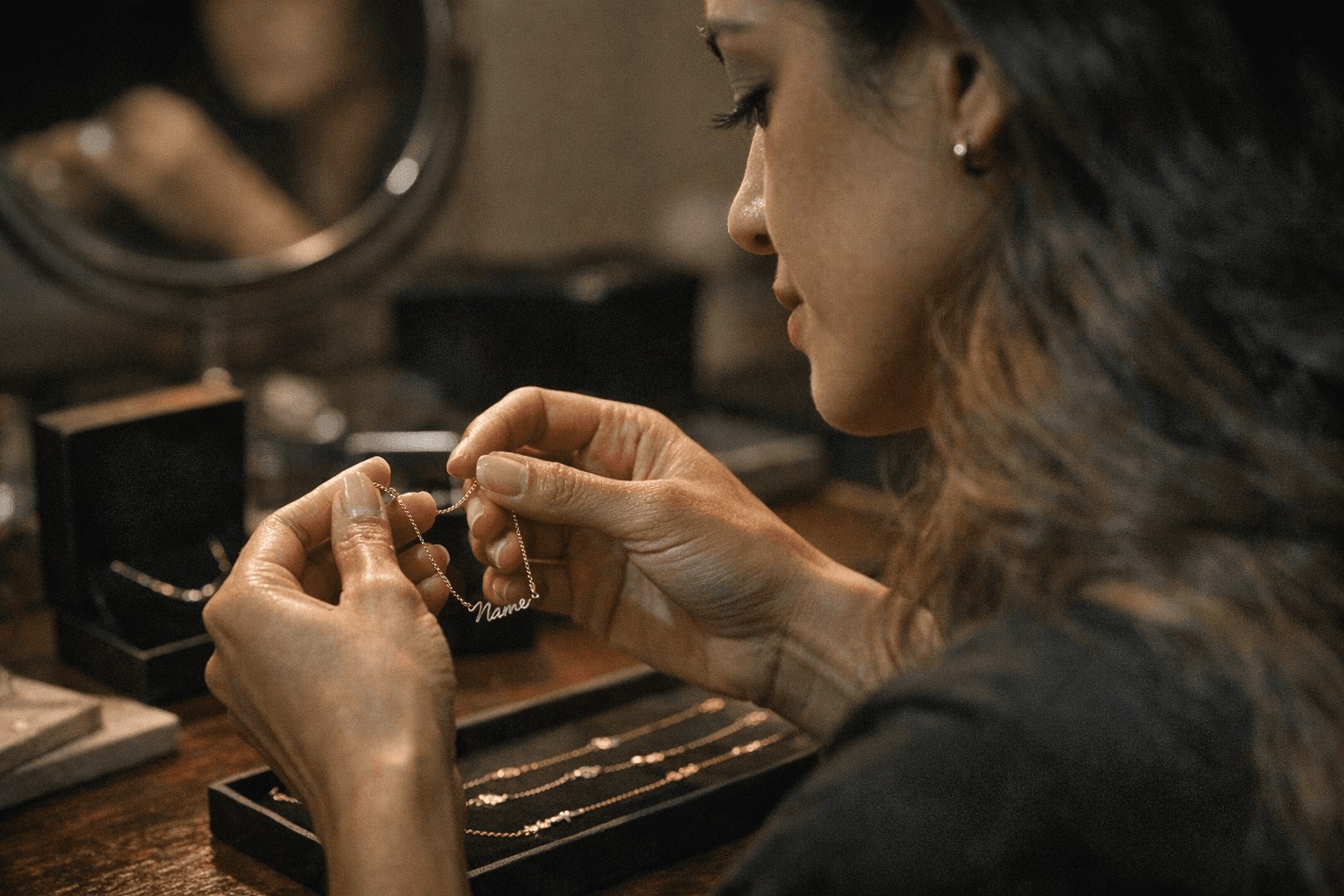
- Font preview: Request a digital proof or use the brand's preview tool. What looks elegant at 72pt on a screen may be illegible at 10mm in metal.
- Chain length: Measure a chain you already own and love before defaulting to a site's "recommended" length.
- Lead time: Personalized pieces typically require production time ranging from a few days to several weeks, and that window extends significantly around major gift-giving occasions. Order earlier than feels necessary.
- Return policy: Understand before ordering that most personalized items are final sale. If the piece is a gift, confirm sizing and metal preference with the recipient beforehand.
- Metal and skin sensitivity: If the recipient has known metal sensitivities, ask the jeweler to confirm the full material stack, not just the exterior finish.
Occasion and Longevity
Name necklaces built around milestone moments, graduation, a first Mother's Day, a milestone birthday, tend to carry emotional weight that outlasts trends. For those occasions, investing in solid gold rather than plated alternatives is a decision that reads differently a decade later. A gold-filled or vermeil piece is an entirely defensible everyday choice, provided the wearer understands its maintenance needs. A plated piece at a price point below what vermeil costs is a consumable, not a keepsake.
The personalized necklace market has matured considerably, and the quality ceiling is genuinely high. The distance between a piece that looks like a considered jewel and one that looks like a gift-shop impulse buy is, in nearly every case, the result of four variables: metal integrity, font legibility, proportional chain length, and construction method. None of them require a large budget to get right. They require attention, which is, ultimately, what separates jewelry from accessories.
Know something we missed? Have a correction or additional information?
Submit a Tip

