16th-century diamond cluster ring found by detectorist sells at Noonans
A detectorist’s muddy find became a £17,000 sale: eight hogback diamonds, a rose-cut center stone and hidden enamel turned a field discovery into a museum-grade story.
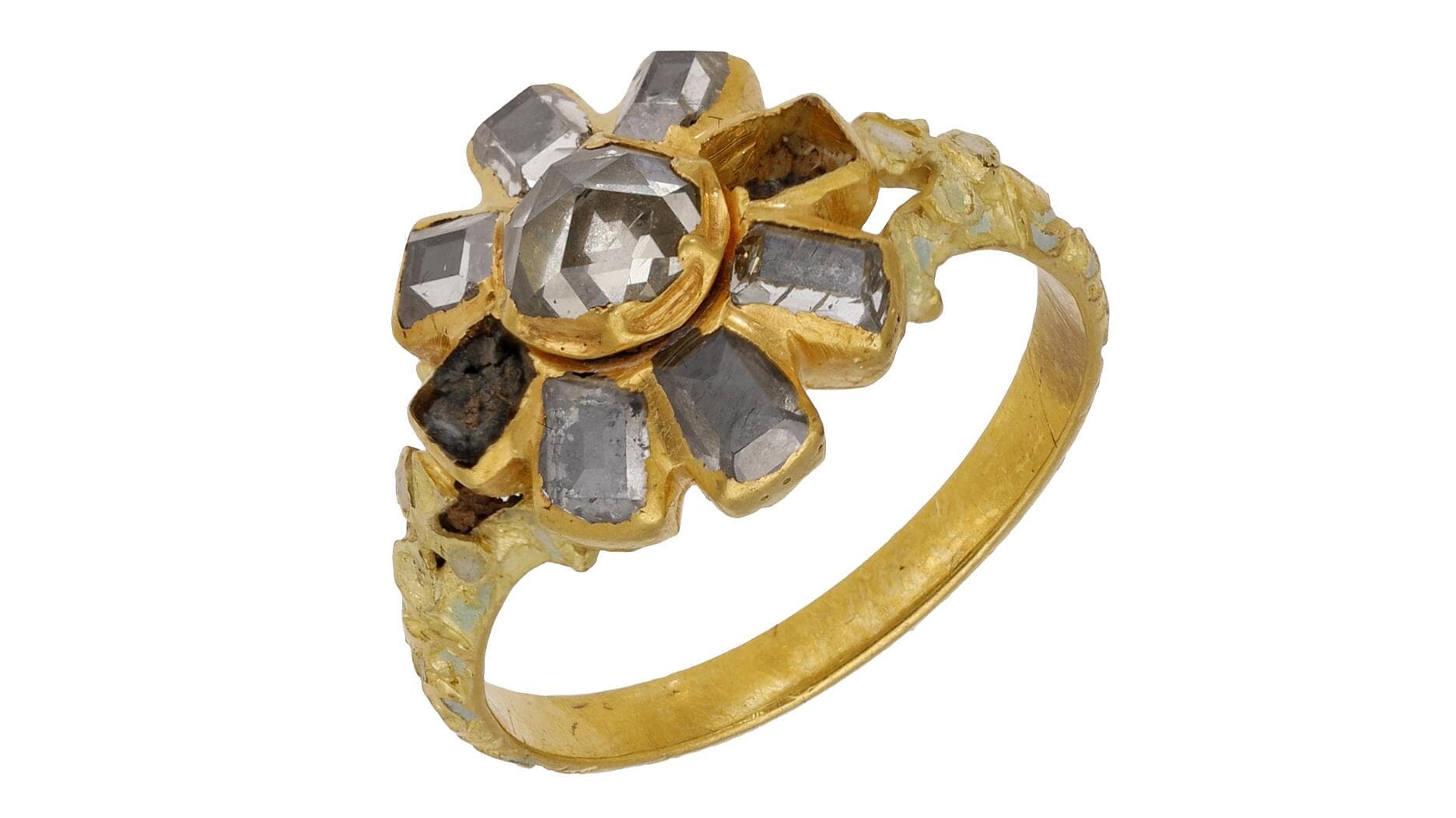
A late-16th- to early-17th-century diamond cluster ring found in a Gloucestershire field sold for £17,000 at Noonans after its missing stone was recovered from sieved soil and its history was traced through the British Museum and the Portable Antiquities Scheme.
Stuart Jones, 42, of Solihull, discovered the ring in November 2024 in Wormington, near Evesham, while detecting alone. Noonans said Jones was out from about 9 a.m. to 4 p.m. and lifted the ring in the last hour and a half of the day, a moment he described as his “once in a lifetime find.” When he pulled it from the earth, one diamond fell into his hand and a second setting was visibly empty. He saved the surrounding soil, washed and sieved it later, and found the missing diamond.
The ring, dubbed “The Evesham Diamond Ring,” was recorded on the Portable Antiquities Scheme under reference WMID-15FCDD and disclaimed as Treasure under reference 2025 T300 before it reached the rostrum. Noonans had placed a £15,000 to £20,000 estimate on the jewel, and the hammer price landed in that range’s upper edge, confirming the appetite for a piece with both rarity and a documented find history. A UK phone bidder bought it in the June 23 jewellery sale, which also included 14 other items found by metal detectorists.
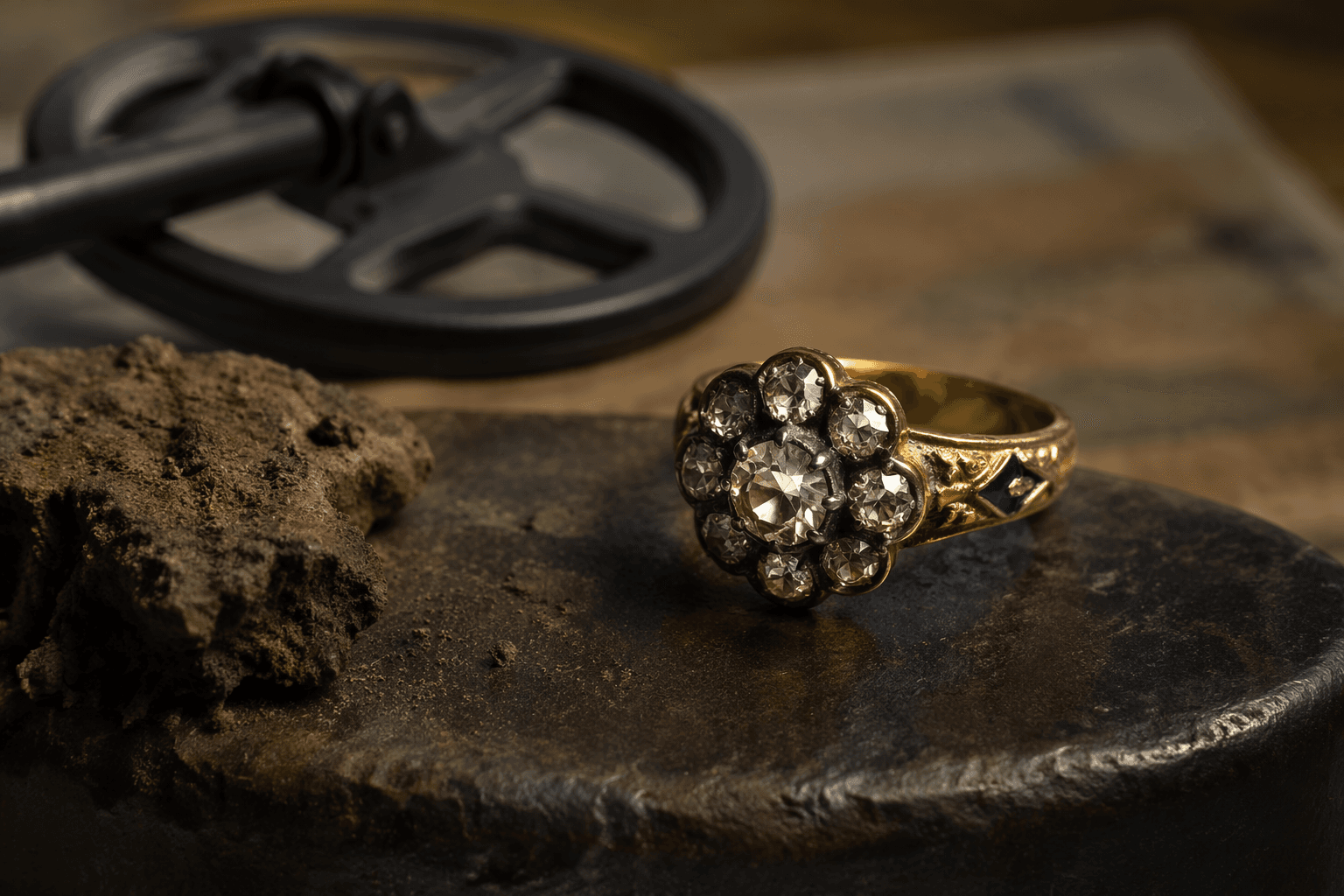
What makes the ring unusual is its structure. The bezel is set with a cluster of eight so-called hogback diamonds around a central rose-cut diamond, a format that speaks to the early days of diamond-set ring making, when stones were valued as much for their sparkle and profile as for symmetry. The underside carries turquoise and white enamel, while the shoulders are decorated with applied quatrefoil flowerheads. Noonans described the form as a flowerhead bezel, a detail that places the ring within the decorative vocabulary of early 17th-century baroque taste, when large rings were designed to read clearly on the hand.
The gold tested at 19.2 carats, the historic standard set by Edward I in 1300, and the ring’s size K and 13.2 mm bezel underline how compact the object is despite its visual impact. Noonans linked the design to period fashions that included rosettes, pansies, crosses and fleur-de-lis, motifs that turned finger ornaments into miniature statements of allegiance, status and taste. In this case, the survival of the enamel, the integrity of the cluster and the find’s clear archaeological trail gave the ring a significance that went well beyond its weight in gold.

Jones said the result was “beyond anything” he could have imagined, but the sale’s real force lies in the full chain from field to catalogue: a detector sweep, a recovered stone, an expert examination and a ring that emerged from the soil as both jewel and document.
This article was produced by Prism’s automated news system from verified source data, official records, and press releases, then run through automated quality and moderation checks before publishing. The system is built and supervised by the people who set the standards it runs under. Read our full AI policy.
Did this article answer your question?