Gucci high jewelry turns Flora, horsebit and nautical motifs into gems
Gucci’s latest high jewelry collection turns house codes into gem-set signatures, from the 1966 Flora motif to horsebits and Marina Chain in vivid stones.

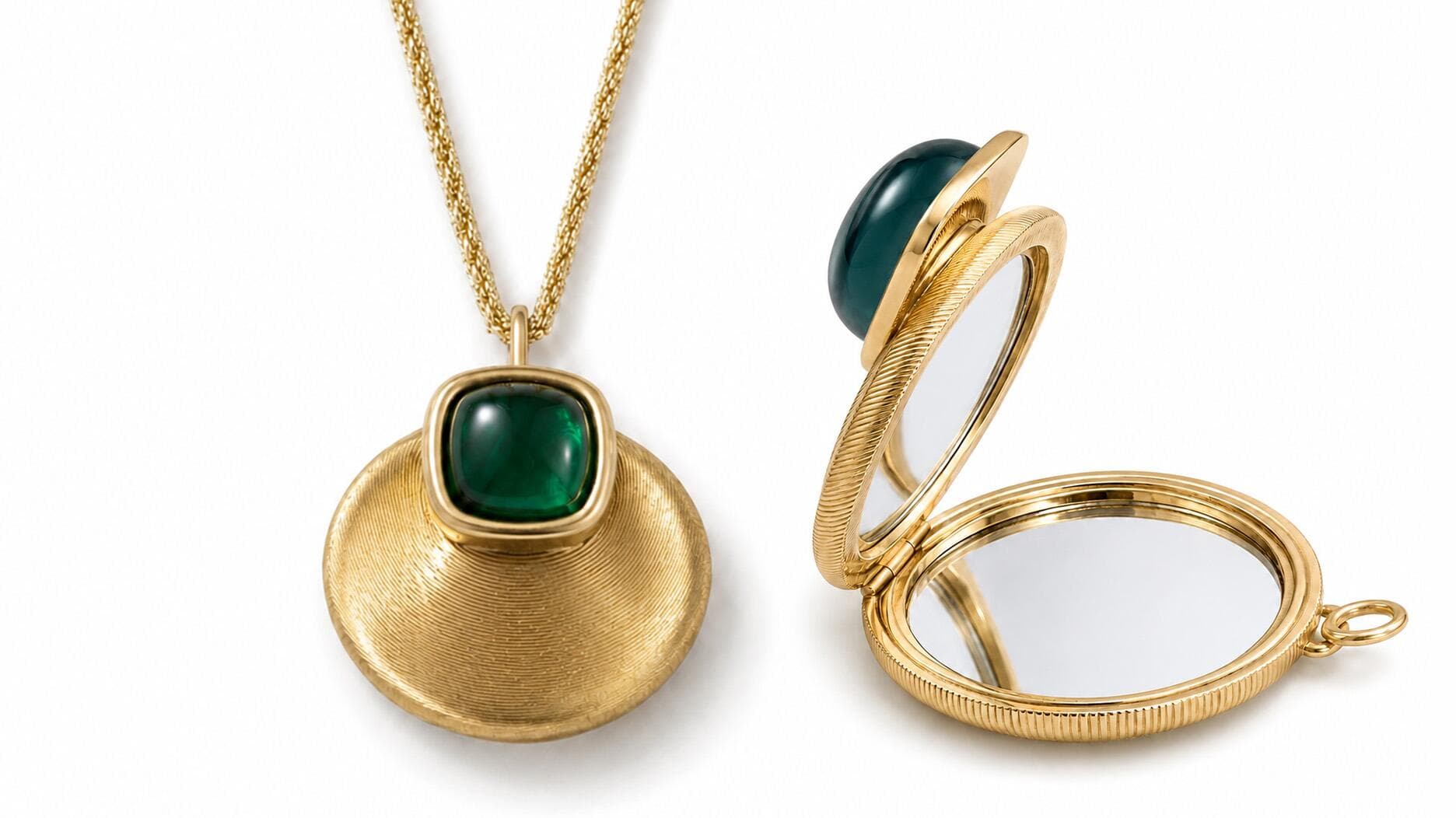
Gucci has taken three of its most recognizable symbols, flowers, horsebits and nautical hardware, and translated them into high jewelry with unusually clear intent. The result is a collection that reads less like a scatter of decorative references than a vocabulary: one built from archival motifs, saturated gemstones and the house’s own sense of proportion.
A house code, cut into high jewelry
The collection is organized into four families: Gucci Flora, Gucci Nodo, Everlasting G and Iconic Signatures. That structure matters because it gives the line a grammar, not just a theme, and lets each motif carry its own visual register while still belonging to the same design world. Gucci’s point of view is strongest in the way it uses colorful stones as narrative material rather than accent, keeping rubies, tsavorites, sapphires and aquamarines at the center of the story.
The most useful way to read the collection is as motif translation. Gucci is not borrowing the old language of high jewelry from place and period, such as garland suites or Belle Époque lacework; it is converting house emblems into objects with the scale, finish and rarity expected of serious collector pieces. That makes the collection feel less archival in the museum sense than archival in the brand sense, where history is filtered through recurring symbols and then sharpened into something new.
Flora, from scarf motif to jewel
Gucci Flora carries the clearest historical lineage. The floral design dates to 1966, when Vittorio Accornero created it for a silk scarf commissioned as a gift for Grace Kelly. In high jewelry form, that origin story becomes more than brand lore, because the motif already has the elegance of ornament before it ever reaches a setting.
What changes in the jewelry is scale and permanence. A scarf motif can drift, repeat and fade into fabric; a high jewelry interpretation locks the image into metal, gemstones and craftsmanship meant to endure. That shift gives Flora the strongest claim to future heirloom status, because it begins with one of Gucci’s most enduring signatures and ends in a medium built for longevity.
Nautical lines, made luminous
Gucci also leans into nautical elements, drawing on a motif the house places in the 1960s. In the Gucci High Jewelry collection, that idea appears through Marina Chain pieces that turn links and movement into gemstone architecture. The Marina Chain pendant necklace is set with a 3.4-carat Brazilian aquamarine, light blue sapphires and diamonds, a combination that captures the cool translucence of water without becoming literal.
This is where the collection feels especially contemporary. Rather than simply reproducing a chain in precious metal, Gucci pushes the idea into color gradation, using stones to suggest depth, reflection and motion. The effect is decorative, but it is also disciplined: the nautical reference remains legible, while the gem-setting prevents it from becoming costume-like or overly illustrative.
Horsebit as a collector’s signature
If Flora supplies the romantic register, Horsebit gives the collection its sharper iconography. Gucci says the Horsebit design originated in the 1940s and became its own jewelry line in 2004, which places the motif in a different historical cadence from Flora, more equestrian and urban than airy or botanical. In the new collection, the Horsebit-centered collar necklace is centered on an oval-cut 3.07-carat ruby and round tsavorites in a red-and-green palette.
That combination is smart because it turns a known house emblem into a piece with tension. The horsebit shape is instantly recognizable, but the ruby and tsavorite pairing keeps the jewel from feeling like a literal logo exercise. Instead, the color contrast gives the collar a pulse, and the setting suggests that Gucci understands how to make a brand symbol read as precious form, not just signifier.
Everlasting G and Iconic Signatures
The collection’s other two families, Everlasting G and Iconic Signatures, expand the house’s language without losing cohesion. Even without the immediate visual shorthand of Flora or Horsebit, they reinforce the idea that Gucci is building a high jewelry system around repeatable codes, not one-off novelty. That matters for collectors because collectability often begins when a house develops forms that can be recognized across seasons and still feel specific to a single moment.
Iconic Signatures, which includes Horsebit and Marina Chain motifs, is especially telling. It gathers the clearest house emblems under one heading, making explicit what the collection already demonstrates: Gucci is trying to make motif itself a luxury asset. In that sense, the line is less about a seasonal launch than about codifying a signature language that can mature over time.
The stones do the speaking
The gems are not incidental to the design concept; they are the collection’s means of expression. Gucci’s own presentation emphasizes imaginative gemstone gradients and colorful stones, and the palette is broad enough to keep the collection from collapsing into a single visual note. Rubies bring heat, tsavorites sharpen the green spectrum, sapphires cool the composition, and the 3.4-carat Brazilian aquamarine gives the Marina Chain necklace a distinctly maritime clarity.
There is also a useful level of specificity in the weights and cuts. An oval-cut 3.07-carat ruby is not a generic center stone, and the aquamarine weight is large enough to matter in a pendant necklace without overwhelming the form. These are the kinds of details that help high jewelry feel considered rather than merely lavish.
Scale, exclusivity and the Paris address
Gucci is also situating the collection where serious high jewelry is expected to live: through its dedicated boutique at Place Vendôme in Paris. That address places the line inside the traditional geography of the category, where craftsmanship, rarity and private presentation still matter as much as glamour.
The scale of Gucci’s earlier Labirinti Gucci collection gives additional context. That 2024 high-jewelry line included 140 one-of-a-kind pieces and drew inspiration from Italianate gardens. Compared with that, the new collection feels more distilled, less encyclopedic and more symbolic. Instead of building a world from many variations, Gucci is concentrating attention on a smaller set of visual emblems and using gemstones to make them sing.
For Vintage Jewelry readers, that is the real question worth watching: whether Gucci is merely polishing recognizable motifs, or whether it is shaping a distinct high-jewelry language that collectors will eventually read as period-defining. On the evidence of Flora, Horsebit and Marina Chain, the house is not simply quoting its past. It is setting it in stone.
This article was produced by Prism’s automated news system from verified source data, official records, and press releases, then run through automated quality and moderation checks before publishing. The system is built and supervised by the people who set the standards it runs under. Read our full AI policy.
Did this article answer your question?