How to care for antique jewelry without damaging delicate materials
Antique jewelry survives by restraint: skip ultrasonics, harsh chemicals, over-polishing, and careless storage, then match care to each stone, metal, and era.

An ultrasonic cleaner can damage an antique jewel that mixes stones, adhesives, enamel, or organic materials. These pieces were made from materials that age differently, and that is precisely where damage begins: a cleaning method that flatters one stone can scar another, while handling, light, heat, moisture, and the wrong polish can quietly erase both beauty and value. That is how museum conservators approach collections meant to survive for future generations, and the same logic belongs on a collector’s dressing table.
Start by avoiding the mistakes that do the most harm
The quickest way to devalue an antique jewel is to treat it like modern mass-market jewelry. Ultrasonic vibrations may be harmless to one component and disastrous to another, especially in pieces that mix stones, adhesives, enamel, or organic materials. Harsh chemicals, aggressive polishing compounds, and over-polishing can strip surface detail, blur engraving, and round away the crisp edges that make antique work read as antique.
Improper storage is another slow form of damage. Pieces knocked against one another can abrade soft surfaces, snag delicate prongs, and scratch stones with very different hardness levels. Mixed-material pieces should never be tossed into a single tray with cuffs or chains, because age often means fragility is unevenly distributed across the same jewel.
Know what each material can actually tolerate
The Gemological Institute of America rates opal 5 to 6.5 on the Mohs scale and very poor to fair in toughness, which means it can scratch or break more easily than many owners realize. The Gemological Institute of America rates pearls 2.5 on the Mohs scale, so they are easily scratched or abraded, and aging or dehydration can make them even more fragile.
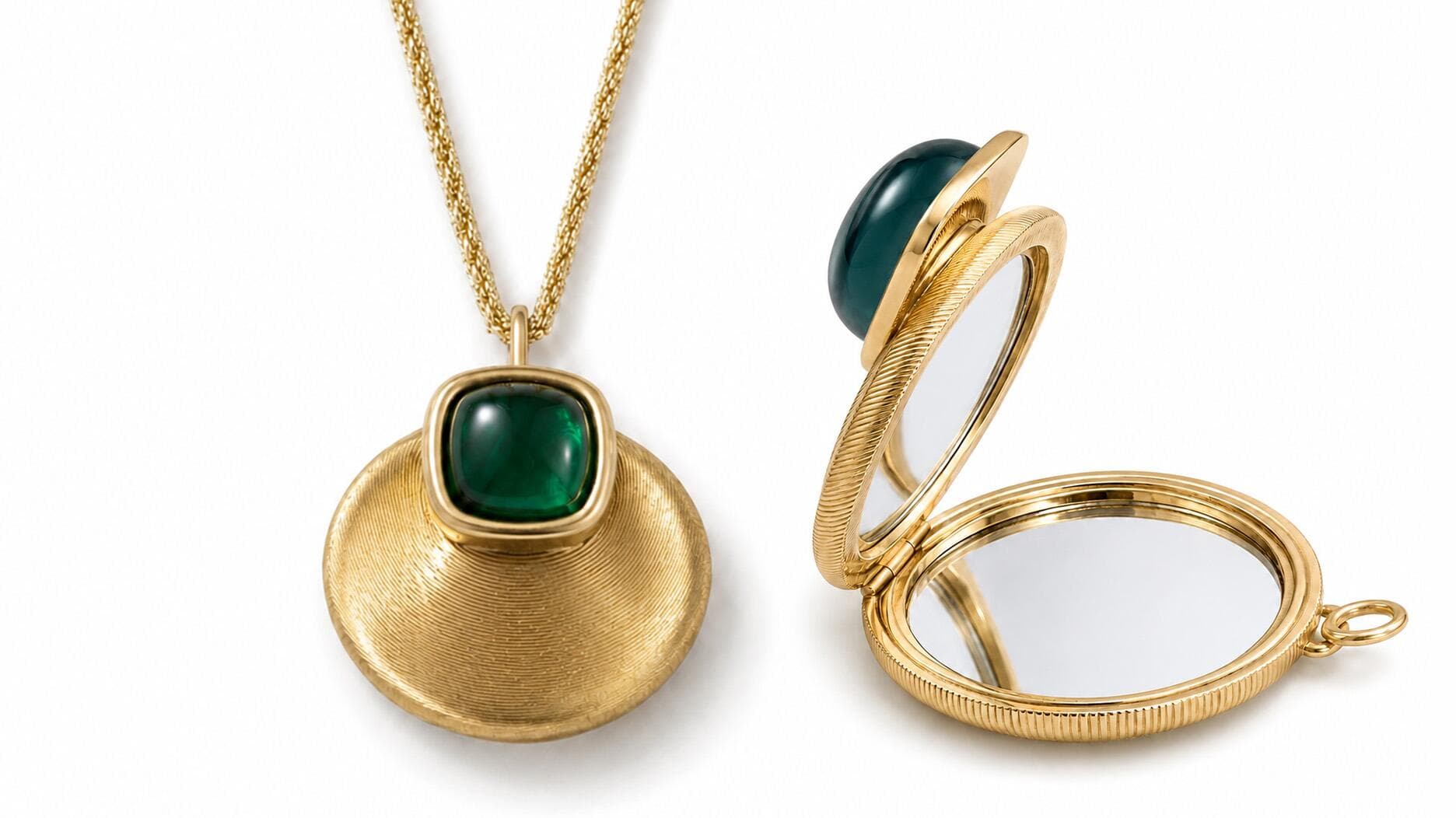
That softness changes the entire cleaning conversation. Emeralds sit at the other end of the practical spectrum for routine care: warm, soapy water with gentle scrubbing is the safest way to clean them.
What you can usually handle at home
Home care should be limited to the least invasive option that the jewel can safely accept. For emeralds, warm, soapy water with gentle scrubbing is the safest routine option, and that kind of measured cleaning belongs to pieces with sturdy settings and no delicate surface treatments. Even then, the goal is removal of surface grime, not restoration, because the minute a piece requires pressure, heat, or strong solvent, you have crossed from care into risk.
For antique pieces more broadly, the safest at-home habit is restraint. Use soft, dry handling, keep pieces separated in storage, and treat any jewel with multiple materials as if the most delicate element sets the rules. If a piece includes opal, pearls, or other soft or porous components, the conservative choice is to stop short of anything more forceful than very gentle surface wiping, because the material facts alone make abrasion a real threat.
When the piece belongs with a specialist
Some jewels should not be cleaned at home at all. The Smithsonian American Art Museum places meaningful objects in the hands of trained professionals, and that principle fits heirloom jewelry with historical, sentimental, or monetary weight. Once a piece has loose stones, failing joints, old repairs, fragile mountings, or surfaces that appear unstable, a specialist restorer can assess the construction before cleaning begins.
That caution matters because museum conservation works by testing what can be touched, wetted, or lifted, and by avoiding wet cleaning when pigments or materials are soluble. Jewelry can present the same problem in miniature. An antique brooch might combine a soft gem, soldered settings, and decorative elements that respond differently to moisture or friction, so the right conservator is the one who can decide which part of the jewel can be cleaned at all, and which part must be left alone.
For owners of important heirlooms, local museums, galleries, or historical societies can be useful places to ask for a recommendation.
Why age and history change the rules
The Victorian era ran from 1837 to 1901, and the period’s jewelry included mourning pieces that became widely popular after Queen Victoria’s grief for Prince Albert. Those jewels can be deeply personal records as well as decorative objects, which makes indiscriminate polishing or replacement work especially costly.
Hair jewelry adds another reason to slow down. It was fashionable for hundreds of years before fading around 1925, and surviving examples can be remarkably vulnerable because they often rely on organic material and intricate handwork.
Keep antique jewelry wearable without erasing it
Store pieces separately, keep cleaning as minimal as the materials allow, and let opal, pearls, and other soft components set the limits on what is safe. Use warm, soapy water only where the material can take it, as with emeralds, and leave meaningful, fragile, or historically important pieces to trained conservators.
This article was produced by Prism’s automated news system from verified source data, official records, and press releases, then run through automated quality and moderation checks before publishing. The system is built and supervised by the people who set the standards it runs under. Read our full AI policy.
Did this article answer your question?