Ancient Egyptian jewelry blended adornment, protection and afterlife symbolism
Ancient Egyptian jewelry made beauty do double duty, turning scarabs, heart amulets and seal rings into objects of power, identity and afterlife belief.
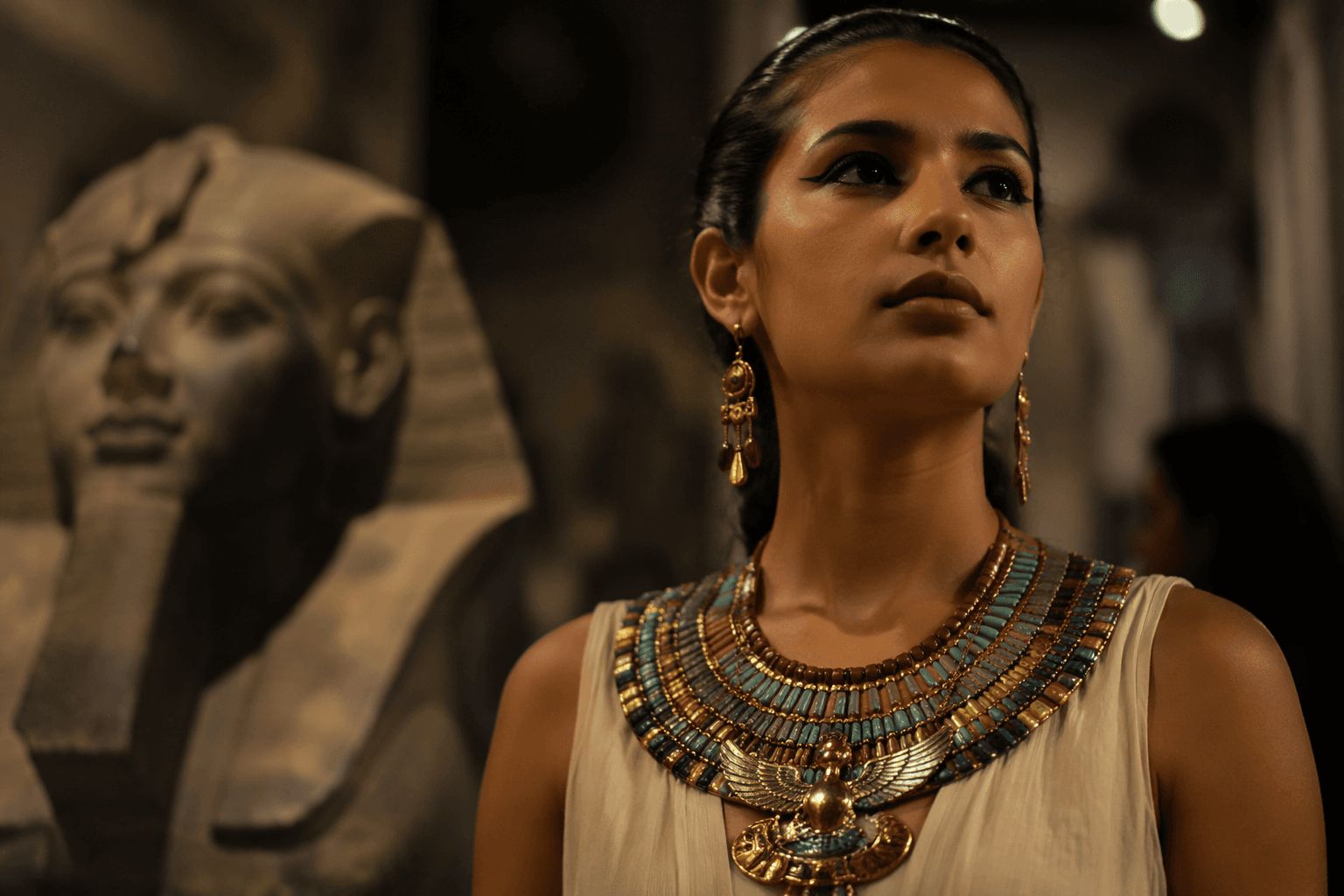
Ancient Egyptian jewelry never separated beauty from belief. Worn by people across social classes and buried with the dead, it worked as ornament, status marker and protection at once, which is exactly why its imagery still feels so persuasive in vintage-inspired pieces today.
Adornment with a purpose
The smallest Egyptian jewels could carry the biggest meanings. The Metropolitan Museum of Art notes that amulets often measured just 2 to 6 centimeters, yet they were dense with symbolism: animals, deities, sacred signs and miniature objects all appeared in these tiny forms. Ancient makers used faience, stone and metal, but they also trusted natural materials such as claws and shells to hold protective power.
That compact scale is part of the modern appeal. A scarab pendant or talismanic charm can still feel intimate on the body because it follows the same logic as the ancient originals: a small object, worn close, meant to shape the fate of the wearer. In Egyptian jewelry, size rarely determined importance. Meaning did.
Scarabs, hearts and the language of protection
Among the most enduring motifs is the scarab. Favored throughout Egyptian history, it was tied to the morning sun and to renewal, which made it a natural emblem for jewelry meant to renew the wearer’s prospects in life and death. The Met notes that funerary winged scarabs could be about 25 centimeters wide, a scale that turns the protective idea into something almost architectural.
Heart amulets pushed that belief even further. For the ancient Egyptians, the heart was the source of intelligence, feelings and actions, so it had to be safeguarded in burial. Heart amulets were placed on the mummy to protect the heart during the Weighing of the Heart, the judgment scene in which the deceased needed to respond positively. That spiritual logic explains why so many later collectors are drawn to Egyptian revival pieces with heart motifs, scarab forms or other symbols that seem to promise guidance, resilience and safe passage.
Rings that identified and authenticated
Not all Egyptian jewelry was purely funerary or devotional. Signet, or seal, rings served a practical civic role, authenticating documents and carrying the wearer’s name and titles on the bezel. These were working objects as much as precious ones, and that mix of function and prestige has always given them special appeal.
Modern buyers respond to that same tension. A ring that reads as both declaration and tool, whether ancient in spirit or inspired by the past, feels more substantial than a purely decorative jewel. Egyptian seal rings show how identity could be worn, sealed and recognized in one small object. That idea still resonates in vintage collecting, where the most compelling pieces often look as if they belonged to a private vocabulary rather than a passing trend.
Tutankhamun and the shock that revived Egypt
The modern hunger for Egyptian motifs accelerated in 1922, when Howard Carter and Lord Carnarvon discovered Tutankhamun’s tomb in the Valley of the Kings. The burial chamber yielded gold-covered chariots, shrines, coffins, jewelry and the famous gold funerary mask, a concentration of riches that made the ancient world suddenly feel immediate. Britannica describes the Tutankhamun treasure now housed in the Egyptian Museum in Cairo as the biggest collection of gold and jewelry in the world.
That discovery did more than fill newspaper columns. It helped ignite Egyptomania and gave ancient Egyptian imagery a central place in the visual language of Art Deco. By the mid-1930s, the style had spread far beyond jewelry into architecture, fashion, interior design and popular culture. Egyptian revival pieces from that era often translate the ancient mood into cleaner, more geometric forms, but the underlying attraction is the same: a jewel that suggests history, power and ritual all at once.
What still draws collectors in
The best Egyptian-inspired vintage jewelry works because it keeps the original contract intact. It offers ornament, but also memory. It offers surface beauty, but also the promise of protection, renewal or personal identity. That is why scarabs, amulets and signet forms continue to show up in collecting circles, especially when they are rendered with confident gold work and enough symbolic clarity to feel intentional rather than decorative by accident.
- Scarabs communicate renewal and a direct link to ancient belief.
- Heart motifs evoke the afterlife judgment scene and the idea of safeguarding the self.
- Seal-ring silhouettes signal authority, inscription and personal identity.
- Small-scale amuletic forms feel wearable because the ancient model was intimate from the start.
For a collector, that combination matters. A vintage Egyptian revival jewel is most compelling when it does more than quote the past. The strongest pieces carry the old Egyptian idea forward: adornment that protects, identifies and endures, long after the style has moved through one civilization and into another.
This article was produced by Prism’s automated news system from verified source data, official records, and press releases, then run through automated quality and moderation checks before publishing. The system is built and supervised by the people who set the standards it runs under. Read our full AI policy.
Know something we missed? Have a correction or additional information?
Submit a Tip