Ancient jewelry surges as collectors seek meaning, rarity, and history
Ancient-looking jewels are back in demand, and the clues that matter most are the ones you can inspect: carving, metalwork, provenance, and the story a ring can prove.
The newest jewelry obsession reaches back centuries
The most surprising thing about the current ancient-jewelry boom is that it does not look new at all. Intaglios, snake motifs, and other antiquity-linked symbols are drawing collectors because they offer something modern luxury rarely can: a piece that feels rare, legible, and personally charged with history.
That appetite is not abstract. Buyers are chasing objects that move from ancient Egypt through the Byzantine era, and they are willing to pay for the difference between a jewel that merely looks old and one that can actually prove where it came from. In a market defined by uncertainty, these pieces read as portable archives.
What an intaglio really is, and why it keeps resurfacing
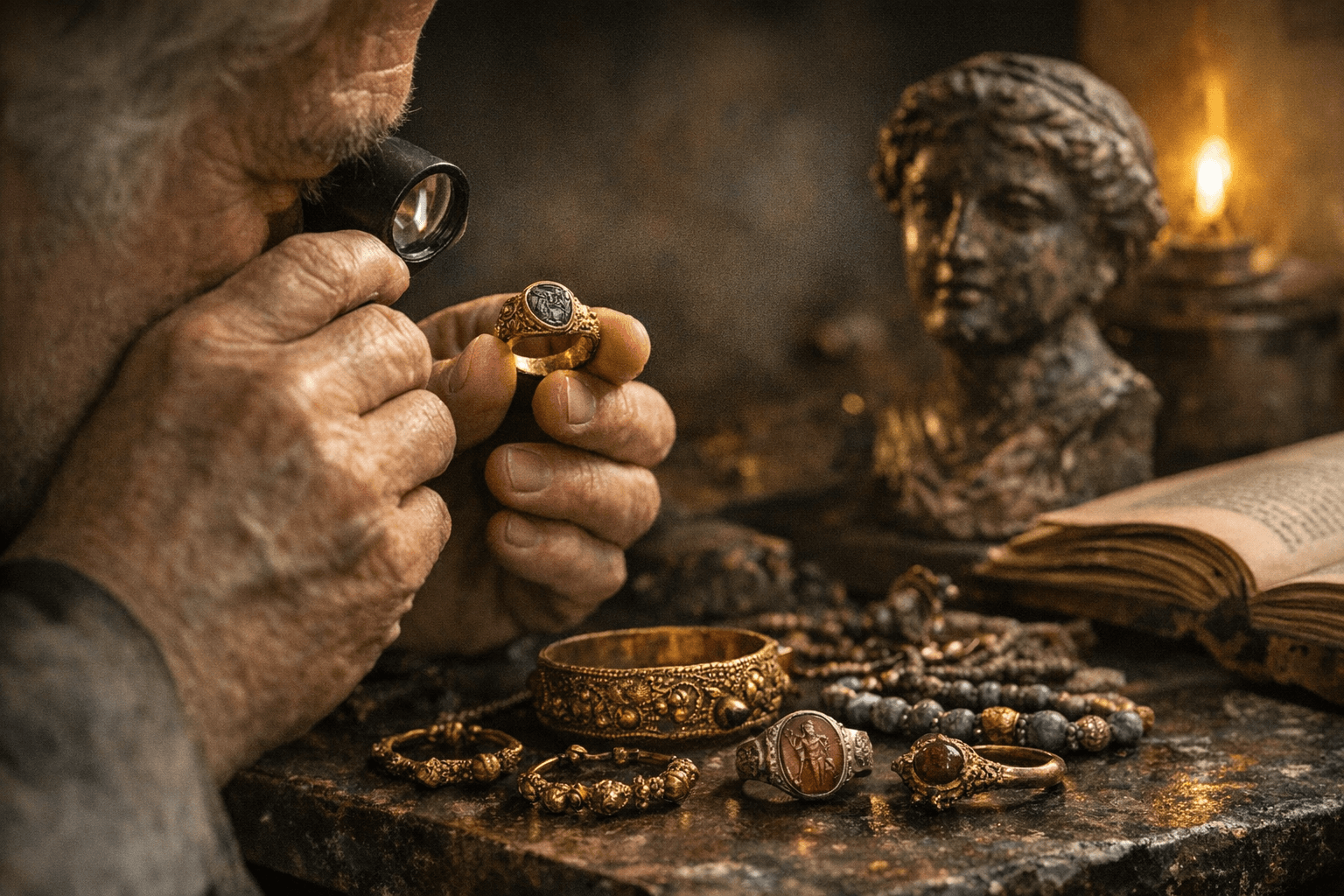
At the center of the category is the intaglio, an engraved semi-precious stone, often carnelian, chalcedony, agate, or jasper, usually cut as a ringstone. The surfaces are small, but the imagery can be vivid, with mythological figures such as Apollo, Hygieia, satyrs, nereids, and other gods and goddesses appearing in miniature relief.
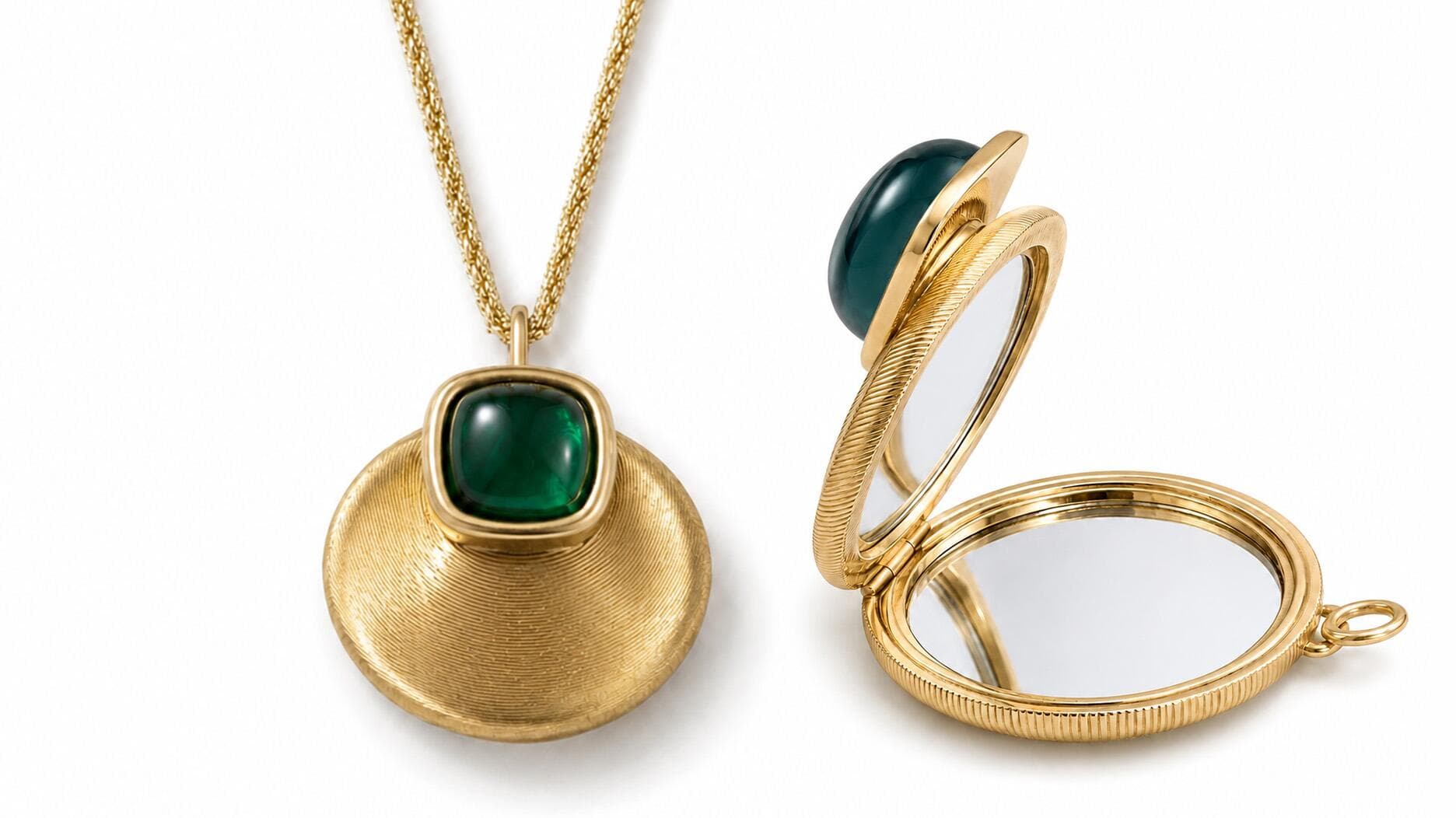
That is part of the appeal. An intaglio is not just decorative, it is coded, and the code has lasted for centuries because it combines craft, symbolism, and wearability. Modern jewelers have taken note, resetting loose intaglios into contemporary rings and pendants, which helps explain why this antique language keeps appearing again in current luxury jewelry.
Snake motifs work in a similar way. They are instantly recognizable, historically loaded, and easy to read as symbols of continuity and power, which makes them attractive to buyers who want a jewel that carries meaning as well as sparkle.
The auction results tell the story better than the mood board
Christie’s offered one of the clearest snapshots of the market on April 9, 2024 in New York, when its Antiquities sale included nearly 60 engraved gems mounted in gold rings. The estimates ran from about $700 to $30,000, with most lots clustered between $4,000 and $6,000, a range that shows how broad the appetite has become for this category.
What gave those pieces extra weight was provenance. Christie’s said many came from prestigious older collections and had well-documented histories, the kind of paper trail collectors prize because it turns beauty into evidence. Another Christie’s sale, featuring 19 ancient jewelry pieces from the Kofler-Truniger collection, brought in £447,000, more than three times the estimate.
Freeman’s has been pushing the category as well. It launched annual “Jewelry Through the Ages” sales in 2023, and its March 30, 2026 sale, held online and in Chicago, included 276 lots ranging from ancient to neoclassical jewelry. The spread was wide, with Western Asiatic, Egyptian, Phoenician, Sumerian, and Achaemenid pieces all in the mix.
One Roman carnelian ring sold for $18,900 against a $500 estimate, a dramatic reminder that rarity and desirability can overwhelm the low end of the catalogue. Other highlights included Egyptian bead necklaces, scarabs, and a pair of Achaemenid gold earrings, all evidence that buyers are not just chasing a single motif, but an entire ancient visual vocabulary.
How to tell a genuinely old-inspired piece from a modern revival
The easiest mistake is to assume that anything with a carved stone and a classical profile must be antique. In reality, the market is full of hybrids, old stones in new mounts, modern pieces made in ancient style, and true period jewels that have been reset for contemporary wear. The difference matters.
- Look at the stone first. Intaglios are usually carved from semi-precious material such as carnelian, chalcedony, agate, or jasper, and the carving should feel intentional rather than shallow or decorative.
- Study the subject matter. Mythological figures, scarabs, and ancient deities point toward an antiquity-linked tradition, but they can also be revived by modern makers who borrow the same iconography.
- Check the mount. A gold ring setting can be old, later, or newly made. A convincing old piece often shows a relationship between stone and mount that feels historically coherent, while a revival may place an ancient-style gem in a sharply contemporary setting.
- Ask for provenance, not just a story. Well-documented ownership history is the strongest clue that the piece belongs to a serious collecting category rather than the costume-jewelry aisle.
- Expect wear, but not sloppiness. Age can show in softened edges and honest surface marks. Damage, crude repairs, or vague origin claims should make you pause, especially when a piece is marketed as “ancient” without specifics.
That distinction is the heart of the appeal. A modern jewel that borrows ancient forms can be beautiful, but a piece with real provenance offers something more layered: craft, history, and traceable survival.
Why collectors are drawn to these pieces now
The current surge makes sense because the category answers several desires at once. Ancient jewelry offers rarity, but also symbolism, and collectors are increasingly responding to objects that feel personal rather than generic. A jewel with an intaglio, a snake, or a scarab does not just decorate the body, it signals memory, continuity, and the long life of a design language.
There is also a supply problem. Dealers say demand now outpaces supply, which is why strong pieces have become harder to source and why the best examples, especially those with older collection histories, can rise far beyond estimate. That scarcity is not just market heat, it is part of the story the pieces tell.
The ancient-jewelry boom is less a flash than a reorientation. Collectors are treating these jewels as evidence, not just ornament, and the best ones reward that attention with the one thing modern luxury can rarely manufacture: history you can hold.
This article was produced by Prism’s automated news system from verified source data, official records, and press releases, then run through automated quality and moderation checks before publishing. The system is built and supervised by the people who set the standards it runs under. Read our full AI policy.
Did this article answer your question?