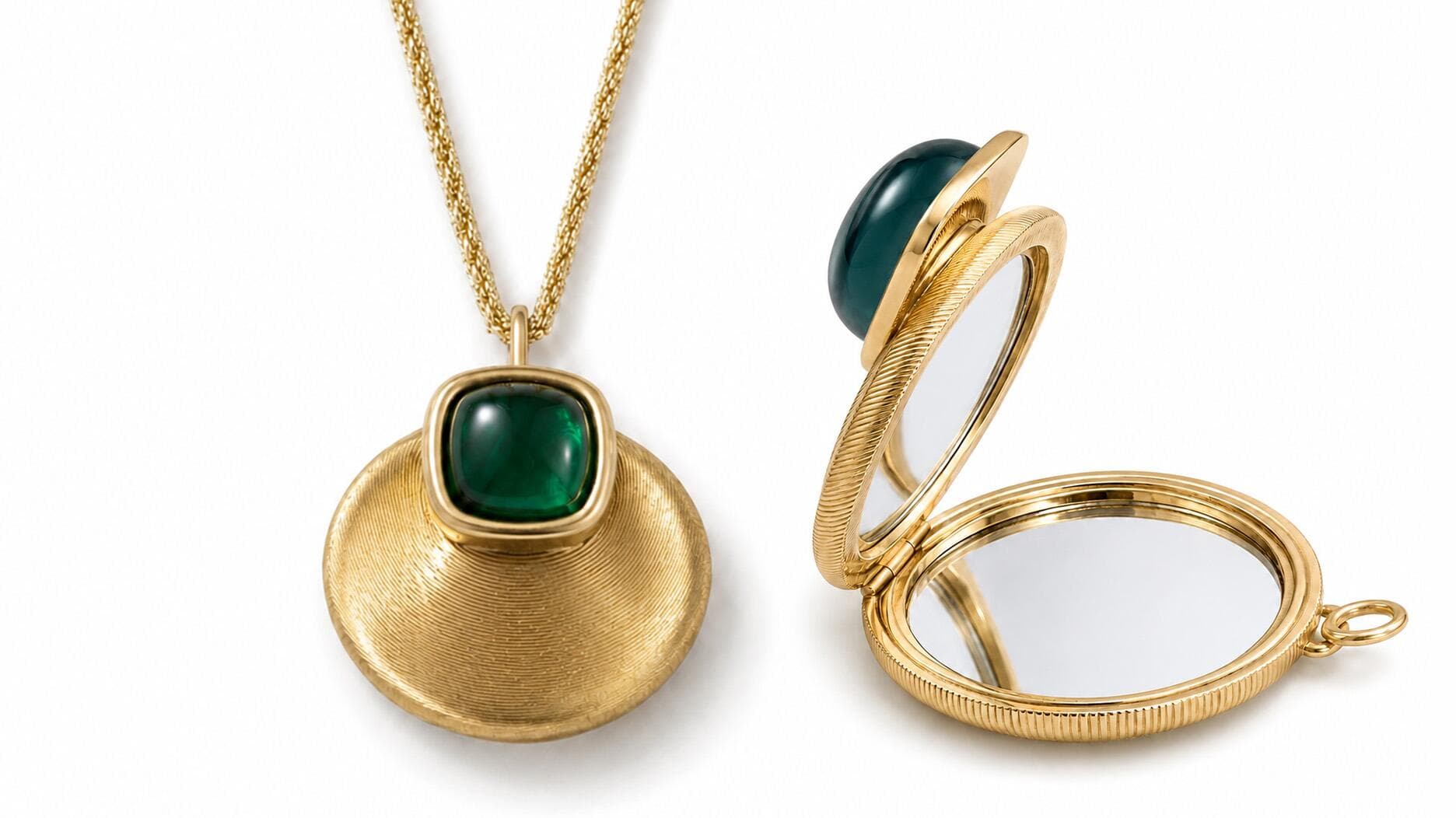
Richmond’s Veiled Mirror spotlights mourning jewelry, Berlin iron, and Art Deco pieces
Richmond’s Veiled Mirror turns antique jewelry into a lesson in symbolism, from mourning locks to Berlin iron and Art Deco geometry.
A shop that teaches you how to read an object
The Veiled Mirror does something rare in antiques retail: it invites you to look more closely. In Richmond’s Arts District, the brick-and-mortar shop at 209 N. 3rd St. gathers jewelry and curiosities from the 1600s through the 1930s, and the pleasure is not only in what is beautiful, but in what can be decoded. A mourning brooch, a length of Berlin iron, a sharp Art Deco line, each piece arrives with evidence built into its construction.
Olivia Lloyd and Kathryn Parker opened the storefront in 2026 after starting the business online in 2021, and their taste runs toward the unusual, the dark, the romantic, and the macabre. That sensibility suits the shop’s name, which refers to the Victorian custom of veiling mirrors after a death, a gesture that turns a domestic object into a sign of grief, ritual, and memory. In other words, The Veiled Mirror is not merely selling antiques. It is staging the emotional language of the past.
What the inventory tells you at a glance
The store’s collections move through Georgian, Edwardian, Berlin Iron, and Art Deco categories, with antique jewelry and curiosities spanning the Georgian period through the Art Deco era. That range matters because each period leaves behind a different set of clues. Georgian pieces often reward close inspection for hand fabrication and wear, while Edwardian designs tend to lighten, refine, and open up the surface. Art Deco brings symmetry and harder edges, which makes it easier to spot if a piece belongs to the era or simply borrows its look.
For a newcomer, the most useful habit is to treat each piece as a document. Look for clasp styles, construction seams, stone cuts, and the quality of the metalwork. A true antique usually shows the logic of its time in the way it was made, not just in the way it looks from across the room.
Mourning jewelry: grief made visible
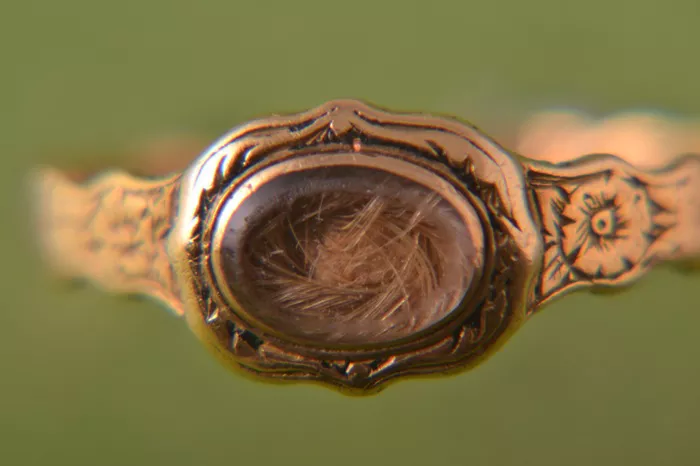
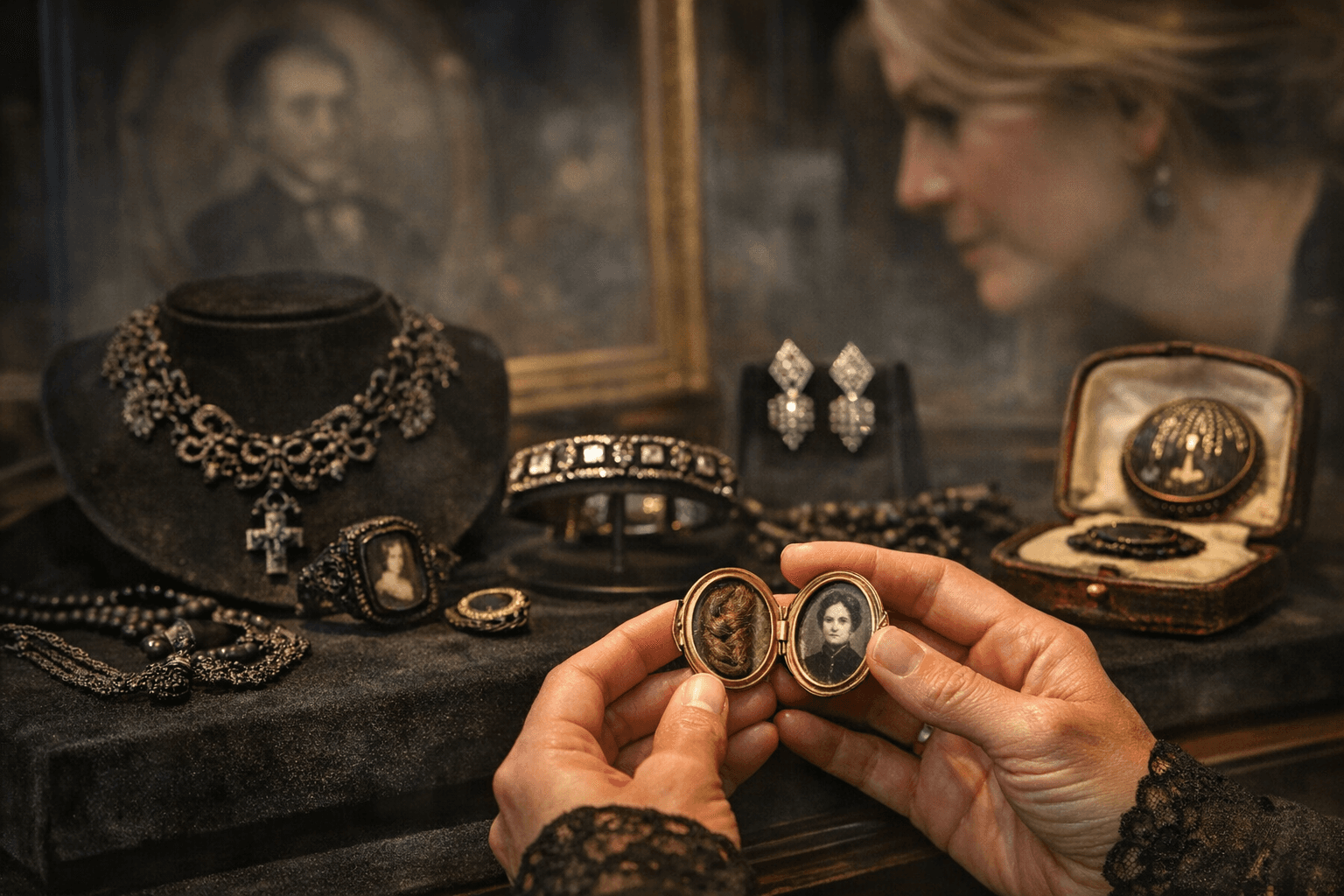
Mourning jewelry remains one of the clearest examples of jewelry as personal narrative. These pieces were designed to commemorate the dead, and their most persuasive details are often the most intimate: hairwork, black enamel, dark stones, seed pearls, and restrained silhouettes. The emotional force comes from how specifically they were made to be read by the people who understood the symbols in their own era.
At The Veiled Mirror, mourning jewelry fits the shop’s larger interest in the story-rich and the slightly unsettling. When you inspect such a piece, pay attention to whether the materials and the finish feel aligned with the period. Patina, wear, and the delicacy of the setting can help separate an authentic relic from a later revival piece. The beauty of mourning jewelry is that it carries both design and message in the same small frame.
Berlin iron, and why its darkness matters
Berlin iron is one of the most distinctive materials in the shop’s orbit because it turns austerity into ornament. Its dark, often lacy appearance gives it a visual severity that can read almost like cut paper in metal. Historically, it has a power that is both decorative and symbolic, especially when placed beside the brighter, more overtly jeweled traditions of later periods.
For collectors, Berlin iron offers a useful lesson in authenticity. Its appeal lies in the precision of the casting or forging, the crispness of the pattern, and the overall restraint of the form. If a piece feels too glossy, too light, or too mechanically smooth, it may not have the presence that makes Berlin iron so compelling. The best examples have a gravity that is unmistakable in hand.
Art Nouveau and Art Deco, two very different kinds of glamour
The Veiled Mirror also moves into Art Nouveau and Art Deco territory, and those categories reward very different eyes. Art Nouveau tends to favor movement, curves, and organic motifs, while Art Deco sharpens everything into geometry and rhythm. A newcomer can learn a great deal simply by comparing the two side by side.
Art Deco pieces in particular are useful training tools because their symmetry, calibrated contrast, and architectural lines are easier to recognize than the softer inventions of earlier styles. Once you know what to look for, you start noticing how the period favors balance over flourish, and how good examples can feel almost engineered. That clarity is part of the draw of this shop: it helps you see style as structure, not just surface.
How to browse without feeling out of your depth
The best way to approach a shop like this is the same way a curator would approach a case in a museum, with curiosity and patience. Start with the object’s construction before you worry about value. Ask yourself what the clasp, the mounting, the metal, and the wear patterns suggest. A piece that has lived a long life will usually tell you so.
- Examine the back as carefully as the front, since old mounts, clasps, and pin fittings often reveal more than the face.
- Compare the stone cuts and settings with what you know of the period, especially in Georgian, Edwardian, and Art Deco work.
- Notice whether the design feels handmade, cast, or machine-finished, because each can point to a different era.
- Let the dark materials, from mourning jewelry to Berlin iron, be a clue rather than a warning. In this shop, somber often means historically rich.
A few details are worth keeping in mind:
The Veiled Mirror’s monthly classes and lectures reinforce that approach. The shop is not only a place to buy, but a place to learn the language of antique objects, from the 17th century through the early 20th century. Its announced Absinthe After Hours event series extends that idea into a social setting, with an emphasis on 17th- through early 20th-century history, fancy crafts, and the rituals of gathering that shaped the period’s decorative arts.
Why the shop fits Richmond now
The Veiled Mirror adds another distinct voice to Richmond’s Arts District, where storefronts and specialty shops give the neighborhood its texture. Style Weekly called it “The Best Place to Find Antiques You Didn’t Know Existed,” a description that captures the shop’s central appeal: discovery with context. It is the kind of place where an inherited ring, an estate-sale brooch, or a small fragment of blackened metal can become the start of a historical reading.
That is what makes the shop memorable. It does not ask you to admire antiques from a distance. It teaches you to recognize them, to ask what they were for, and to understand why their details still matter.
This article was produced by Prism’s automated news system from verified source data, official records, and press releases, then run through automated quality and moderation checks before publishing. The system is built and supervised by the people who set the standards it runs under. Read our full AI policy.
Did this article answer your question?