Animal jewels steal the spotlight at Las Vegas market week
A hedgehog, a monkey and a polar bear show how animal jewels reveal vintage pedigree, from David Webb's Kingdom to Van Cleef's ongoing bestiary.
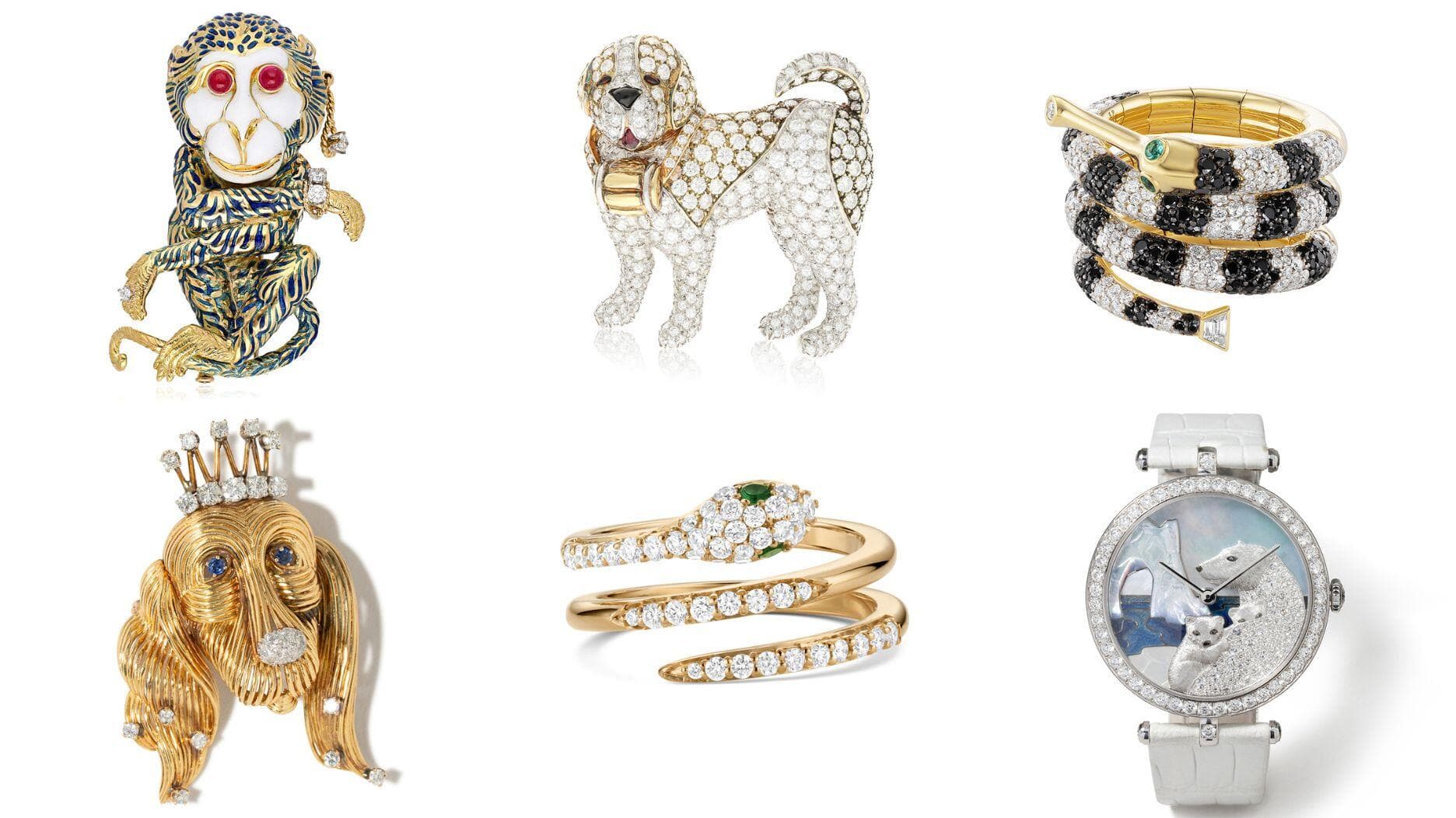
The most revealing object in Las Vegas was not the biggest diamond or the loudest cuff. It was a hedgehog nicknamed Chia Pierre, its back bristling with inverted green diamonds, its body cast in 18-karat yellow gold, and its price set at $6,560. Set beside a David Webb monkey, a hippo cuff and a Van Cleef & Arpels polar bear watch, it turned market week into something more useful than a roundup of pretty things: a lesson in how animal jewelry signals lineage, craft and intent.
Why animal jewels matter in a vintage case
Las Vegas jewelry market week has long been treated like the trade’s "Jewelry Olympics," and the scale of the gathering explains why these sightings matter. The Las Vegas Antique Jewelry & Watch Show positions itself as a global showcase for antique, vintage and estate jewelry, with merchandise that shifts from year to year as the market changes. Its most telling promise is not variety but character: signed pieces from Cartier, David Webb, Harry Winston, Patek Philippe, Van Cleef & Arpels and Rolex are the shorthand collectors use when they are looking for pedigree rather than novelty.
That is why animal motifs stand out so sharply in a room full of stone and metal. A well-made creature is never just cute. It is a compact exercise in sculptural compression, where a goldsmith has to suggest muscle, fur, feather or hide with a handful of surfaces, stones and eyes. In vintage jewelry, that kind of compression is often the clue that separates a collectible piece from a decorative one.
The language collectors should learn to read
Animal jewels that endure usually share a few visual habits. The head is expressive, but not cartoonish. The body is dimensional, not flat. Gemstones are used as punctuation, often in the eyes, the muzzle or along the spine, while enamel, repoussé or carved material gives the object a sense of life rather than illustration. Those are the signs that a maker understood the animal as a form to be modeled, not merely themed.
In Las Vegas, that distinction was visible across the case. The hippopotamus cuff and monkey brooch carried the sort of layered construction that vintage buyers prize. The polar bear watch drew its power from restraint: a miniature animal figure translated into a watch form without losing the maison’s polish. And the hedgehog, though contemporary, borrowed from the same vocabulary by turning scale, texture and light into part of the design.
David Webb still sets the standard for collectible animal jewelry
No house carries more weight in this category than David Webb. The brand identifies its celebrated animal jewelry as the Kingdom Collection, introduced in 1957, and that date matters. It places the work squarely in the era when American goldsmiths were pushing figural jewelry toward bold, almost architectural statements, with scale and surface as important as sparkle. For collectors, that midcentury origin is part of the appeal: these pieces are not whimsical afterthoughts, but a defined design language with a long internal history.
David Webb made that history explicit in 2021 with its first exhibition, "A Walk in the Woods: David Webb's Artful Animals," held on Madison Avenue in New York City from Sept. 19 to Oct. 2. The show explored the archives and made a simple point: animal jewelry is not peripheral to the brand, it is part of the house’s DNA. That helps explain why a Webb monkey brooch or hippopotamus cuff reads so differently from a casual novelty jewel. Even when the subject is playful, the execution is disciplined.
The monkey brooch in the Vegas lineup exemplified that discipline. Made in 18-karat yellow gold and platinum, it was set with brilliant-cut diamonds and cabochon rubies, then finished with blue and white enamel detailing. Those materials do more than decorate. The mix of gold and platinum creates tonal contrast, the cabochon rubies give the face a liquid, animal glow, and the enamel adds graphic definition without flattening the form.
The hippopotamus cuff was equally persuasive, but in a different register. Executed in 18-karat yellow gold repoussé with cabochon ruby eyes, it relied on relief and volume. Repoussé has a particularly apt role in animal jewelry because it lets the metal itself suggest body and contour. A hippo needs mass, not delicacy, and this is the kind of technique that turns mass into elegance.
The lion bracelet, also seen in the roundup, fits that same collecting logic even without needing to shout for attention. In the vintage market, lions tend to endure because the motif works so well with Webb’s muscular vocabulary: they can be rendered as emblem, profile or sculptural head, each variation still clearly part of the house’s bestiary.
Van Cleef & Arpels approaches the animal from the other side
If Webb’s creatures are assertive and architectural, Van Cleef & Arpels tends to soften the silhouette. The house’s current Lucky Animals collection includes Teddy Bear, Fox, Dachshund, Bichon Frisé and Frog designs, which extends the maison’s tradition of endearing creatures into a more accessible register. That matters for vintage readers because it shows how an established house can keep an animal theme alive without abandoning refinement.
The polar bear watch in the Vegas case captured that balance. Crafted in platinum and 18-karat white gold, then set with carved mother-of-pearl and diamonds, it was a study in pale surfaces and quiet luxury. The carved mother-of-pearl gives the bear a luminous, almost fur-like softness, while the diamonds sharpen the form just enough to keep it from drifting into sentiment. It is unmistakably Van Cleef in the way it turns precious materials into a small, controlled scene.
What feels collectible, and what feels newly commercial
The clearest line between vintage-rooted animal jewelry and newer commercial design is not subject matter. It is control. The older, collectible pieces use the animal as a serious design problem, solving it with sculptural goldwork, cabochon eyes, enamel accents and strong house proportions. They feel signed because they are built from a recognizable grammar.
Chia Pierre, by Lauren Newton and Tamsin Rasor, is the exception that proves the rule. Its 18-karat yellow gold body and inverted green diamonds show wit and technical intelligence, and its $6,560 price places it in a contemporary sphere that feels far more approachable than the rarefied top tier of signed vintage animal jewels. But its value lies in how it borrows the old language of the genre: a compact creature, a tactile surface, an idea that can be read at a glance. It is inventive and attractive, yet it does not carry the archival heft of a Webb monkey or the institutional continuity of a Van Cleef bear.
For anyone hunting older animal jewels, that is the real lesson from Las Vegas. Look first for house signatures that have history, then for construction that models an animal rather than merely depicting one. The best pieces make the creature feel inevitable in gold, stone and enamel. That is why they survive the market cycle and remain the kind of objects collectors recognize instantly, even across a crowded case in Nevada.
This article was produced by Prism’s automated news system from verified source data, official records, and press releases, then run through automated quality and moderation checks before publishing. The system is built and supervised by the people who set the standards it runs under. Read our full AI policy.
Did this article answer your question?