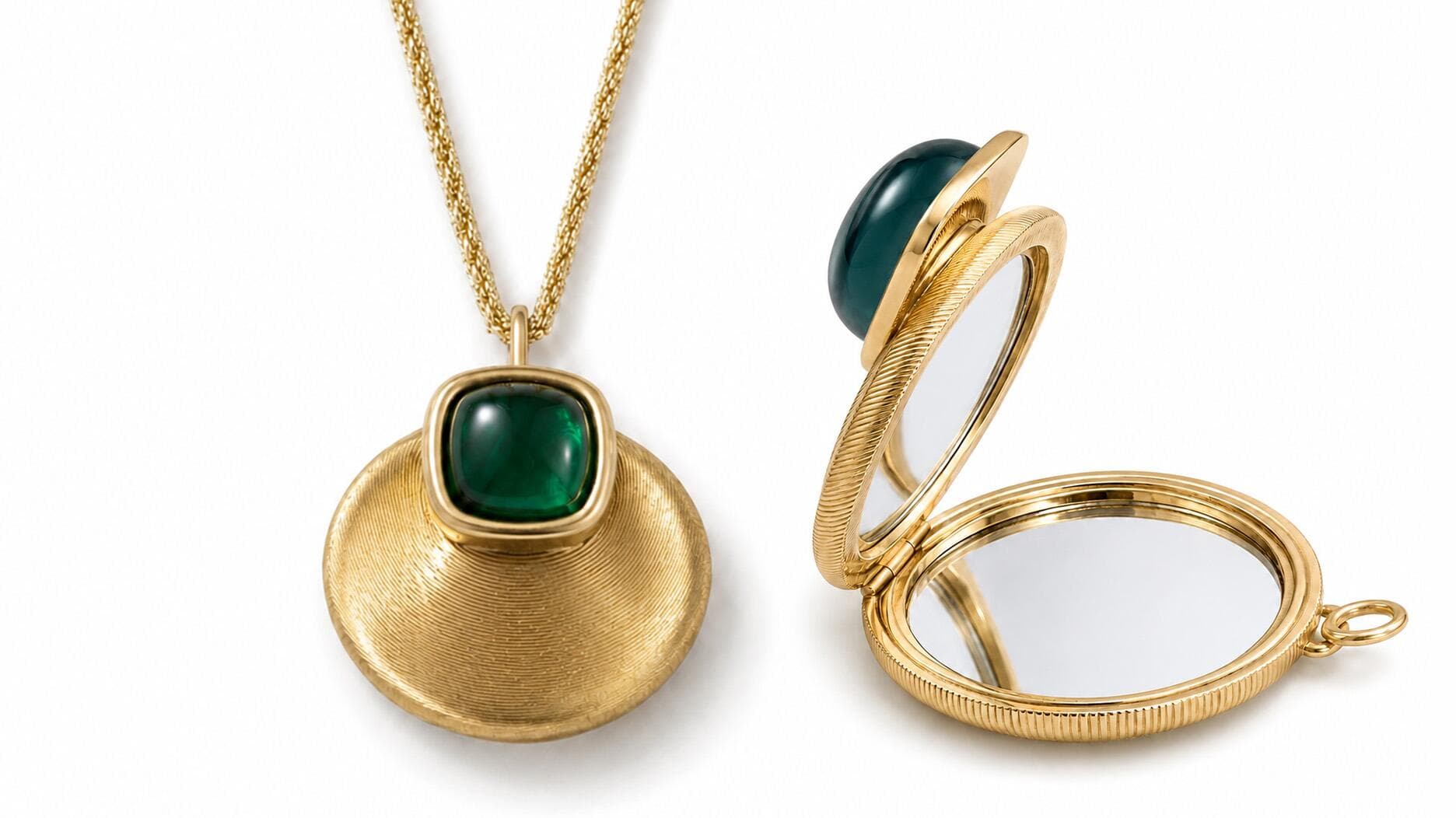
Antique jewelry revival shapes modern style and collector demand
Antique revival is shaping modern jewelry, but the real value lies in the clues: original settings, signed pieces, patina, and the history a jewel still carries.
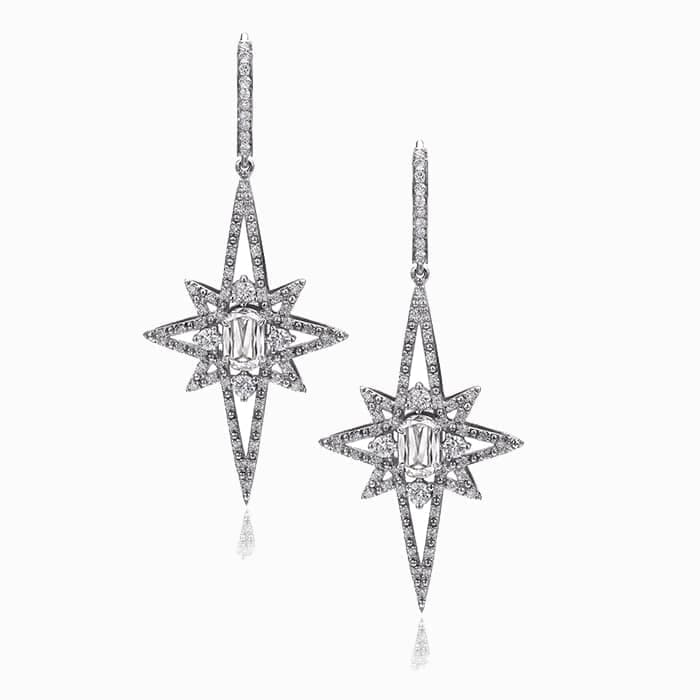
Antique jewelry as evidence, not just ornament
A ring with a softened shank, a brooch with hand-cut edges, a setting that looks older than the stone it holds: those are not just pretty details, they are clues. Antique and heirloom jewelry now sits at the center of contemporary style conversations because it carries history in plain sight, and the pieces that resonate most are often the ones that still look legible under a loupe.
That is the heart of the current revival. The American Gem Society frames antique and heirloom jewelry as an active force in contemporary style, not a museum-only category, and that perspective matches what collectors already know: the past keeps re-entering the market through pieces that feel personal, wearable, and evidence-rich.
Why revival keeps returning
Jewelry history has never moved in a straight line. The Metropolitan Museum of Art notes that nineteenth-century American jewelry often adapted earlier styles and techniques, and it also points out that fascination with historical imagery and antique ornament has resurfaced repeatedly across later eras. In other words, revival is not an exception in jewelry design. It is one of its defining habits.
René Lalique embodies that pattern. At Musée Lalique in Wingen-sur-Moder, France, he is presented as the designer who renewed jewelry at the end of the 19th century and, to some historians and contemporaries, the inventor of modern jewelry. Before he became synonymous with Art Deco glass, he had already made his name during the Art Nouveau period, when design looked backward and forward at once. That duality matters now, because today’s best revival pieces do the same thing: they borrow historical language without becoming costume.
What buyers are actually seeing on the market
The revival showing up in modern jewelry is not just about sentiment. It is about specific visual and material cues that make a piece feel rooted in another era. The most convincing examples tend to preserve older-looking proportions, historical ornament, and a sense of handwork that machine-finished jewelry often smooths away. The Met’s point about older jewelry preserving a wide variety of materials and techniques is useful here, because those techniques are often what separate a true period piece from a newer homage.
In practical terms, that means looking closely at the architecture of the jewel. Antique-inspired pieces may echo the surface richness of earlier work, but original pieces usually reveal more than style alone. They often carry evidence of age in the metal, the setting, and the way the design was made to be worn rather than merely displayed.
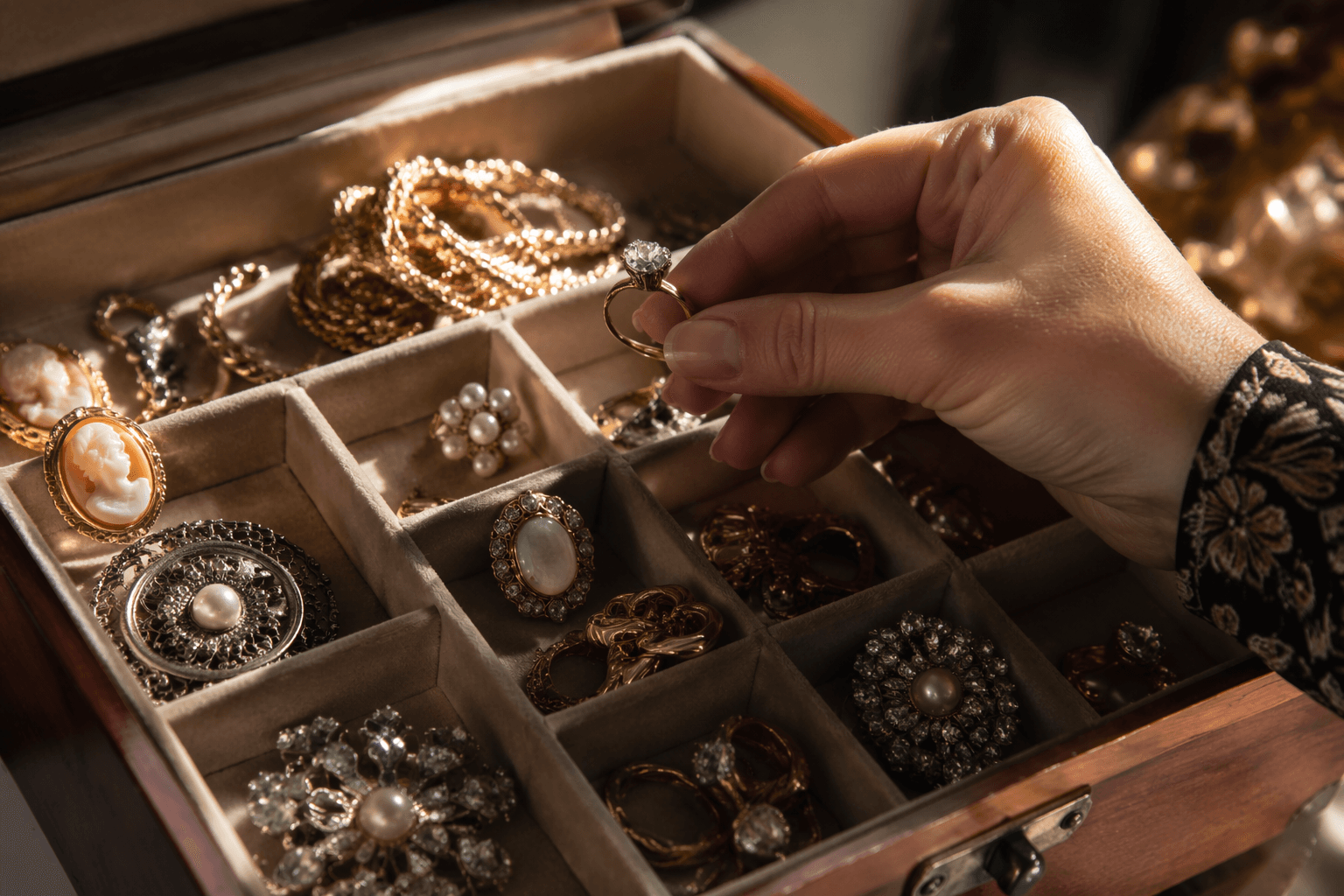
How to tell revival from original
The quickest mistake buyers make is assuming that an old-looking design is an old jewel. It is not. Revival pieces can be beautiful, and they can be expertly made, but they usually lack the layered evidence that accumulates over decades or centuries: authentic wear at the high points, signs of hand-finished construction, and the subtle irregularities that come from older techniques.
A good inspection should start with the back, the edges, and any visible signatures or marks. Sotheby’s continues to include vintage and signed pieces in its Fine Jewels sales, and that matters because signatures, hallmarks, and workshop traces can help place a jewel in a real historical chain rather than a stylistic echo. Christie’s makes the same case from another angle, describing its jewellery department as a place for antique pieces with rare craftsmanship and history. Those words matter because the market rewards proof, not just aesthetic resemblance.
The collector market is still rewarding provenance
The auction world is one of the clearest signs that antique jewelry has more than decorative value. Sotheby’s and Christie’s continue to stage jewelry sales in major hubs including New York, London, Geneva, Hong Kong, and Milan, which signals persistent demand across geographies and collecting cultures. When a category keeps showing up in those rooms, it is no longer a niche nostalgia play. It is an active market with institutional backing.
At Sotheby’s, Rahul Kadakia, Chairman of Global Luxury Group, has become one of the most visible auction figures across Geneva, Hong Kong, London, and New York. That kind of international reach matters because antique jewelry does not move only through private sentiment anymore. It moves through global taste, and global taste increasingly prizes pieces with a documented past.
Jemima Chamberlain-Adams, a Sotheby’s specialist, has also noted that antique jewelry’s popularity has expanded more recently and is increasingly visible on red carpets and in archival fashion styling. That is the bridge between collector demand and modern style. Jewelry that once lived in cases and estate lots now appears in fashion imagery, where its age becomes part of the point.
What separates collectible age from decorative imitation
For buyers, the highest-value pieces usually have more than an antique look. They have a clear relationship to their era. That can mean a signed setting, original materials, visible craft, or a history that reads coherently from stone to mount to finish. The closer a jewel stays to the techniques and visual language of its period, the more likely it is to interest collectors as well as stylists.
A useful way to read a piece is to ask three questions:
- Does the construction feel consistent with the period it claims to echo?
- Do the materials, marks, and workmanship support that story?
- Does the piece show the kind of wear and patina that come from real use and age, rather than artificial distressing?
Those questions matter because antique revival has a wide spectrum. At one end are contemporary jewels inspired by older forms. At the other are original period pieces whose craftsmanship, survival, and provenance make them historically meaningful. The market continues to value both, but not equally.
The strongest antique and heirloom jewels are not just beautiful objects. They are small archives, carrying the evidence of how jewelry was made, worn, and desired across time. In a market crowded with imitation nostalgia, that evidence is what turns a revived look into a collectible legacy.
This article was produced by Prism’s automated news system from verified source data, official records, and press releases, then run through automated quality and moderation checks before publishing. The system is built and supervised by the people who set the standards it runs under. Read our full AI policy.
Did this article answer your question?