Beth Bernstein’s guide makes antique jewelry accessible for collectors
Beth Bernstein turns antique jewelry into a practical buying tool, showing collectors how to read period clues, value pieces, and wear old jewels with confidence.

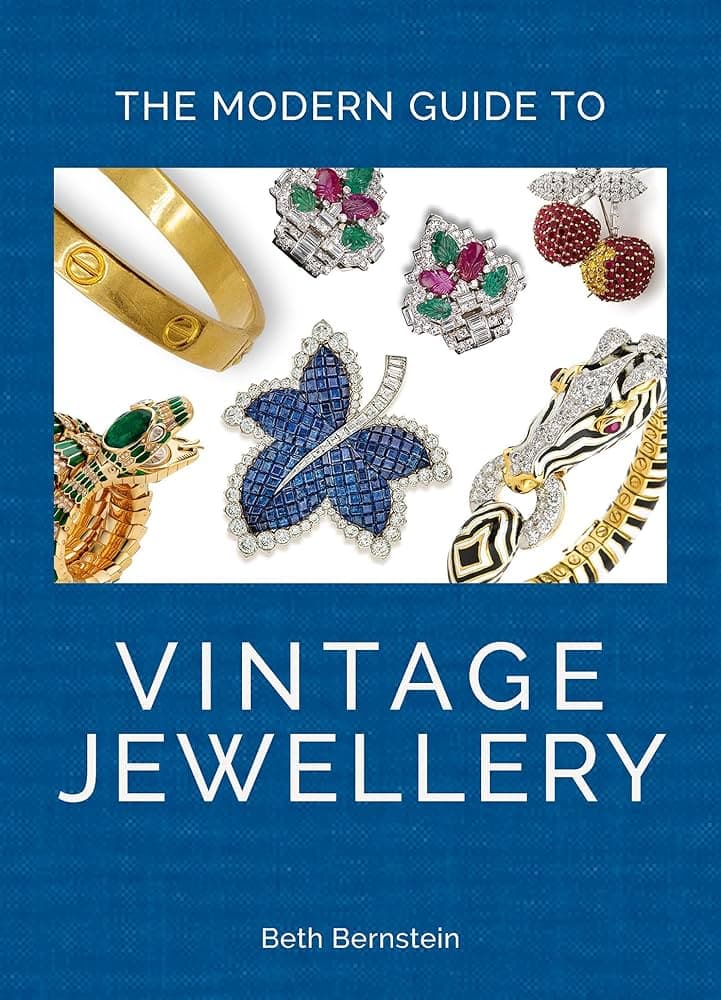
An old brooch from a family box or an estate-sale ring with a softened shank can feel like a tiny archive. Beth Bernstein’s The Modern Guide to Antique Jewellery treats pieces like that as readable objects, not untouchable relics, and that is what makes the book so useful to collectors trying to buy with confidence. Published by ACC Art Books in 2022, it moves from the 1700s to the early 20th century with one clear question in mind: what is this jewel, and what should it tell you?
Why the book feels practical, not academic
ACC Art Books describes the book as part travelogue, part educational guide, and part celebration of historical jewelry, and that hybrid shape matters. At 192 pages, it is compact enough to use as a desk-side reference, yet broad enough to cover antique jewels across multiple centuries without turning them into a dry chronology. Bernstein said she wrote it conversationally rather than scholastically, and that choice gives the book the feel of a knowledgeable dealer talking you through a tray of pieces rather than a lecturer standing behind a podium.
That conversational style is backed by first-hand material. Bernstein drew on anecdotes and quotes from international experts, dealers, and store owners, which gives the guide the kind of lived-in detail collectors want when they are trying to separate romance from reality. For a reader who already knows antique jewelry can be beautiful, the book’s value lies in making that beauty legible.
How to use it when dating a piece
The book is most helpful when a jewel looks old but refuses to announce exactly how old it is. Bernstein’s core advice is simple and practical: learn the characteristics and styles of each historical period before you buy. That matters whether you are holding a Georgian-style ring, a Victorian brooch, or a piece that sits somewhere between late 19th-century formality and early 20th-century restraint.
Because the book covers antique jewels from the 1700s through the early 20th century, it gives readers a period-by-period framework instead of a vague sense of “old.” That kind of structure helps collectors ask better questions about proportions, ornament, and construction before a seller’s story does all the work. The real collector problem is not just spotting age, but confirming whether the piece’s visual language matches the period it claims to come from.

What it teaches you to read: stones, materials, styles, and signatures
The guide’s strength is specificity. ACC Art Books says it covers how to identify popular gemstones, materials, styles, and collectible antique pieces, which makes it more useful than a pretty survey book that stops at broad historical mood. If you are trying to understand why one jewel feels convincingly period and another feels merely antique-inspired, those material and styling cues are where the answer usually lives.
Bernstein’s earlier advice on buying antique jewelry reinforces that approach: the buyer should know the characteristics and styles of each historical period, not just the headline era. That is especially important when a piece’s signature or maker’s name carries as much weight as its design. The book’s emphasis on reading those details gives collectors a way to move from admiration to analysis, which is where smarter buying begins.
How it handles value and modern wear
National Jeweler reported that the book also addresses how to value pieces in today’s market, and that makes it more than a style guide. Antique jewelry often lives at the crossroads of beauty, condition, rarity, and current demand, and Bernstein’s book acknowledges that reality instead of pretending every old jewel belongs in a museum. That market awareness matters because the same brooch can be charming, collectible, or overpriced depending on the craftsmanship and the quality of its period details.
The book also speaks to wearability, not just acquisition. National Jeweler noted that it helps readers choose old-school jewels for a modern-day lifestyle, which is a useful corrective to the idea that antique jewelry is too delicate or too formal to wear. Bernstein’s framing treats these pieces as living objects, meaning a collector can admire the craftsmanship while still imagining how a jewel works with contemporary clothes, posture, and daily use.
Where the guide takes you beyond the page
One of the book’s most collector-friendly additions is its where-to-shop directory, which points readers toward influential shops, markets, and trade fairs worldwide. The range stretches through New York, Los Angeles, London, Paris, and Amsterdam, a reminder that serious antique jewelry lives in a global ecosystem of dealers and venues rather than in isolated showcases. For buyers, that matters: provenance and sourcing are inseparable from where a piece is found.
That directory turns the book into a tool for making real-world decisions. Instead of leaving readers with theory alone, it points them toward the kinds of places where antique jewelry is actually handled, compared, and sold. In a category where condition, authenticity, and price can shift dramatically from one venue to the next, that practical map is as valuable as any chapter on style history.
Why Bernstein’s perspective carries weight
Bernstein has more than 20 years of experience in jewelry, and her career spans historian, author, journalist, and former designer. Forbes has described antique and period jewels as her specialty, and Bernstein herself has said this was her fourth book. That depth shows up in the way the guide balances scholarship with accessibility: she knows the field well enough to be precise, but she writes as someone who wants readers to feel at home inside it.
That instinct also explains why she wanted to write the book in the first place. She has said she did not want it to resemble the other jewelry books she had read, and the result is a guide that feels less like a shelf object and more like a working companion. For collectors, dealers, and jewelry historians alike, that is the real advantage: it makes antique jewelry readable, wearable, and worth understanding on its own terms.
This article was produced by Prism’s automated news system from verified source data, official records, and press releases, then run through automated quality and moderation checks before publishing. The system is built and supervised by the people who set the standards it runs under. Read our full AI policy.
Did this article answer your question?