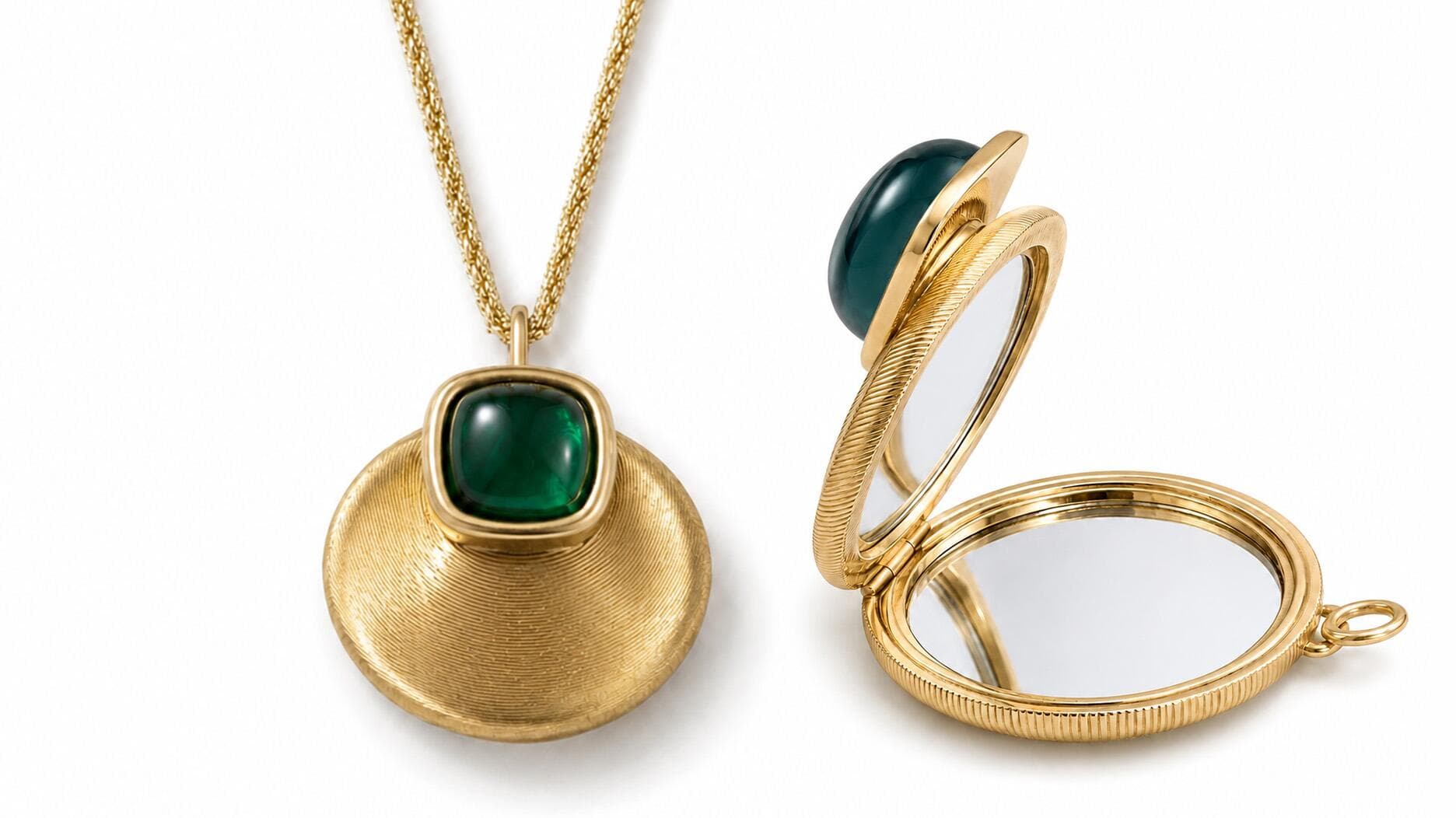
Beth Bernstein’s vintage jewelry guide spans Art Deco to disco-era glamour
Bernstein’s new guide turns vintage jewelry into a style toolkit, showing how to mix eras, metals, and statement pieces without losing a jewel’s character.
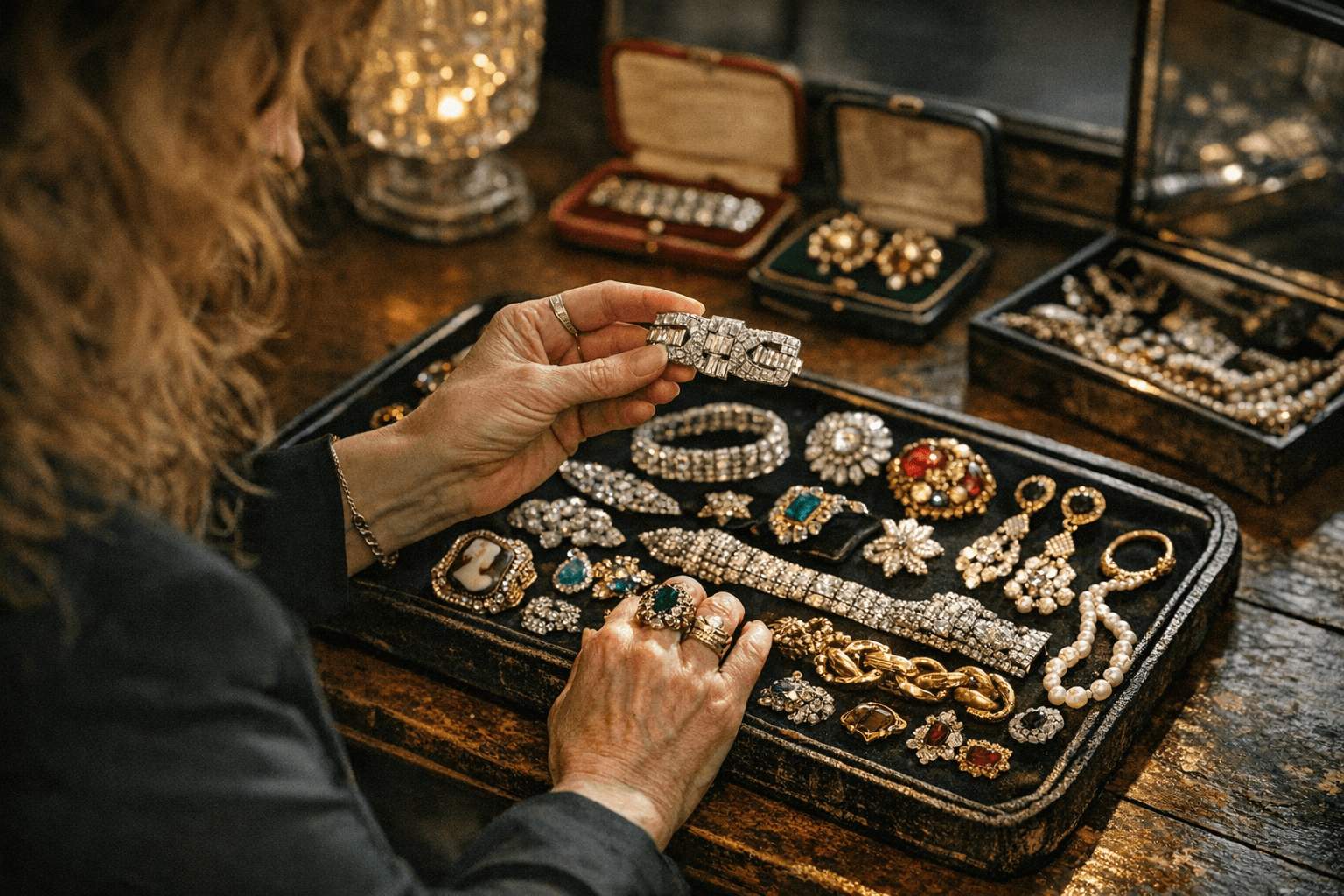
A brooch can change the entire language of an outfit. Pinned at the lapel, it is no longer just a relic from another decade. It becomes a clue, a signature, and, in Beth Bernstein’s hands, a blueprint for how vintage jewelry can live beautifully in a modern wardrobe.
Bernstein’s new guide, *The Modern Guide to Vintage Jewellery*, is built for readers who want more than romance. Published by ACC Art Books as a 216-page volume, it moves from the 1930s through the early 1980s and teaches the practical skills that make collecting feel less mysterious: how to identify gemstones, materials, styles, and collectible pieces, how to buy at auction, and how to mix vintage with antique and contemporary jewelry. It is also a sequel to her 2022 book, *The Modern Guide to Antique Jewellery*, which tells you exactly where Bernstein sees this project in her larger body of work: as a continuation of the same collector’s education, only with a later, more fashion-forward century in view.
Why Bernstein’s authority matters
Bernstein writes with the rare combination of historian’s depth and stylist’s eye. National Jeweler says she made the book to help readers understand, source, and style vintage jewelry, and that emphasis shapes every useful lesson she offers. She has spent more than 20 years in the jewelry world as a historian, author, journalist, and former jewelry designer, so she understands both the archive and the wrist.
That dual perspective matters because vintage jewelry is not only about provenance. It is about proportion, restraint, and context. A piece can be rare and still look theatrical if it is worn without balance. Bernstein’s value lies in showing that the difference between a convincing look and a costume effect often comes down to a few disciplined choices: where the focal point sits, how the metals speak to one another, and how much of a single era you let dominate the frame.
How to read the jewel in front of you
Think like a collector-detective. A good vintage piece offers clues before it offers glamour. Art Deco jewelry, for instance, is defined by geometry, crisp color contrast, and the tension between precious and manufactured materials. Christie’s notes that the period embraced unexpected combinations such as onyx, emerald, ruby, jade, silver, ivory, lapis, rock crystal, plastic, and glass. That is the kind of mix that instantly tells you why Deco still looks modern: it was already thinking in bold, graphic terms.
Bernstein’s sweep through the decades is equally useful as a styling map. The 1930s brought modern innovations, the 1940s wartime ingenuity, the 1950s their charm-laden optimism, the 1960s a rebellious edge, the 1970s glitter and glamour, and the early 1980s a sharper kind of career-woman confidence. If you can place a piece in that timeline, you can also place it in an outfit with more intelligence. A Deco clip, a midcentury cuff, and a disco-era pendant do not belong in the same styling sentence unless you know which one is speaking and which ones are supporting actors.
The formulas that keep vintage jewelry from looking overdone
The easiest way to wear vintage well is to give one piece the lead and let everything else answer it quietly.
- If the statement is architectural, soften the rest. A 1930s Belperron piece, with its sculptural seriousness, asks for clean lines elsewhere. Pair it with a plain modern blazer, a simple silk dress, or a contemporary chain that does not compete for attention.
- If the piece is exuberant, keep the palette disciplined. David Webb zebra bangles have a theatrical presence that works best when the rest of the wrist is nearly bare. One cuff can read as elegant; two can start to feel like a tableau.
- If the jewel is motif-driven, repeat the idea only once. Van Cleef & Arpels zodiac charms from the 1970s already carry strong identity. Let the charm be the narrative point and avoid piling on other symbolic pieces that make the look feel costume-like.
- If you are mixing eras, use one visual bridge. A Deco ring can sit beautifully beside a contemporary watch if both share a similar metal tone or a clean geometric line. That bridge keeps the outfit cohesive even when the pieces come from different decades.
- If you are wearing a brooch, choose the placement with intention. The current revival has made brooches feel newly alive, especially on the lapel, where they can sharpen a jacket and make tailoring feel personal. On a simple knit or coat, one brooch is often stronger than a cluster because it gives the eye a place to land.
Metal balance, scale, and the art of restraint
Vintage jewelry rewards an edited hand. Mixed metals can be compelling, but the effect should look deliberate rather than accidental. If a piece has silver, white gold, or platinum brightness, ground it with one warmer element, such as a gold ring or bracelet, rather than scattering every metal family at once. The goal is harmony, not display.
Scale matters just as much. A substantial brooch or cuff needs negative space around it, while smaller charms or rings can be layered more freely. Bernstein’s approach, as framed by ACC, encourages mixing vintage with antique and contemporary jewelry, but the mix only works when the proportions are legible. A large 1970s zodiac charm can hold its own on a long chain; it does not need a second major pendant to justify itself.
This is where the collector’s eye becomes the stylist’s best tool. When you understand whether a jewel is geometric, organic, sentimental, or flamboyant, you can decide whether it wants contrast or companionship. A midcentury Webbian animal motif, for example, has enough energy to sit beside a modern tuxedo shirt without any additional ornament. A delicate Deco clip, by contrast, may need quiet tailoring to keep its line intact.
Why the market is paying attention now
The timing of Bernstein’s book feels especially apt. Rapaport reported in January 2026 that brooches have surged since the pandemic, with vintage and antique examples becoming a major source for collectors, especially for self-expression and lapel dressing. That surge makes sense. In an era of heavy branding, a brooch, charm, or vintage ring offers a more personal kind of declaration, one with history built into the design.
The trade has been watching closely. National Jeweler reported a book signing and panel for Bernstein’s guide at the NYC Jewelry, Antique, & Object Show in Manhattan on November 20, 2025, at Hyatt Place Chelsea, and JCK noted that the autumn 2025 edition expanded to more than 160 exhibiting dealers, up from its inaugural show just two years earlier. That growth says as much about the market as any sales chart does: vintage and antique jewelry are no longer niche side interests, but central to how collectors think about style, value, and originality.
Bernstein’s book lands in that conversation with unusual clarity. It treats older jewelry not as frozen heritage, but as usable design, full of lessons about proportion, material contrast, and emotional charge. That is why the best vintage jewelry does not look old when it is worn well. It looks exact, and in that precision, unmistakably modern.
This article was produced by Prism’s automated news system from verified source data, official records, and press releases, then run through automated quality and moderation checks before publishing. The system is built and supervised by the people who set the standards it runs under. Read our full AI policy.
Did this article answer your question?