Birmingham Assay Office Names Roxanne Guest as New Chief Executive in 2026
Roxanne Guest is now the 15th chief executive in the Birmingham Assay Office's 253-year history; the anchor hallmark her office strikes is one of vintage jewelry's fastest provenance shortcuts.
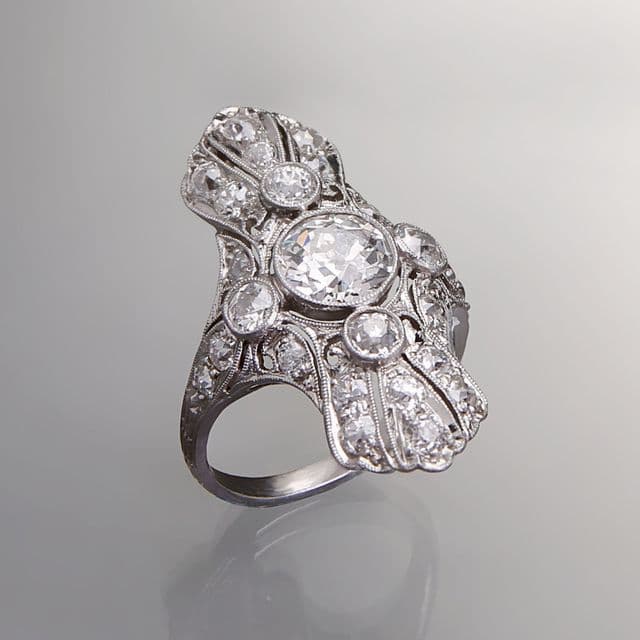
Pick up a piece of British vintage jewelry and turn it toward the light. Somewhere along the shank, inside the band, or pressed into the clasp, a cluster of tiny struck marks tells you nearly everything: who submitted it, where it was tested, what the metal actually contains, and, on older pieces, the precise year it left the workshop. You're holding a small archive. That archive has been maintained continuously since 1773, and the institution that administers it for Birmingham's jewelry quarter just named its first new leader in nine years.
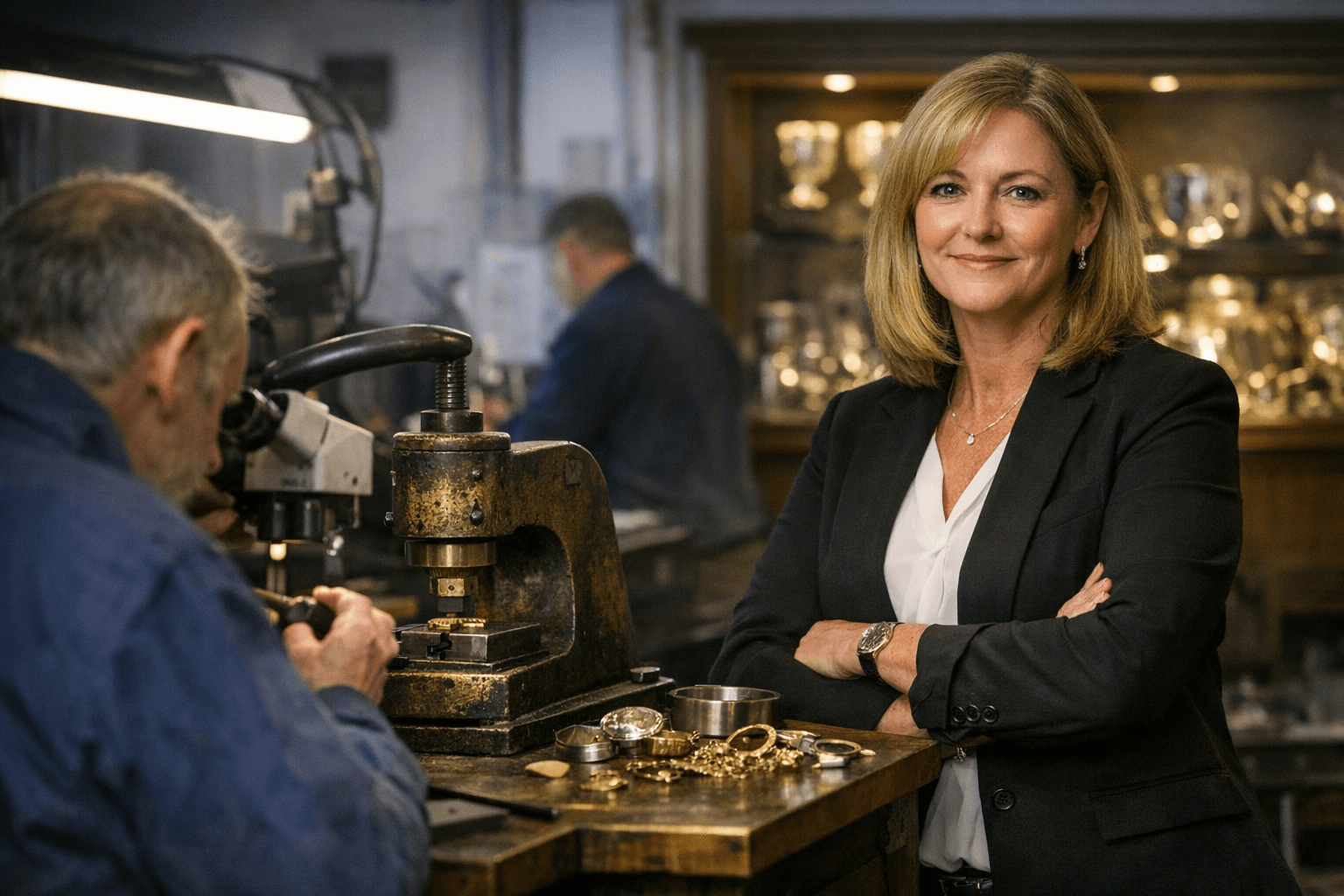
Roxanne Guest stepped into the role of Assay Master and Chief Executive Officer of the Birmingham Assay Office on April 1, 2026, succeeding Doug Henry, who is retiring after nearly a decade at the helm. Guest, previously the office's Deputy Chief Executive, becomes the 15th person to hold the Assay Master title across the institution's 253-year history. The appointment was confirmed by the board on March 30, framed as a planned succession designed to maintain continuity.
Chairman Simon Meddings said: "We would like to thank Doug for his leadership and dedication to the Assay Office over the past 9 years. We are pleased to appoint Roxanne as the 15th Assay Master and CEO in our 253-year history."
Guest brings operational experience within the Birmingham Assay Office, having played a key role in delivering service performance, operational improvements, and business transformation initiatives. The office has indicated that digital tracking and throughput improvements for high-volume clients remain priorities under her leadership. Guest has also been the public face of the office's industry education efforts, organizing its annual Careers Day in partnership with the Goldsmiths Craft and Design Council, now in its third year.
Understanding what the office actually does matters to anyone buying or selling vintage pieces. Founded by an Act of Parliament in 1773, the Birmingham Assay Office is one of four assay offices in the UK that tests and hallmarks precious metal items as required by the Hallmarking Act. Its core function is independent verification: a manufacturer submits work, technicians test the metal's fineness, and the office stamps it with marks that confirm what the piece actually is. On its busiest day ever recorded, the Assay Office Birmingham achieved the hallmarking of 100,000 articles in just one day. In its busiest years between 2002 and 2004, twelve million hallmarks a year were struck on articles of gold, silver, or platinum. Beyond statutory hallmarking, the office now runs gem certification, watch and silverware valuations, nickel testing, bullion certification, and metal analysis services.
For collectors, the anchor symbol is fundamental in identifying Birmingham Assay Office marks, appearing alongside a standard mark that indicates the metal's purity. Fineness numbers such as 375 for 9ct gold or 925 for sterling silver provide direct confirmation of metal content. On pieces made before the 1973 Hallmarking Act made date letters optional, an alphabetic date code can pinpoint a piece's year of manufacture to a single year, making it one of the most reliable provenance shortcuts in the vintage market.
Misreads happen most often at the assay office mark itself. From June 1907, foreign items that were hallmarked in a British assay office were required to be stamped with import hallmarks to distinguish them from items made in Britain. Instead of the town mark of an anchor, the Birmingham Assay Office was identified by the sign of an equilateral triangle for imported goods. Collectors occasionally mistake this triangle for a damaged or incomplete anchor, or assume its presence signals a problem with authenticity; it does not. A triangle is a legitimate Birmingham import hallmark. Worn or lightly struck marks on thin-gauge silver present a separate challenge: a partially visible anchor can read as a decorative motif or be confused with another office's symbol entirely. A 10x loupe under raking light at a 45-degree angle resolves most ambiguities before they become expensive ones.
Guest inherits an office in deliberate transition. Henry shepherded it through nine years of structural change; her brief, as articulated by the board, centers on continuity and digital process improvements. For collectors who use hallmarks as a first line of authentication, the institution administering those marks is not an abstraction. The standards upheld at the Birmingham office have a direct bearing on what a piece of jewelry actually proves itself to be.
HALLMARK CHECK: WHAT TO LOOK FOR BEFORE YOU BUY
The anchor confirms the piece was tested at the Birmingham Assay Office. It should appear alongside, not instead of, a fineness number. A fineness number without any assay office mark is a caution. The date letter, if present, is your sharpest dating tool: Birmingham used its own alphabetic sequence and typeface, distinct from London, Edinburgh, and Sheffield, so consult a Birmingham-specific date letter table. The maker's mark, appearing as initials in a struck punch, identifies who submitted the piece for hallmarking, not necessarily who fabricated it. On Birmingham-hallmarked imports from 1907 onward, the office mark is a triangle rather than an anchor; this is a valid hallmark, not a forgery indicator. If the anchor reads as unclear under direct light, try raking the piece at 45 degrees before concluding the mark is absent.
This article was produced by Prism’s automated news system from verified source data, official records, and press releases, then run through automated quality and moderation checks before publishing. The system is built and supervised by the people who set the standards it runs under. Read our full AI policy.
Did this article answer your question?