UK Valuers Now Required to Screen All Diamonds for Lab-Grown Origin
UK valuers must now screen every diamond to confirm natural or lab-grown origin, a shift that rewrites how estate and vintage pieces are appraised, insured, and resold.
When you hold an inherited Art Deco cluster ring or lift a 1950s platinum solitaire from a velvet tray at a country auction, the stone looks exactly as it always has: brilliant, colourless, unmistakably diamond. Whether it is the same kind of diamond it appears to be is now something every registered UK valuer must formally establish before putting a figure to it.
The Institute of Registered Valuers (IRV), regulated by the National Association of Jewellers (NAJ), introduced updated guidance in April 2026 requiring all diamonds to be screened during the valuation process to determine whether they are natural or synthetic. The change responds to a market in which laboratory-grown diamonds have become not only prevalent but, in most cases, visually indistinguishable from natural stones when examined by traditional methods alone.
IRV chair Sammantha Maclachlan set out the stakes plainly: "The diamond market has changed fundamentally, and our standards must reflect that reality. By introducing mandatory screening, the Institute of Registered Valuers is ensuring that our members continue to deliver accurate, transparent, and defensible valuations. This is about protecting both the valuer and the client, and about leading the profession forward."
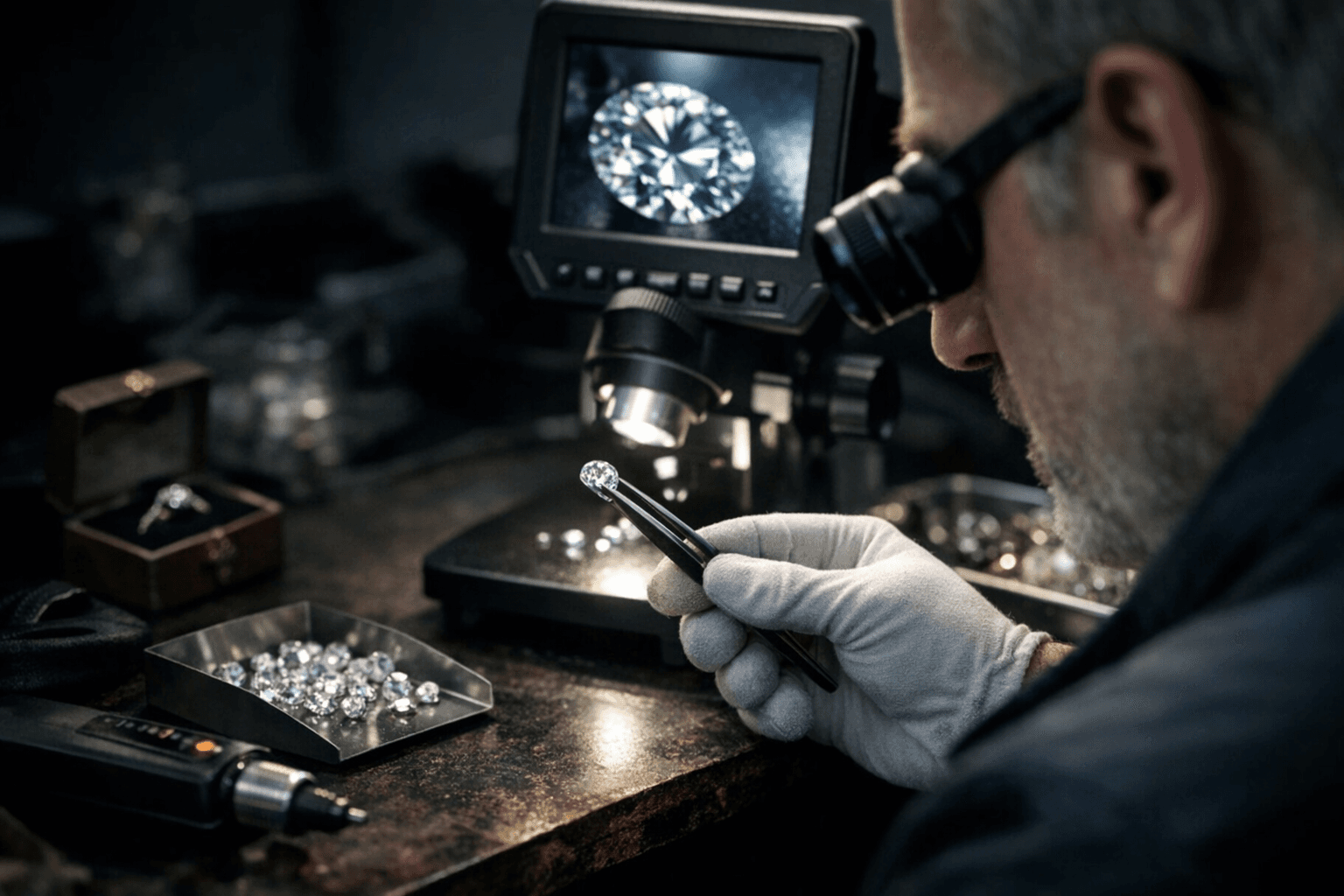
Standard screening instruments test a stone's UV fluorescence, phosphorescence, and photoluminescence spectra to identify the two main categories of synthetic diamond: those produced by High Pressure High Temperature (HPHT) synthesis and those grown by Chemical Vapour Deposition (CVD). Both processes yield stones chemically and physically identical to natural diamonds. Only specialist equipment reliably separates them.
What screening does not resolve is equally important to understand before you walk into an appraisal appointment. The natural-versus-synthetic mandate does not automatically flag colour treatments applied post-growth, nor does it address simulants such as moissanite or cubic zirconia, which are not diamond at all and require separate testing. If a screening result is inconclusive, IRV practice calls for referral to an accredited gemmological laboratory, and the written valuation should document that referral explicitly.
For vintage and estate jewelry, the implications reach further than routine paperwork. An engagement ring appraised two decades ago carries no record of a screening result. That silence used to be unremarkable; under the new standard, it means the document is incomplete. The IRV has been engaging insurers in the rollout so that underwriters recognise the updated practice, and policy renewals may begin to prompt requests for revised documentation on older pieces.
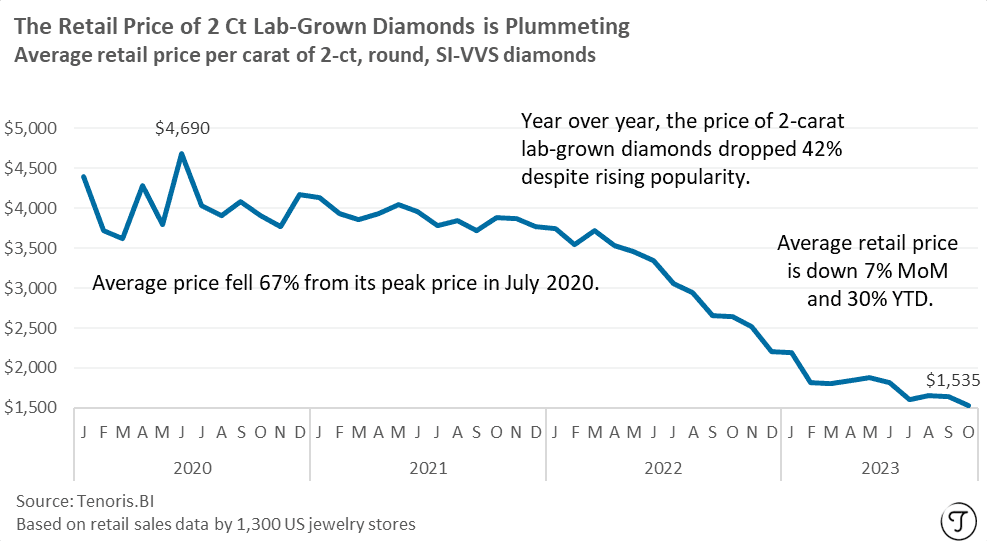
Resale value is also directly in play. According to Natural Diamond Council analysis, lab-grown diamond retail prices have dropped to roughly 24 percent of their 2018 levels, meaning the premium on a confirmed natural stone has widened considerably. A secondhand dealer or auction house receiving a piece with IRV documentation that records a positive natural screening result has something demonstrably bankable. A piece without that documentation carries real uncertainty.
When taking a vintage piece in for valuation, ask the appraiser which screening instrument was used, and request that the written report records the result as a named finding: "confirmed natural" or "referred for gemmological laboratory testing." Do not accept a description that merely reads "diamond" without clarifying what that determination rests on. For estate executors managing inherited pieces, verify the valuer's IRV credential listing: Fellows and Members are bound by the IRV Code of Practice and undergo professional review every five years, a standard that general antique dealers and most independent valuers are not required to meet.
The IRV will host technical demonstrations of screening equipment at the Valuers' Conference on 16-17 May at the Edgbaston Park Hotel in Birmingham, with Bonhams returning as headline sponsor. For anyone buying or insuring vintage diamonds, that conference is where the new protocol becomes embedded practice, and where the question of what your piece actually contains starts to have a formal, documentable answer.
This article was produced by Prism’s automated news system from verified source data, official records, and press releases, then run through automated quality and moderation checks before publishing. The system is built and supervised by the people who set the standards it runs under. Read our full AI policy.
Did this article answer your question?