Bonhams ruby necklace tops New York sale at $2.2 million
A 5.02-carat Burmese ruby with no heat shot from a $250,000 high estimate to $2.178 million, a lesson in provenance, rarity and condition.
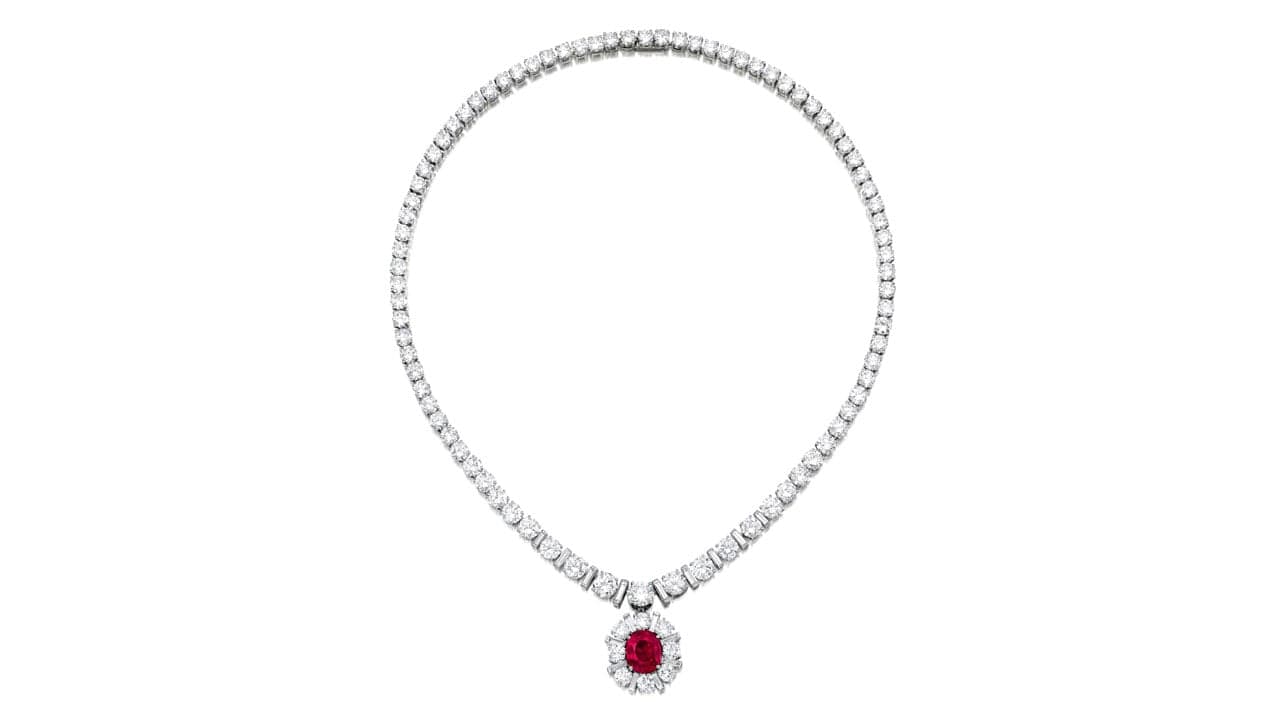
A ruby necklace estimated at $150,000 to $250,000 did not just beat expectations in Bonhams’ Exceptional Jewels sale in New York. It sold for $2,178,000, more than 14 times its high estimate, after intense competition for a 5.02-carat Burmese ruby with no heat enhancement set among alternating baguette and round brilliant-cut diamonds.
That result explains why certain vintage colored-stone jewels can leave the field behind. The catalog read like a collector’s checklist: Burmese origin, untreated stone, a precise carat weight, and a setting that kept the ruby central rather than burying it in ornament. Those details matter because they give buyers something measurable to trust. A named source of origin and the absence of heat treatment are among the strongest rarity signals in ruby collecting, and when they are paired with a clean, elegant design, the jewel stops being merely attractive and starts looking exceptional.

The piece also showed the power of house identity around it. Bonhams said the sale included signed jewelry from Harry Winston, Chaumet, Bulgari, Graff, Tiffany & Co., Cartier, Van Cleef & Arpels, Oscar Heyman, Taffin and J.E. Caldwell. In this market, the signature inside a clasp or stamped on a mounting can matter almost as much as the gem itself, because maker attribution helps anchor quality, design era and resale confidence. A strong name does not guarantee a record price, but it can sharpen competition when the stones are already unusual.
The ruby was not the only lot to run far past estimate. An unmounted 30.61-carat Mozambique Paraíba-type tourmaline brought $1,452,000 against a $150,000 to $250,000 estimate, another example of color, size and scarcity combining to overpower a cautious catalog range. Bonhams said the 153-lot sale totaled $9,476,620, with 78 percent sold by lot and 98 percent sold by value, a sign that bidders were willing to push hard for the right stones.

For vintage colored-stone jewelry, the lesson is plain. The pieces that soar are usually the ones with the clearest story: a specific origin, a treatment-free gem, a strong design frame, and condition good enough to let the stone speak. In New York, that formula turned one ruby necklace into the undisputed center of the sale.
This article was produced by Prism’s automated news system from verified source data, official records, and press releases, then run through automated quality and moderation checks before publishing. The system is built and supervised by the people who set the standards it runs under. Read our full AI policy.
Did this article answer your question?