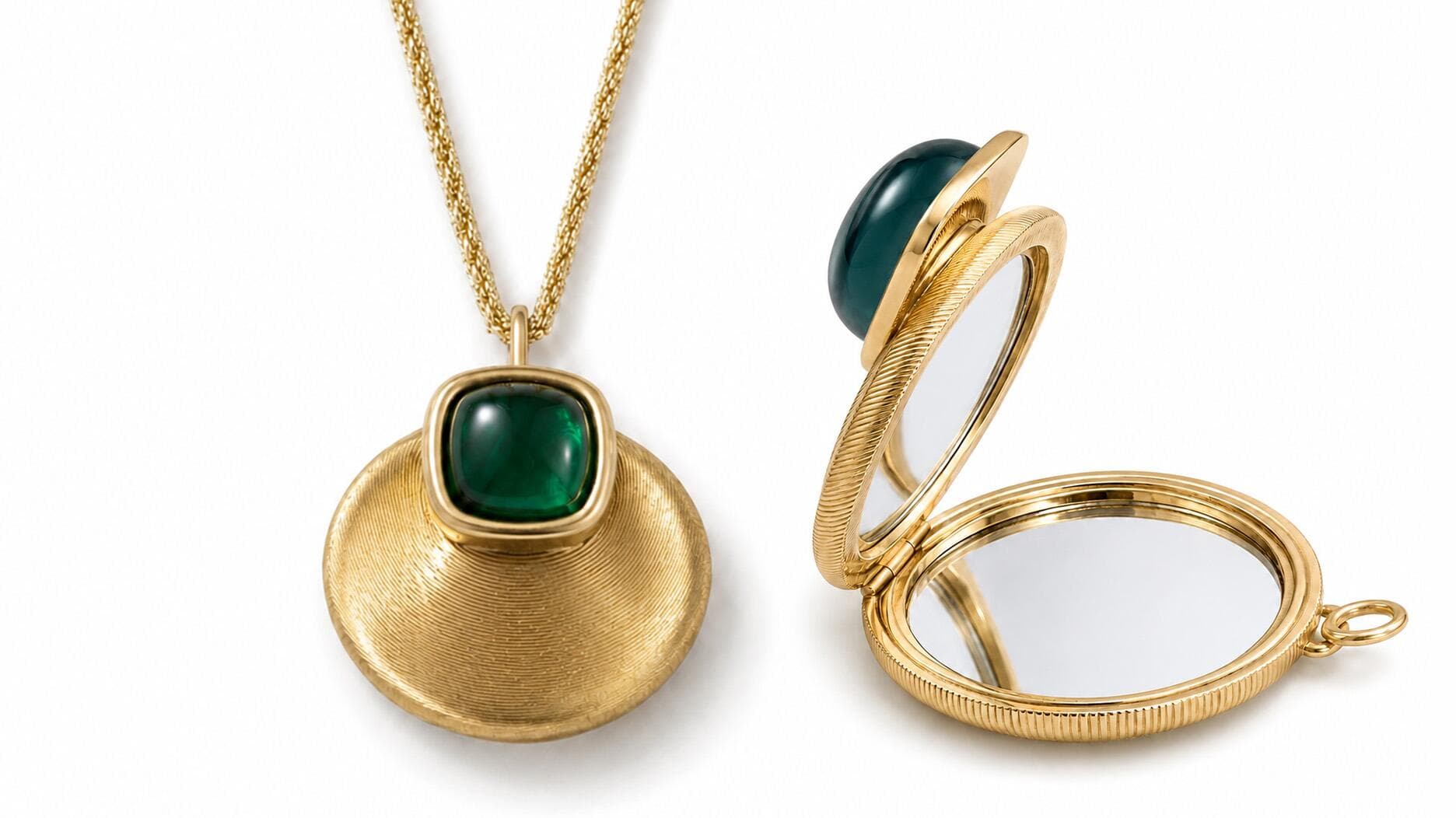
Brooches and Bead Necklaces Lead Vintage Jewelry’s Playful Return
Beaded collars, brooches, and turquoise are back in play, and the smartest vintage buys are the ones that still reveal their materials, clasps, and craft.
Read the piece before the trend prices it out
The fastest way to spot a good vintage jewelry buy right now is to treat it like evidence, not decoration. A bead necklace in a flea-market tray, a brooch in an estate-sale box, or a turquoise pendant in a mixed lot can tell you exactly what era it came from if you know where to look, and that matters now because the market is tilting hard toward playful, storied pieces. Pinterest said searches for “brooch aesthetic” jumped 110 percent, “maximalist accessories” rose 105 percent, and overall trends are moving 4.4 times faster than they were seven years ago, a sharp reminder that the return of ornament is not a passing whim. Comfort, personal expression, and escapism are driving the mood, and searches for vintage jewelry and Art Deco design are climbing as buyers try to bridge past and present.
Bead necklaces: the material tells the truth
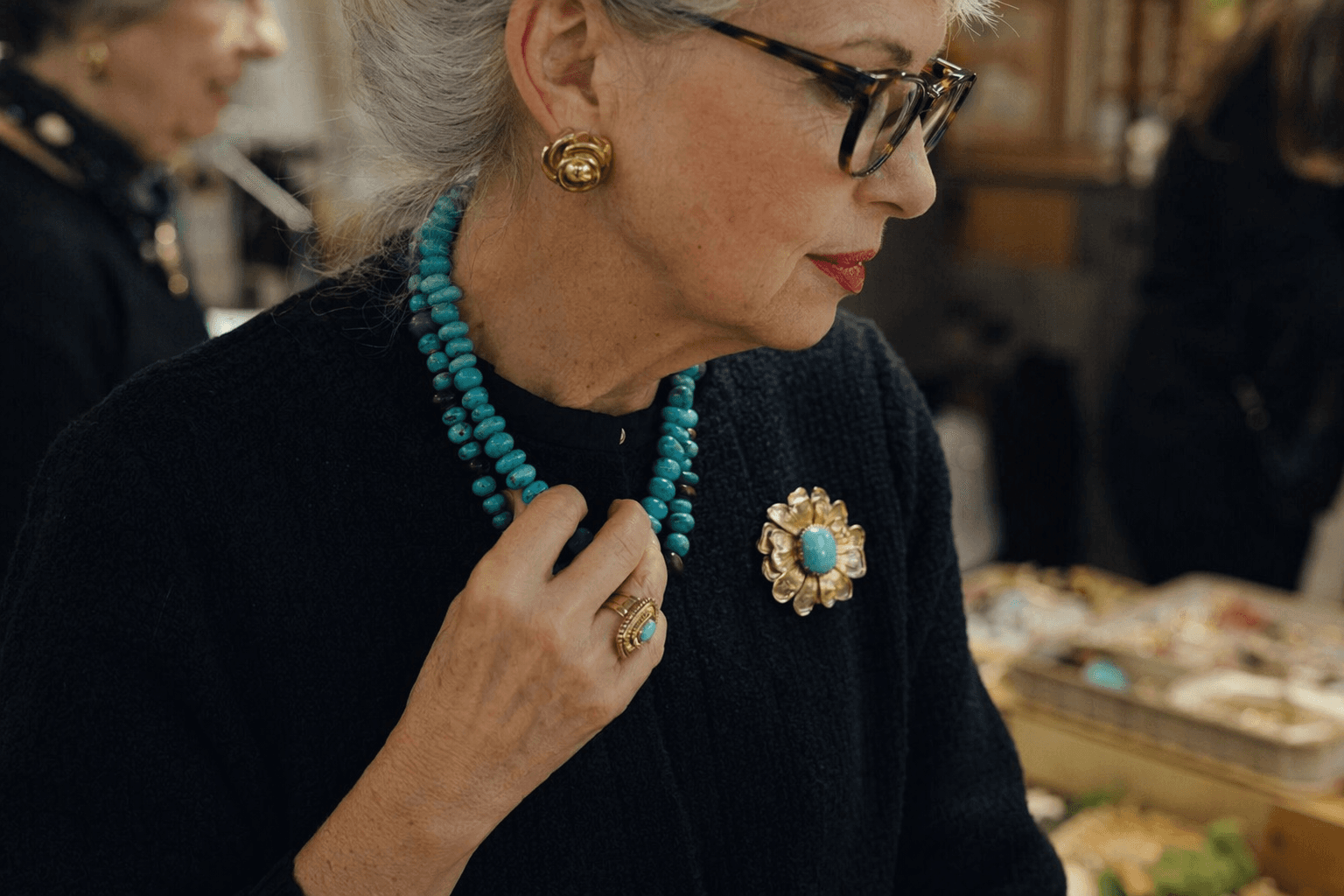
The bead necklace revival is not just about color. Spring and summer 2026 collections from Celine, Chanel, Polo Ralph Lauren, Tory Burch, Zankov, and Presley Oldham pushed beaded jewelry into the foreground, using stacks of colorful strands, draped collars, and long bead earrings that felt deliberately handmade and intentionally abundant. The strongest versions mixed seed beads, crystals, pearls, shells, Murano glass, enamel, and even antique beads, which is exactly why genuine vintage pieces often offer more value than new-season copies: older necklaces usually have more character in the materials themselves.
When you are looking at a bead necklace, read the surface like a gemologist would. Glass beads have a cool weight and a sharper internal sparkle than plastic, Murano glass often has a richer depth of color, and natural materials such as shell and pearl rarely look perfectly uniform. Antique beads may show tiny irregularities, softened edges, or slight wear at the drill holes, and those details are not flaws so much as proof of age and handling. By contrast, many contemporary lookalikes rely on perfect sameness, which can flatten the whole effect even when the palette is right.
PORTER singled out supersized beads among the chicest fine-jewelry moves for summer 2026, and that larger scale is useful to remember when you are judging value. Bigger beads made from good glass, coral alternatives, shell, or finely finished stone can look far richer than a strand that simply imitates the silhouette in lightweight plastic. The most convincing vintage bead necklaces feel like small sculptures, not costume props.
Brooches: the clasp is part of the story
Brooches are back because they do double duty: they fasten clothing and they punctuate it. On spring 2026 runways, brooches resurfaced from Chanel to Mugler to Dior couture, with Jonathan Anderson’s Dior pieces taking floral, architectural, and animal forms that made the category feel fresh again. Off the runway, editors and style figures wore them on sweaters, blazers, breast pockets, and jacket collars, proving that a brooch is one of the few jewelry forms that can change both silhouette and mood.
The easiest way to date a brooch is to inspect the mechanism. Older examples often use a simple C-clasp, a tube hinge, or a trombone clasp, while many later pieces add a rollover safety catch. A strong hinge should feel snug, not loose, and the pin should sit centered rather than wobble. In vintage buying, the back matters as much as the front: a well-made mechanism suggests a better-made brooch, and a brooch with a beautiful front but a flimsy closure may be more decorative than collectible.
This is where vintage often beats a new-season copy. A brooch with proper weight, crisp enamel, good casting, or hand-set stones has the kind of tactile authority that a mass-produced pin cannot fake. Even whimsical animal brooches or small floral pins feel richer when the metalwork is clean and the clasp is original, because the object is doing two jobs at once: ornament and engineering.
Turquoise: know when you are looking at costume, silver, or something more specific
Turquoise belongs to the same revival because it brings color without sugarcoating it. It also asks for more careful identification than almost any other stone in this trend. Costume pieces may use dyed howlite, plastic, glass, or resin to mimic turquoise, while sterling examples usually pair cabochons with silver settings that may be marked sterling or .925. The stone itself can be natural, stabilized, or treated, and the setting will often tell you more than the color alone.
A sterling turquoise piece tends to have some weight, visible metalwork, and a setting that protects the stone with prongs, bezels, or scalloped silver frames. A costume piece often feels light and overly uniform, especially if every “stone” matches perfectly. Likely Native-made turquoise jewelry is usually recognized less by a single visual trick than by the combination of sterling silver, handwork, signed backs or maker marks, and a construction style that feels tied to a specific artistic tradition rather than a generic factory line. The safest instinct is to look for evidence of craftsmanship first, because turquoise has been copied so often that the setting is often more revealing than the stone.
Why vintage now feels sharper than minimalism
The broader shift is as emotional as it is visual. Several 2026 forecasts describe the same pivot away from early-2020s restraint toward pieces that feel heirloom-like, collectible, and less mass-produced. That is why beaded necklaces and brooches are resonating now: they carry the charm of something discovered, inherited, or saved, not something bought to disappear into an outfit. The jewelry looks playful, but the appeal is serious. It answers a modern craving for personal expression while still delivering the craftsmanship markers that serious buyers use to separate an object worth keeping from one worth passing over.
That is the real lesson hiding inside the trend forecast. A good vintage bead necklace, a brooch with an honest clasp, or a turquoise piece with visible silverwork does more than decorate a neckline or lapel. It gives the wearer a story with structure, and in a market suddenly hungry for ornament again, those are the pieces that will hold their value longest.
This article was produced by Prism’s automated news system from verified source data, official records, and press releases, then run through automated quality and moderation checks before publishing. The system is built and supervised by the people who set the standards it runs under. Read our full AI policy.
Did this article answer your question?