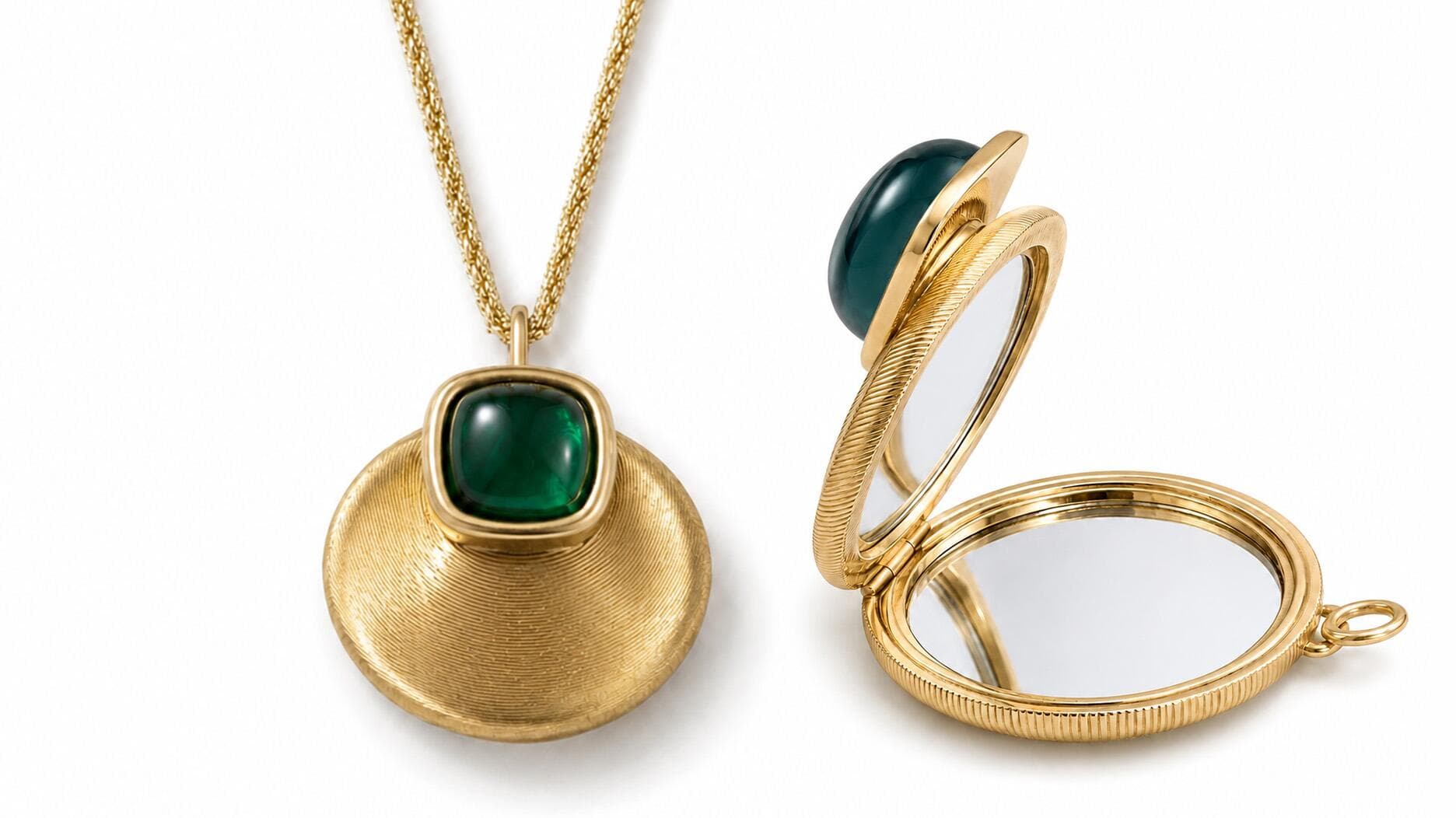
Vintage Jewelry Takes Center Stage in Summer 2026 Accessory Trends
Art Deco pearls and brooches are back, but the smartest buys are the ones with period clasps, honest wear, and enough provenance to prove the story.
Summer’s nostalgic jewelry story is really a collector’s test
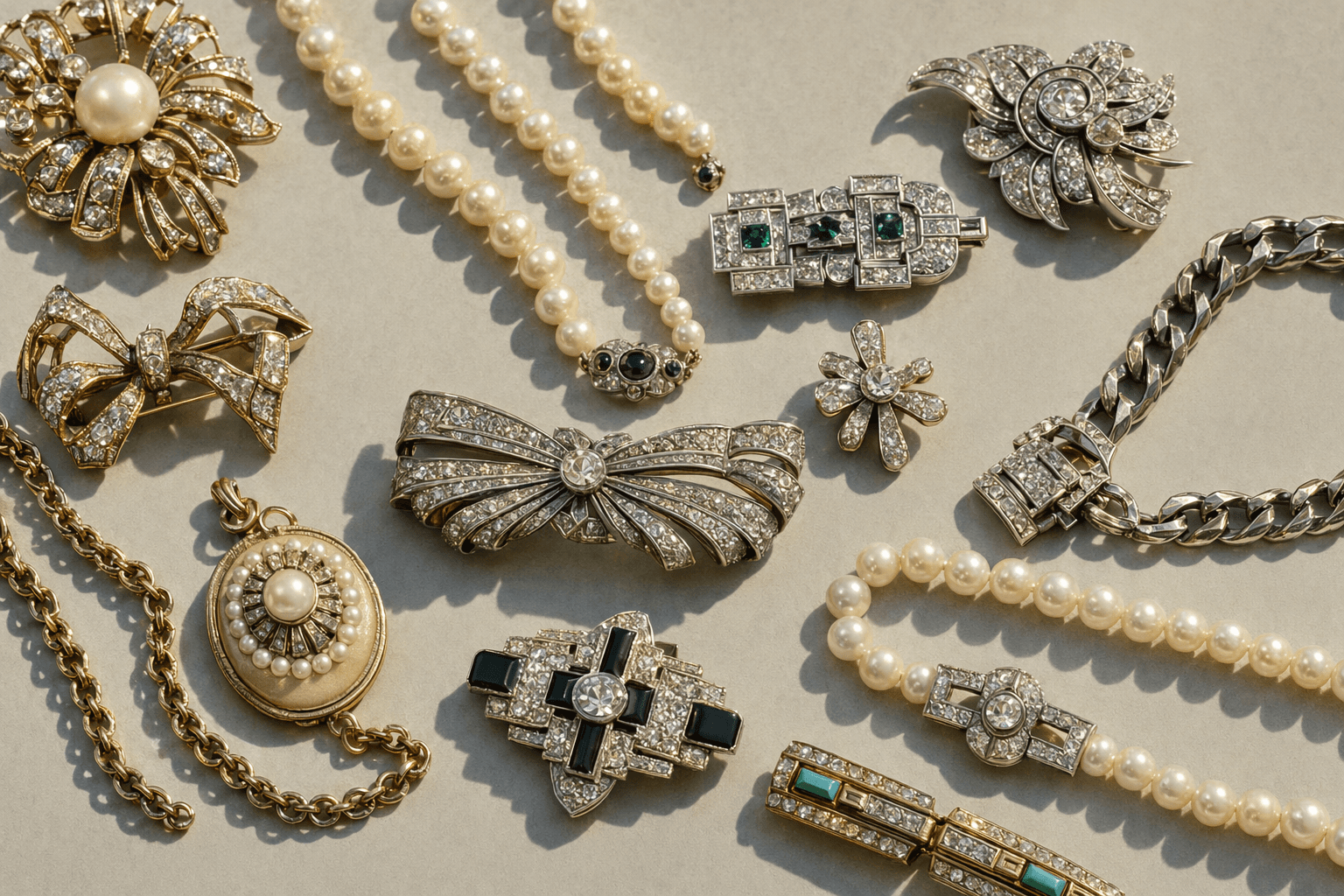
At an estate sale, the most interesting box is usually the one with the clasped brooch, the pearl drops, and the hair ornament that looks as if it has already lived a few lives. That is the energy running through summer 2026: Vintage-inspired accessories are no longer an afterthought, and the strongest versions are the ones that feel genuinely assembled, not merely styled to look old. Editorialist’s accessory coverage points to Art Deco pearl earrings, vintage-style brooches, tassels, and sculptural hair clips, while WWD’s spring 2026 jewelry reporting shows buyers and designers leaning into heirloom references, geometric lines, color, craftsmanship, and statement-making pieces.
The quickest way to tell whether you are looking at the real thing, or a convincing echo, is to study the back as closely as the front. Art Deco jewelry is defined by clean lines, contrast, and geometry, with designers using smaller brilliant-cut diamonds and unexpected material pairings such as onyx, emeralds, jade, silver, ivory, lapis, rock crystal, and even manufactured materials like plastic and glass. When a piece is genuinely period, the construction usually follows that same logic: the mount, the setting, and the fastening all serve the design rather than hiding it.
How to read the hardware
Brooches give away the most. An older example may have a simple C clasp, a straightforward wire loop that secures the pinstem, while later examples show safety mechanisms such as sliding safety clasps or spring-loaded findings. A late-19th-century brooch/clasp with a detachable pin, a circa 1935 Art Deco brooch/clasp on cultured pearls, and a mid-19th-century brooch with a patent sliding safety clasp all show how much you can learn from the reverse alone. If the fastening looks too polished, too generic, or too perfectly modern for the stated period, that is a signal to slow down.
Hallmarks and maker’s marks matter just as much. They are often tucked into discreet places such as the back of a pendant, near a clasp, or inside a band, and they can help identify maker, origin, metal content, and date. A piece signed on the reverse, numbered, or accompanied by an assay mark has a much better claim to authenticity than one that leans only on a seller’s vague “vintage-inspired” description.
Pearls: the most useful clue, and the most abused one
Pearls are where the market gets slippery, because the look is easy to imitate. GIA’s value framework is built around size, shape, color, nacre, luster, surface, and matching, which means a good strand or pair is judged by far more than simple whiteness. GIA also notes that it has led pearl identification and classification for decades, and Sotheby’s has singled out natural pearls as especially rare, which is exactly why a seller’s wording matters so much when a piece is described as “natural” rather than cultured.
For Art Deco pearl earrings, look for geometric mounts that feel architected rather than decorative, with white metals, crisp symmetry, and the kind of restraint that lets the pearl do the talking. A pair with a subtle drop, a platinum or white-gold mount, and period wear to the edges will usually read truer than a heavy-handed reproduction with overbright metal and pearls that are suspiciously identical in surface and sheen. Christie’s Art Deco guide makes clear that the period prized streamlined forms and bold contrast, not sugary prettiness.
What is actually wearable now
The pieces worth buying are the ones that can move through a modern wardrobe without losing their character. Brooches are the easiest win, because they can pin a blazer, anchor a scarf, or sit on the shoulder of a knit, and Sotheby’s current vintage-brooch offerings show how often these pieces now include convertible pendant-brooch fittings, clip-brooch constructions, and 20th-century forms that still feel sharp. The market is backing that up: Sotheby’s has highlighted a Schlumberger for Tiffany & Co. Bird on a Rock brooch that sold for $69,850 in December 2025, and its Paris fine-jewelry sale in March 2026 included natural pearl necklaces, natural pearl and diamond earrings, and pearl-and-diamond brooches and tiaras.
Hair ornaments are the sleeper category, and they are the easiest way to wear the look without tipping into costume. Rachel Weisz wore Cartier’s Wisteria as a hair ornament, after the piece had already existed in other forms, which is a useful reminder that the best vintage jewels are often multi-use objects with strong engineering. If a hair clip or ornament looks fragile, flimsy, or purely decorative, it may photograph well but fail in real life; a real keeper should have enough structural integrity to stay in place and enough finish to justify being handled.
What to buy if you want the real thing
- Choose brooches with maker’s marks, assay marks, or clearly period-appropriate clasps, especially C clasps, early safety clasps, or detachable fittings.
- Favor pearls with documented identity. Natural pearls are rare, and even cultured pearls should be assessed for matching, luster, nacre, and surface quality rather than just their color.
- Look for Art Deco geometry rather than vague “old-fashioned” styling: sharp lines, openwork plaques, step-cut or baguette accents, and white-metal mounts all point in the right direction.
- Treat tassels and hair ornaments as style pieces, but buy the ones with real construction, not costume lightness. The best examples feel engineered, not applied.
The larger point is simple: summer 2026 is rewarding jewelry that carries evidence. The best Art Deco pearl earrings, brooches, tassels, and hair ornaments do more than nod to nostalgia, they show their age in the right places, keep their shape in the wrong ones, and leave enough clues on the back to satisfy a collector long after the trend has moved on.
This article was produced by Prism’s automated news system from verified source data, official records, and press releases, then run through automated quality and moderation checks before publishing. The system is built and supervised by the people who set the standards it runs under. Read our full AI policy.
Did this article answer your question?