Cannes red carpet turns into a showcase for vintage-inspired jewels
Cannes 2026 turned the red carpet into a field guide to Art Deco and gala-era jewels, from Boucheron’s lacquered brooch to Chopard’s 226.34-carat necklace.
The red carpet as a jewelry archive
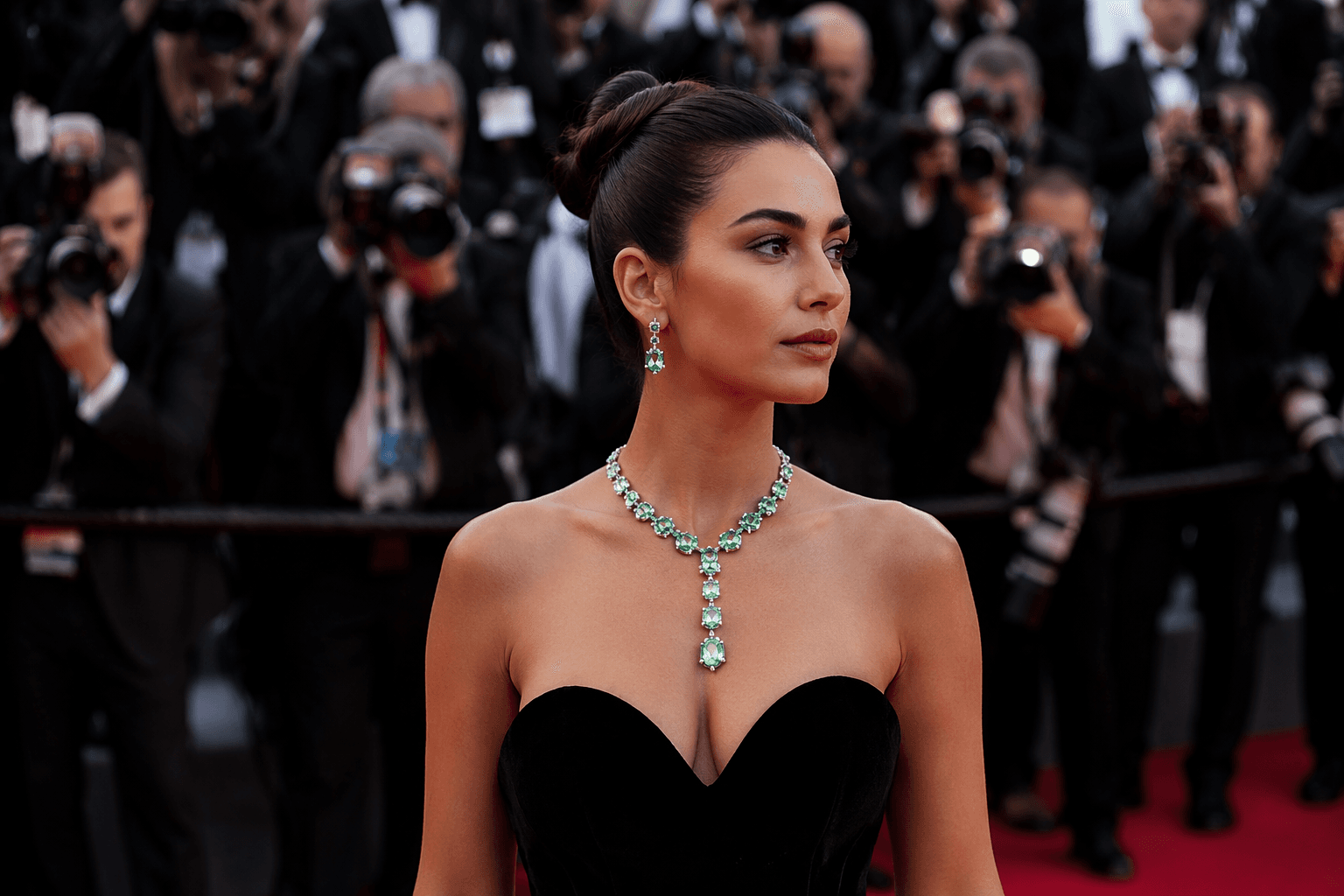
At Cannes, the quickest way to read the room is through the jewels. During the 79th Festival de Cannes, held May 12 to 23, 2026 at the Palais des Festivals et des Congrès on the Croisette in Cannes, France, brands treated the staircase as a live showroom, with Marli, Boucheron, Chopard, Tiffany & Co., Messika, Chaumet, Pomellato, and Piaget using the festival to debut and spotlight new high jewelry. The 2026 edition was widely framed as one of Cannes’ most jewelry-drenched in years, and that makes sense: this is a black-tie arena that has been built for spectacle since the festival’s official debut in 1946.
What changed in the room was not only the volume of gems, but the way they were allowed to speak. Cannes updated its dress code in 2025 to prohibit nudity and voluminous outfits with long trains, a rule that quietly shifted attention toward the details that sit closest to the skin. When clothing becomes more restrained, the brooch, necklace, and earring become the storytelling device, and that is exactly where collectors should focus their eye.
Why the new Cannes silhouette favors vintage references
The festival’s tighter dress code made the jewelry carry more of the visual weight, which is why vintage-coded design felt so resonant. A clean neckline, a pinned lapel, or a single emphatic collar lets the viewer register the cut of a stone, the shape of a setting, and the discipline of a design language. That is the same logic that governs estate jewelry: the best pieces do not shout through size alone, but through line, symmetry, and the way their details survive close inspection.
For collectors, Cannes becomes useful precisely because it rewards clarity. You are not looking for costume drama here. You are looking for the recurring grammar of high jewelry, the motifs, mounts, and silhouettes that echo earlier eras and can still be found in vintage cases, auction catalogs, and estate sales now.
Boucheron’s brooch and the pull of Art Deco
Colman Domingo’s Boucheron appearance offered the clearest vintage clue of the season. He wore the Lavallière Diamants brooch from the maison’s Histoire de Style collection, a design explicitly rooted in Art Deco, with diamonds and black lacquer creating the sharp contrast that defined so much of the movement’s most elegant jewelry. The piece matters because it is not merely “inspired by” the past; it translates the past into a modern, wearable object with the same graphic discipline collectors recognize in 1920s and 1930s pieces.
If you are hunting for something similar in the vintage market, start with brooches that have the same visual architecture: geometric symmetry, monochrome contrast, and a setting that lets the stones read almost architecturally. The most persuasive examples often feel precise rather than ornate.
- Art Deco brooches in diamonds with black enamel or lacquer accents
- Lavallière or bow-shaped motifs that sit neatly at the throat or lapel
- Platinum or white-metal mounts with crisp, balanced geometry
- Pieces with visible craftsmanship rather than heavy ornament
The appeal of the Boucheron brooch is that it looks collectible even before you know the name on the clasp. That is the standard to keep in mind when you scan estate lots: the design should read cleanly from across the room, but it should reward a second look with structure, proportion, and surface contrast.
Chopard and the language of ceremonial scale
Chopard’s presence at Cannes is not incidental, and it has not been for a long time. The house says it has been an official partner of the festival since 1998, crafts the Palme d’Or in ethical gold, and unveils its traditional Red Carpet Collection for actresses making their way up the steps. That longstanding relationship gives Cannes a ceremonial backbone, one that makes the red carpet feel less like a fashion moment and more like a stage for goldsmithing, provenance, and house identity.
Demi Moore’s Chopard high-jewelry necklace, reported at 226.34 carats, showed how scale still commands attention when the design is controlled. In vintage terms, this is the territory of gala jewelry: collar-length statements, substantial stone weight, and an emphasis on luminous continuity rather than busy embellishment. If Boucheron supplied the sharpest lesson in period styling, Chopard supplied the lesson in presence.
For estate shoppers, the parallel is clear. Seek necklaces and suite pieces that use weight and symmetry to create elegance, not just sparkle. A convincing vintage necklace does not need to be maximalist to feel important; it needs proportion, craftsmanship, and a setting that lets the stones hold together as one coherent field.
What the other maisons signal
The presence of Marli, Tiffany & Co., Messika, Chaumet, Pomellato, and Piaget rounded out a carpet that was less about one aesthetic than about the range of modern high jewelry language. Cannes remains one of the rare places where different house codes can coexist in full view, from sleek contemporary compositions to pieces that nod more explicitly to heritage forms. For collectors, that mix is useful because it teaches you how old references are being reworked for the present.
The practical takeaway is not to chase a logo. It is to train your eye on the components that matter most in vintage and estate buying: the cut of the stones, the style of the setting, the use of contrast, and the condition of the metal. Tiny stamped marks, softened edges, and a little patina can tell you more about a jewel’s life than a perfect polish ever will. In a market crowded with reinterpretations, those are the details that separate an inspired piece from an empty imitation.
How to translate Cannes into an estate hunt
Use Cannes as a decoding guide, and the search becomes much sharper. The strongest vintage echoes on this year’s carpet point toward Art Deco geometry, lavallière and bow motifs, black-and-white contrast, and high-jewelry scale that still feels disciplined. Those are the pieces that translate best from red carpet to real life, because they have the same thing the best estate jewels have always had: a visible point of view.
Cannes has long been a controlled environment for heritage houses to show what they can do, and the 2026 festival only reinforced that role. With its black-tie history, its Chopard partnership dating to 1998, and its newly stricter dress code, the festival has become a place where the jewel often says more than the dress. For collectors, that is the advantage. Cannes does not just showcase jewelry; it reveals which kinds of vintage language still feel alive, and which pieces are worth pursuing before everyone else catches up.
This article was produced by Prism’s automated news system from verified source data, official records, and press releases, then run through automated quality and moderation checks before publishing. The system is built and supervised by the people who set the standards it runs under. Read our full AI policy.
Did this article answer your question?