Christie’s New York sale pairs Kashmir sapphire ring with antique pearl brooch
Christie’s Lot 102 pairs a 15.49-carat Kashmir sapphire with a circa-1900 pearl brooch, a reminder to read origin, mounting, and period detail before the price tag.
Why Lot 102 matters
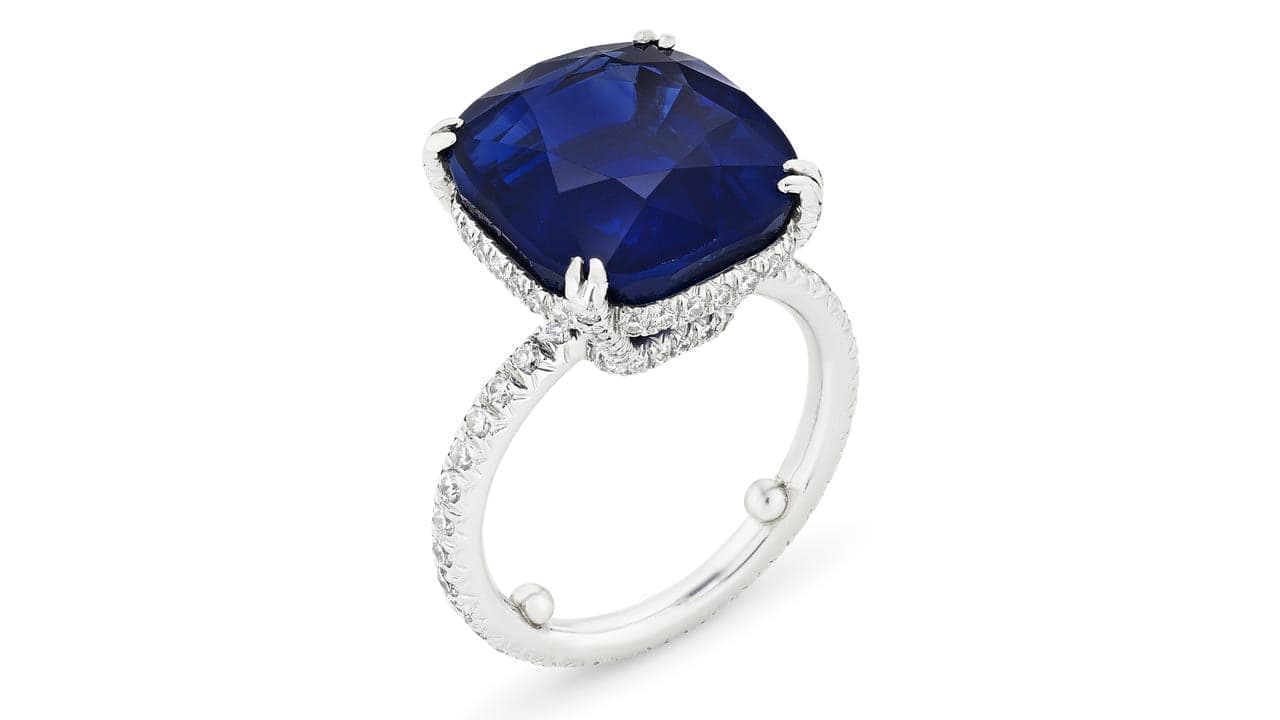
A Kashmir sapphire ring can stop a sale in its tracks, but the real lesson in Christie’s New York Magnificent Jewels catalog is how much more there is to inspect than carat weight. Lot 102 is a 15.49-carat Kashmir sapphire ring mounted in platinum with pavé diamond accents, estimated up to $1.8 million, and it arrives with the kind of aura that has kept Kashmir stones at the center of serious collecting. Christie’s describes these sapphires as “luminous, velvety and intense,” a description that reads like romance until you remember that romance in this market is built on rarity, documentation, and condition.
The geography matters too. Christie’s ties Kashmir sapphires to the harsh conditions of the North Himalayan Mountains, which is part of what gives the category its legend. But legend alone does not sustain value. A Kashmir claim only becomes convincing when the stone’s papers, cut, and mounting all support the story.
Read the ring beyond the headline weight
The ring’s platinum mount and pavé diamond accents tell you how the stone is presented, not necessarily how it was originally framed. That distinction matters because collectors should always ask whether a mounting is period to the gem or a later reset, especially when a stone has been positioned as the star lot in a marquee sale. A beautiful mount can enhance value, but a replacement setting can also blur the historical identity of the jewel.
What to check before bidding
- Ask for an origin report from a respected gemological laboratory, not just a seller’s claim.
- Examine the cut and proportions. Rapaport describes the stone as a cushion mixed-cut Kashmir sapphire, and mixed cuts often reveal whether a gem has been recut to improve color or clarity.
- Look for signs of recutting risk. A stone that has been repolished may still be beautiful, but it can lose a little of the original shape, character, and sometimes weight.
- Study the platinum mount. The style should make sense with the stone’s age and presentation, or else it may be a later marriage.
- Judge color first, size second. Kashmir stones are prized for their visual depth, not just their measurements.
For a collector, this is the crucial distinction: an expensive sapphire is not automatically a desirable one. A truly desirable sapphire has the right color, believable provenance, and a setting that does not fight the stone’s identity.
The pearl brooch gives the catalog its memory
The circa-1900 brooch in the same catalog is an excellent counterpoint to the sapphire ring because it shifts the conversation from headline glamour to period truth. Christie’s identifies it as an exceptional antique natural pearl and diamond brooch with button-shaped natural pearls measuring 13.52 mm and 13.38 to 13.19 mm, an old mine brilliant-cut diamond of 18.27 carats, and yellow gold. That combination tells you immediately that this was made in a different visual era, when natural pearls carried enormous prestige and old mine cuts were admired for their warmth and candlelit fire.
Just as important, the Gemological Institute of America report says the two pearls are natural saltwater pearls with no indications of treatment. That matters because natural pearls are among the most scrutinized materials in antique jewelry, and treatment disclosure is a core part of their value. In a market full of polished stories, this kind of documentation gives the brooch its authority.
The brooch also helps collectors understand what makes an early-20th-century jewel genuinely desirable. It is not only the size of the diamond or the scale of the pearls. It is the coherence of the design, the appropriateness of yellow gold for the period, and the survival of materials that are increasingly hard to find in untouched condition.
What the wider sale adds to the story
Christie’s New York Magnificent Jewels sale at Rockefeller Center is broader than one sapphire and one brooch. The auction also includes jewelry from Bulgari, Cartier, Harry Winston, JAR, and Van Cleef & Arpels, which turns the sale into a useful cross-section of collecting taste. Branded modern pieces and anonymous period jewels sit side by side, and that contrast helps buyers see what they are really chasing: maker prestige, gem rarity, or historical integrity.
The recent market signal is just as telling. Christie’s said a recent online jewelry sale led by a 16.58-carat Kashmir sapphire ring brought $1,016,000, and 26% of participants were new to the house. That is a strong sign that rare colored stones are drawing fresh attention, but it also shows why collectors need to stay disciplined. Rising demand can lift prices fast, yet the strongest purchases still depend on whether the stone’s origin, cut, and mounting can survive close inspection.
What separates a serious jewel from a costly headline
The best early-20th-century sapphire jewels share a few qualities that are easy to miss if you only look at the estimate. They usually have a believable mount, a stone whose proportions make sense for its era, and documentation that confirms the claims being made about origin or treatment. In a piece like this, the surrounding catalog matters too: the antique pearl brooch is not filler, it is context, showing how natural materials and period craftsmanship can give a sale its depth.
That is why Kashmir sapphires still command attention. They are not just rare stones, they are tests of judgment. The collector who looks past the carat count and reads the papers, the mount, and the period language is the one most likely to recognize the jewel worth keeping.
This article was produced by Prism’s automated news system from verified source data, official records, and press releases, then run through automated quality and moderation checks before publishing. The system is built and supervised by the people who set the standards it runs under. Read our full AI policy.
Did this article answer your question?