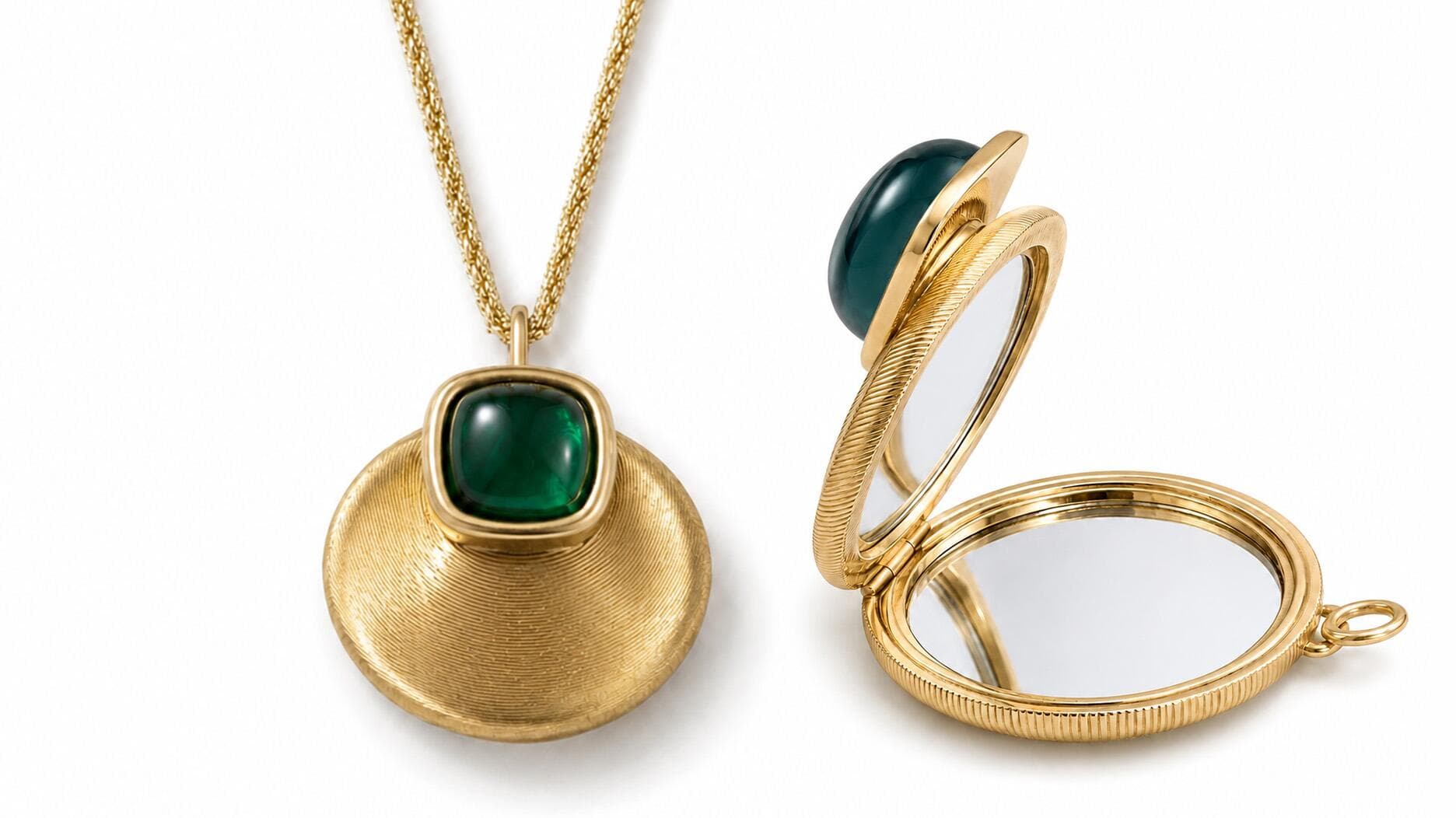
Couture preview spotlights new designers blending heritage and vintage style
Ashaha turned Amazigh references, brushed-gold texture and 1970s geometry into one of Couture’s sharpest first-time debuts.
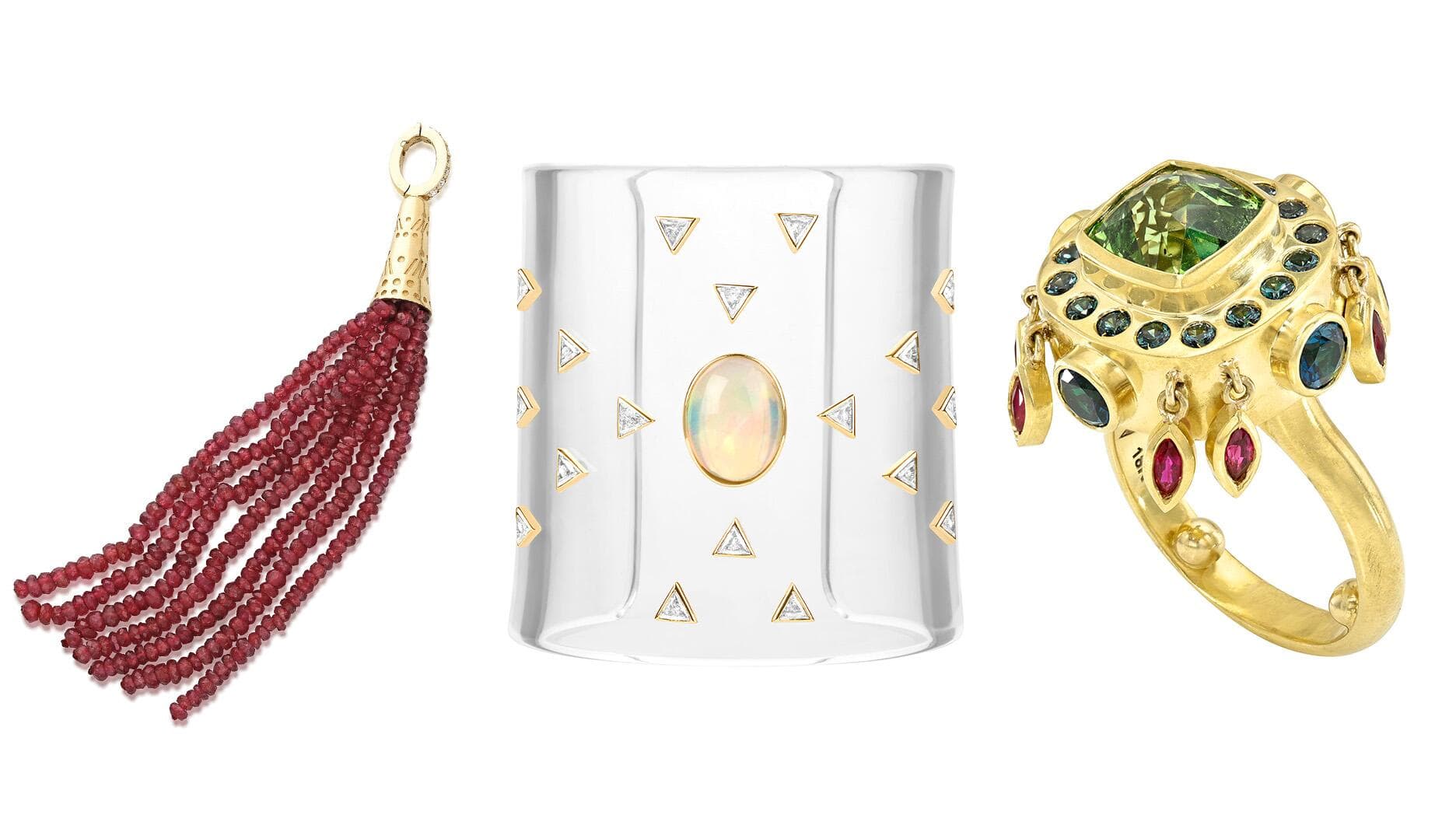
A rough-gold surface and a blunt geometric profile can tell you more about a jeweler’s intentions than any brand statement ever will. At Couture, where 17 new brands joined Design Atelier, the most persuasive newcomers were not the loudest, but the ones that borrowed from history with enough discipline to feel lived-in. Design Atelier, the show’s curated section for promising emerging designers, is a three-year run, and the corridor outside the Cristal ballroom remained one of the room’s most useful arenas, a place where designers, editors and retailers crossed paths with pieces still fresh on the table.
Ashaha made a strong case for itself there. Founded in Paris four years ago by Oumaima Benharbit, the brand is rooted in Amazigh, or Berber, heritage and has already shown in a multi-brand showroom at Couture. Benharbit won a Couture Design Award for the Shiraz choker, and Couture’s French-mastery feature placed Ashaha in an especially telling category: Paris-conceived, Italy-produced, working in 18K gold and precious gemstones. The brand also maintains a Paris showroom on rue La Boétie and a New York showroom contact, a sign that its references are being translated into a commercial language, not just a conceptual one.
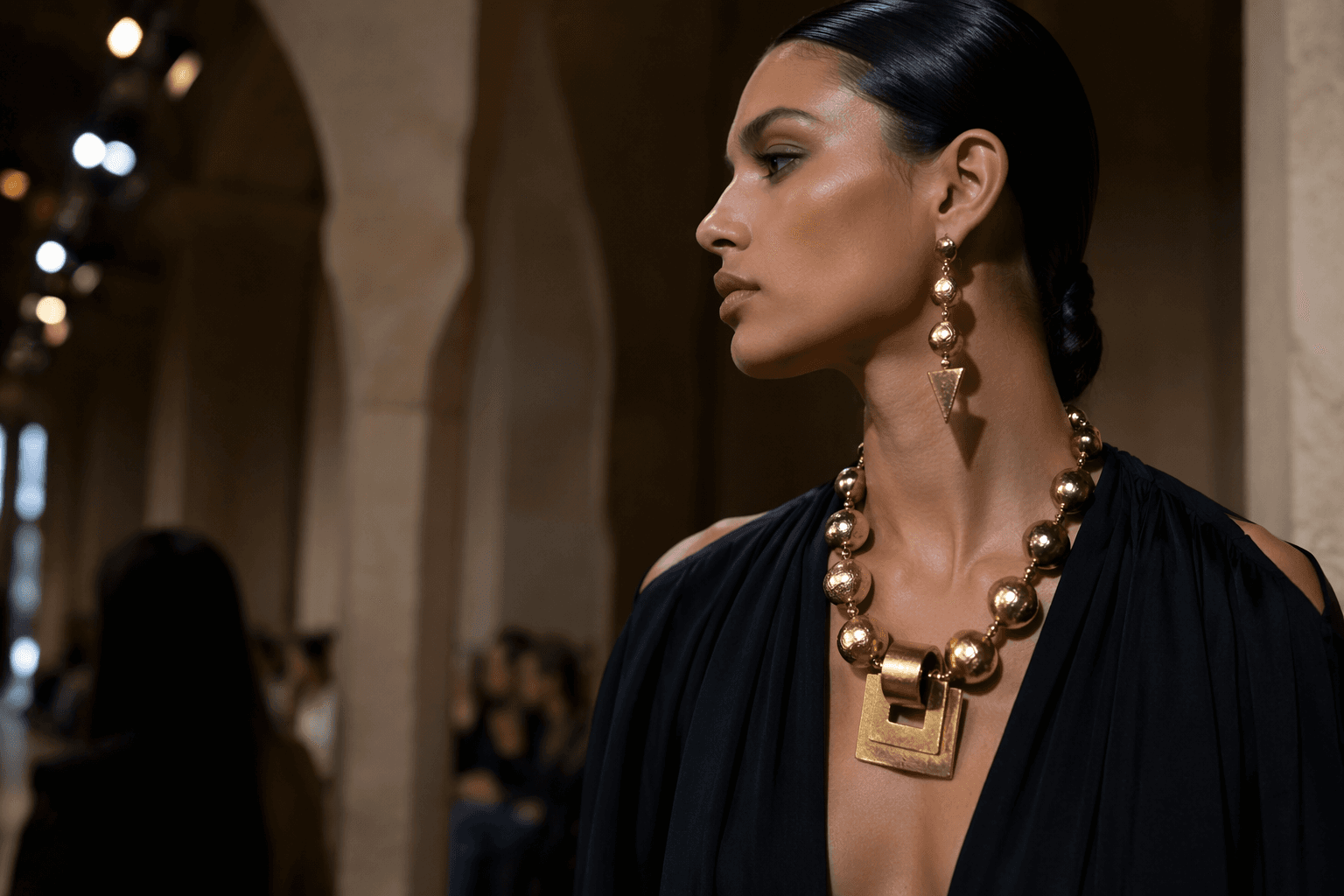
Benharbit has said Ashaha’s DNA blends Amazigh heritage with a 1970s twist and a modern touch, and that description is useful for collectors trying to separate historical fluency from trend-chasing. The strongest vintage-leaning jewelry rarely copies a period outright. It borrows its grammar: geometric shapes, bold chunky forms and a finish that looks brushed rather than polished to a mirror shine. Ashaha’s rough-gold surface, inspired by traditional brushed-gold techniques, gives the work the kind of tactile depth that often reads more convincingly than decorative excess. Benharbit also told Couture that the fair offered “a rare balance of artistry and intimacy,” which is exactly the right setting for jewelry that depends on close inspection.
That distinction matters now. Rising gold prices and a more competitive luxury landscape are making point of view as important as material value, especially for emerging fine-jewelry brands. Ashaha’s appeal lies in how it uses heritage as structure rather than ornament, with pieces that Benharbit has said are chunky yet lightweight and not too costly. For vintage-minded buyers, that is the cue to watch: the best new jewelry does not merely echo the past, it understands why the past still feels tactile, exacting and worth collecting.
This article was produced by Prism’s automated news system from verified source data, official records, and press releases, then run through automated quality and moderation checks before publishing. The system is built and supervised by the people who set the standards it runs under. Read our full AI policy.
Did this article answer your question?