Elizabeth I amber pendant resurfaces at Sotheby’s with soaring estimate
A £5,588 Elizabeth I amber pendant is back at Sotheby’s with a £100,000 to £150,000 estimate, after research, provenance and a rare portrait attribution reset its value.
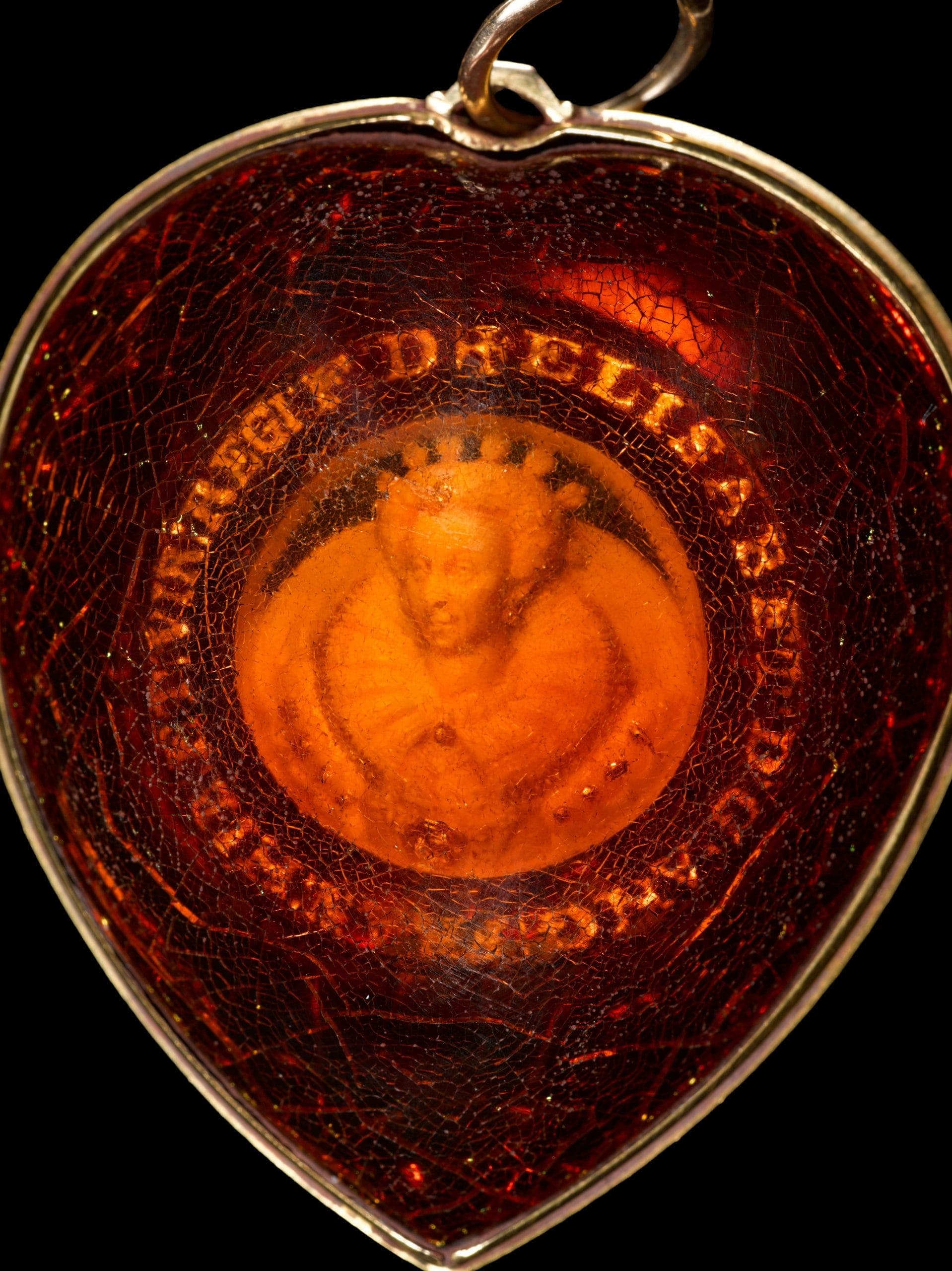
Sotheby’s will place a circa-1600 amber pendant with a portrait of Queen Elizabeth I in its London sale on July 1, with a £100,000 to £150,000 estimate after it brought £5,588 at Lyon & Turnbull in Edinburgh last November. The jump is the sort that happens when a jewel moves from being an obscure antique to a named historical object with a traceable past.
Catalogued as lot 246 in Master Sculpture from Four Millennia, the 41 mm pendant is attributed to Hans Klingenberg or Georg Schreiber, amber workers active in Königsberg on the Baltic coast. Sotheby’s describes it as a German, Königsberg-made amber pendant with a microcarved portrait of Elizabeth I, set within an 18th-century pendant mount. Yellow amber frames a cameo likely carved from white amber or a tin-rich compound, with gilt highlights and painted foil or verre églomisé, details that place the object firmly in the world of courtly miniature work rather than ordinary ornamental jewelry.
The price reset rests on more than rarity alone. Sotheby’s says scientific and historical research established the piece as a rediscovered Renaissance jewel, and it points to the fact that, by the close of the 16th century, virtuoso amber objects were prized as “Baltic gold.” The pendant’s inscription names Elizabeth as queen of England, France, Ireland and Virginia, tying it to the iconography of her reign. Amber also appears in the gift culture around the English and Prussian courts, with the house noting recorded amber gifts to Elizabeth and to Anne of Denmark, consort of James I.

The provenance carries its own weight. The pendant traces to John Malcolm, 1st Baron Malcolm of Poltalloch, then by family descent to the 2025 Edinburgh sale. It was also exhibited at the Burlington Fine Arts Club in London in 1879, no. 377, a paper trail that gives the jewel a public history stretching back nearly 150 years. Artnet calculated that a sale within estimate would mean roughly an 1,800 percent return for the consignor, but the bigger collector lesson is more practical: on Elizabethan pieces, the mount, the portrait, the inscription and the technical tests matter as much as the headline estimate, because those details decide whether an object reads as a curiosity or a rediscovered royal jewel.
This article was produced by Prism’s automated news system from verified source data, official records, and press releases, then run through automated quality and moderation checks before publishing. The system is built and supervised by the people who set the standards it runs under. Read our full AI policy.
Did this article answer your question?