Elizabeth Taylor, Diana and modern stars drive record jewel fascination
A jewel becomes collectible when a name, a maker’s stamp, and a documented appearance lock together. Elizabeth Taylor, Diana, and Grace Kelly show how provenance turns ornament into evidence.
The clues that make a jewel collectible
The most valuable celebrity jewels are not just large or glittering. They are pieces with metadata you can hold in your hand: a signed clasp, a known date, a royal or Hollywood owner, and a public appearance that can be pinned to a moment in time. That combination is what transforms a diamond or pearl from luxury into a benchmark, and it is why the market still circles back to Elizabeth Taylor, Princess Diana, Grace Kelly, and Jacqueline Kennedy Onassis when it wants proof that provenance can outmuscle even exceptional stones.

Elizabeth Taylor: when ownership becomes a record
Elizabeth Taylor remains the clearest case study in how celebrity ownership inflates a jewel’s meaning. Christie’s called her 2011 sale a world-record moment, and the numbers still tell the story: La Peregrina, the 16th-century natural pearl, realized $11,842,500, while 26 lots crossed the $1 million mark. Before the auction, the collection traveled on a three-month global exhibition tour that included Moscow, London, Los Angeles, Dubai, Geneva, Paris, and Hong Kong, which helped turn the sale into a public event as much as a private dispersal.
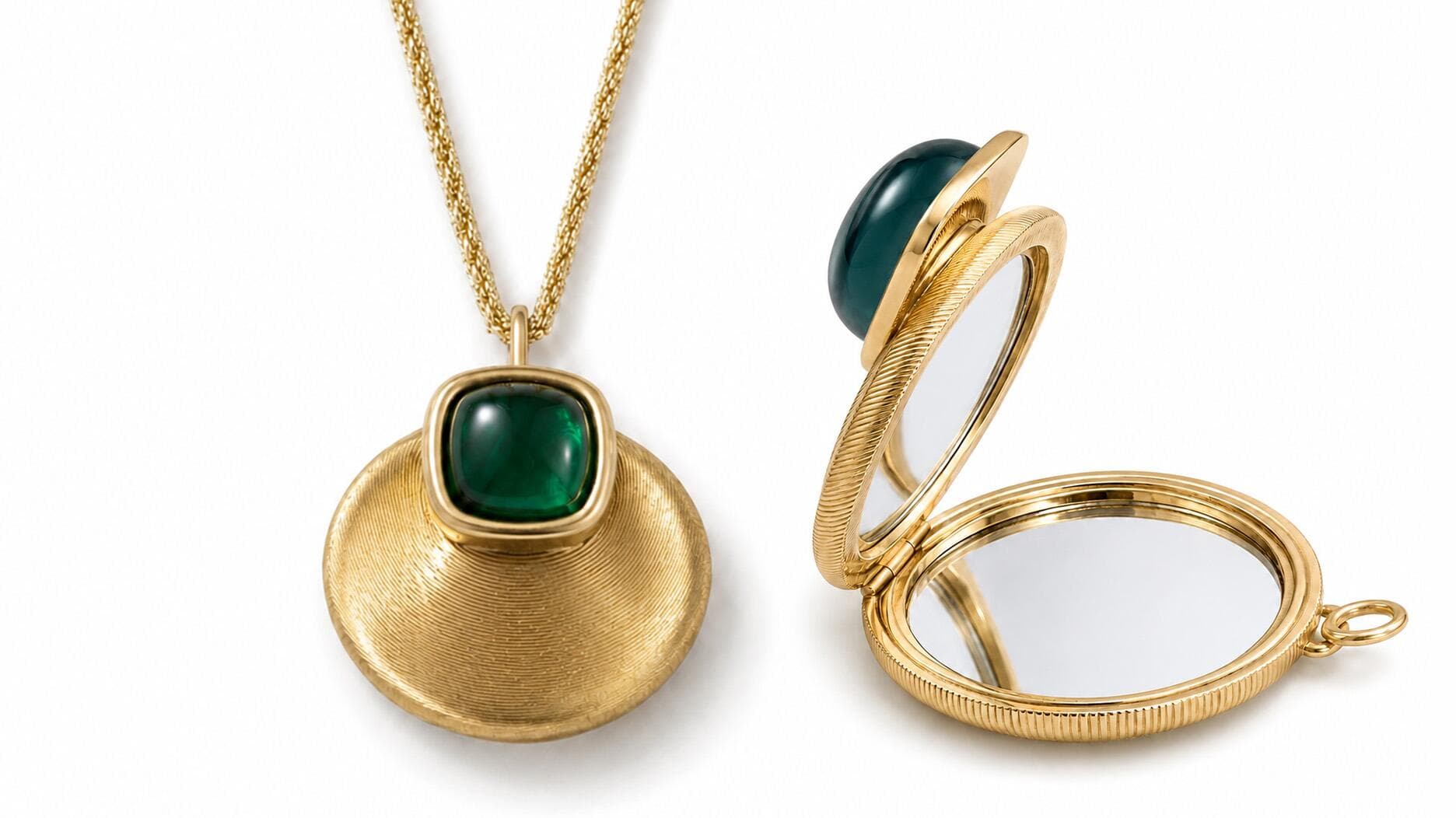
Her Bulgari emerald-and-diamond suite shows the same logic at a different scale. The pendant alone brought $6,587,500, and the lot listing describes the necklace as set with a graduated series of sixteen rectangular-cut and square-cut emeralds, signed BVLGARI. That signature matters. In the vintage market, a maker’s mark can be the difference between a handsome emerald necklace and a documented jewel with a paper trail, a design language, and a place in jewelry history.
What Taylor’s collection proves is that reproducible features and irreplaceable history are not the same thing. You can find emerald suites with sharp-cut stones and sleek, geometric settings. You cannot recreate the combination of Taylor, Richard Burton, Bulgari, and a highly public auction in which collectors bid on a legend as much as on the stones.
Princess Diana: the power of public wear
Princess Diana’s jewels remain so magnetic because she wore them where cameras could see them. The Attallah Cross, an early-20th-century amethyst-and-diamond pendant, was worn by Diana in 1987 at a Garrard function in support of Birthright. That sighting is the piece’s essential provenance: a bold cross, a specific year, a known venue, and a princess whose style made even antique jewels feel alive.
When Kim Kardashian bought the Attallah Cross at Sotheby’s in January 2023 for £163,800, or $197,453, the sale reinforced how much public memory can matter. A jewel like this is collectible not merely because it is old, but because its shape, scale, and documented wear make it instantly legible. If you see a similar amethyst cross in the market, the design may be repeatable. The Diana connection is not.
That distinction is critical for readers decoding vintage pieces. Era-specific settings, in this case the dramatic, statement-making proportions of the early-20th century, can often be found again. Diana’s exact ownership history cannot. The market pays for both, but only one is unique.
Grace Kelly: a ring that outgrew its price tag
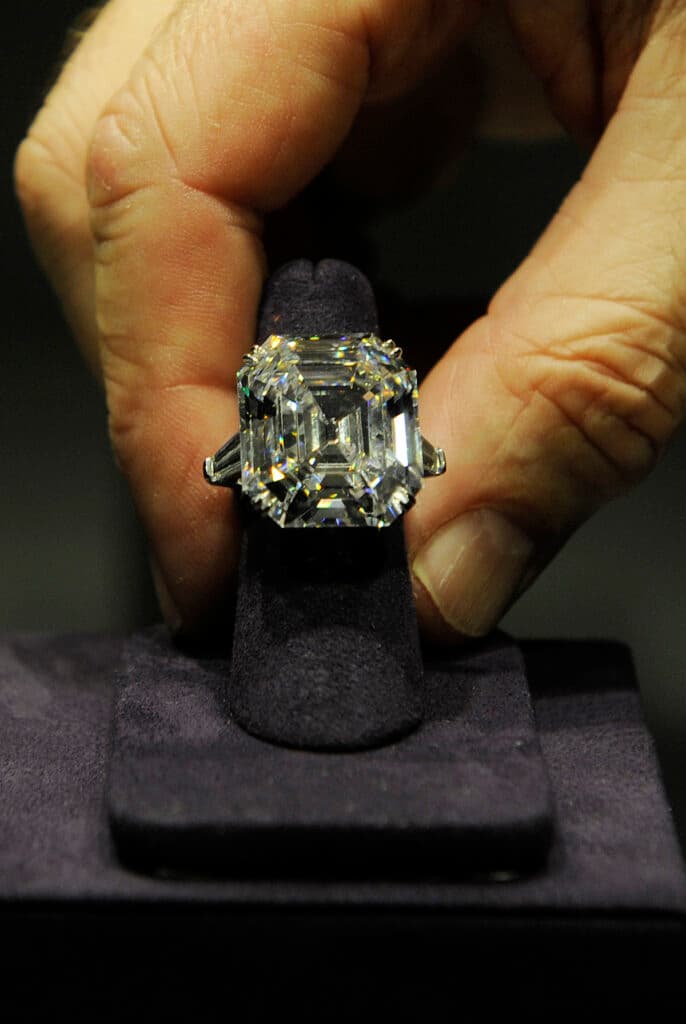
Grace Kelly’s Cartier engagement ring is one of the most recognizable examples of a jewel whose symbolism has eclipsed its original transaction. Given by Prince Rainier III of Monaco in 1956, it is commonly identified as a 10.47- or 10.48-carat emerald-cut diamond, and a recent valuation placed it at about $38.9 million. That kind of figure is a reminder that some jewels accrue value not because the stone changed, but because the story attached to it did.
The emerald cut itself is important here. It is a shape that rewards clarity and proportion over flash, which fits Kelly’s elegant public image and the clean, aristocratic lines associated with Monaco. A similar emerald-cut diamond can absolutely be sourced in the vintage market. What cannot be duplicated is the exact convergence of princess, principality, and a ring that has become shorthand for romantic royalty.
Jacqueline Kennedy Onassis and the modern first-lady look
Jacqueline Kennedy Onassis is a different kind of reference point, but no less influential. Her jewelry helped define a modern first-lady image, especially through pearl-and-diamond looks and the Schlumberger pieces associated with her at Tiffany. Her engagement ring was redesigned in 1962, and that fact alone is useful to collectors: even the most famous jewels can evolve, acquiring layers of alteration, reinvention, and public recognition.
For readers assessing vintage jewelry, Jackie’s example shows how style can become a collectible category. The pearls, the diamonds, and the Schlumberger designs are not valuable only because she wore them. They matter because they shaped an aesthetic that still reads as polished and instantly recognizable. If a piece carries that kind of documented association, it enters a different class of desirability than an unnamed jewel of similar quality.
Modern stars and the limits of comparison
The fascination has not stopped with the mid-century icons. A Yahoo-published InStyle roundup places Beyoncé, Gigi Hadid, and Margot Robbie in the same lineage of public jewel spectacle, showing how contemporary stars extend the story into the present. Beyoncé is the strongest modern comparison point because her jewelry has already become a reference case in its own right.
She wore Tiffany’s 128.54-carat yellow diamond, joining Audrey Hepburn and Lady Gaga among only a very small group of women known to have worn it. Her 2013 Grammys look also included Lorraine Schwartz pear-shaped diamond stud earrings, a 14-carat portrait-cut diamond statement ring, and stacked diamond bracelets. Those details matter because they separate a one-night look from a collectible object: a famous red-carpet appearance can amplify a jewel, but if the design is not tied to a named stone, a documented maker, or a historically rare cut, the piece is usually memorable rather than museum-grade.
How to read the market without the gloss
The highest-value celebrity jewels share a few traits that can be tested rather than admired vaguely. Look for a maker’s signature, like the signed BVLGARI necklace in Taylor’s collection. Look for a stone or cut that is unusual enough to be identified precisely, such as an emerald cut, a portrait cut, or a natural pearl like La Peregrina. Look for documented ownership, especially when the piece was worn publicly at a specific event, because that is where private jewelry becomes cultural evidence.
Just as important, separate what can be reproduced from what cannot. A similar emerald necklace can be built, a comparable amethyst cross can be found, and an emerald-cut diamond can be sourced with relative ease. What cannot be manufactured is the chain of provenance that links a jewel to Elizabeth Taylor’s sale, Diana’s public image, Grace Kelly’s royal romance, or Jacqueline Kennedy Onassis’s polished first-lady silhouette.
That is why these jewels continue to fascinate. They are not only beautiful objects. They are archives in metal and stone, and the market still rewards the ones whose histories can be read as clearly as their settings.
This article was produced by Prism’s automated news system from verified source data, official records, and press releases, then run through automated quality and moderation checks before publishing. The system is built and supervised by the people who set the standards it runs under. Read our full AI policy.
Did this article answer your question?