Estate appraiser Moshe Hakemolo builds Hawaii jewelry business on trust
A Honolulu appraiser built his business on plainspoken valuations, free verbal appraisals, and a hard line on trust, turning heirloom uncertainty into clarity.
Trust is the first valuation
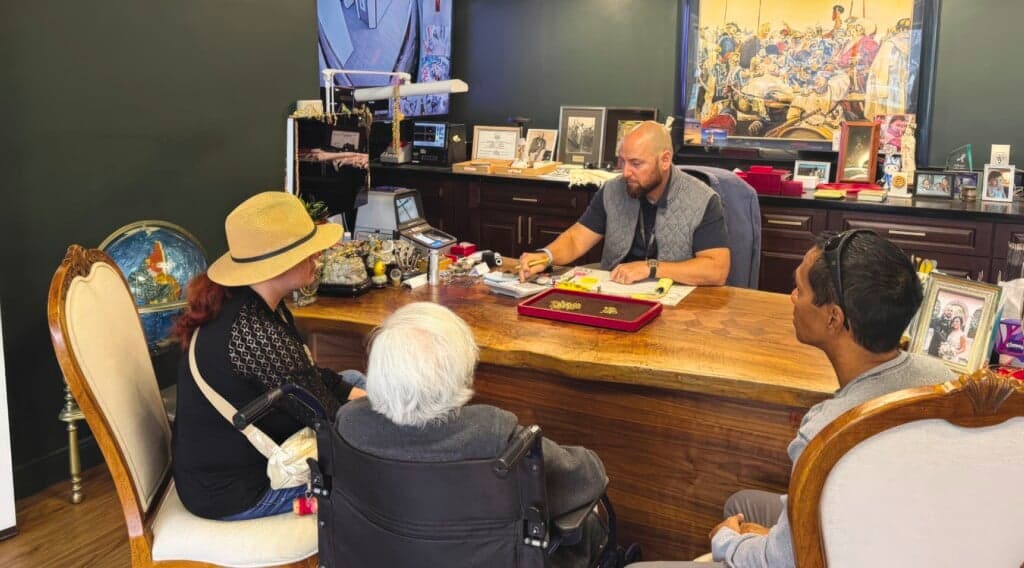
When you bring in a ring, a chain, or a watch that has passed through a family, the first thing being assessed is not the stone or the metal. It is whether the person behind the desk can explain exactly what you own, what it is worth, and why. Moshe Hakemolo has built Hawaii Estate & Jewelry Buyers around that premise, pairing gemological knowledge with a service model meant to make inherited jewelry less mysterious and less intimidating.
Hakemolo has worked in the jewelry business since 2001 as an estate appraiser and gemologist, and he started his own company in 2010. Today the business has five employees, including two appraisers, a small team size that suits the kind of close, private transactions estate jewelry often demands. His approach is anchored in Jewish religious beliefs, and he describes dishonest business practices as something that eventually fails, a philosophy that matters in a field where sellers can easily be separated from the true value of a piece.
How estate jewelry becomes a readable object
Estate jewelry is not just old jewelry. It is a small archive, and the clues are usually visible where people rarely look: inside a band, along a clasp, beneath a stone, on a watch case, or stamped into a safety-deposit-box stash that has not been opened in years. The difference between a straightforward sale and a painful underpayment often comes down to whether someone can interpret those marks correctly.
That is why appraisal is not a formality. A competent jeweler separates retail or replacement value from wholesale or liquidation value, because those numbers answer very different questions. Replacement value is designed for insurance, while wholesale or liquidation value is closer to what a buyer may offer when a piece is being sold quickly. If you do not understand which number you are holding, you can mistake an insurance document for a sales price, or take a cash offer that reflects scrap alone when the piece has collectible or historical appeal.
What a fair buyer should examine
A trustworthy appraisal begins with documentation, not persuasion. Hallmarks, purity stamps, maker’s marks, signatures, and cartouches can reveal metal content, origin, and sometimes the house that made the piece. Stones should be identified separately from the mounting, because a diamond in a worn mounting may have different value dynamics than the setting itself. Repairs matter too: a bent shank, a replaced clasp, or a re-tipped prong can change both value and marketability.
Hakemolo’s company offers verbal jewelry appraisals, written appraisals for estate or insurance purposes, jewelry repairs and refurbishing, safety-deposit-box appraisals, and luxury watch servicing. That range is significant because it reflects the real life of estate jewelry: some pieces should be documented and insured, some should be sold as-is, and some may be worth repairing before resale. A bezel setting, for example, can preserve a stone differently than a prong setting, and a buyer who understands those construction choices is better equipped to explain whether restoration adds value or simply adds cost.
Why repair and resale should be treated separately
Estate sellers are often told to think only in terms of melt value, especially if they have first encountered cash-for-gold offers. Hakemolo’s business began as an appraisal service and later expanded to selling select pieces on behalf of customers who had received low offers from cash-for-gold buyers. That evolution tells you something important: not every inherited piece belongs in the same pricing category.
A slender gold chain with little design distinction may indeed be priced close to metal value, while a signed vintage bracelet, a well-cut diamond, or a luxury watch can carry a premium based on craftsmanship, brand, and condition. The point of a fair buyer is not to inflate value; it is to identify where value lives. Sometimes the right answer is a repair and resale strategy. Sometimes the right answer is to sell immediately. A serious appraiser should be able to tell you which path is defensible.
A service model built for families, not just transactions
Hawaii Estate & Jewelry Buyers says its work centers on transparency, professionalism, and fair market pricing, and it keeps appointments private and exclusive to the client. That privacy is not a luxury flourish. It is part of how sensitive family property should be handled, especially when multiple heirs, old paperwork, or emotional attachment are involved. A private appointment creates room to examine each piece carefully and to discuss whether it belongs in a written appraisal, an insurance file, a sale, or a repair queue.
The company also offers free verbal appraisals for seniors and military members, a community-minded detail that fits Honolulu’s population profile. Honolulu County had an estimated population of 998,747 in July 2024, and 64,756 veterans in the 2020-2024 estimates. In a place with a substantial older population and a deep military presence, estate jewelry services are not niche indulgences. They are practical tools for families managing inheritances, downsizing, or deciding what to do with objects that have outlived one generation.
The local credentials behind the counter
The business, filed as Hawaii Estate & Jewelry Buyers, LLC on June 30, 2011, is listed at 1188 Bishop Street in Honolulu. It is also BBB Accredited with an A+ rating, which gives prospective sellers one more concrete indicator of how the company presents itself in the marketplace. In a category where trust is often more valuable than polish, those details matter because they help distinguish a licensed local firm from the anonymous, high-pressure operations that promise fast cash and leave value on the table.
Hakemolo sees the business as a multigenerational legacy and hopes his two children, a boy and a girl, may eventually join the company. That matters because estate jewelry is, at heart, about continuity. The pieces move from one hand to another, but so do the stories, the obligations, and the records that make those pieces legible. A good appraiser does more than name a price. He helps preserve the chain of evidence that lets a family understand what it owns and whether it is being treated fairly.
In a market crowded with vague promises, that kind of clarity is the rarest gem of all.
This article was produced by Prism’s automated news system from verified source data, official records, and press releases, then run through automated quality and moderation checks before publishing. The system is built and supervised by the people who set the standards it runs under. Read our full AI policy.
Did this article answer your question?