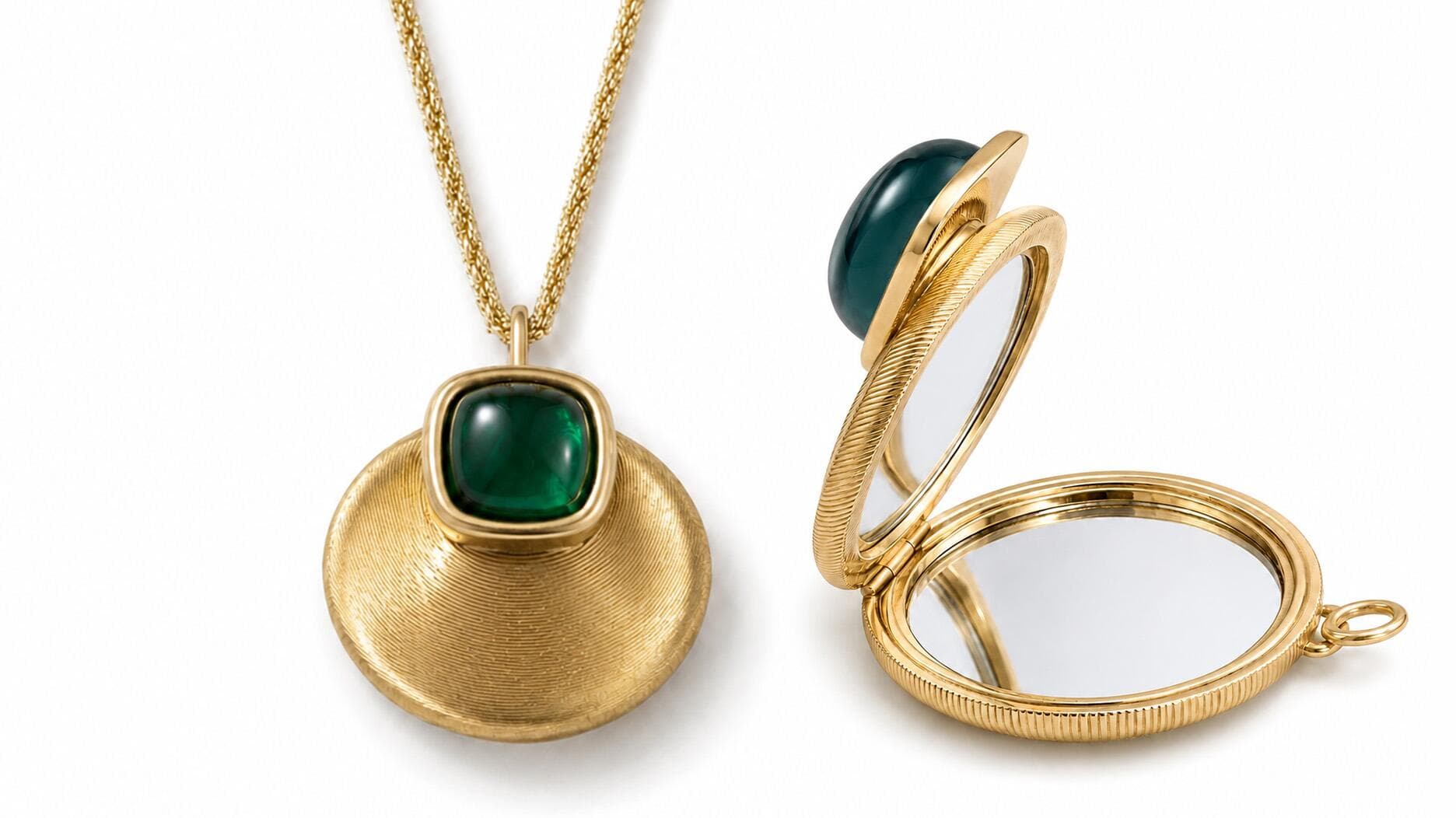
Estate‑discovery checklist — 10 actions to take when you inherit jewelry
When you open an inherited jewelry box, you're holding a small archive. These 10 steps protect both its history and its value before a single piece leaves your hands.
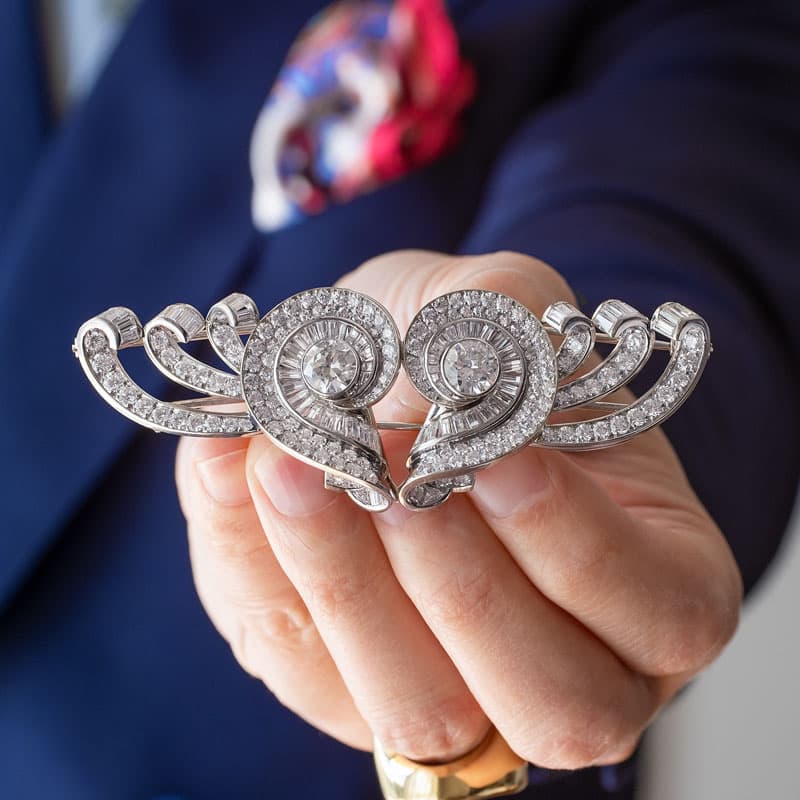
The moment you lift the lid of an inherited jewelry box, you are holding a small archive: family history compressed into gold, silver, enamel, and stone. The instinct to sort, polish, and make sense of it all is entirely natural. Resist it. The choices you make in the first hours and days after inheriting jewelry can be the difference between preserving a piece's full provenance and inadvertently erasing it. Here is the checklist that matters most.
Photograph everything before you touch anything
Before a single brooch is lifted from its velvet bed, document the box exactly as you found it. Shoot the full tray or drawer first, then work methodically through each piece: one image flat on a neutral surface, one macro shot of the back, clasp, or interior shank where marks tend to live. Use your phone's portrait or macro mode, or hold a magnifying glass in front of the lens for tighter detail. This initial photographic record is your baseline; it captures condition, context, and arrangement before human hands disturb any of it, and it will prove invaluable if ownership questions arise later in probate.
Do not clean, polish, or alter a single piece
This cannot be stated firmly enough. The dark film inside an engraved cartouche, the slight tarnish on a silver bracelet's clasp, the greenish bloom on a copper-backed brooch: none of it is dirt. That surface aging is patina, the oxidization that occurs over decades, and it is one of the most reliable visual indicators of genuine age in vintage and antique jewelry. A jeweler's polishing cloth or even a damp tissue can strip away the very evidence that places a piece in the Victorian era rather than last year. Equally important, abrasive cleaning can render hallmarks and maker's marks illegible, destroying information that has survived a century or more of wear.
Gather every provenance clue in the box
Look beyond the jewelry itself. Tissue-paper envelopes, old ribbon-tied receipts, cardboard gift boxes stamped with a jeweler's name, handwritten notes tucked behind a bracelet: all of these are primary documents. Engraved dates and initials on a locket back or ring shank are not merely decorative; they anchor a piece in a specific moment and, sometimes, to a specific maker. A date letter paired with an inscription can narrow a piece's origin to a single year. Gather every scrap of paper, photograph it alongside the jewelry it accompanied, and store it all together. Context is provenance, and provenance is value.
Read the marks with a loupe
A jeweler's loupe, specifically a 10x triplet loupe, is the single most useful tool in this process and costs under thirty dollars. Work systematically: the interior shank of rings, the reverse of pendants and brooches, the underside of clasps, the cartouche on silverware handles. You are looking for hallmarks (purity marks indicating metal fineness, such as "750" for 18-karat gold or "925" for sterling silver), assay office marks (in British pieces, the distinctive shields of London, Birmingham, Edinburgh, or Sheffield), date letters (alphabetical sequences that identify a year of assay), and maker's marks (initials or symbols registered to a specific workshop). Record every mark exactly as it appears, noting its shape as well as its content; a lion passant means something different in English silver than a similar-looking mark on a Continental piece.
Photograph the marks in isolation
Once you have located the marks, photograph each one separately against a white or neutral grey card with strong raking light from a single direction, which causes stamped impressions to cast small shadows and become legible. A macro lens attachment for a smartphone, available for a few dollars, is sufficient for most marks. Label each image with the piece it came from. These close-up mark photographs are what you will submit to databases, forums, and appraisers; clear images do more work in a single message than a paragraph of description, and they protect you from transcription errors when dealing with unfamiliar alphabets or Continental coding systems.
Commission a written insurance appraisal from a credentialed professional
The goal at this stage is not to know what the jewelry would sell for at auction; it is to know what it would cost to replace it, which is a different and usually higher figure. An insurance valuation provides the documented replacement value your insurer requires to cover the pieces properly. Seek appraisers who hold credentials from recognized professional bodies: the American Society of Appraisers (ASA) and the Appraisers Association of America (AAA), whose certified membership exceeds 900 independent professionals, are the two primary American organizations. In the United Kingdom, look for Fellows of the Gemmological Association of Great Britain (Gem-A). Auction houses with dedicated jewelry departments, including Bonhams, Christie's, and Sotheby's, also offer estate review services, sometimes without charge, though those assessments reflect sale value rather than insurance replacement cost. Ask specifically for a written report with item-by-item descriptions, photographs, and the appraiser's credentials; verbal estimates are not useful for insurance or estate documentation.
Cross-reference marks against specialist databases and forums
For British hallmarks, the UK Assay Office's published guides and the online hallmark finder maintained by Antique Jewellers offer searchable references covering marks from 1700 onward, including date letters, fineness numerals, and assay office symbols. For American costume and silver marks, the databases at 925-1000.com and the Silver Collector forums are well-established community resources. European Continental marks, which vary enormously between French, German, Austro-Hungarian, and Scandinavian systems, often require specialist input; the Online Encyclopedia of Silver Marks is a reliable starting point. For genuinely obscure pieces, university jewelry or metalwork departments occasionally assist with identification, and specialist collector forums frequently harbor members with deep regional expertise. Patience here pays: a mark that looks unidentifiable under one classification system sometimes resolves immediately under another country's coding.
Test suspected significant stones before any sale or repair
If a piece contains a stone that might be a sapphire, ruby, emerald, or large diamond, do not proceed to sale or repair without independent gem testing. The stakes are considerable: a natural, unheated Ceylon sapphire and a synthetic corundum of the same color can look identical to the untrained eye, but their values differ by orders of magnitude. The Gemological Institute of America (GIA) offers laboratory grading reports for colored stones and diamonds that provide country of origin determination, treatments disclosure, and quality grades that directly affect sale value. For pieces that may not warrant GIA pricing, independent certified gemologists can perform basic identification testing, including refractive index readings and spectroscopic analysis, that establishes at minimum whether a stone is natural, synthetic, or a simulant. This step is not optional for any piece where a gemstone appears central to the design.
Secure the pieces and update your insurance immediately
Inherited jewelry is almost universally under-insured or uninsured during the estate settlement period, which is precisely when it is most vulnerable. A standard homeowner's or renter's insurance policy typically covers jewelry only up to a sublimit, often $1,500 to $2,500 for the entire category, which is likely inadequate for even a single significant piece. A bank safe-deposit box costs as little as twenty to forty dollars annually and removes the most acute risk. Simultaneously, contact your insurance broker to schedule a jewelry rider or floater on your existing policy, which requires the written appraisal from step six. Document the addition in any ongoing estate or probate paperwork; the executor of an estate has a legal obligation to safeguard assets, and jewelry is frequently the category where that obligation goes unmet.
If you decide to sell, build a competitive field of written offers
The single most financially consequential thing you can do if you choose to sell is refuse the first offer. Reputable auction houses with specialist jewelry departments, estate dealers with verifiable track records, and consignment platforms that photograph and list pieces to a broad collector audience all represent legitimate channels with price discovery built into their processes. Collect at minimum three written offers before making any decision. Be especially cautious of unsolicited "cash now" offers from buyers who appear quickly after an estate is publicized, whether at an estate sale, through social media, or via word of mouth. Those offers are almost always pitched at or below scrap metal value, and once the transaction is complete, the piece and its history are gone. The jewelry market rewards sellers who take their time; a well-documented piece with strong provenance, sold through the right channel to a collector who wants exactly that object, will consistently outperform a rushed transaction with an undisclosed buyer.
Reference resources worth bookmarking
- UK Assay Office hallmark guides (assayofficelondon.co.uk)
- Antique Jewellers online Hallmark Finder
- Online Encyclopedia of Silver Marks (925-1000.com)
- Kovels' online antiques and collectibles database
For hallmark identification:
- American Society of Appraisers: find-an-appraiser directory (appraisers.org)
- Appraisers Association of America member search (appraisersassociation.org)
- Gem-A (Gemmological Association of Great Britain) for UK-based professionals
For finding a credentialed appraiser:
- GIA laboratory submission (gia.edu)
- American Gem Society (americangemsociety.org) for locating credentialed gemologist-appraisers
For gem testing and grading:
For photographing marks legibly: use a single light source held at a low angle to the surface, a white card reflector on the opposite side, and a macro lens attachment. Shoot at the highest resolution your phone or camera allows, and crop in post rather than standing farther back and zooming. A crisp image of a maker's mark is worth considerably more than a verbal description of one.
The jewelry sitting in that box has already survived decades, possibly generations. A few careful days of documentation and verification are a small investment against the irreversible loss of something that cannot be remade.
This article was produced by Prism’s automated news system from verified source data, official records, and press releases, then run through automated quality and moderation checks before publishing. The system is built and supervised by the people who set the standards it runs under. Read our full AI policy.
Did this article answer your question?