Francesca Villa turns flea-market finds into high-jewelry stories
Francesca Villa turns flea-market castoffs into jewel-box narratives, preserving their past while recasting them as luxury objects with wit, memory and provenance.
The romance of the found object
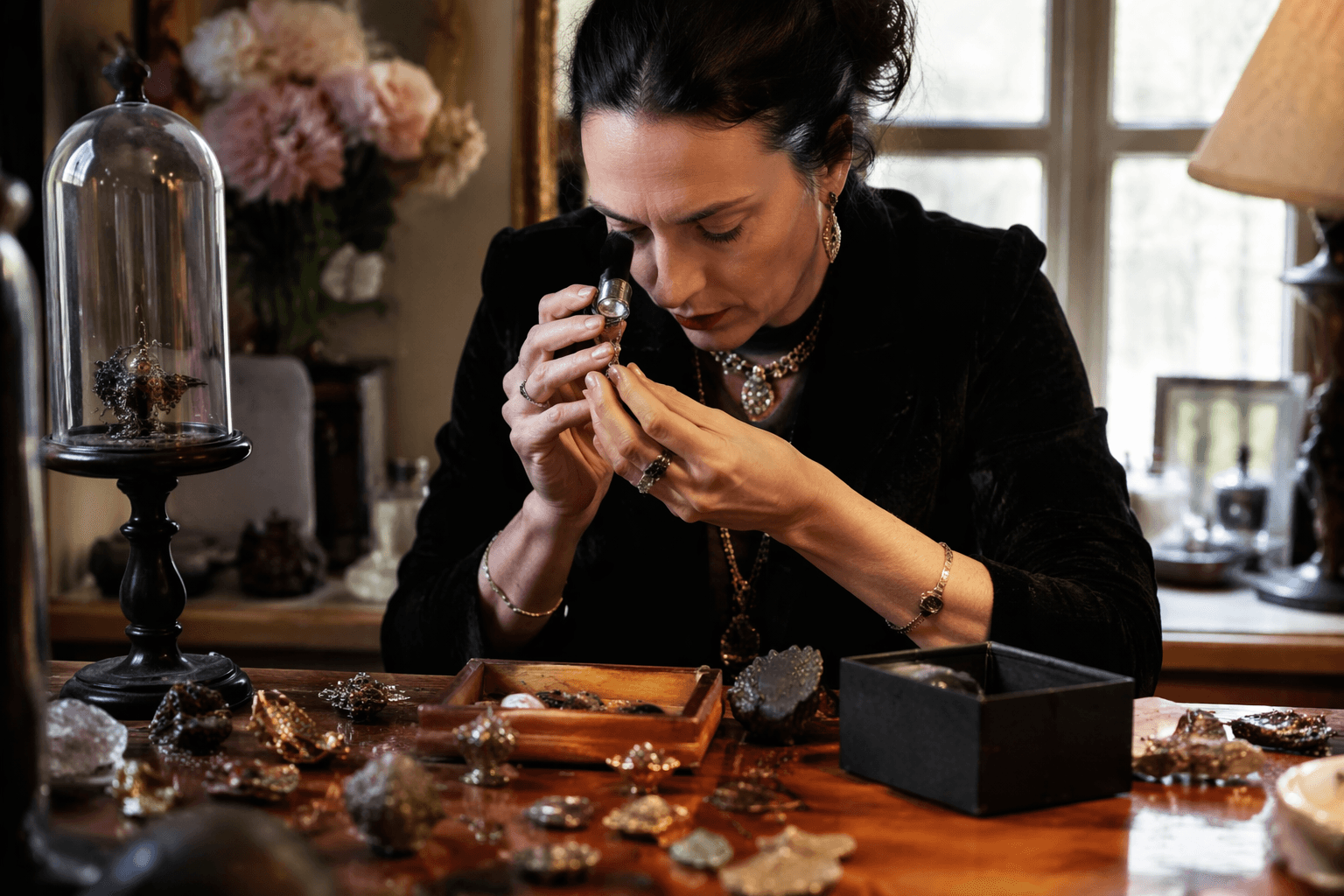
Francesca Villa treats a flea-market cameo or a discarded casino chip as the beginning of a jewel, not an afterthought. Her work is built on a rare balancing act: she preserves the historical charge of vintage objects while giving them a new life in gold and gemstones, where eccentricity becomes part of the value.
That is what makes her so compelling in the current jewelry landscape. Collectors are no longer drawn only to carat weight and polish; they want pieces that carry provenance, surprise and a sense of personality. Villa understands that a jewel can be luxurious and intellectually engaging at once, especially when its starting point is an object with a past.
A house built on memory
Villa’s own brand language is unusually clear about the emotional stakes. It says it elevates vintage and antique objects in gold and gemstones, and that the work is centered on story and memory. That framing is not decorative. It is the core of the brand’s identity, and it explains why her pieces feel more like miniature narratives than straightforward ornament.
Her collection taxonomy gives the idea real shape. Alongside more familiar jewelry forms, Villa explicitly works with Essex crystals, cameos, casino chips, gambling chips, Vari Vue lenticulars and Venetian beads. That list tells you everything about her taste: she is interested not just in preciousness, but in the poetry of objects that were once functional, collectible, playful or simply overlooked.
The brand also says the inspiration can begin with “an intriguing object with a story to tell.” That is the crux of Villa’s appeal. She is not merely mining the past for motifs. She is rescuing objects from obscurity and letting their original identity remain visible enough to matter.
From cufflinks to reversible jewels
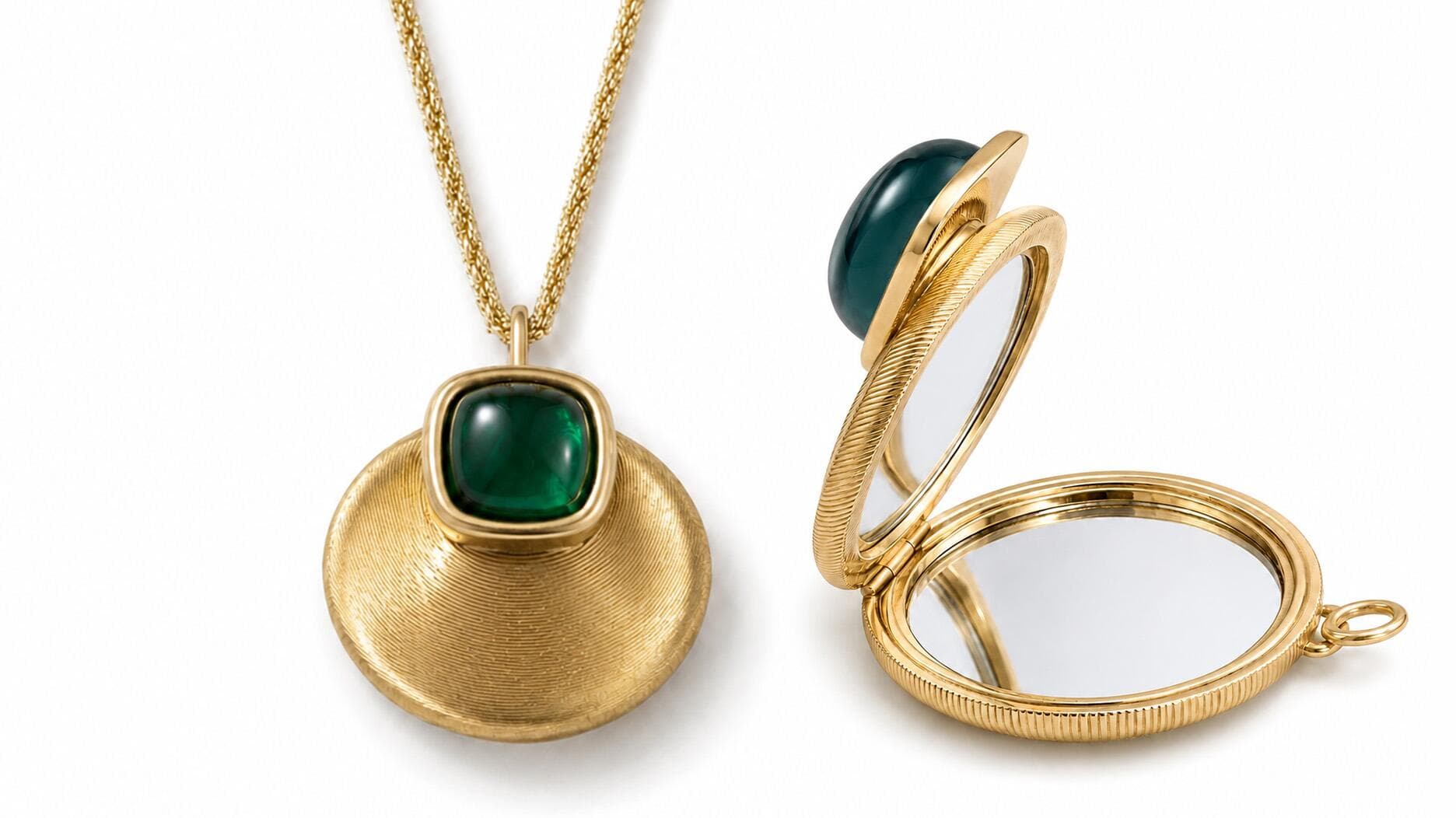
Villa’s 2024 collection, “Change Your Stripes,” captures her approach with unusual clarity. The line began with resin cameos made in Japan in 1950, originally commissioned for a menswear company to decorate cufflinks. That origin matters. These were not born as grand jewels; they were modest accessories with a specific midcentury purpose, which Villa then elevated into a new language of high jewelry.
One of the cameos depicts Janus, the Roman god associated with duality and new beginnings. That symbol is apt because the collection itself was built around reversible jewels designed to reflect changing moods. The idea of duality, of a piece that can shift as the wearer shifts, feels especially modern even as the material carries an older history. Villa is not erasing the past here. She is making its multiple meanings explicit.
This is where the line between preservation and reinvention becomes most interesting. The original cameo remains legible, but its new setting and function transform it into something more conceptually ambitious. In Villa’s hands, the antique object is not trapped inside nostalgia. It becomes an active participant in contemporary dress.
A designer shaped by inheritance and experience
Villa’s perspective is rooted in both lineage and hard-earned craft. She is described as a fifth-generation jeweler, and that family inheritance gives her work a deep familiarity with jewelry as a language rather than a category. Her path also includes a decade designing for prominent brands before launching her eponymous line in 2007, a stretch that suggests she came to her own label with serious technical and commercial experience.
She has also said she has designed jewelry for some of the world’s most prestigious houses and served as creative director of a high-jewelry atelier. That background helps explain why her pieces can move comfortably between collector appeal and couture-level execution. There is conceptual play in the work, but there is also the discipline of someone who understands how high jewelry must be built to last.
Her biography adds another layer of geography and sensibility. Born in Liguria, she later lived in Milan and Rome before settling in Solonghello, where her atelier is located. The path from coastal Liguria to Milan and Rome, then to a quieter working base in Solonghello, mirrors the balance in her jewelry: cosmopolitan in reference, intimate in feeling, and grounded in a personal sense of place.
Why her debut at Couture mattered
Villa’s 2024 COUTURE debut marked a significant moment in her visibility. It was her first appearance at the event, yet it arrived after years of work and a substantial body of experience. That timing gave the debut a kind of authority. She was not introduced as a newcomer to jewelry, but as a mature designer stepping into a room tailored to collectors, editors and connoisseurs.
The response was immediate. At the 2024 Couture Design Awards, held on June 1, 2024, at the Wynn Las Vegas Encore Theater, Villa won first place in the “Best in Debuting” category and also placed third in “Best in Haute Couture.” Those results reflect more than a strong season. They suggest that her blend of antique material, narrative intelligence and meticulous finishing registered not as novelty, but as a persuasive statement about where luxury jewelry can go.
The momentum continued in 2025, when Villa won the Couture Design Award in the “Best in Pearls” category for her “Eyes on You” necklace. That follow-up matters because it shows the brand’s appeal was not tied to a single clever debut. Villa’s vocabulary of historic references and finely handled materials has staying power.
The collector’s appeal of provenance and eccentricity
Francesca Villa’s work speaks directly to a collector’s instinct. A jewel that begins as a poker chip, a lenticular, a cameo or a bead does more than decorate the body. It carries a prior life, and that prior life becomes part of the pleasure of ownership. In an era when luxury increasingly rewards rarity with narrative, Villa’s pieces offer both.
The risk, of course, is sentimentality. Too much nostalgia and the work becomes costume. Too much transformation and the source object disappears. Villa avoids that trap by keeping the original object central to the design’s identity, while surrounding it with the kind of goldwork and gemsetting that signal true high jewelry. The result is not merely antique-inspired jewelry. It is jewelry that understands antiques as living material.
That is the sophistication of Villa’s practice. She does not flatten the oddities of the past into generic elegance. She lets a resin cameo made in Japan in 1950, a Janus image, a casino chip or an Essex crystal retain its personality, then asks what happens when it enters the vocabulary of luxury. The answer is a piece that feels at once archival and fresh, intimate and precious, and unmistakably alive.
This article was produced by Prism’s automated news system from verified source data, official records, and press releases, then run through automated quality and moderation checks before publishing. The system is built and supervised by the people who set the standards it runs under. Read our full AI policy.
Did this article answer your question?