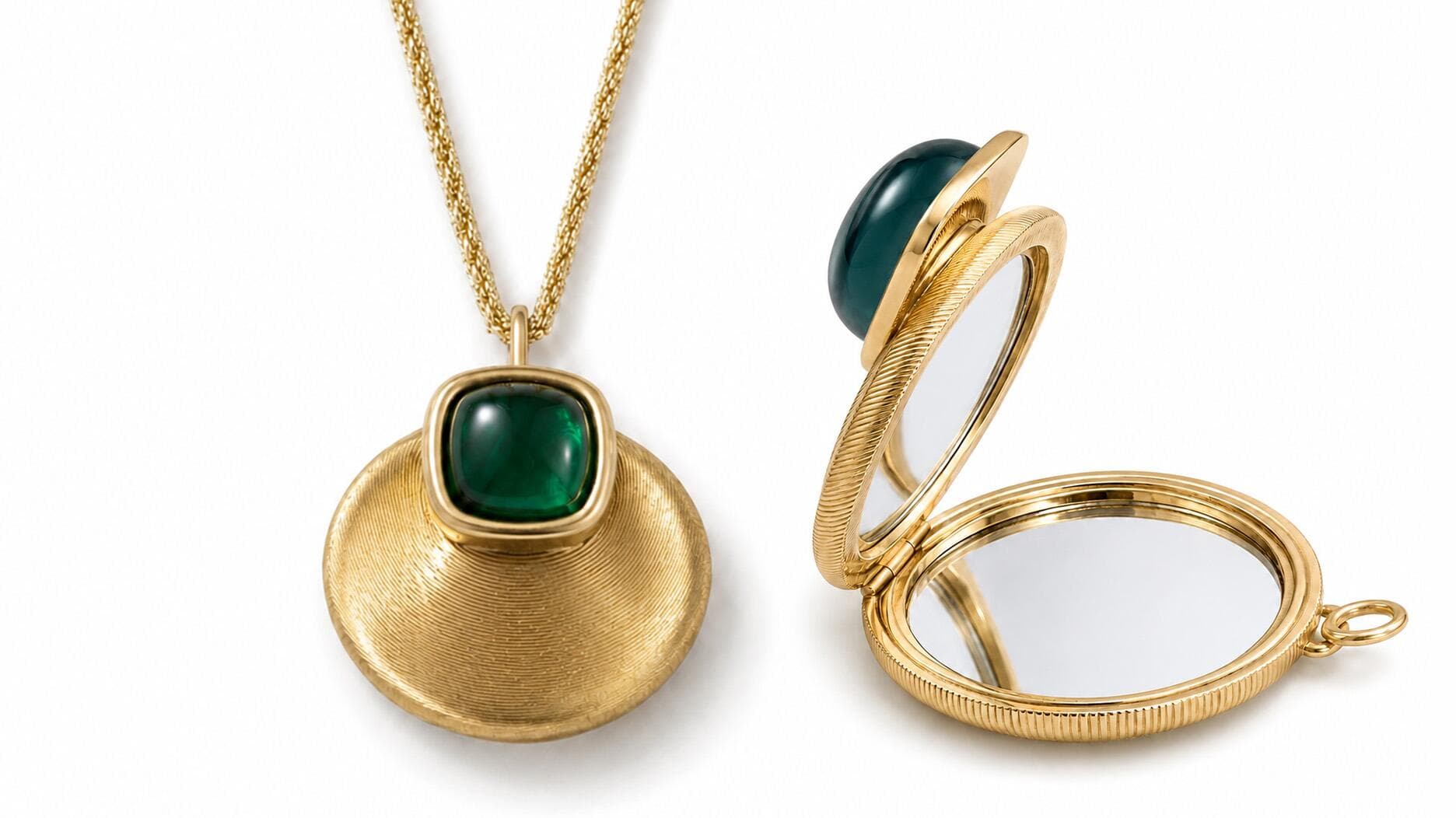
French eagle-head hallmark reveals 18K gold on vintage jewelry
An eagle head under magnification can confirm 18K French gold, but the real clue is how it sits beside maker and assay marks on worn vintage pieces.
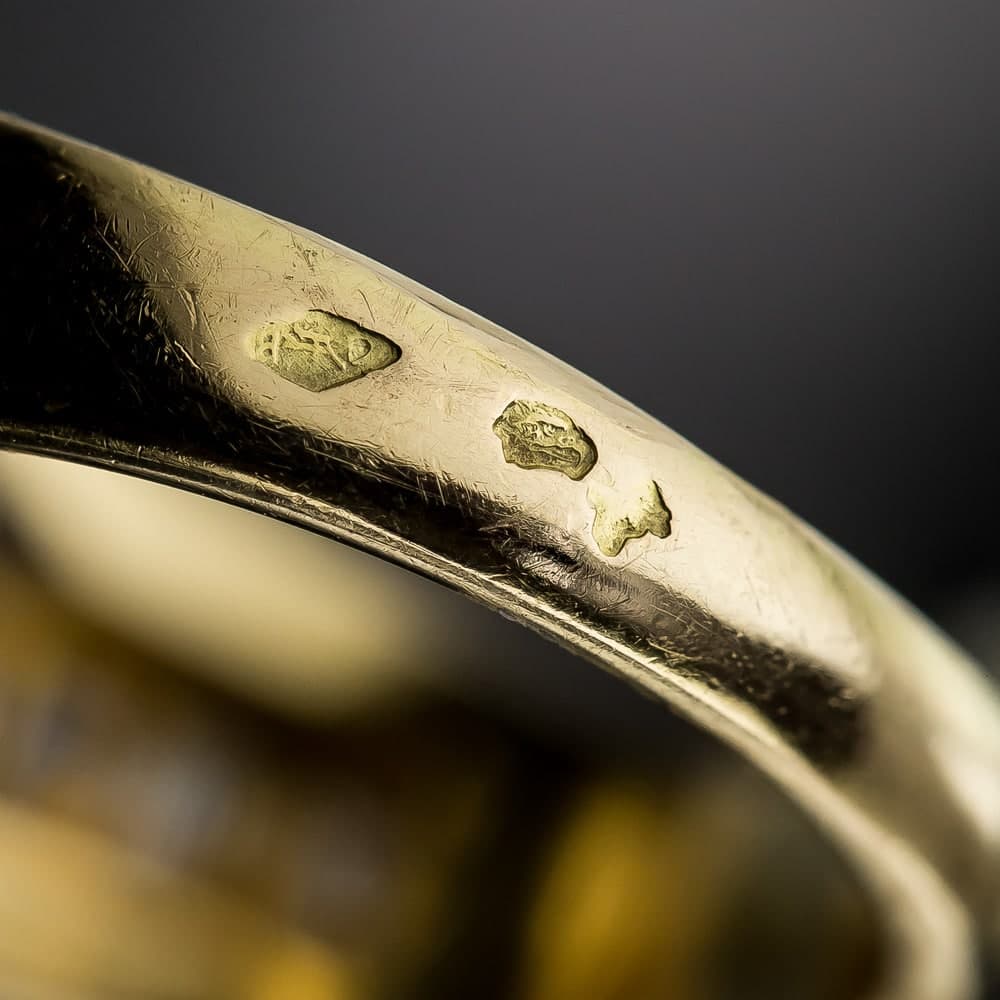
A tiny eagle’s head can change the entire reading of a vintage jewel. On a ring shank rubbed thin by decades of wear, or on the back of a brooch where the metal has softened from use, that minute stamp can signal French assay approval, 18K gold, and a far more precise sense of origin than a seller’s broad description alone.
What the eagle head means
The French eagle’s head is the official guarantee mark for 18-karat gold in France. In practical terms, that means 750 parts per thousand fine gold, a standard that has anchored French gold jewelry since 1838. For collectors, it is not a decorative flourish but a government-backed statement about fineness, and one of the most useful clues in European jewelry identification.
That weight of meaning is why the mark matters far beyond simple purity. A correctly read eagle head can support authentication, help narrow a date, and strengthen valuation, especially on signed vintage jewelry where the maker’s name and the national hallmark should tell the same story. When those clues align, confidence rises; when they do not, the piece deserves a second look.
How French hallmarking evolved
French hallmarking has older roots than the eagle itself. Before the French Revolution in 1789, precious-metal marking was handled by guilds in each town. After the Revolution, government-operated hallmark offices took over, testing precious metals and stamping them to certify quality and tax payment. That shift turned hallmarks into official records rather than local craft signatures.
The system became especially layered in the 19th century. From 1798 to 1838, French precious-metal objects carried two official marks, a title mark and a guarantee mark, plus the maker’s mark. Since 1838, a single official hallmark plus the goldsmith’s mark has been sufficient in France. That is one reason French hallmarking is considered one of the more complex systems in jewelry, with many marks used over time and overlapping periods that can trip up even experienced eyes.
Where to look on the piece
The first test is simple: look closely, then look again with magnification. French hallmarks are often tiny and worn, especially on rings, which makes them difficult to read with the naked eye. A loupe can reveal the shape of the mark, the condition of the strike, and whether the impression is crisp enough to be original or too softened to call with confidence.
The eagle head usually appears alongside the maker’s mark, which in France is typically set in a diamond-shaped cartouche. That pairing matters because the hallmark tells you the metal standard, while the maker’s mark links the jewel to a workshop or goldsmith. Imported jewelry may instead use an oval responsibility mark, a useful distinction when a piece claims French style or continental origin but the paperwork feels thin.
The shape of the guarantee hallmarks can also help place the piece. Parisian guarantee hallmarks differ in shape from provincial ones, and from 1809 onward French hallmarks included numbers or small symbols called assay-office marks, or différents, identifying the city where the piece was hallmarked. That means a small, worn stamp may hold more geographic information than a seller realizes.
The look-alikes and the marks that cause confusion
This is where vintage jewelry gets interesting, and where misreads happen. The eagle’s head is the best-known French mark for 18K gold, but it is not the only French animal symbol a buyer may see. Current reference guides also mention the owl for imported gold, the boar’s head for imported silver, and the Minerva head for silver. Each of these speaks to a different metal or origin, so confusing them can change the entire interpretation of a jewel.
There is also the retouched eagle’s head, a mark that creates real confusion because it looks related but served a narrower purpose. The retouched eagle’s head was used as a limited warranty mark for small works in 750/000 gold in Paris from 1847 to 1919, and in Paris and the departments from 1919 to 1994. On a tiny clasp, pendant, or petite mounting, that variation can be mistaken for the standard eagle head unless the mark is studied carefully.
This is why the best read is never made from one symbol alone. A weakened impression, a partial strike, or an overpolished surface can flatten the details enough to blur an eagle into another bird-like mark, or a true French hallmark into an unrelated emblem. The more worn the piece, the more the surrounding clues matter.
Why the mark still affects value
For a buyer, the eagle head is not just about romance or provenance. It is a practical assurance that the piece met French standards for 18K gold, and that assurance can shape both confidence and price. In the vintage market, especially with signed jewels, that matters because authenticity is rarely decided by one feature; it is built from the harmony of hallmark, maker’s mark, construction, and style.
That is also why vague claims about “French gold” deserve scrutiny. A piece may be French-made, French-style, or merely sold through a French dealer, but the eagle head points to French assay approval, not just continental taste. When a seller’s language sounds grander than the physical evidence, the hallmark is often the fastest way to test the claim.
Reading the mark with discipline
A useful habit is to treat the hallmark as a clue, not a shortcut. Start with the metal standard, then look for the maker’s mark, then note whether the strike resembles a Parisian or provincial form, and finally consider whether the piece belongs to the post-1838 system or one of the older, more layered periods. That sequence can turn a blurry stamp into a meaningful read.
- Use magnification, because French marks are often minute and worn.
- Look for the eagle head paired with a maker’s mark in a diamond-shaped cartouche.
- Check whether the mark could be a retouched eagle head rather than the standard guarantee mark.
- If the piece seems imported, watch for an oval responsibility mark instead of a French maker’s cartouche.
- Consider the broader system: the hallmark may help date the jewel approximately, but the maker’s mark and city symbols sharpen the picture further.
For vintage jewelry, the French eagle head remains one of the most elegant pieces of evidence a jewel can carry. It tells a story of assay, fineness, and official oversight, and when read correctly, it can separate a beautiful object from one with documented French identity.
This article was produced by Prism’s automated news system from verified source data, official records, and press releases, then run through automated quality and moderation checks before publishing. The system is built and supervised by the people who set the standards it runs under. Read our full AI policy.
Did this article answer your question?