Hancocks London offers 1890 emerald bracelet tied to Irish royalty
Hancocks London is showing a circa-1890 emerald bracelet whose value rests as much on paperwork as on its 5.67-carat stone.
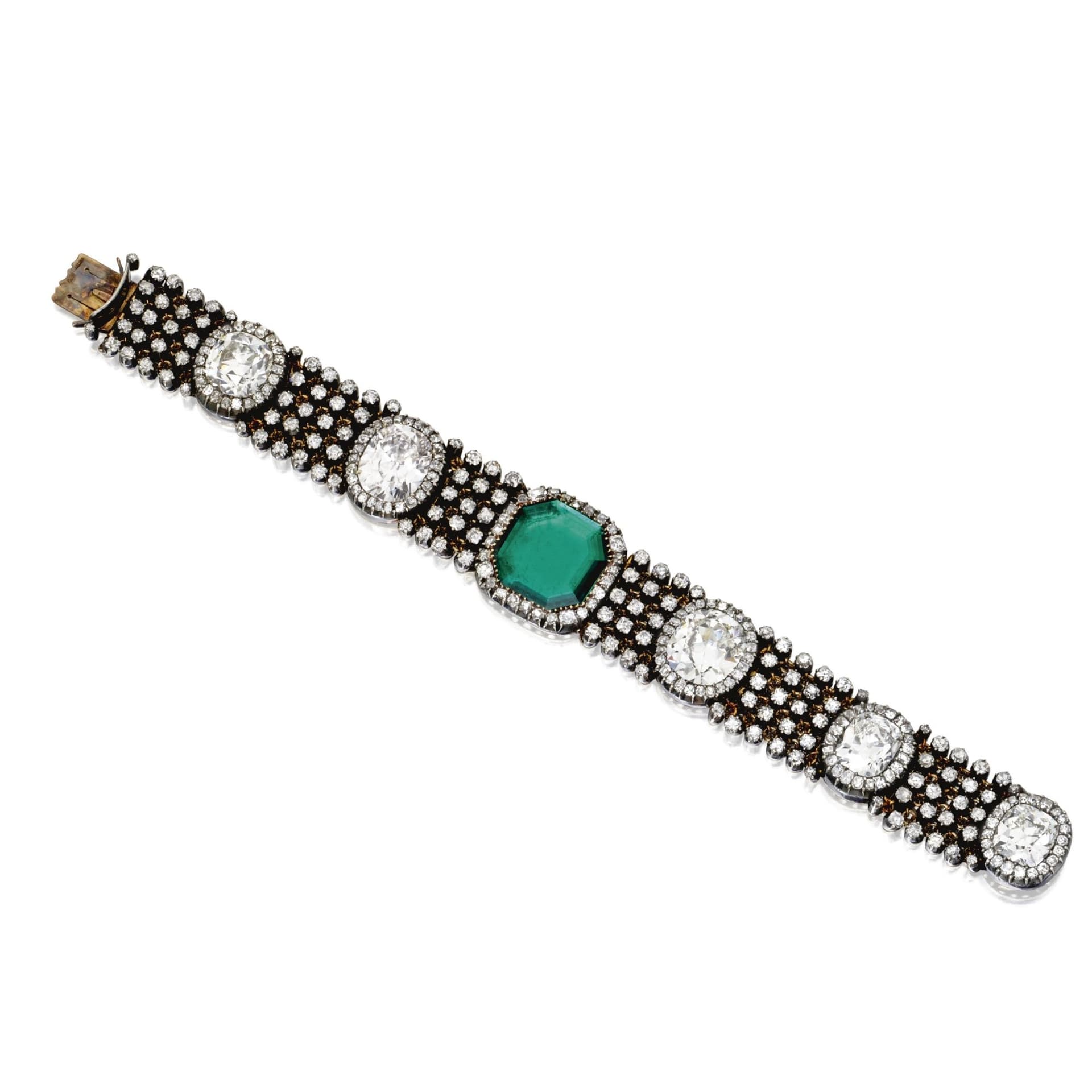
The bracelet at Hancocks London is not just a late-Victorian jewel with a 5.67-carat emerald at its center. Its pull comes from a paper trail that links the piece, known as the Inchiquin Emerald, to the O’Brien family and, by extension, to Brian Boru, the High King of Ireland from 1002 to 1014.
On display at 62 St James’s Street in London, the diamond-and-emerald bracelet dates to around 1890 and carries the kind of details collectors look for when a jewel arrives with a royal backstory. The emerald is described in related coverage as an antique Colombian stone, set in yellow gold claws and surrounded by 12 old mine-cut diamonds, eight larger old European-cut diamonds and diamond points totaling about 10.50 carats. The design can be worn as either a bangle or a pendant, a useful bit of Victorian engineering that often says as much about craftsmanship as the main stone does.
The ownership history is the real test of the story. The jewel has been in the O’Brien family for more than a century, and it was reportedly presented in 1896 to Ethel Jane Foster on her marriage to the Honourable Lucius William O’Brien. It was later documented in the 15th Baroness Inchiquin’s 1939 will as a “large emerald and diamond bracelet.” For antique-jewel buyers, that kind of sequence matters: marriage records, wills and named family references are the sort of documents that separate a verifiable lineage from a romance spun around a stone.
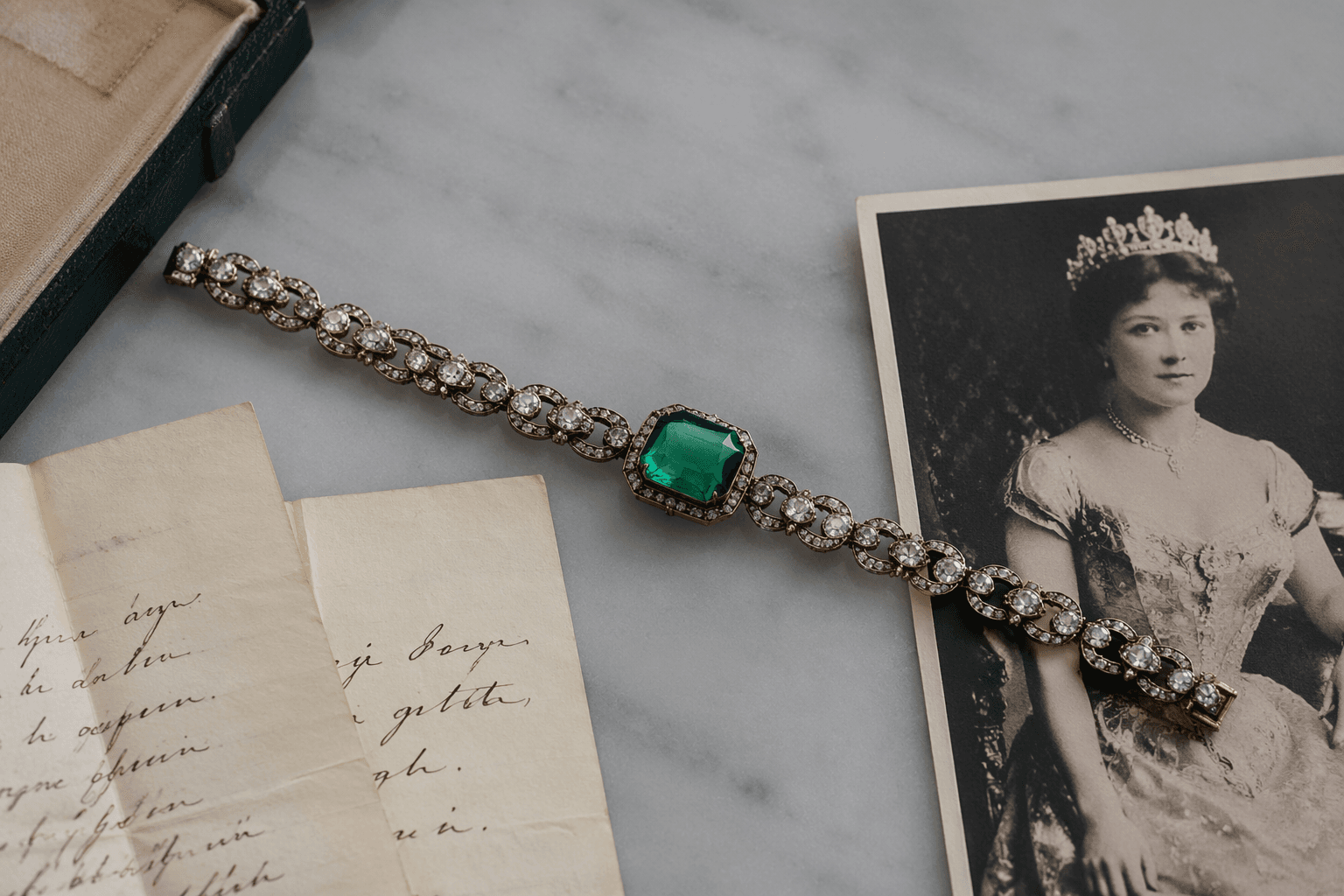
Guy Burton, managing director of Hancocks London, said the Inchiquin Emerald belongs to “an exceptionally small group of named heritage jewels available today.” He pointed to the combination of provenance, rarity, gemmological quality and beauty. That is exactly the point collectors should press on. A late-19th-century mount can be handsome and valuable on its own, but the legend attached to an emerald needs proof, not just pedigree language. Ask for the chain of custody, the archival references and any independent lab report that supports the gem identification. In one earlier appearance at auction, the jewel was catalogued with an SSEF report, a reminder that serious antique stones often travel with more than one form of evidence.
In a market crowded with vague aristocratic claims, the Inchiquin Emerald stands out because its story is anchored in names, dates and documents. That is what makes it more than a beautiful bracelet: it is a case study in how provenance earns its place beside the gem itself.
This article was produced by Prism’s automated news system from verified source data, official records, and press releases, then run through automated quality and moderation checks before publishing. The system is built and supervised by the people who set the standards it runs under. Read our full AI policy.
Did this article answer your question?