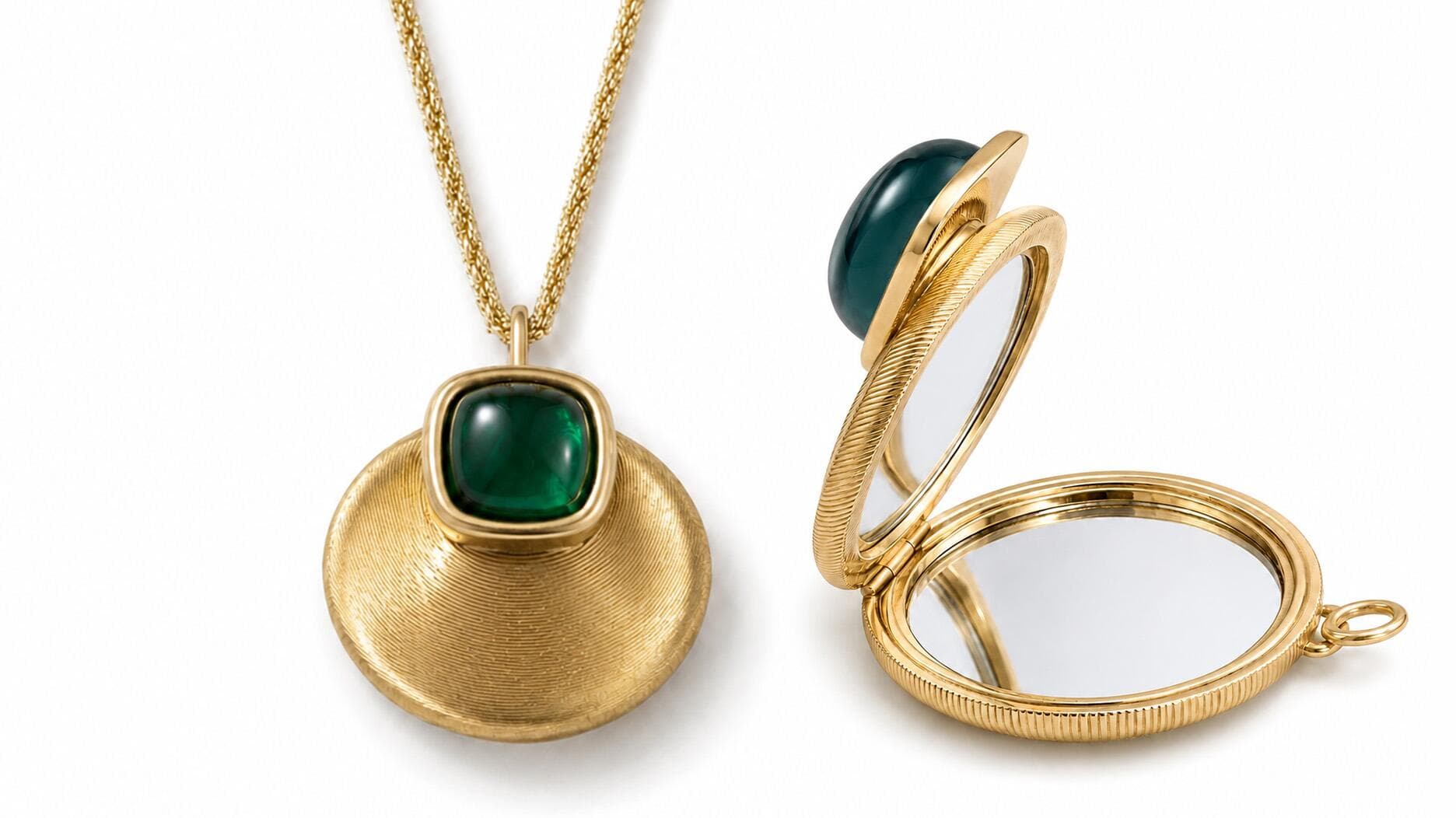
Hong Kong Palace Museum exhibition redefines vintage jewelry as cultural memory
A new Hong Kong Palace Museum show turns jewelry into a readable archive of identity, power, and memory, with 200 pieces spanning 4,000 years.
A brooch is rarely just a brooch
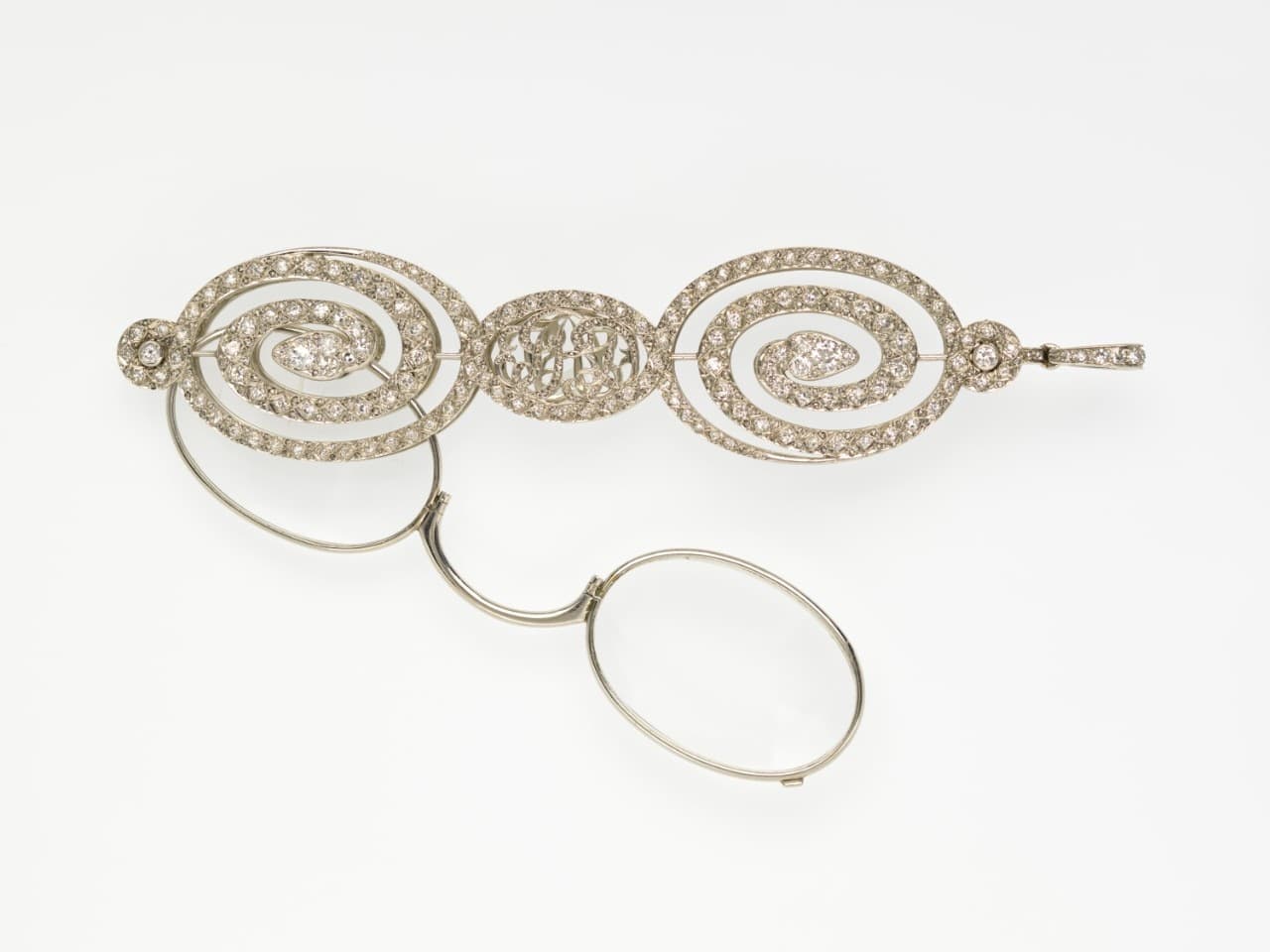
A vintage necklace or brooch can look decorative until you start reading it like a document. The Hong Kong Palace Museum’s new exhibition does exactly that, treating jewelry as a carrier of identity, power, and memory rather than a simple accessory.
A global archive in Gallery 8
“Treasures of Global Jewellery from The Metropolitan Museum of Art: The Body Transformed” runs from 15 April to 19 October 2026 in Gallery 8 at the Hong Kong Palace Museum. Jointly organised by The Metropolitan Museum of Art and the Hong Kong Palace Museum, it is described by HKPM as The Met’s first major travelling exhibition of its encyclopaedic global jewellery collection.
The scale is part of the point. About 200 objects are on view, all shown in Hong Kong for the first time, and the display stretches across five continents and roughly 4,000 years, from the second millennium BCE to the 21st century. Loans from the HKPM’s Mengdiexuan Collection, the Chris Hall Collection, and the ILLUMINATA Collection widen the conversation beyond one institution’s holdings and push the show toward a real comparison of how ornament has carried meaning in different places and periods. Cathay and American Express are the major sponsors.
Why the body matters more than the display case
The exhibition is a revival and expansion of The Met’s earlier New York presentation, “Jewelry: The Body Transformed,” which ran at The Met Fifth Avenue from 12 November 2018 to 24 February 2019. That earlier show brought together about 230 objects drawn almost exclusively from The Met collection and asked what jewelry is, why people wear it, and what meanings it conveys.
The Met’s curatorial framing is especially useful for anyone decoding vintage pieces today. Jewelry, in that view, does not sit passively on the body. It “acts upon and activates the body it adorns,” extending, amplifying, accentuating, distorting, concealing, or transforming it. For a buyer at an estate sale, that is the right mindset: a necklace can sharpen a neckline into a statement, a brooch can redirect attention to rank or allegiance, and a ring can compress romance, mourning, or political identity into a few grams of metal and stone.
How to read a piece when you hold it in your hand
The best vintage jewelry is full of visible clues. Look first at placement and scale. A heavy collar, a pendant that sits at the throat, or a pin meant to be worn high on the chest each suggests a different relationship between the jewel and the person wearing it. Then look at construction: the clasp, hinge, setting, and reverse often tell you whether the piece was made for daily wear, ceremony, or display.
That is where the museum’s broader argument becomes practical. Across centuries, ornaments have communicated status, mourning, romance, religion, and politics without saying a word. The exhibition’s sweep across five continents and 4,000 years makes that easy to see: adornment is never just about sparkle. It is about what a culture wanted the body to say.
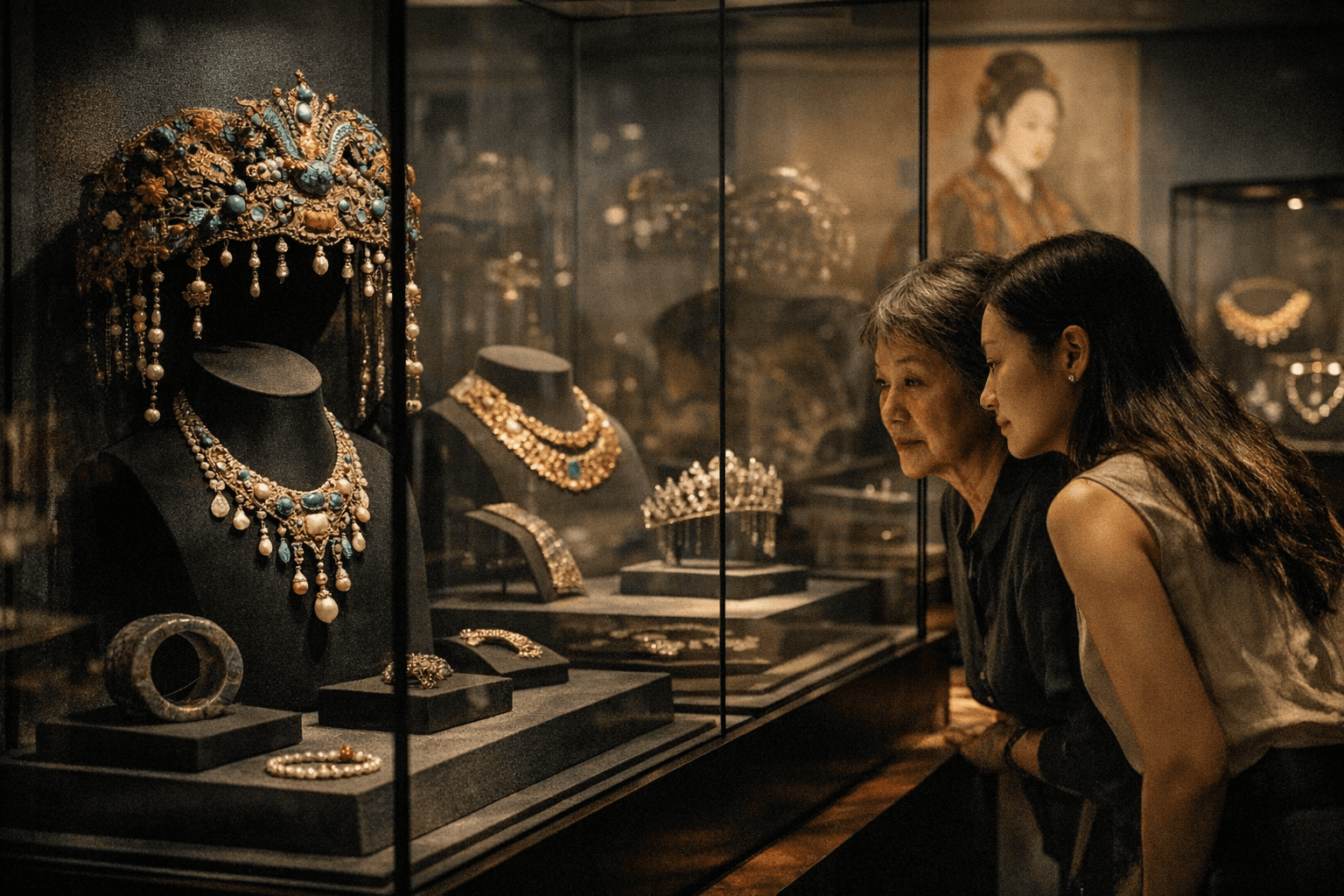
For collectors, that means reading beyond the stone count or the shine. A deliberately austere design can be as revealing as one set with gems. A symbolic motif, an unusual fastening, or a form that emphasizes the neck, breast, wrist, or hair can point to a social code that once would have been obvious to the wearer’s contemporaries.
Hong Kong as the first stop changes the story
The Hong Kong opening on 14 April 2026 drew Rosanna Law, Leo Kung, Quincy Houghton, Betty Fung, and Dr Louis Ng, signaling that this is more than a loan exhibition. Houghton said the project had been in discussion for three years, and Melanie Holcomb described the objects as delicate enough to require careful selection for only a limited number of venues.
Dr Louis Ng said he expected 200,000 visitors over the six-month run and noted that the pairing of the two museums’ collections would allow “intriguing comparisons” across cultures. That figure matters. It suggests a jewelry show can draw the kind of audience usually reserved for blockbusters, which says as much about the public hunger for material history as it does about the allure of gems.
The museum is building a larger conversation about dress and meaning
This exhibition does not arrive in isolation. HKPM has already built a fashion-and-textile strand through earlier special exhibitions such as “Cartier and Women” in 2023 and “The Adorned Body: French Fashion and Jewellery 1770–1910 from the Musée des Arts Décoratifs, Paris” in 2024. The new show extends that work by placing jewelry inside a broader cultural argument: adornment is a shared language, one that links courtly display, private memory, and public identity.
That mission also helps explain why the museum positions Hong Kong as an East-West center for cultural exchange. The show is not simply importing prestige from New York. It is staging a meeting point, where objects from The Met, HKPM’s own collections, and private loans can be read side by side. In a city known for circulation and trade, jewelry becomes an especially apt medium for the story.
What this changes for vintage buyers
For anyone who buys old jewelry, the lesson is immediate. Stop seeing pieces only as pretty objects or investment material. Ask what they once signaled, who might have worn them, and what body language they were designed to create. A jewel can be a badge of mourning, a declaration of love, a marker of class, or a subtle political code, and often it is several of those at once.
That is why a show like this feels bigger than its Gallery 8 footprint. It turns vintage jewelry into cultural memory you can hold in your hand, and it reminds you that the most revealing part of a necklace, brooch, or ornament is often not the gem at its center but the human story built around it.
This article was produced by Prism’s automated news system from verified source data, official records, and press releases, then run through automated quality and moderation checks before publishing. The system is built and supervised by the people who set the standards it runs under. Read our full AI policy.
Did this article answer your question?