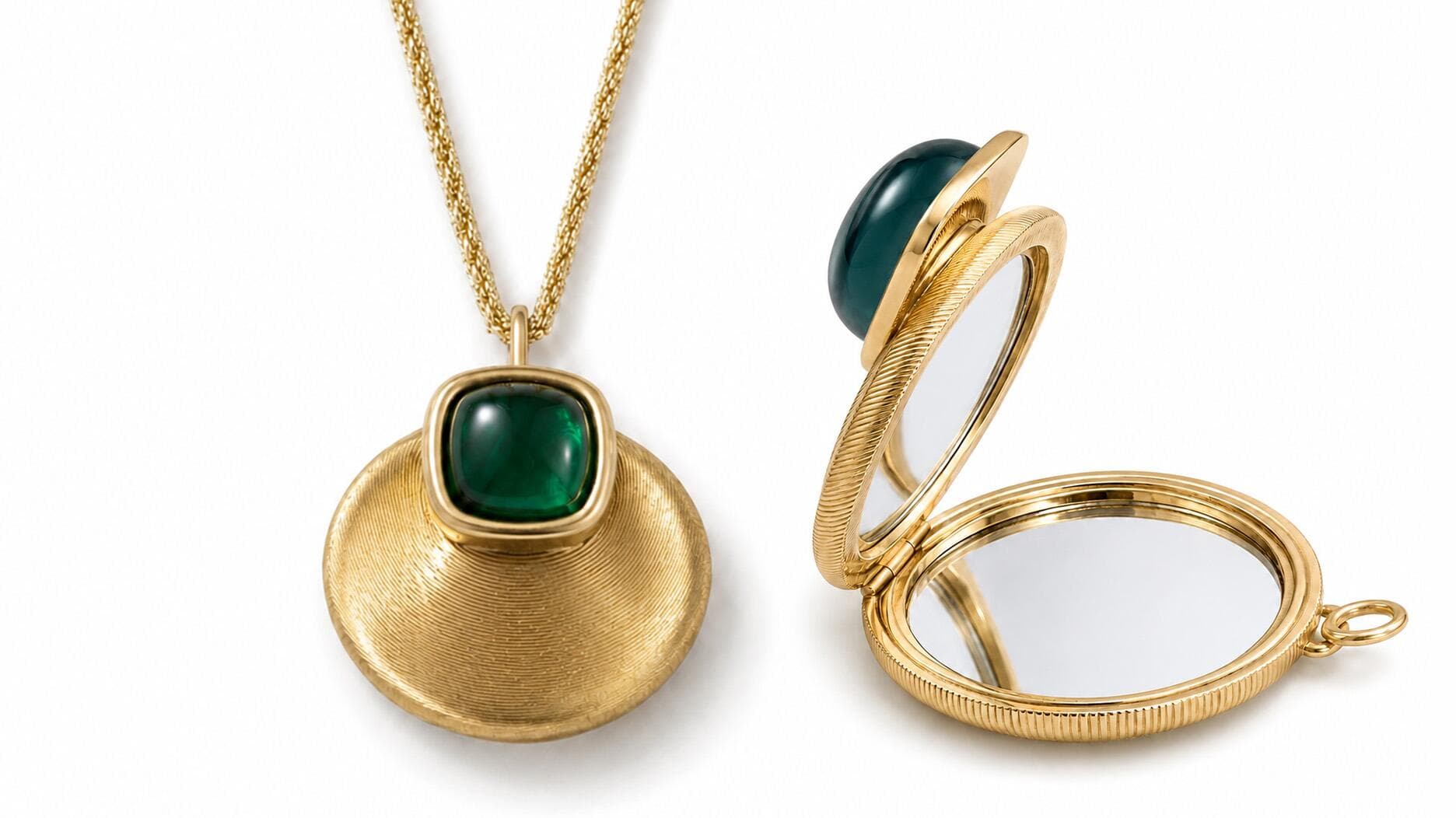
How to authenticate vintage Cartier, from French hallmarks to serial numbers
Before you send money on vintage Cartier, read the metal, the signature, the serial number, and the workshop mark in order. The real test is whether all four tell the same story.
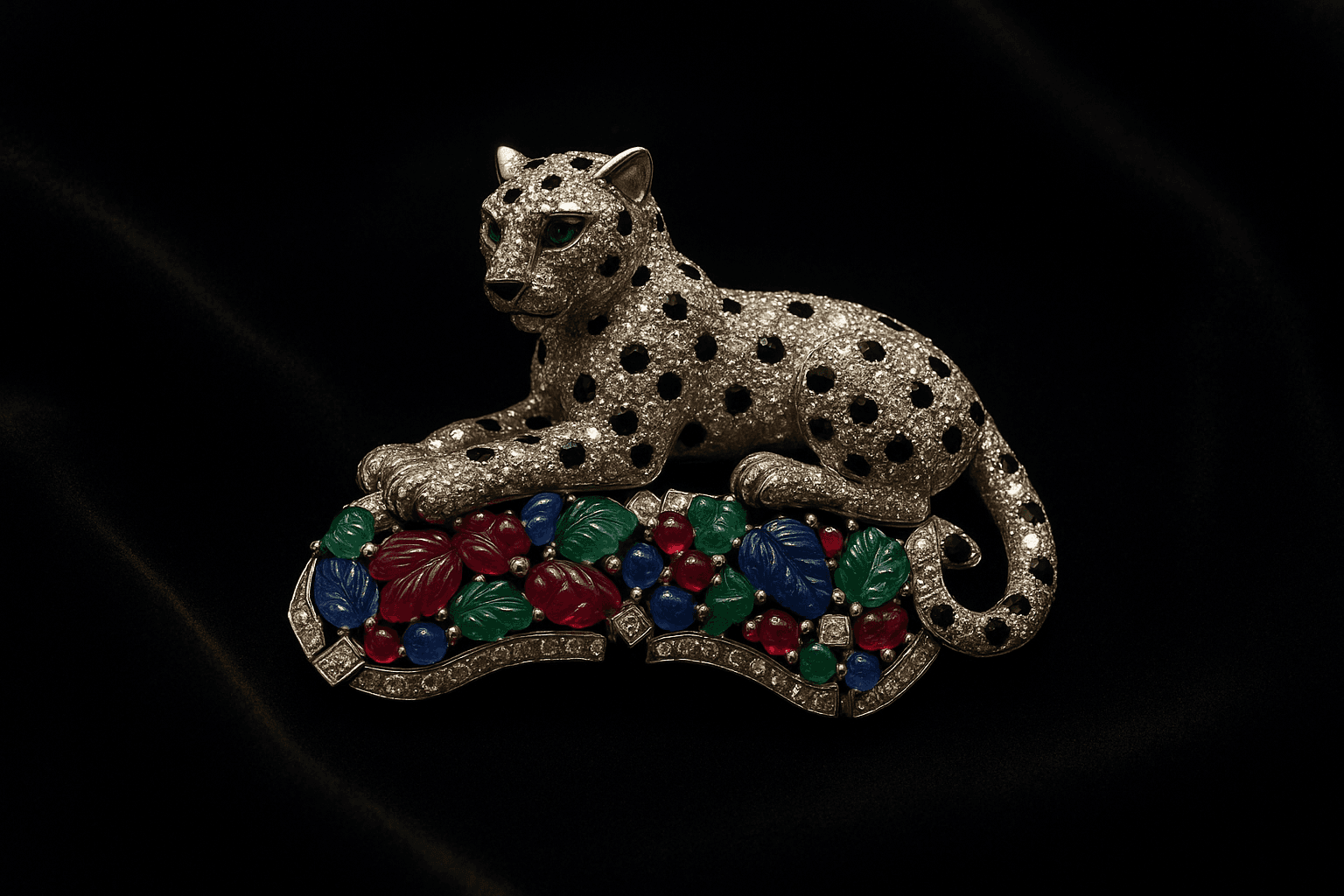
Before you send money on vintage Cartier, read the piece in a fixed order: French assay mark first, Cartier signature second, serial number third, workshop mark last. That sequence tells you what the metal is, which branch may have sold it, whether the object carries an internal number, and how the piece fits into the house’s long, heavily copied history.
Start with the metal, not the logo
The most reliable first clue is the French assay mark. On an 18K gold Cartier piece, the eagle’s head is the official French hallmark, and it is not Cartier-specific. It tells you that the metal was tested and struck through the French assay system, which is far more useful than a logo alone because a stamp can be copied while a correct assay mark still has to make sense alongside the construction.
That distinction matters because a genuine-looking Cartier signature on its own proves very little. A collector should want the metal, the workmanship, and the mark placement to agree with one another. If the piece is described as French gold but lacks the hallmarks you would expect for the material and era, treat that as a reason to slow down, ask for sharper photographs, and request more provenance before a payment is made.
Read the Cartier signature in branch context
Cartier’s signature is important, but it is only one layer of evidence. A genuine piece may be stamped with “Cartier” alongside “Paris,” “Londres,” “New York,” or “Made in France,” and that variation is not noise, it is history. Cartier’s three houses, Paris, London, and New York, operated semi-independently through much of the 20th century, which is why construction, signatures, and marks can differ from branch to branch and from era to era.
That flexibility is exactly why collectors need to look beyond the name alone. A signature can confirm that the house claimed the piece, but it cannot, by itself, prove the jewel or object is original to its stated period. If the stamp looks too fresh for the wear on the rest of the piece, or if the signature feels out of step with the stated branch or date, the smarter move is to pause and ask for additional documentation.
Treat serial numbers as evidence, not a verdict
Serial numbers are one of the most useful clues because they can connect a piece to a model, a production sequence, or a documented sale history. A Christie’s Cartier cigar case, for example, was described with French assay marks for 18K gold, a Cartier stamp, “Made in France,” and serial number 03412. Another Christie’s lot description paired French assay marks for 18K gold with a numbered case, a Cartier maker’s mark, and a workshop mark, showing how authentic pieces often carry several layers of identification at once.
Still, a number is not a guarantee. Serial numbers can be added, altered, or detached from their original context, which is why they need to be checked against the object’s construction, wear, and supporting paperwork. If a seller offers only a number and no corresponding marks, or if the numbering system seems inconsistent with the object’s branch and age, that is the moment to request more provenance or walk away.
Know the difference between maker’s marks and workshop marks
French maker’s marks are separate from Cartier branding. They are official workshop identifiers, not decorative flourishes and not the same thing as a Cartier signature. When they appear alongside the assay mark and the house stamp, they strengthen the case that the piece passed through a legitimate production chain in France.
That layered evidence is what makes authentic vintage Cartier feel so specific. A true piece often reads like a document: metal mark, house stamp, workshop mark, serial number, and then the object itself, with its hinge, clasp, mount, or case construction telling the rest of the story. If one layer is present but the others are missing, the answer is not necessarily fake, but it is absolutely incomplete.
Match the piece to Cartier’s own timeline
Cartier’s history begins in 1847, when Louis-François Cartier took over a shop at 29 Rue Montorgueil in Paris. Cartier says its heritage runs from 1847 to today, and the Cartier Collection adds a crucial archival frame: after a 1973 Geneva auction, the house bought, for the first time in its history, a piece made half a century earlier, a Portique mystery clock. The oldest pieces in that collection date to 1860.
That timeline matters because Cartier has been copied for as long as it has been admired. Rare Belle Époque and Art Deco creations can carry major premiums, and London-made Cartier wristwatches are especially sought after because they were produced in extremely small numbers. In practice, that means a collector should expect the marks and the construction to reflect not just Cartier’s name, but a particular branch, period, and type of object.
What the marks can confirm, and what they cannot
The strongest vintage Cartier pieces are the ones where everything lines up. The assay mark can confirm the metal, the signature can point to the house and branch, the serial number can help anchor identity, and the workshop mark can tie the object to a legitimate production trail. Together, those clues can build a persuasive case.
They still cannot prove everything. Marks do not, by themselves, guarantee original components, uninterrupted ownership, or an unbroken chain of custody. Cartier itself says authenticity can be assured only when a model is purchased through Cartier boutiques or authorized dealers, and that the house does not authenticate items acquired elsewhere. That means a vintage purchase from an estate sale, private seller, or auction deserves extra scrutiny, especially if the piece is valuable, rare, or unusually pristine.
The red flags that should make you pause
- Marks that do not agree with the stated material, branch, or era.
- A Cartier stamp that looks newly struck against heavily worn metal.
- A serial number with no supporting assay or workshop marks on a piece that should have them.
- A highly polished surface that has blurred or erased the logic of the stamp placement.
- A rare configuration, such as a London-made Cartier watch, offered without strong provenance.
When the evidence is coherent, vintage Cartier feels unmistakable: precise, engineered, and historically legible. When the evidence is thin, the safest choice is not to chase the romance of the name, but to wait for a piece whose hallmarks, signatures, numbers, and workshop marks all speak in the same voice.
This article was produced by Prism’s automated news system from verified source data, official records, and press releases, then run through automated quality and moderation checks before publishing. The system is built and supervised by the people who set the standards it runs under. Read our full AI policy.
Did this article answer your question?