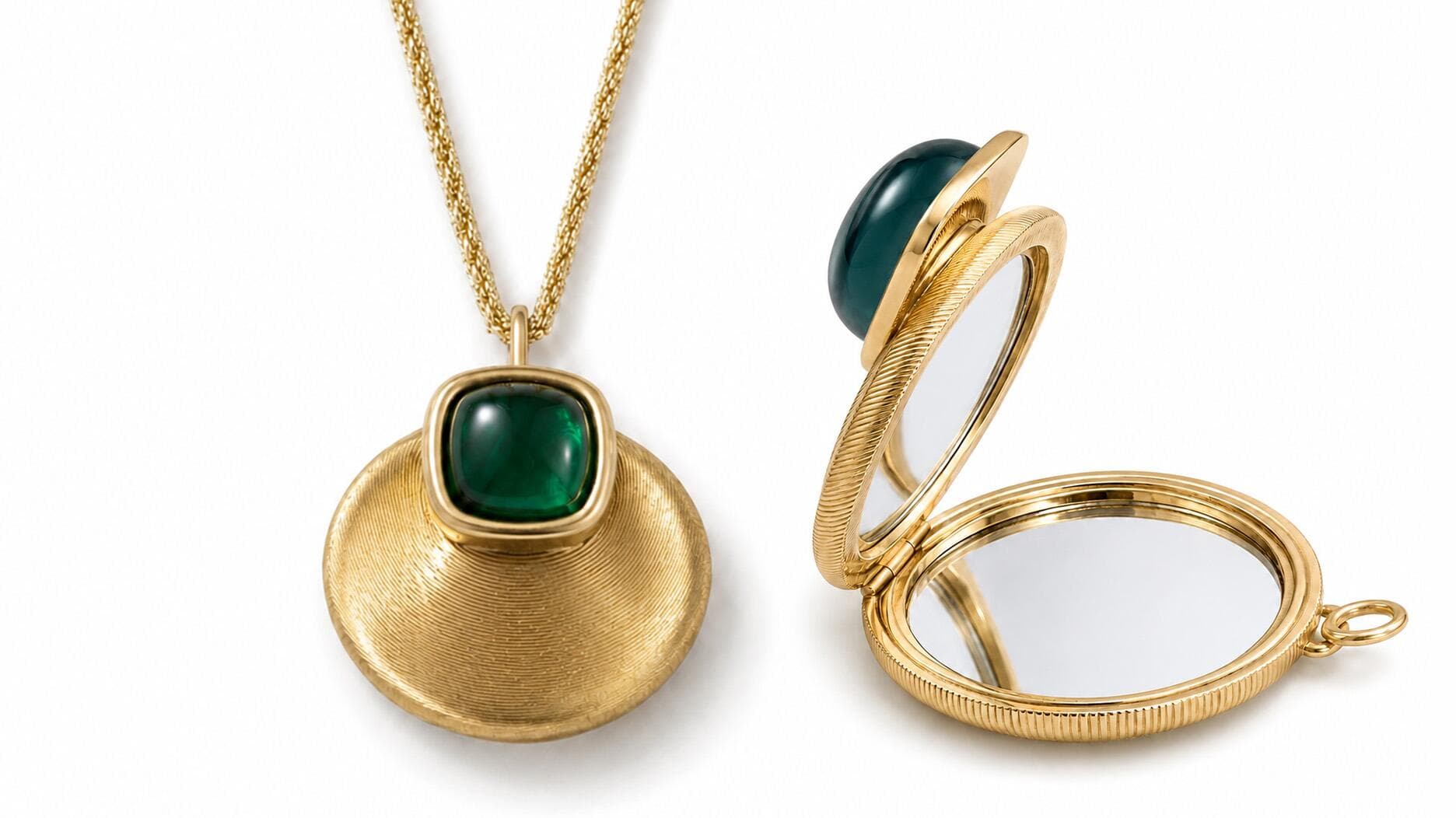
How to buy vintage jewelry online, judge authenticity and hallmarks
Look for hallmarks, period-true cuts, and honest patina before you fall for a pretty listing. The best online vintage buys are the ones whose details can be verified.
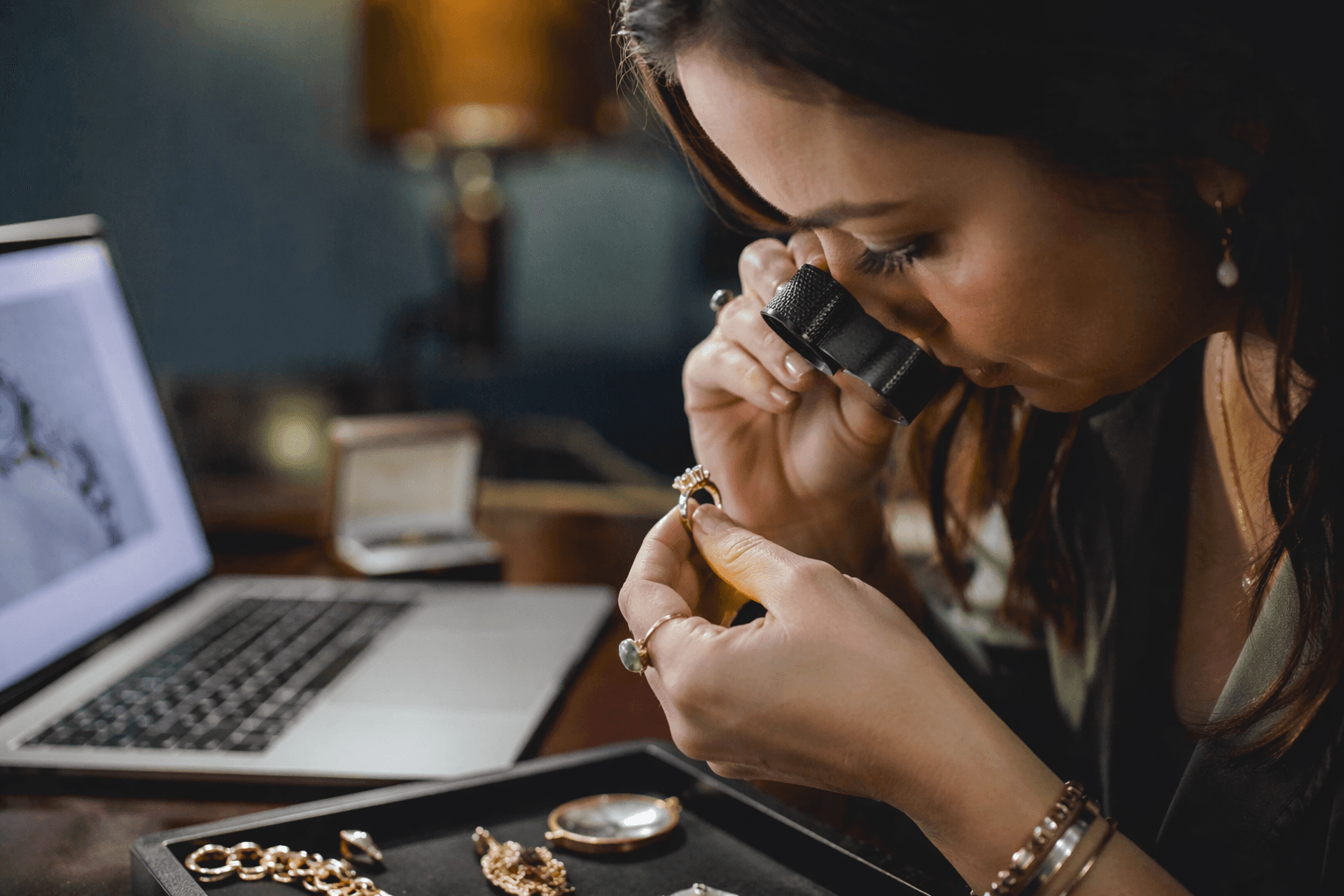
Where real value begins online
Vintage jewelry rewards the careful eye. The most convincing pieces are not the ones that shout “vintage-inspired,” but the ones that carry small, legible clues: a softly worn shank, a clasp that belongs to its era, a stone cut that matches the period, and a hallmark that can be read rather than guessed at. Online, that means training yourself to look past styling and into structure.
Start with the basics: a true vintage or antique piece should show design logic from its own moment, not a vague throwback aesthetic. A late-19th-century ring will not look or feel like a mass-made modern replica with faux aging; the same is true of an Art Deco bracelet, where geometry, milgrain, and symmetry usually matter more than decorative excess. The best buys are often the ones whose age is visible in the construction.
What a hallmark actually tells you
Hallmarks are one of the most useful credibility checks in precious-metal jewelry. In the United Kingdom, official guidance says a hallmark shows the item has been independently tested and verified as matching its description and conforming to legal standards of purity or fineness. The Hallmarking Act 1973 governs the composition, assaying, marking, and description of precious-metal articles there.
The full hallmark is more than a single stamp. Official guidance says it includes a sponsor’s mark, an assay office mark, and a fineness mark. That matters because a gold purity stamp alone is not the whole story. A “9K,” “14K,” or “18K” mark tells you the gold standard, but the surrounding marks help show who submitted the item and where it was tested. If a seller’s listing mentions a hallmark but only shows a blurry close-up of one digit, that is not enough to build confidence.
For online buyers, the practical rule is simple: ask for clear photographs of every mark, not just the most flattering angle of the face of the jewel. A convincing seller should be able to show the metal stamps, the back of the setting, and any maker’s mark without hesitation.
Reading the surface, not just the sparkle
Patina is one of the most misunderstood parts of vintage jewelry. In the right place, it is evidence of age and wear. On a gold ring, gentle softening around the edges or a mellowing of the surface can support the piece’s history. On a brooch or bracelet, a little darkening in recesses can be part of the object’s character, especially when it appears in the crevices that would naturally collect time.
That said, patina should never be used as a blanket excuse for damage. Corrosion, heavy polishing, replaced stones, and worn-down prongs are separate issues. A believable vintage piece looks lived in, not abused. When a listing describes “beautiful patina,” look closely at the photos to see whether the surface wear feels consistent with the era and the construction.
Stone cuts matter here too. Old mine cuts, old European cuts, rose cuts, and cushiony antique proportions often look different from modern brilliant cuts. They throw a softer light and usually have less machine-perfect symmetry. If a seller offers an “Edwardian” ring with a center stone that flashes like a contemporary round brilliant, pause and ask whether the stone has been replaced.
How to judge authenticity from photos
The Metropolitan Museum of Art notes that jewelry has been produced and collected for thousands of years, which is exactly why period context matters so much. A jewel can look “old style” and still be a later copy. The Met also points out that authenticating a Renaissance jewel, for example, can require close attention to craftsmanship and, in some cases, chemical analysis or other scientific methods to separate originals from later style pieces.
That principle applies to online buying at every level. You are not only checking whether the piece is beautiful. You are checking whether the details make sense together.
Look for:
- Construction that matches the period, including clasp type, hinge style, prong shape, and setting style.
- Stone cuts that fit the era rather than a newer replacement stone dropped into an antique mounting.
- Natural wear in the places hands actually touch, such as shanks, pin stems, and bracelet edges.
- Maker’s marks or signatures that support provenance, especially on designer or fine-atelier pieces.
Sotheby’s says signed jewelry can provide stronger clues to provenance and authenticity. That does not mean every unsigned jewel is suspect, but a signature from a known maker can sharpen the story and give you a better framework for comparison. In the online market, that extra evidence can make a real difference when you are weighing price against credibility.
The seller signals that matter most
A beautiful listing is not the same as a trustworthy one. Good seller photos should include multiple angles, close-ups of hallmarks, clasp mechanisms, prong wear, and any repair points. If the piece is set with gemstones, ask for daylight and indoor images, because color, saturation, and transparency can shift dramatically between lighting conditions.
Return policy is just as important as presentation. A seller willing to stand behind a piece with a clear return window is often more credible than one that relies on polished copy and no recourse. For online vintage buying, a return policy is not a luxury, it is part of the authenticity check.
You should also read descriptions with a skeptical eye. Words like “in the style of,” “inspired by,” or “estate-style” often signal modern manufacture rather than genuine age. Those labels are not automatically bad, but they are not the same as vintage or antique. If the listing does not clearly distinguish between period piece and reproduction, assume you still need proof.
Why provenance changes the calculation
Provenance can turn a pretty object into a better one. Signed jewelry, original boxes, documented ownership, and repair records all help build a chain of credibility. Sotheby’s valuations are recognized around the world by government agencies, financial institutions, and international insurance brokers, including HM Revenue & Customs and the Internal Revenue Service. That kind of recognition matters because it shows how seriously documented jewelry can be treated when value has to be established beyond aesthetics alone.
For the shopper, the takeaway is not that every purchase needs an auction-house pedigree. It is that the more a piece can be traced, the easier it is to trust the price. A plain gold bangle with clear hallmarks and honest wear may be a smarter buy than a flashier object with vague provenance and no visible marks. Value in vintage jewelry often comes from evidence, not hype.
A practical buying blueprint
The secondhand market keeps growing, and that makes a disciplined approach more useful, not less. ThredUp’s 2025 Resale Report was its 13th annual study and drew on a survey of 3,034 U.S. consumers; its 2026 report is the 14th annual edition and references a survey of 3,268 U.S. consumers and 50 top fashion brands. That wider resale appetite helps explain why more jewelry listings are circulating online, but popularity alone does not guarantee quality.
Use this final filter before you buy:
- Can you see the hallmark clearly, including the sponsor’s mark, assay office mark, and fineness mark where relevant?
- Does the wear look natural for the metal and the era?
- Do the stone cuts, clasp, and setting style match the period story?
- Has the seller shown enough photos to let you judge the piece honestly?
- Is the return policy strong enough to protect you if the jewel arrives looking different from the listing?
Vintage jewelry is most satisfying when beauty and evidence meet in the same object. The best pieces do not just look old, they can explain themselves.
This article was produced by Prism’s automated news system from verified source data, official records, and press releases, then run through automated quality and moderation checks before publishing. The system is built and supervised by the people who set the standards it runs under. Read our full AI policy.
Did this article answer your question?