How to Identify Jewelry Makers Marks Using Online Databases
Pick up a vintage ring and you're holding a small archive: a single stamped symbol can confirm its maker, metal purity, and era — if you know where and how to look.
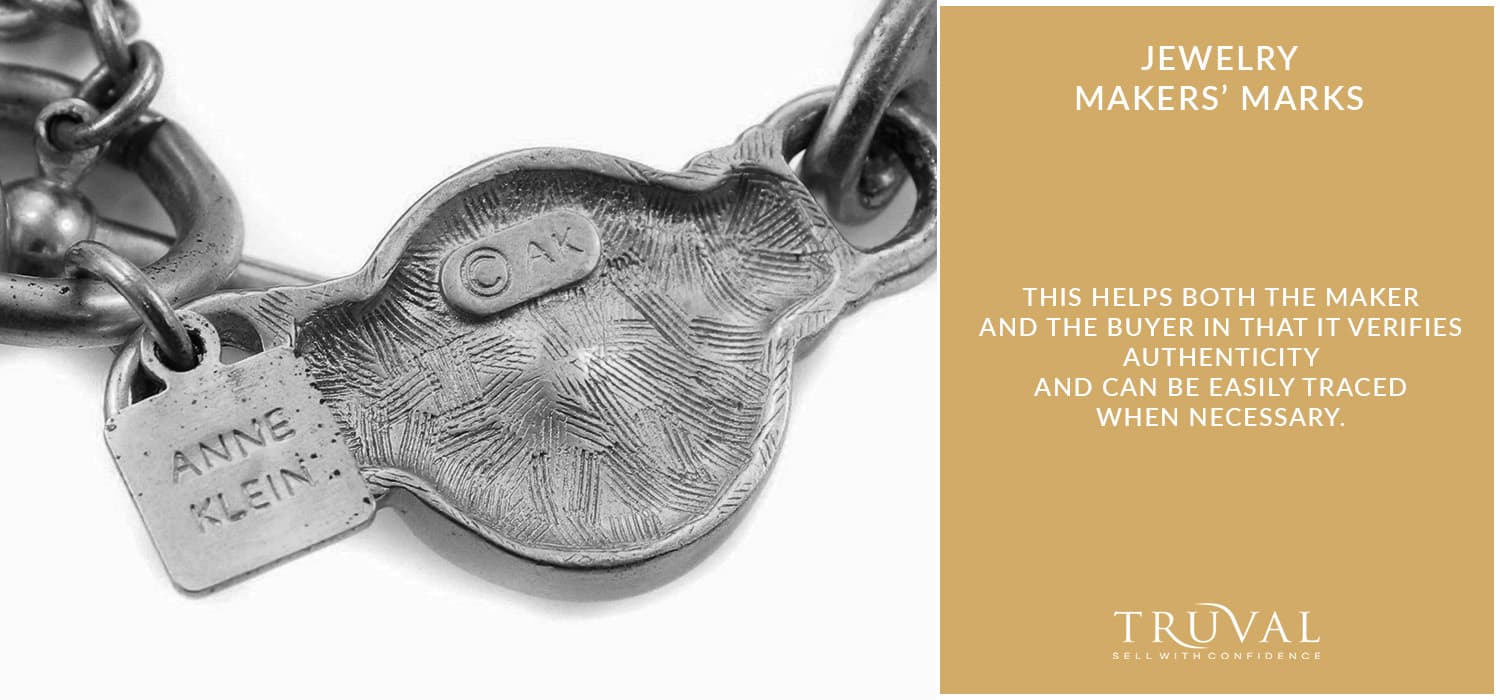
Pick up an inherited brooch or a ring pulled from an estate sale and you're holding a small archive. Somewhere on that piece — tucked inside the band, pressed into a clasp, etched along a post — there is almost certainly a mark. Maker's marks are identification symbols stamped on jewelry, and are more than just decorative. These symbols serve as proof of origin and a window into the past. The challenge, for anyone who has squinted at a mystery engraving under poor light, is knowing how to read that archive. Online databases have transformed what was once the province of specialist appraisers into something any collector can navigate with a bit of method and the right tools.
What Maker's Marks Actually Tell You
Before reaching for a database, it helps to understand exactly what you're looking for and why it matters. Maker's marks are the initials, names, or other representative symbols stamped into a gold, silver, or platinum item. Also called "trademarks," these marks often provide the only evidence that a certain piece of jewelry has indeed been manufactured by a certain jewelry maker.
Hallmarks and maker's marks overlap in function but carry distinct information. Jewelry hallmarks are small but significant stamps or engravings found on precious metal items like rings, necklaces, bracelets, and even silverware. These marks act as an official guarantee of the metal's content and quality. More specifically, a single hallmark can encompass a great deal of information including the fineness of the metal, the country of origin, timeframe of manufacture, relative weight of the piece, the city where it was assayed and whether it was exported or imported.
The marks themselves can take several forms:
- Initials or monograms
- Full maker's names
- Logos or pictorial symbols
- Unique abstract symbols
- Combinations of letters, numbers, and shapes unique to specific countries or periods
Sometimes a goldsmith's maker's marks evolve over time. Understanding which mark was used during a specific period helps jewelry historians or appraisers accurately date an item. This is why a mark that looks unfamiliar may simply represent a different chapter in the same maker's history: a partnership formed, a brand reregistered, a workshop relocated.
The practical stakes are real. Maker's marks are crucial for confirming the legitimacy of a piece. They allow collectors and appraisers to trace the jewelry's origin, date it accurately, and assess its historical and monetary value. A tiny stamped cartouche, correctly identified, can be the difference between a piece valued at costume jewelry prices and one worth several thousand dollars.
Where to Look: A Micro-Location Guide
Marks are deliberately placed where they won't be seen during wear, which means knowing where to look is half the battle. Maker's marks are often stamped in discreet areas, such as the inside of a ring band, near the clasp of a necklace, or on the back of a pendant. For bracelets and chains, check the clasp first; it's the most common placement on linked pieces.
Earrings require a bit more patience. The locations vary by style:
- Studs: The post or stem is where marks most often appear; examine carefully under direct light.
- Earring backs: Some earring backs are stamped with purity numbers or makers' symbols.
- Hoops and drops: Larger earrings sometimes have marks inside the hoop or near hinges.
One practical note worth keeping in mind: basic repairs, such as resizings and pinstem replacements may be found, and while these don't fundamentally change the purpose of the item, they may alter or remove important details. A resized ring or repaired pin mechanism may have had hallmarks, maker's marks and/or purity/assay marks, and the repair or change may have removed the marks. If a piece has been altered, absence of a mark isn't necessarily absence of identity.
The Right Tools for the Job
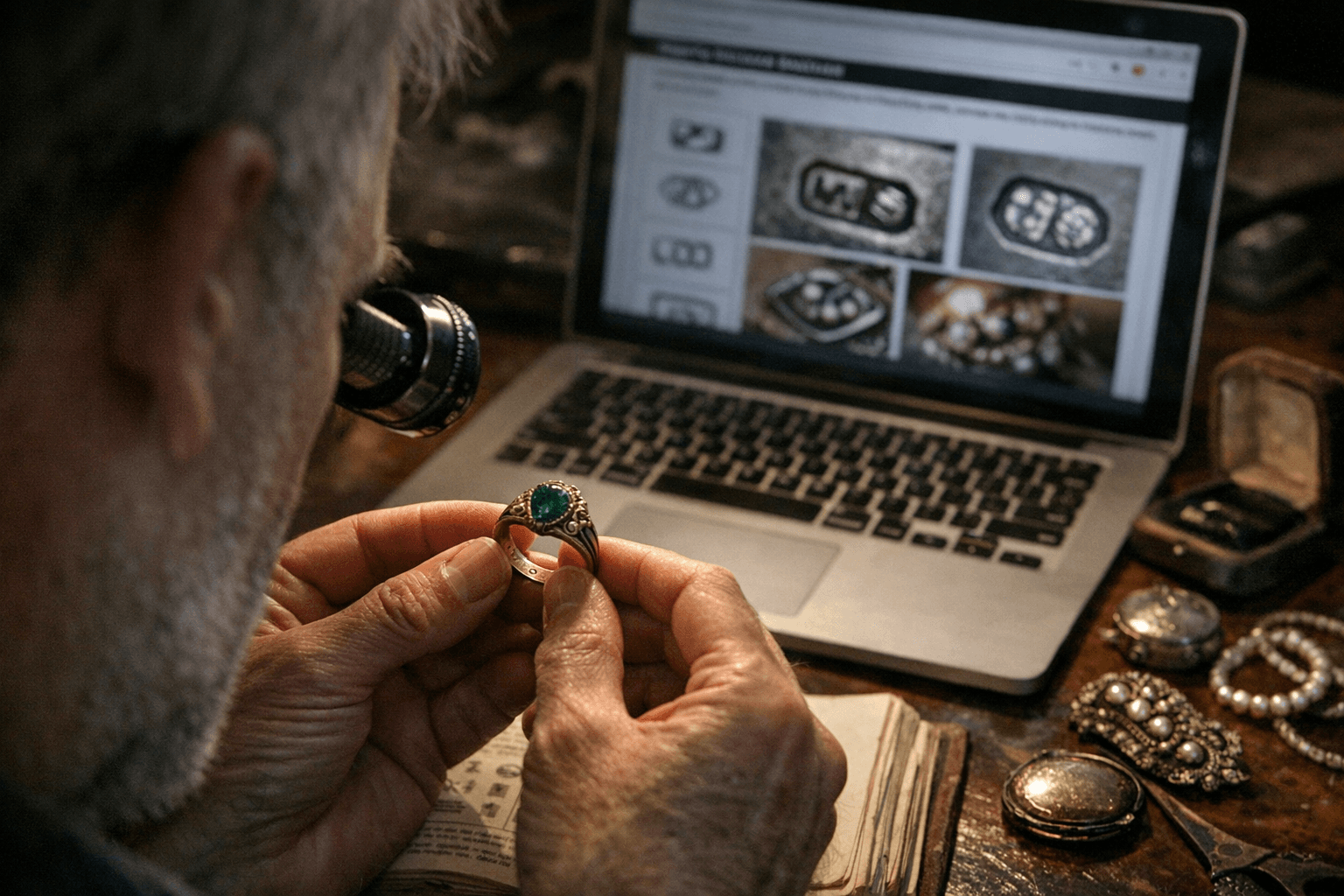
Use a jeweler's loupe (10x magnification) for best results when searching for elusive hallmarks, especially on vintage pieces where wear can obscure details. A 10x loupe, combined with a strong directional light source, will reveal impressions invisible to the naked eye. For faint or partially worn marks, try angling your light source from the side: raking light picks up depth and contours that direct illumination flattens out.
Once you've located a mark, photograph it. High-resolution images from databases are invaluable when comparing subtle differences in fonts or border shapes on a mark. A close-up photograph also gives you something concrete to share with a database, an appraiser, or an online collector community without risking the piece itself.
For offline reference, tools like a jeweler's loupe allow close examination of small or faint hallmarks, while reference materials such as Jackson's Hallmarks Pocket Edition and online databases provide comprehensive information for identifying maker's marks and assay symbols effectively. Its pocket size makes it ideal for trips to auctions or antique fairs. Hallmark reference books are typically organized by country and then by period within that country, so having a rough sense of a piece's era before you open the book saves considerable time. A maker's mark on an Art Deco brooch is unlikely to be found in a book on Victorian jewelry, unless the maker was in business over several design periods.
How to Use Online Databases
A jewelry makers marks database is your essential tool for decoding these cryptic symbols. These comprehensive online resources catalog thousands of marks from jewelers worldwide, spanning centuries of craftsmanship.
The search process works best when you layer your inputs rather than searching on a single criterion. Enter descriptive words in the search bar, such as "eagle" or "bird." Describe the cartouche, frame, or shape, for example "circle" or "triangle." Search words, single letters, or monograms. You can also input the city or country where a maker worked or originated, information that is not usually contained within the mark itself but that you may know or intuit based on other marks on the piece. Adding details progressively narrows results and reduces the frustration of scrolling through hundreds of unrelated entries.
When only a partial mark is visible, don't give up. Identifying partially worn marks requires combining several techniques. First, photograph the mark under raking light from multiple angles; side lighting reveals depth and contours invisible under direct light. Compare partial letters against reference images, paying attention to distinctive letter shapes, spacing patterns, and any remaining decorative elements or symbols.
The Key Databases
The most comprehensive free databases include Antique Jewelry University (Lang Antiques), which covers thousands of marks from multiple countries and time periods; Heritage Auctions' designer marks guide, focusing on luxury brands; 925-1000.com, specializing in silver marks; and Costume Jewelry Collectors International for vintage costume jewelry marks.
Antique Jewelry University offers an extensive Jewelry Maker's Marks Database featuring hundreds of maker's mark identification symbols stamped on jewelry from around the world, and the database is continuously updated with additional makers and their marks as they become available. Its search interface allows filtering by alpha character, symbol type, outline shape, country, and city, making it one of the more granular tools available. The database includes illustrated examples from renowned makers including Boucheron, giving you a visual benchmark when you're trying to match a mark against a known house's historical stamps.
The Costume Jewelry Collectors International website hosts the comprehensive "Researching Costume Jewelry" database created by Dotty Stringfield, featuring alphabetized listings with mark photographs, which is particularly useful for pieces from the 1920s through the 1980s. For silver specifically, 925-1000.com is considered the "go to" site for the identification of sterling silver items, markers marks and hallmarks.
One feature that sets the Antique Jewelry University database apart is its crowdsourced growth model. If you have a unique stamp or logo, send clear images and details to aju@langantiques.com to contribute to the growing archive. Your submission could help others solve their own jewelry maker's mark identification mysteries. This kind of collective cataloguing matters because the universe of makers is genuinely vast, and many smaller regional jewelers, workshop partnerships, and short-lived manufacturers are only preserved in the records of other collectors.
Marks That Change, and What That Signals
Look for initials, logos, symbols, or full names stamped in discreet areas; letters, numbers, and other symbols unique to certain countries or historical periods; and variations in maker's marks signaling different production periods or partnerships with other jewelers. A mark that doesn't match a maker's current or best-known stamp may predate a partnership, follow a company acquisition, or reflect a regional workshop operating under license. A goldsmith's or manufacturer's mark can evolve over time due to changes in branding, partnerships, or regulations, and understanding these variations helps to date and value jewelry accurately.
It's also worth noting that maker's marks can be counterfeited, especially on high-value designer jewelry, and fake marks are a significant problem in the vintage and designer jewelry market. Authentication requires examining not just the mark itself, but also the jewelry's construction quality, materials, design details, and overall consistency with the identified maker's known work.
When to Bring in a Professional
For pieces where provenance genuinely affects value, a database search is a starting point, not a final answer. Professional appraisers bring calibrated expertise that no database can replicate: they can assess construction technique, tool marks, stone cutting style, and metal composition alongside the stamped mark itself. When purchasing expensive jewelry based on a maker's mark, always seek verification from a certified appraiser or reputable dealer specializing in that maker. A formal appraisal also generates written documentation of a piece's history and estimated value, which matters for insurance, estate purposes, and eventual resale.
The best approach combines methods: the loupe and raking light for examination, a high-resolution photograph for comparison, a database search across multiple platforms, a reference book for context, and a professional appraiser when the stakes warrant it. Solving the intriguing riddle posed by the marks stamped onto a piece of jewelry involves the use of a variety of skills and a wealth of knowledge. What has changed is that much of that knowledge is now publicly accessible, searchable, and continuously growing, one submitted photograph at a time.
This article was produced by Prism’s automated news system from verified source data, official records, and press releases, then run through automated quality and moderation checks before publishing. The system is built and supervised by the people who set the standards it runs under. Read our full AI policy.
Did this article answer your question?