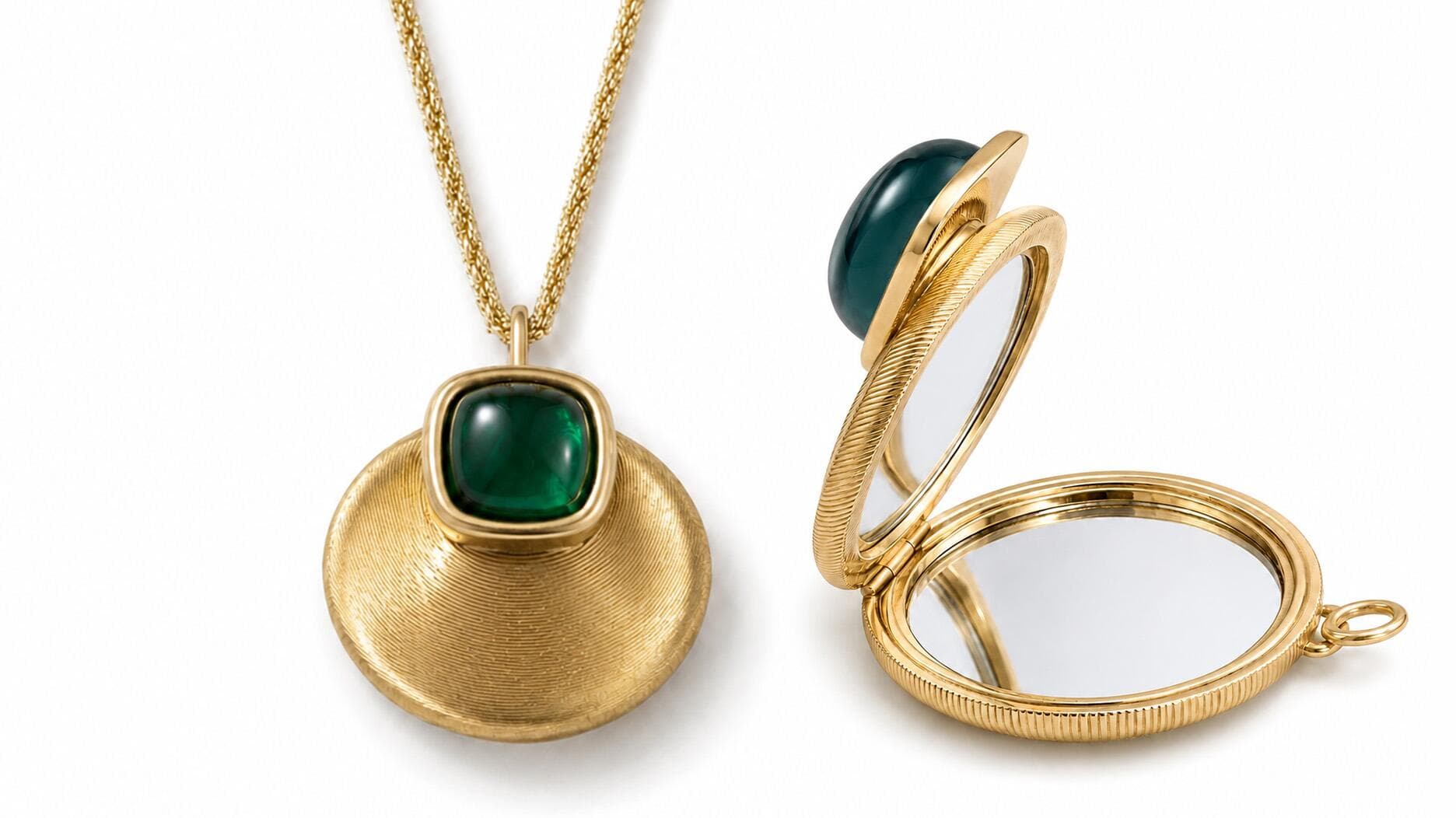
How to spot authentic antique rings, hallmarks, and provenance
A ring’s real value is written in its marks, its construction, and its wear. Learn how to tell a true antique from a romantic impostor before you pay for the story.

An antique ring can look irresistible in the case light of an estate sale, but the difference between a decorative survivor and a collector-grade jewel is often hidden in the smallest places: a crisp hallmark, a coherent period design, a maker’s signature, or the way the shank has aged. If you want lasting value, you have to read the ring as evidence, not just admire it as ornament.
Antique, vintage, and why age changes the stakes
In the trade, antique jewelry is generally defined as at least 100 years old, while vintage usually covers pieces made roughly 20 to 100 years ago. That distinction matters because age alone does not create value. What lifts a ring into serious collector territory is the combination of period authenticity, recognisable craftsmanship, and condition that still allows the piece to speak clearly from its own era.
The museums make that point elegantly. The Victoria and Albert Museum says its jewelry collection includes more than 3,000 jewels, while The Met’s holdings span more than 490,000 works of art across 5,000 years of history. Those collections are reminders that jewelry is not just decorative. It is a record of materials, technique, and taste, and rings in particular carry the most concentrated version of that history.
Start with the language of the era
The first test is not sentiment, but style. The Jewellery Editor’s collecting guide begins with a simple discipline: identify your style, then identify prices and budget. That order is crucial, because the ring has to make sense within its period before it can justify its asking price. The earlier, rarer rings with hallmarks in excellent condition tend to command the strongest prices, precisely because style, documentation, and survival line up.
A convincing antique ring should feel internally consistent. Its setting, proportions, and finish should belong to the same visual vocabulary, rather than looking like a patchwork of later repairs and revived components. When a ring’s look and its marks tell the same story, you are closer to authenticity. When they clash, you are usually looking at a more decorative than collectible piece.
Read the marks before you read the romance
Hallmarks are among the most useful tools in the hunt. A full UK hallmark can identify the sponsor’s mark, the metal fineness mark, the assay office town mark, and, if present, a date letter. Under the Hallmarking Act 1973, that system gives collectors a practical way to check what the ring is made of, who submitted it, where it was tested, and sometimes when it was hallmarked.
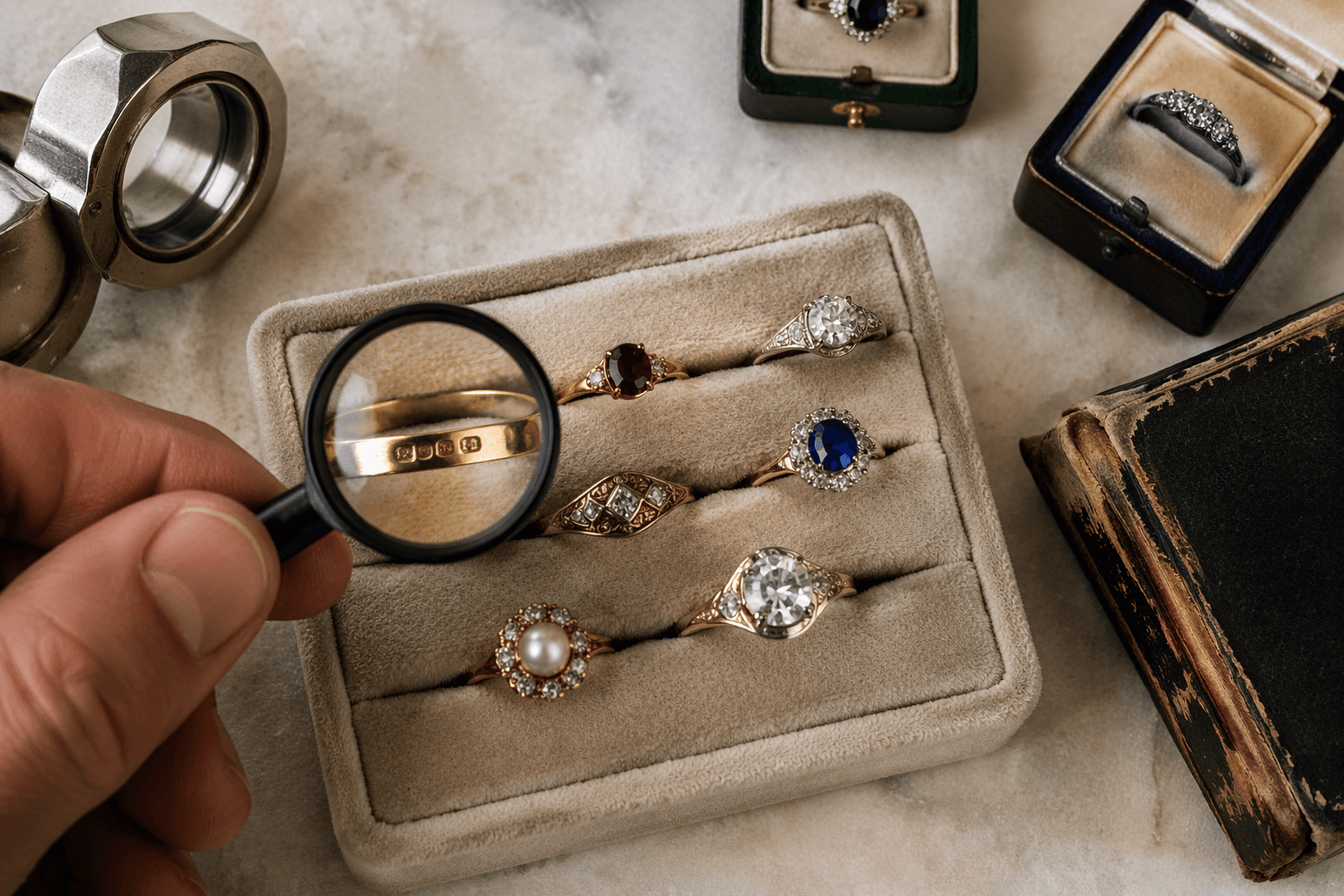
There is also an important nuance in UK guidance: pre-1950 items may be described and sold as precious metal without a hallmark if the seller can prove minimum fineness and that the piece was manufactured before 1950. That means absence of a hallmark does not automatically disqualify an older ring, but it does raise the burden of proof. If the metal claims and the paperwork are thin, the ring is asking you to buy on faith rather than evidence.
For collectors, the takeaway is straightforward. Authenticity is not just about sparkle or age language in a listing. It is about whether the construction, marks, and style all agree.
What to inspect first, and what matters most
When you handle a ring, start with the most documentary features before you get swept up in the stone.
- Look for a full hallmark and any maker’s or sponsor’s mark.
- Check whether the metal fineness and assay town make sense for the claimed origin.
- Compare the design language against the claimed period.
- Examine the condition of the shank, shoulders, and setting for repairs or heavy wear.
- Ask whether provenance is documented, not merely suggested.
Condition red flags are often where romance becomes expensive. A heavily worn shank, a setting that has been rebuilt too many times, or a ring whose stones seem newer than the mount can all depress collector value. At the top end, rare rings in excellent condition bring the best prices because they preserve more of the original object. At more accessible price points, honest wear can be acceptable if the ring still has clear marks, period integrity, and a coherent structure.
Why provenance changes price, and when it does not
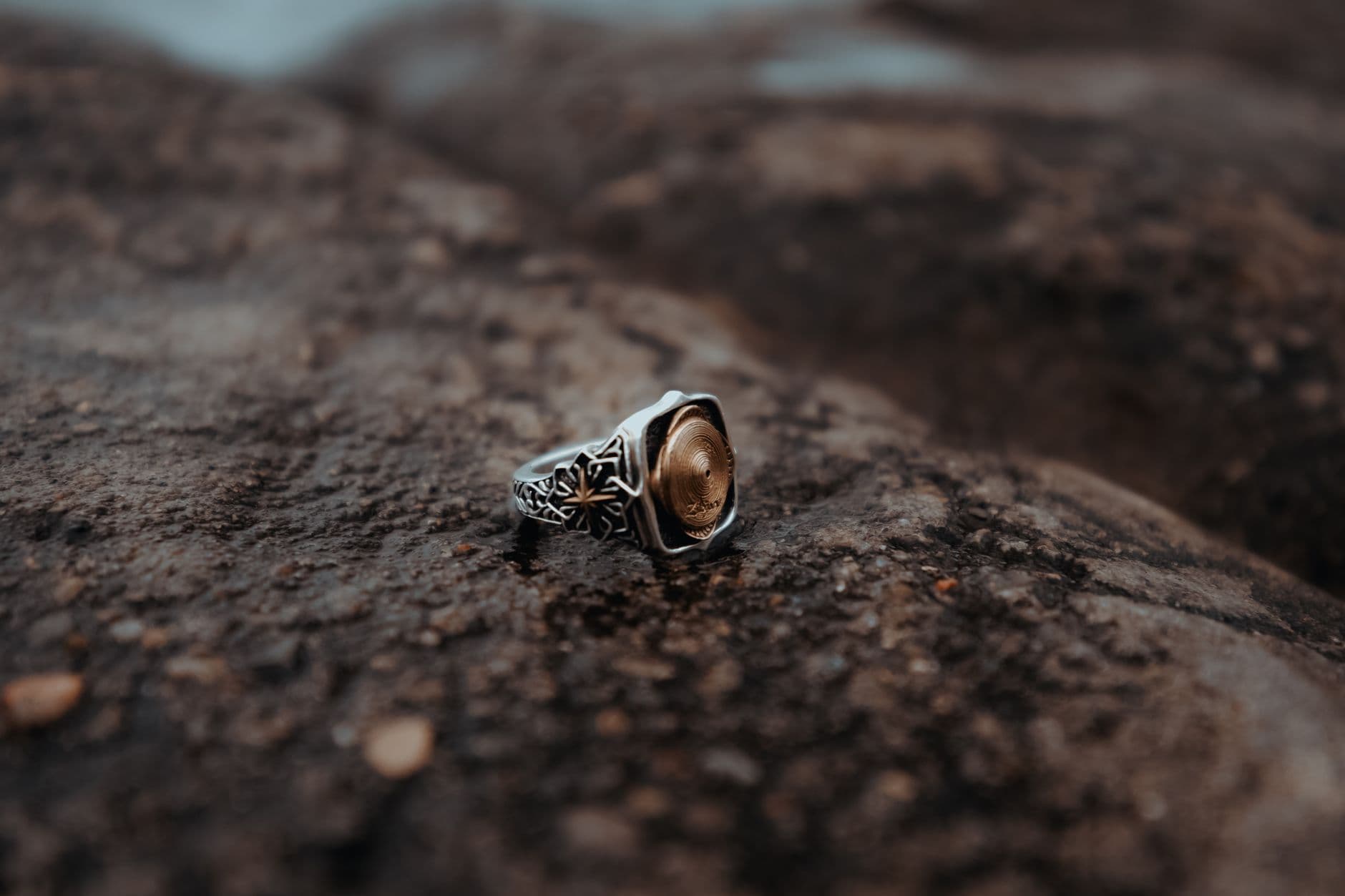
Provenance matters most when it does more than decorate the story. A family tale is charming, but a signature, brand, or documented chain of ownership is what can shift a ring from interesting to genuinely collectible. Sotheby’s is explicit on this point: a signature or brand indicates authenticity and provenance for collectible jewelry.
That distinction becomes sharper in the auction world, where price is tied to verification. Bonhams says buying jewelry at auction can offer better value than retail mark-up, which it says can sometimes reach 300%. In other words, the same ring can cost very different amounts depending on whether you are paying for craftsmanship alone or for a store’s full margin layered on top of it. Auction value is built from rarity, provenance, condition, and market appeal, not sentiment.
Bonhams also holds over 40 jewelry auctions a year across New York, London, Hong Kong, and Los Angeles, a reminder that this is an active market with real competition for signed and period pieces. The names that continue to draw attention, from Cartier and Van Cleef & Arpels to Bulgari and Tiffany, are not just labels. In the collector market, they are shorthand for authorship, design lineage, and resale credibility.
Why rings have always carried authority
Part of the ring’s enduring appeal is that it was never only ornamental. The British Museum and The Met both note that rings and engraved ring stones were long used as signets and seals, impressed into wax or clay to authenticate documents and mark ownership. That history gives rings a particular gravity in collecting, because they were built to do more than glitter. They were meant to identify, authorize, and endure.
That dual life, as object and instrument, is why rings reward close looking. A true antique ring does not merely survive its century. It still shows you how the century thought about power, status, and identity.
The collector’s final test
The best buying decisions are rarely made by the most dramatic story. They are made by the ring that can prove its own life: the correct age language, the legible marks, the honest condition, and, when it exists, the provenance that locks the details together. If a piece is beautiful but undocumented, you are buying charm. If it is beautiful, marked, coherent, and well preserved, you are buying history with lasting value.
This article was produced by Prism’s automated news system from verified source data, official records, and press releases, then run through automated quality and moderation checks before publishing. The system is built and supervised by the people who set the standards it runs under. Read our full AI policy.
Did this article answer your question?